What Are the Flavor Differences Between Ethiopian Geisha Village Geisha Coffee and Panamanian Geisha Coffee?
For professional coffee knowledge exchange and more coffee-bean information, follow Coffee Workshop (WeChat public account: cafe_style).
The reputation of Gesha coffee is legendary. Besides Panama, countries such as Costa Rica and Colombia also grow the Gesha variety, and among them Ethiopia's Gesha Village Estate is especially renowned. Through cupping, FrontStreet Coffee found that the similarity between Gesha Village's Gesha and the Panamanian Gesha we know is not high. Panamanian Gesha shows captivating floral aromas in the dry fragrance, wet aroma, and taste alike, while Gesha Village's Gesha is defined by stone-fruit flavors across the dry fragrance, wet aroma, and taste, with floral notes somewhat less prominent than Panama's.
Gesha Village Estate's Gesha is widely loved, and many competitors select batches from the estate and place impressively. Notably, Hong Kong's Chao Ka Po used Gesha Village Estate's Gesha to take third place at the 2017 World Barista Championship. The same year, Japan's Ishiya Takayuki chose Gesha Village coffee to win his first Japan Barista Championship (JBC) title after ten years of competing. So how did Gesha Village rise to prominence?
Gesha Village Coffee Estate
In 2007, documentary director Adam Overton and his photographer wife Rachel Samuel were filming a documentary about Ethiopian coffee for the Ethiopian government when they came into contact with the Gera coffee forest in the Bench Maji region. Along the way, they conceived the idea of establishing their own coffee estate and brand. In 2009, they had the fortune to meet the renowned La Esmeralda estate owner and BOP judge Willem Boot. His vision gave the Overtons an opportunity: return to Ethiopia and find the birthplace of Gesha. Eventually they reached Bench Maji, an area in southwestern Ethiopia near South Sudan, where many places are called Gesha Village, making it the most likely region in which to find the original Gesha.
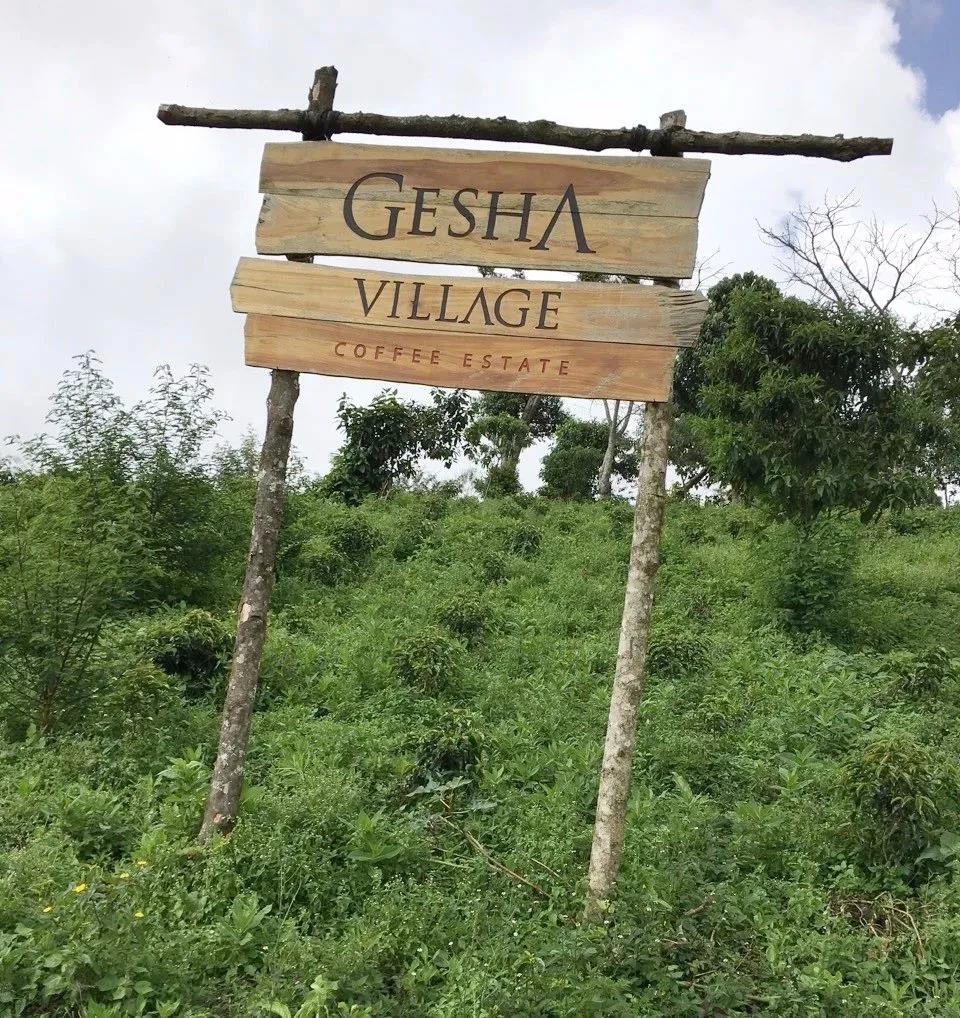
Following Willem Boot, Adam began "exploring" the forests around the estate. In a jungle magically enveloped by dense forest, they discovered several wild tree species, the most exciting being wild Gesha. They later learned this was the Gori Gesha forest, where the Gesha variety was first discovered. They collected seeds from the native Gesha trees, screened them, and planted them at Gesha Village. They decided to establish the estate there and named it Gesha Village Coffee Estate, a 475-hectare coffee farm about 12 miles from the Gori Gesha forest.
Gesha Coffee Varieties
Gesha beans are elongated in shape with refreshing, pleasant flavors. On both counts, Gesha resembles Ethiopian coffee rather than Central and South American varieties. So when was Gesha introduced to Panama? It was discovered in the Gesha forest of Ethiopia in 1931. Gesha was later sent to Kenya's Coffee Research Institute, introduced to Uganda and Tanzania in 1936, to Costa Rica in 1953, and to Panama around 1960.
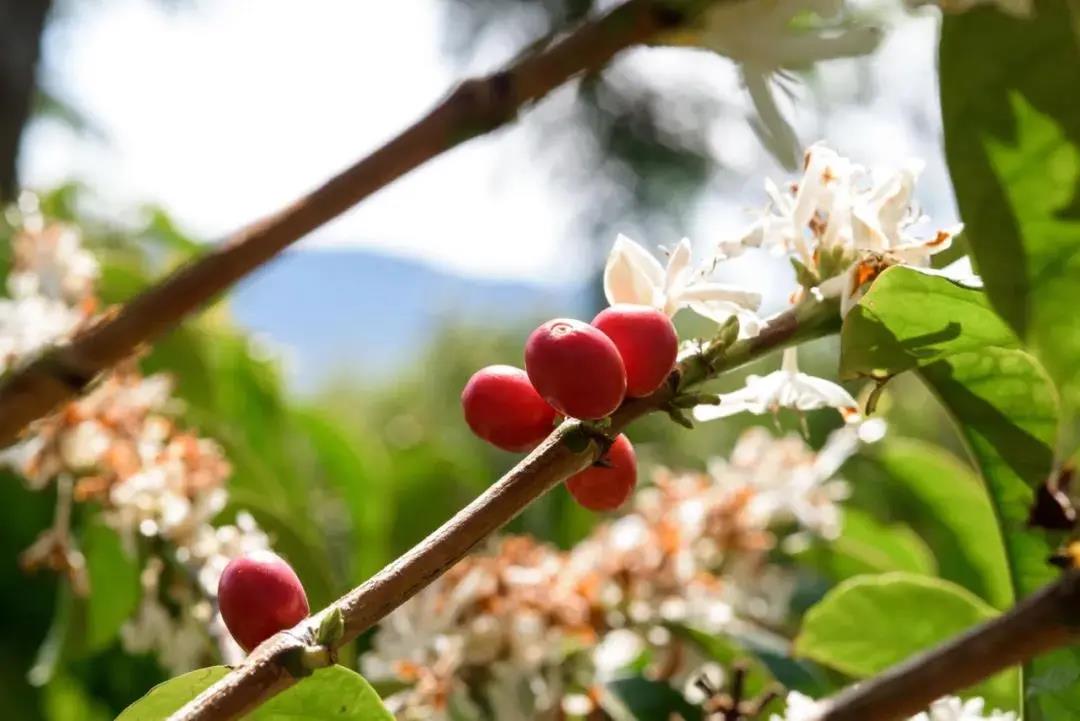
Although Gesha resists disease strongly, its yield is low, so after being introduced as a plant for variety improvement it disappeared from the scene—until the owner of La Esmeralda estate rediscovered it in the windbreak forest. In recent years, Gesha Village has gained momentum in flavor, concluding its independent estate auctions at astonishing prices for two consecutive years and being chosen by multiple competitors at top events such as the WBC. This has brought Ethiopia, the coffee kingdom, back to its peak and once again reshaped people's understanding of Ethiopian coffee.
Gesha Village has three varieties, named after the expedition teams that discovered the coffee: Gesha 1931, Gori Gesha, and Illubabor, the last provided by the Ethiopian Coffee Research Center.
Gori Gesha (GG): This variety replicates the genetic diversity found within the Gori Gesha coffee forest.
Gesha 1931 (G31): Possesses a combination of different forest varieties and is very similar to Panamanian Gesha, selected through observation of plant morphology, bean appearance, screen size, and cupping flavors.
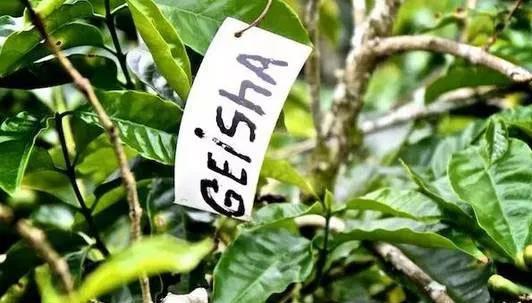
Illubabor Forest 1974 (IF): Discovered during a 1974 expedition to the Illubabor forest and later developed by the Ethiopian Research Center into a disease-resistant variety.
Gesha Village Estate Parcel Division
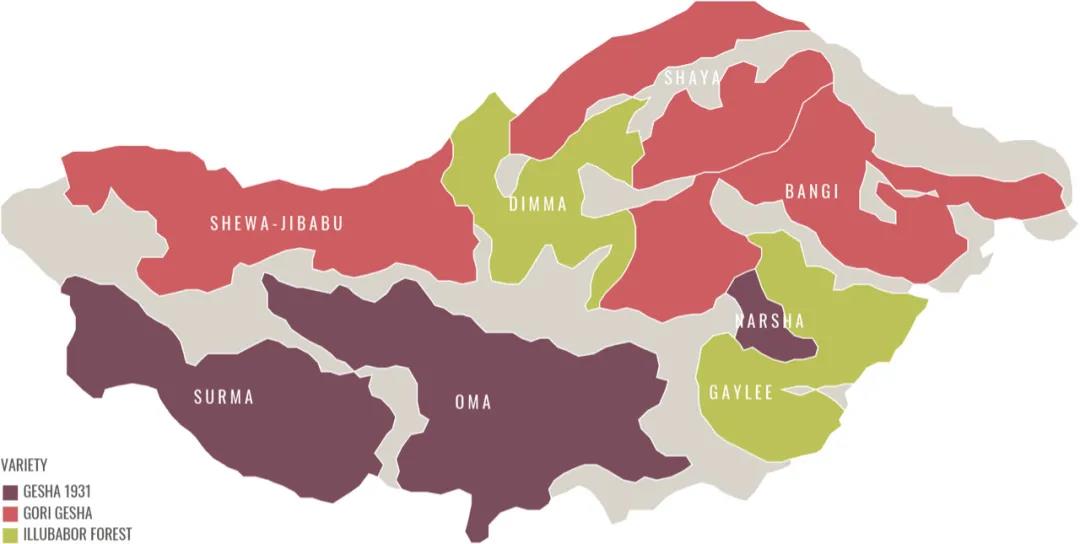
Gesha Village Estate numbers its parcels in great detail, which makes later management and flavor traceability easier.
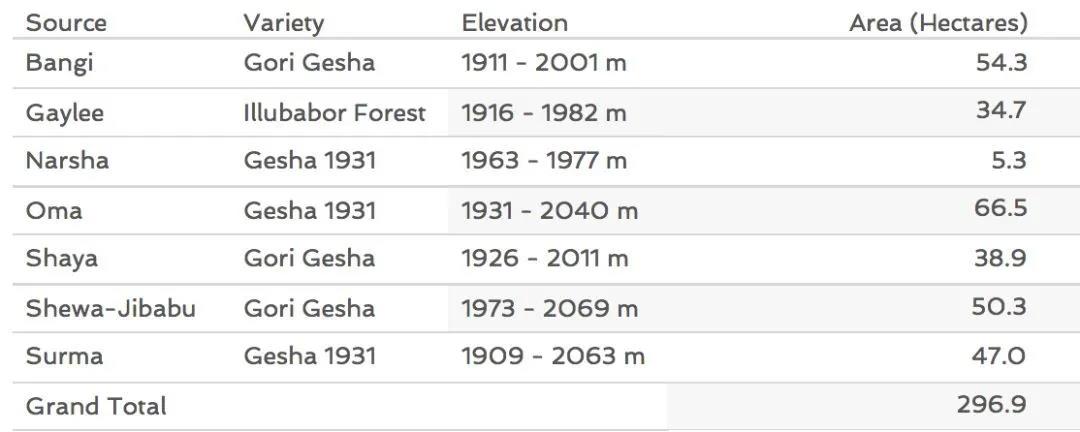
The area and planted varieties of different parcels in Gesha Village
The western side of the estate has relatively higher terrain, so the OMA, SURMA, and SHEWA-JIBABU parcels sit at slightly higher altitudes. The south side has a relatively higher shade ratio, while the north side receives longer sunlight. Among the eight parcels, estate managers select the most suitable variety for each based on microclimate differences such as altitude, soil, and shade, ensuring each major parcel develops its own distinct character.
Gesha Village Estate Grading
Ethiopia originally had no estates or estate grading system. After Willem Boot and Adam discovered the Gesha forest, they decided to apply the Panamanian estate business model to the area, making Gesha Village Estate the only coffee estate in Ethiopia.
At Gesha Village, every step of planting and processing pursues uncompromising quality. In their coffee laboratory in Addis Ababa, following SCA official standards, they carefully select each batch through strict cupping and apply rigorous grading to ensure buyers receive the highest quality coffee. In the end, from the extremely rare and delicious Rarities down to the refined blend Chaka, the coffee is divided into five grades for the global market: Auction, Gold Label, Red Label, Green Label, and Chaka. Each batch carries a single label that can be traced back to detailed information about the beans.
Auction Batches
Accounting for only 3.7 percent of Gesha Village's annual production, these are the estate's most rigorously selected top-tier batches, available only through the 2018 Gesha Village Coffee Estate Global Auction. The 2018 auction batches cupped between 88.15 and 92.67 points and are further divided into Champion's Reserve and Farm Reserve.
For example, Gesha Village 2018 Auction Lot RSV.6 belongs to the auction batch.
Gold Label Batches
Gold Label accounts for only 5 percent of Gesha Village's annual production and is almost equivalent to the auction batches. Competitors from around the world typically select these batches. In the 2018 WBC World Championship held in the Netherlands, the champions from Australia and Japan chose Gold Label batches, and roasters with high quality standards also buy them. They have complete traceability and each batch shows prominent, highly complex flavor, making Gold Label the most excellent grade after the auction lots.
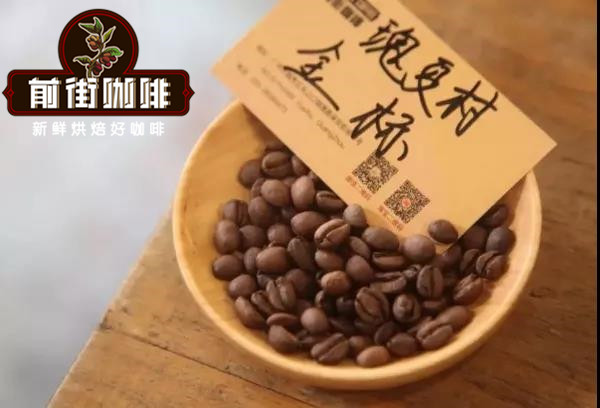
Gesha Village Oma 059 batch
Grade: Rarities (Gold Label)
Processing Method: Natural (32 days)
Variety: Gesha 1931
Country: Ethiopia
Region: Bench Maji
Altitude: 1,931-2,040 meters
Red Label Batches
Red Label batches have complete traceability and typical Gesha Village flavor, with slightly less intensity and complexity than Gold Label, making them single-origin lots with excellent value.
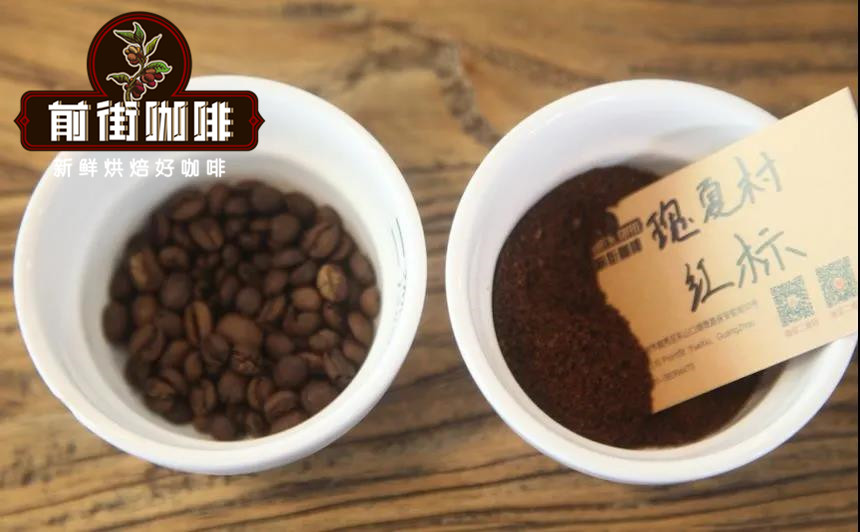
Gesha Village Coffee Estate Grower's Reserve
Gesha Village · Red Label Gesha
Region: Bench Maji
Altitude: 1909-2069m
Variety: Gori Gesha
Processing Method: Natural
Chaka Batches
This is a Gesha coffee blend produced by Gesha Village, including three varieties: Gori Gesha, Gesha 1931, and Illubabor (a native Ethiopian disease-resistant variety).
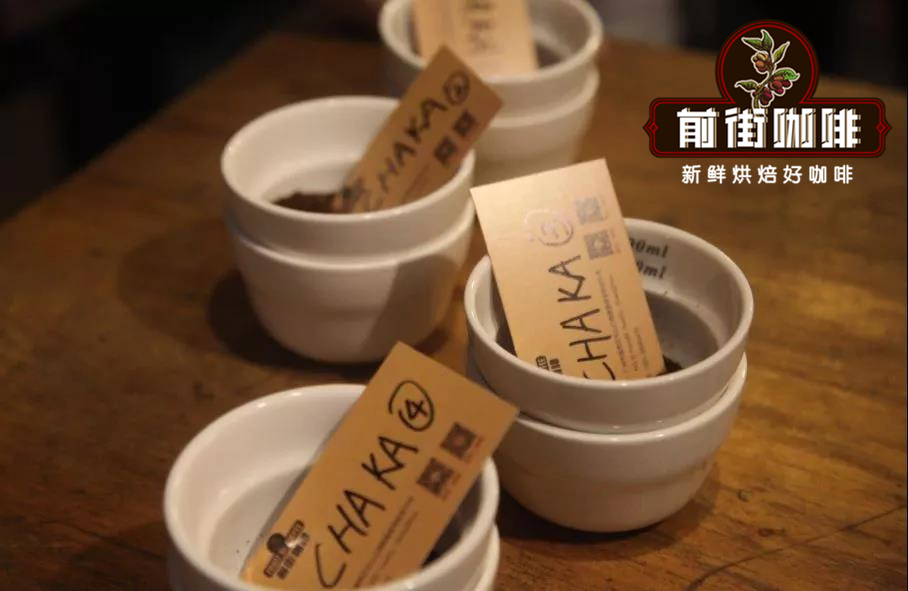
Gesha Village Coffee Estate CHAKA
Gesha Village · Chaka Batch
Region: Bench Maji
Altitude: 1900-2100m
Variety: Gori Gesha, Gesha 1931, Illubabor
Processing Method: Natural
Coffee Bean Processing Methods
Natural
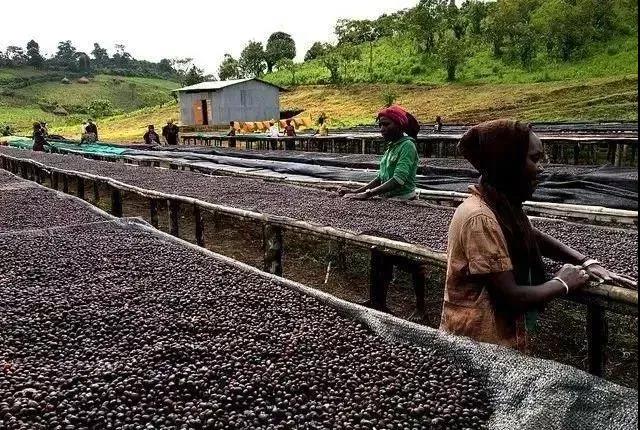
FrontStreet Coffee's Gesha Village coffee uses natural processing. Floating debris and impurities are removed first, then the beans are spread in thin layers on African raised beds and covered with plastic sheets for sun-drying. During drying on the African beds, another screening removes insect-damaged and greenish beans. Total drying time is 18-30 days. FrontStreet Coffee believes naturally processed coffee has noticeable sweetness, gentle acidity, and complex fruit notes.
FrontStreet Coffee's most popular Gesha Village coffee is the Red Label Gesha. Next, let's see how FrontStreet Coffee's roasters roast this Gesha Village Red Label Gesha, and how our baristas brew it.
FrontStreet Coffee Roasting Recommendations
This Gesha Village Red Label Gesha belongs to the current new-crop season, so FrontStreet Coffee's roasters extended the dehydration time during roasting to ensure even heating between the bean surface and core. To express the coffee's acidity and floral-fruity aromas, a light roast was adopted.

Yangjia 800N, 300 g charge: enter the drum at 160°C, firepower 100, air vent open to 3; the turning point comes at 1'40", and when the drum temperature reaches 142°C, open the air vent to 4 and raise firepower to 150; at 148.1°C the bean surface turns yellow, the grassy aroma disappears completely, and the coffee enters the dehydration stage, so reduce firepower to 120; at 7'20" the bean surface shows ugly wrinkles and black patterns, the toast aroma clearly shifts to coffee aroma, marking the prelude to first crack, so listen carefully for it; first crack begins at 8'25", open the air vent to 5, develop for 1'45" after first crack, and discharge at 197.5°C.
FrontStreet Coffee Cupping Report
Through cupping, FrontStreet Coffee found that this Gesha Village Red Label Natural Gesha has distinct yellow stone-fruit flavors, white floral notes, and a slight tea sensation mixed with a noticeable creamy aftertaste.
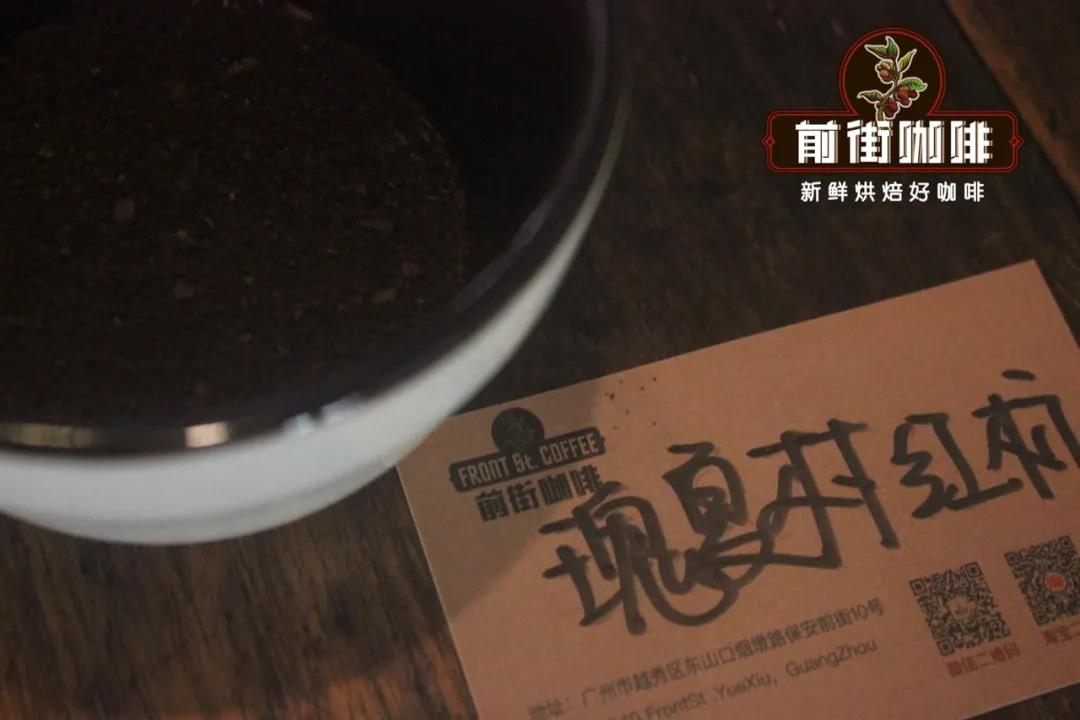
The advantage is the extremely high sweetness brought by refined natural processing, which persists throughout the cup. Because sweetness dominates early on, the acidity is not fruity but gentle, and the creaminess is more pronounced in the finish. The downside is a lack of body thickness, and the coffee becomes somewhat bland as it cools.
FrontStreet Coffee Brewing Tips
Dripper: V60 #01
Dose: 15g
Coffee-to-water ratio: 1:15
Grind size: BG6H (78 percent pass-through on a #20 sieve)
Water temperature: 91°C
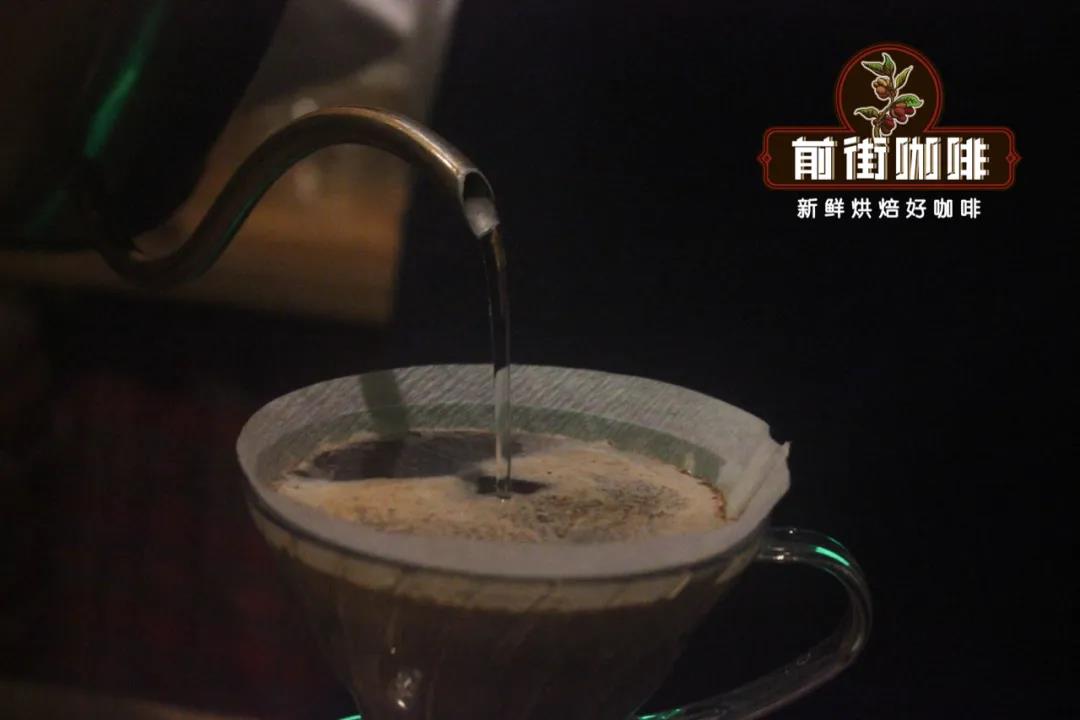
FrontStreet Coffee brewing method: First wet the filter paper and preheat the dripper and server. Use 30 g of water for a 30-second bloom, pour in small circles to 125 g for the second stage, then continue pouring to 225 g as the water level is about to expose the coffee bed. Stop pouring and remove the dripper when the water level is about to expose the bed (timing starts from the bloom); extraction time is 1'55".
Brewing flavors: At high temperature it shows citrus acidity without losing body. As it cools slightly, the acidity becomes gentler, leaning toward yellow stone fruit, creamy sweetness, and slight floral notes, with a faint dark cocoa aftertaste. At low temperature it shows maple sugar and berries.
For more specialty coffee beans, add FrontStreet Coffee on WeChat: kaixinguoguo0925
FrontStreet Coffee Recommendation
Whether you lean toward Ethiopia's stone-fruit Gesha or Panama's floral Gesha, FrontStreet Coffee carries both. FrontStreet Gesha Village Gold Label belongs to the Gesha 1931 variety—the top coffee Gesha Village produces outside its auctions, and one frequently chosen by competition baristas—showing the estate's complex, layered character. FrontStreet Gesha Village Red Label is the Gori Gesha variety, the estate's single-terroir series with full traceability for every lot, and it is the estate's most popular coffee at FrontStreet.
On the Panamanian side, FrontStreet Esmeralda Red Label Gesha comes from a single plot above 1700 meters and is cupped at 91 points, with a refined orange-blossom honey profile, while FrontStreet Boquete Geisha offers an approachable estate-level introduction to the same jasmine, green tea, honey, and citrus notes. For a gentler wallet, FrontStreet Strawberry Candy blends Panamanian Geisha with a Costa Rican raisin-honey coffee for floral sweetness with grape and blueberry overtones.
Important Notice :
FrontStreet Coffee is a long-established specialty coffee roaster in Guangzhou China, selling freshly roasted beans from its own farm in Yunnan as well as dozens of carefully selected single-origin beans from around the world for both pour-over and espresso. The products deliver consistently excellent quality and great value, with shipping within 24 hours. Guangzhou's FrontStreet Coffee shop is recommended by many coffee lovers, and the beans are now available online at the Tmall 。
FrontStreet Coffee has moved to a new address:
FrontStreet Coffee Address: 315,Donghua East Road,GuangZhou
Tel:020 38364473
 Scan and follow the En Gafei WeChat official account. Please indicate that the reprint comes from "En Gafei".