Differences in Brewing Flavors Between Honduran Specialty Coffee Regions: Sherry Coffee Beans and Lychee Orchid Coffee Beans
Honduras Coffee Overview
When talk turns to Honduras, many enthusiasts think of that one cup full of whiskey aroma and vanilla-cream texture: Sherry coffee. FrontStreet Coffee's two barrel-processed Honduran beans, Sherry and Lychee Lan, have long been favorites among enthusiasts. Barrel fermentation can bring flavors and textures to coffee that were not possible before. For anyone who cannot drink alcohol but is curious about whiskey, Sherry is worth trying, since both the aroma and the smooth texture resemble whiskey.
Honduras Coffee Growing History
Honduras coffee was first introduced by Spanish merchants in the late 18th century, and by 1804 the country had already begun small-scale cultivation. Its development lagged for historical reasons: there were no transport links connecting the growing areas to the ports, so the industry could not take off.
After 1970, however, the government established the official coffee institution Instituto Hondureño del Cafe (IHCAFE) to improve coffee quality. Combined with the fact that coffee trees can be grown throughout Honduras, production surpassed Costa Rica and Guatemala by 2011. In 1975, frost damage in Brazil sharply cut its coffee production, and Honduras seized the opening, surging from 500,000 bags to 1.8 million bags, all of which sold out quickly. From then on, Honduran coffee production truly began to develop.
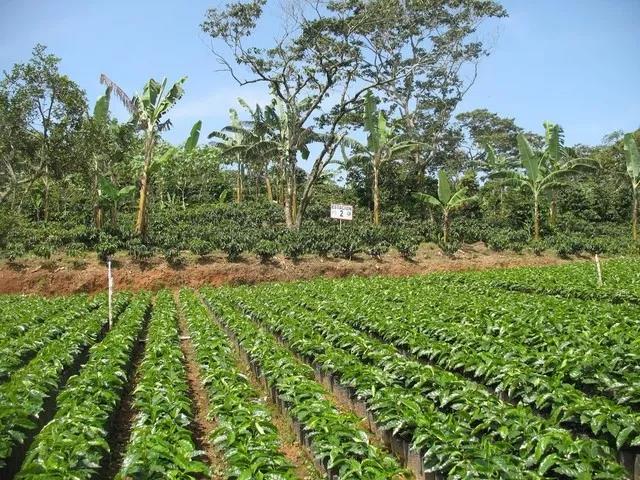
In 1990, as specialty coffee rose across Central America, other countries focused on quality while Honduras fell behind. The main reason was that during green-bean processing, the abundant and irregular rainfall in the mountains disrupted the drying stage. In 2004, Honduras held its first Cup of Excellence competition, where 21 coffees from across the country earned recognition and entered an online auction.
In 2011, Honduras became the highest coffee-producing country in Central America and the world's second-largest Arabica producer. Today it ranks among the world's top ten coffee producers and remains the second-largest Arabica producer, with coffee playing an important role in its economy and national development. Honduras has 280,000 hectares of coffee plantations, mainly small farms, most of them smaller than 3.5 hectares; these account for 60% of Honduras's total coffee production.
Geography of Honduras
Honduras sits in northern Central America, bordering Nicaragua and El Salvador to the east and south and Guatemala to the west. It is mainly mountains and plateaus at an altitude of about 1,500 meters, with a tropical climate, average temperatures between 16-20°C, and abundant rainfall well suited to coffee. Cultivation is based mainly on small family farms, with 70% of them under 2 hectares.
Honduras produces two coffees of excellent quality that enthusiasts hold in high regard. One is "High Grown" coffee, and the other is "Strictly High Grown" coffee, the country's highest grade. Most Honduran coffee is exported to the United States and Germany. (The altitude ranges behind these grades are set out in the grading section below.)
FrontStreet Coffee has compared beans from several Central American countries and found a common thread: floral and fruit aromas with soft, juicy tones. Honduran coffee may be similar to its neighbors, but its character shows exotic spice in the aroma and a nutty chocolate richness in the finish, for an overall balanced, layered performance.
Honduras Coffee Regions
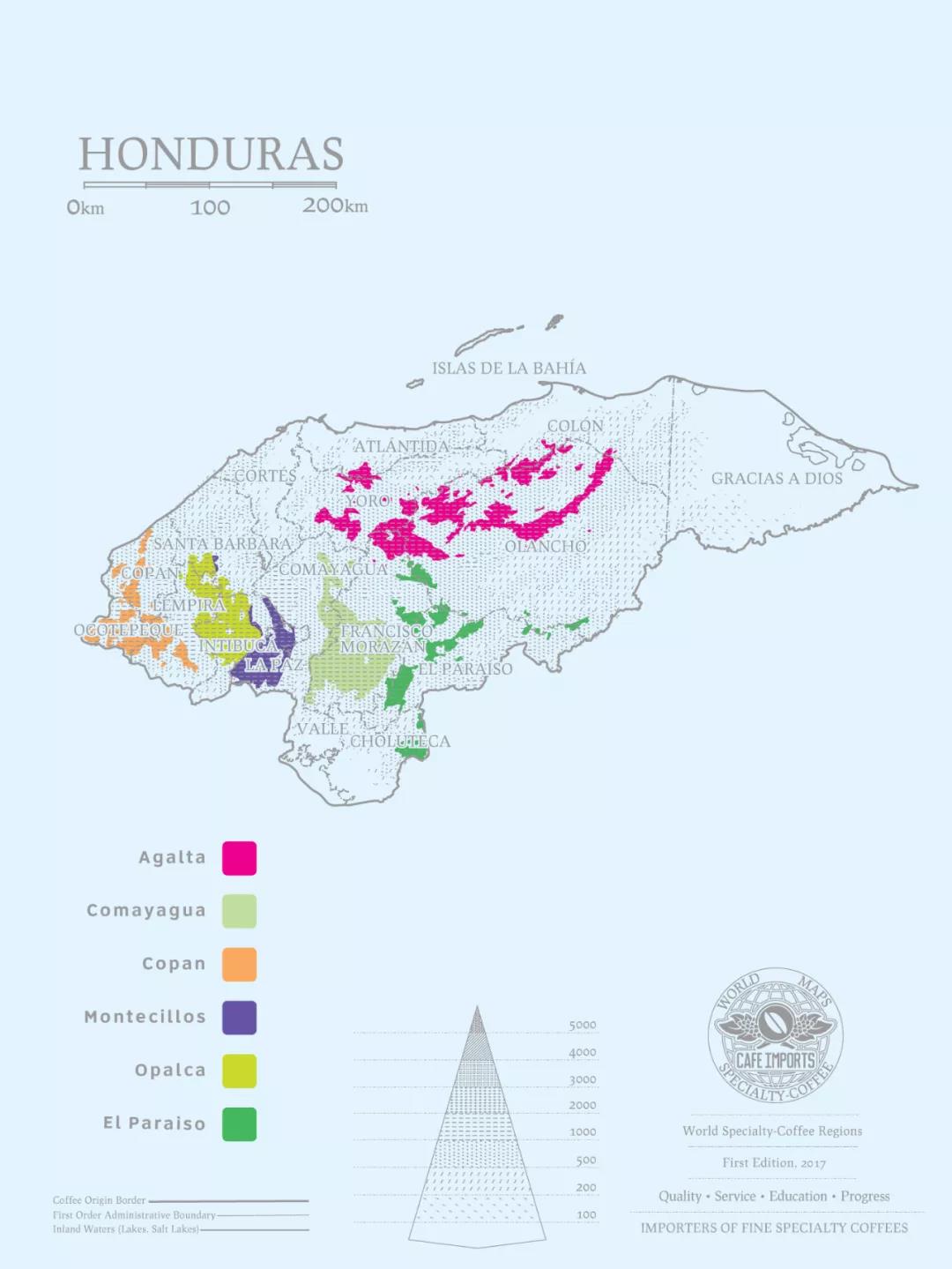
Honduran coffee is divided into five major specialty regions, mainly in the west and south: Copan, Opalaca, Montecillos, Comayagua, and Agalta Tropical. Specialty coffee here is grown above an average altitude of 1,100 meters. Of the coffee grown in these regions, 69% is HG grade, 12% is SHG, and 19% is CS. There are many smaller regions as well, which FrontStreet Coffee will not list one by one here.
Copan Region
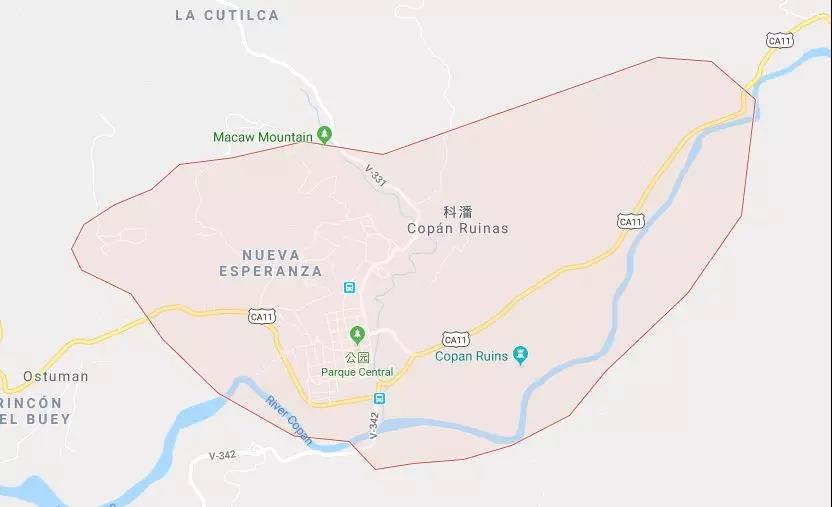
Located between the Copan, Ocotepeque, and Lempira areas, it shows strong chocolate flavors combined with honey and caramel sweetness, with fruit relatively light. Growing altitude: 1,000-1,500 meters. Harvest season: November to March.
Opalaca Region
Located between the Santa Bárbara, Intibucá, and Lempira areas, it has very delicate acidity and a balanced overall profile. The texture brings tropical fruit such as grapes and mulberries with a sweet-and-sour finish, and strong lemon balanced against honey and caramel sweetness, showing distinct fruit character. Altitude: 1,100-1,400 meters. Harvest season: November to March.
Montecillos Region
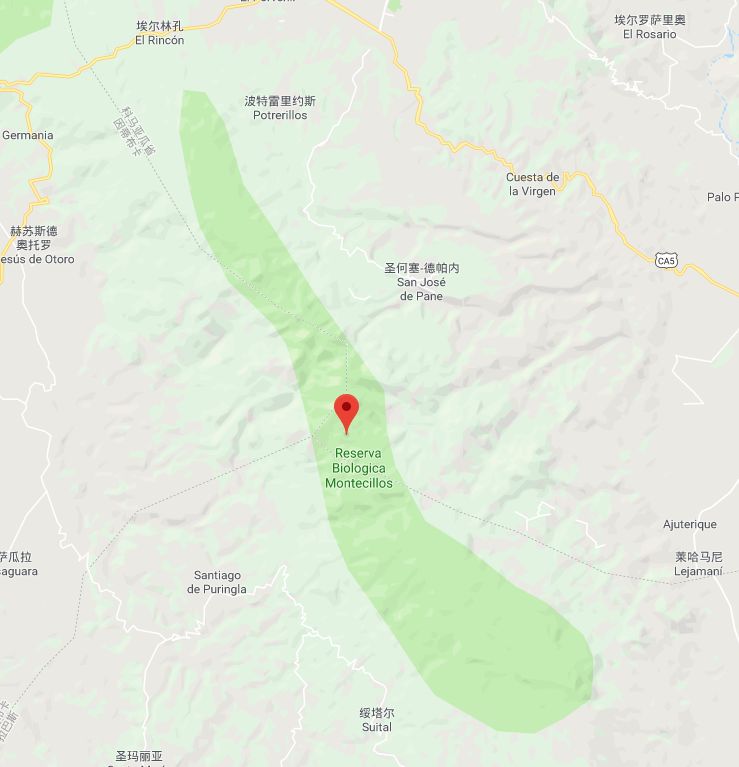
Located between the La Paz, Comayagua, Santa Bárbara, and Intibuca areas, it is full of rich fruit and sweet aromas paired with lemon and floral notes. Lemon and fruit aromas are the defining features, especially peach and orange. The acidity is lively and bright, with a velvety texture and a persistent finish. Altitude: 1,200-1,600 meters. Harvest season: December to April.
Comayagua Region
Located between the Comayagua and Francisco Morazán areas, it features mainly lemon flavors with distinctly sweet fruit aromas. The texture is creamier and richer, carrying citrus sweetness with sweet and chocolate notes. Altitude: 1,000-1,500 meters. Harvest season: December to March.
Agalta Tropical Region
This region spans parts of the Olancho, El Paraiso, and Francisco Morazán provinces, mainly in the east, making it the most dispersed area, composed of fourteen protected areas that increase plant diversity and balance the ecosystem, with high ecotourism value. It has honey aromas, strong citrus flavors, a subtle yet distinct acidity, and a pleasant aftertaste. Altitude: 1,200-1,500 meters.
Honduras Coffee Bean Grading
As mentioned above, High Grown and Strictly High Grown, along with the SHG and HG used in the region descriptions, refer to Honduras's coffee bean grading system.
- Strictly High Grown (SHG): Above 1,200 meters
- High Grown (HG): 1,000-1,200 meters
- Central Standard (CS): 600-1,000 meters
Honduras Coffee Varieties
The vast majority of coffee grown in Honduras is Arabica, mainly Caturra, Catuai, and Pacas-derived varieties.
Caturra
Caturra is a natural variant of the Arabica Bourbon variety, discovered in Brazil in 1937. It is shorter than Bourbon. Although it inherits the Bourbon lineage and is relatively disease-resistant, it yields more than Bourbon. Despite being discovered in Brazil, Caturra is not well suited to growing there, so it was never planted at scale in Brazil, but it became widely popular across Central and South America; Colombia, Costa Rica, and Nicaragua all cultivate it on a large scale.
Catuai
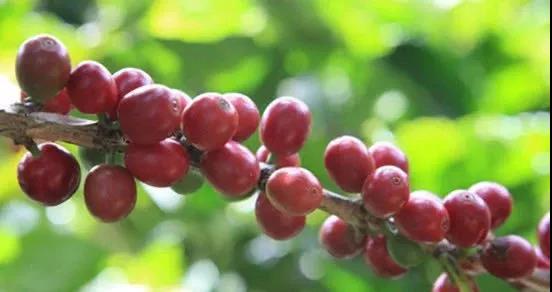
Catuai is a variety artificially hybridized from Caturra and Mundo Novo. It handles natural disasters, especially wind and rain, better than most. The trees are relatively short, and compared with other coffee trees the fruit grows firmer and is harder to pick. The cherries come in both red and yellow. To date, no one has found that yellow fruit tastes better than red; in fact, some cuppers have found that coffee processed from yellow fruit, while having good acidity, has a less clean mouthfeel than coffee from red fruit.
Pacas
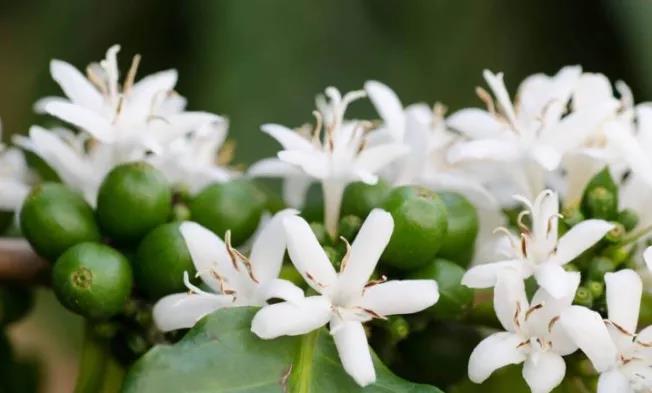
Pacas was first discovered in 1949 on the Pacas family's estate. In 1956, someone found plants with a different form in a Bourbon-growing area, collected them, and began selection and breeding research, also inviting Professor William Cogwill from the University of Florida to identify them. The identification found that the Bourbon planted on the Pacas farm carried a single gene mutation that made the plant smaller, producing a new variety. It was named "Pacas" after the farm owner. Pacas plants are smaller, can be planted more densely, and yield more than the original Bourbon. High-density planting also brought the farm higher yields, with better flavor performance.
Honduras Coffee Processing
Before barrel fermentation appeared, Honduran coffee mostly used washed processing.
Farmers first pour the harvested cherries into large water tanks. Underdeveloped, inferior beans float to the surface while mature, full fruit sinks. The defective fruit floating on top is removed.
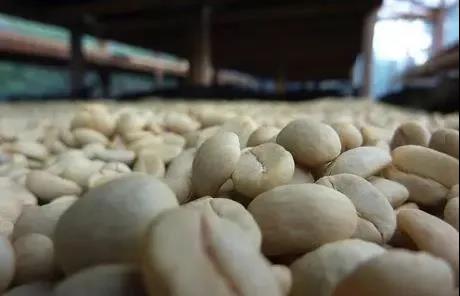
A pulping machine then removes the outer skin and pulp, leaving the beans coated in a slippery layer of mucilage. The beans with mucilage go into fermentation tanks for 16-36 hours, during which microorganisms break the mucilage down. Once fermentation is complete, large amounts of clean water wash away the remaining mucilage. Finally, the cleaned beans are dried in the sun.
Where Barrel Fermentation Came From
Honduras's barrel fermentation method was inspired by winemaking. During coffee fermentation, the barrel lets tiny amounts of air pass through its walls into the interior, causing moderate oxidation of the beans. The right amount of oxygen also accelerates fermentation.
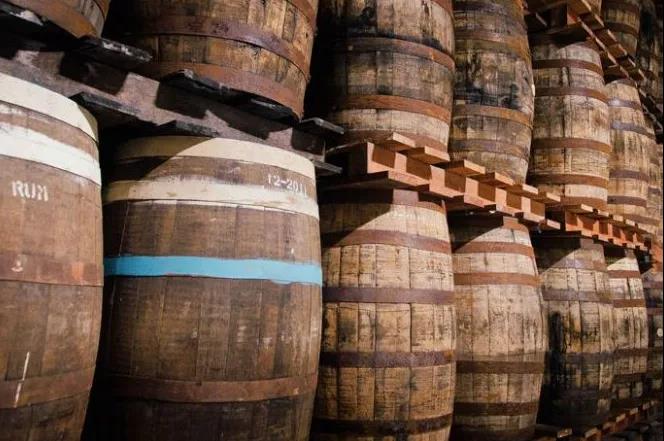
It softens tannins while letting fresh fruit aromas gradually develop into rich, complex, mature wine aromas. The barrel's moderate hardness provides good waterproofing and storage safety. Barrels also contain a certain amount of tannins, and when the green beans are stored during the process, those tannins penetrate the beans inside, giving the coffee layered complexity and rich wine aroma.
Whiskey Barrel and Brandy Barrel Fermentation
FrontStreet Coffee's two Honduran wine-flavored beans both use barrel processing; the difference is the barrel itself. FrontStreet Coffee's Sherry and Lychee Lan beans use fine washing followed by fermentation in whiskey-sherry or rum barrels. Freshly picked cherries are finely washed, then placed in barrels that previously held aged sherry or rum and fermented at low temperature for 30-40 days (around 15-20°C), followed by shade drying.
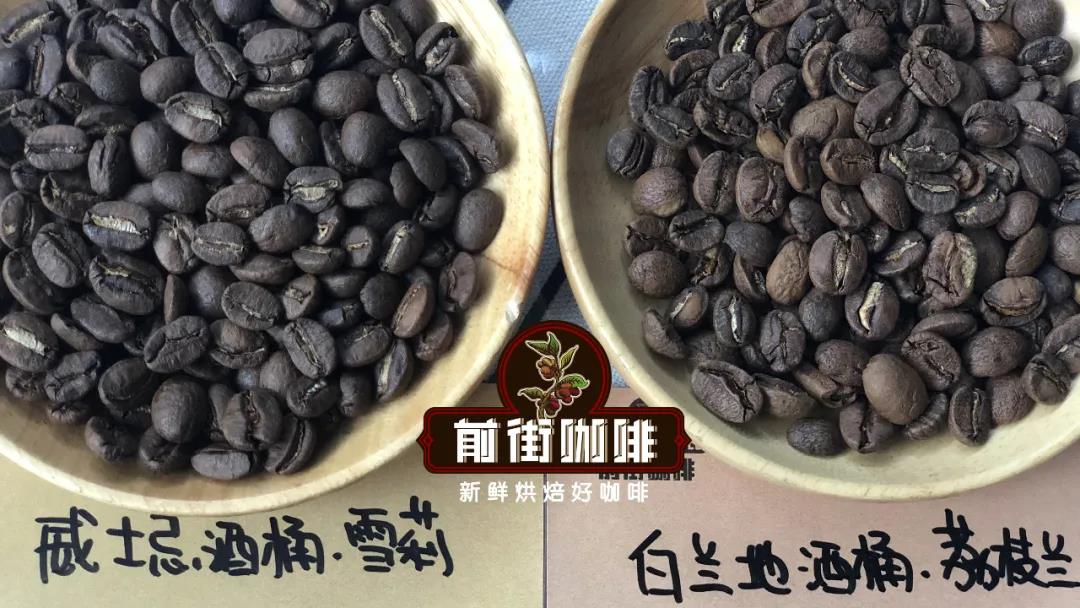
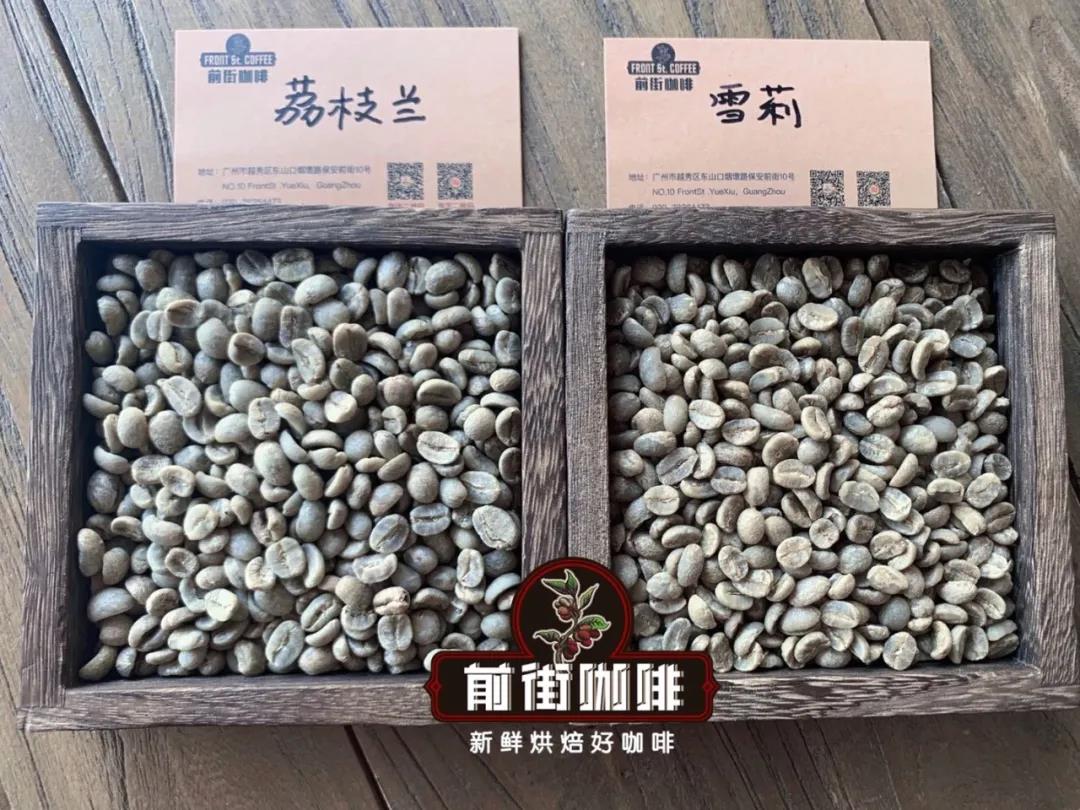
FrontStreet Coffee Green Bean Analysis
Both beans use fine washing plus barrel fermentation. Washed beans look blue-green with little silver skin. That is because washed beans are soaked in water for long periods during processing, which separates the silver skin from the beans. When the parchment is finally removed, the outer silver skin is peeled off with it, leaving very little residue on the surface of the washed green beans.
FrontStreet Coffee Roasting Experience
Sherry Coffee Bean Roasting
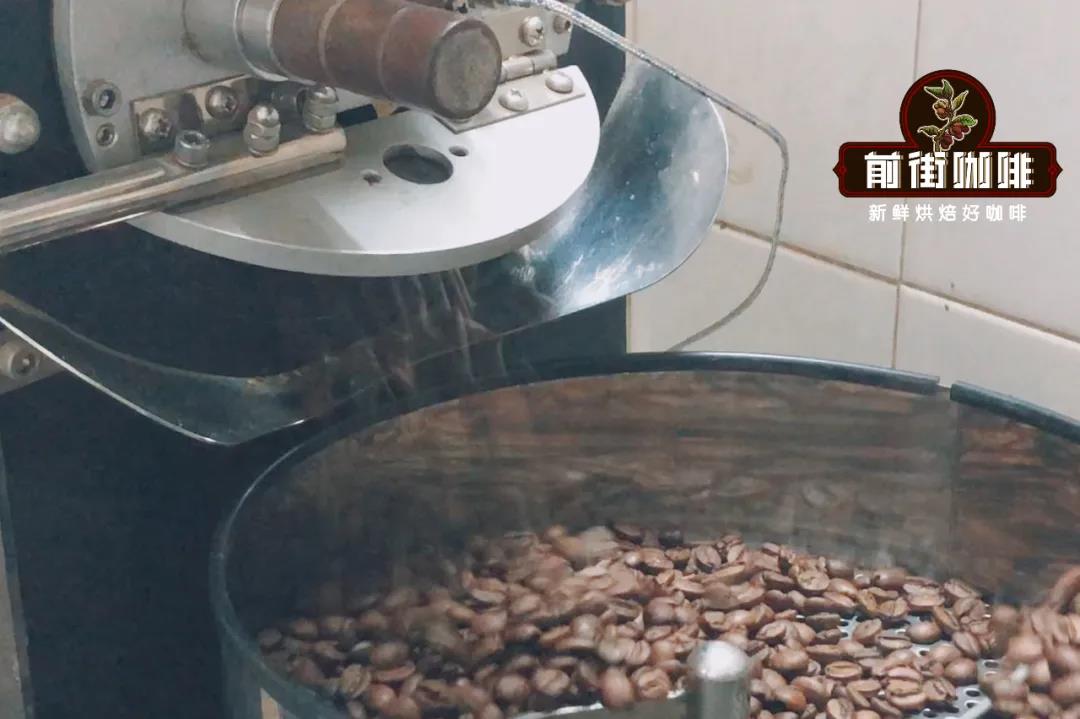
Roaster: Yangjia 800N (batch size 300 g). Enter the drum at 190°C, heat 140, damper 3. The return temperature point is at 1'42"; when the drum reaches 140°C, open the damper to 4 with heat unchanged. At 151.8°C the bean surface turns yellow and the grassy aroma disappears completely, marking the dehydration stage. At 150°C, adjust heat to 120 with the damper unchanged. At 8'38" the bean surface shows ugly wrinkles and black spots, the toast aroma clearly shifts to coffee aroma, and this can be defined as the prelude to first crack; listen carefully for the first crack sound. At 9'07" first crack begins, open the damper to 4, develop for 2'10" after first crack, and discharge at 195°C.
Lychee Lan Coffee Bean Roasting
Roaster: Yangjia 800N (batch size 300 g). Enter the drum at 120°C, heat 140, damper 3. The return temperature point is at 1'32"; when the drum reaches 140°C, open the damper to 4 with heat unchanged. At 152.6°C the bean surface turns yellow and the grassy aroma disappears completely, marking the dehydration stage. At 151°C, adjust heat to 120 with the damper unchanged. At 8'00" the bean surface shows ugly wrinkles and black spots, the toast aroma clearly shifts to coffee aroma, and this can be defined as the prelude to first crack; listen carefully for the first crack sound. At 9'17" first crack begins, open the damper to 5, develop for 2'10" after first crack, and discharge at 195°C.
FrontStreet Coffee Cupping Report
FrontStreet Coffee cups within 8-24 hours of roasting the sample beans. The barista typically uses 200 ml ceramic cupping bowls marked with 150 ml and 200 ml lines. Following SCAA standards, water TDS is around 150 ppm; TDS too low easily causes over-extraction, while too high affects mouthfeel and easily causes under-extraction. Cupping water temperature is 94°C. The grind follows SCAA cupping standards, controlled to a 70%-75% pass rate through a 20 standard sieve (0.85 mm). Ratio: 11 g of coffee to 200 ml of hot water, or 1:18.18, so the extracted concentration falls within the 1.15%-1.35% Golden Cup range. Steeping time: 4 minutes.
Sherry's dry aroma has rich whiskey, and the wet aroma is vanilla. On entry there is whiskey aroma, vanilla-cream smoothness, berry acidity, and a black chocolate and honey finish.
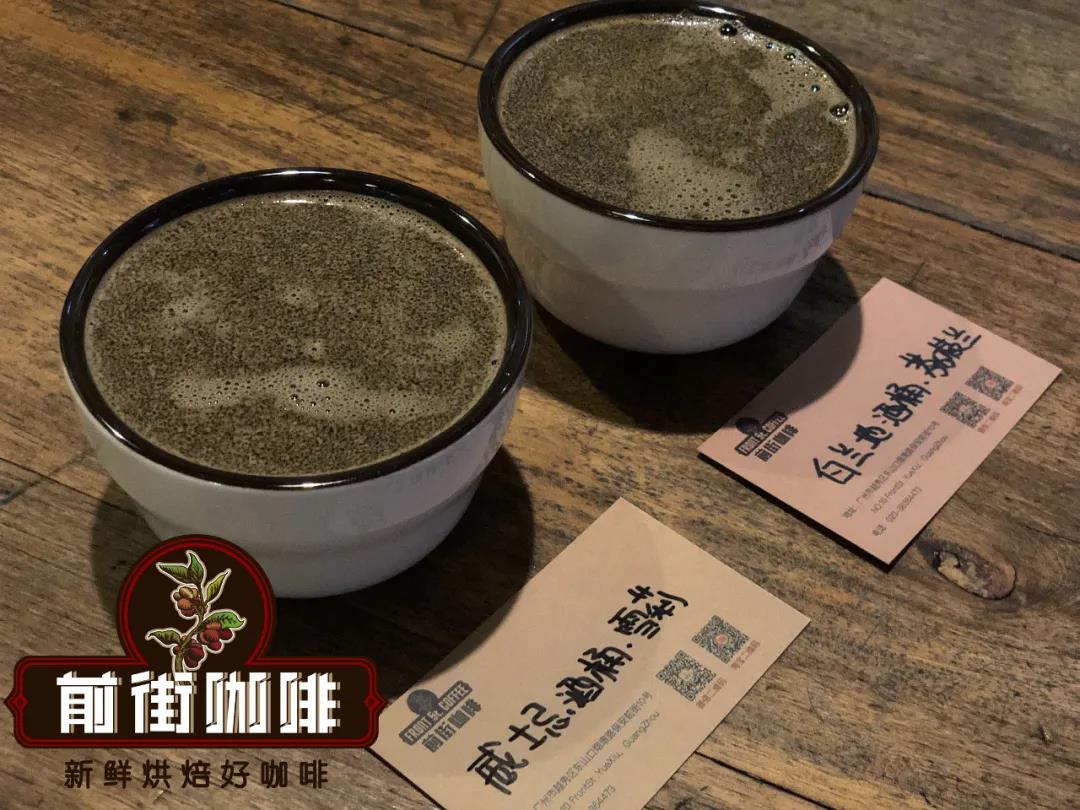
Lychee Lan's dry aroma is vanilla cream, and the wet aroma is lychee. On entry there is brandy aroma, the sweet-and-sour taste of lychee flesh, and a black chocolate and honey finish.
FrontStreet Coffee Brewing Experience
- Dripper: Hario V60 #01
- Water Temperature: 90-91°C
- Dose: 15 g
- Ratio: 1:15
- Grind Size: Medium-fine, fine-sugar size (80% pass rate through a 20 sieve)
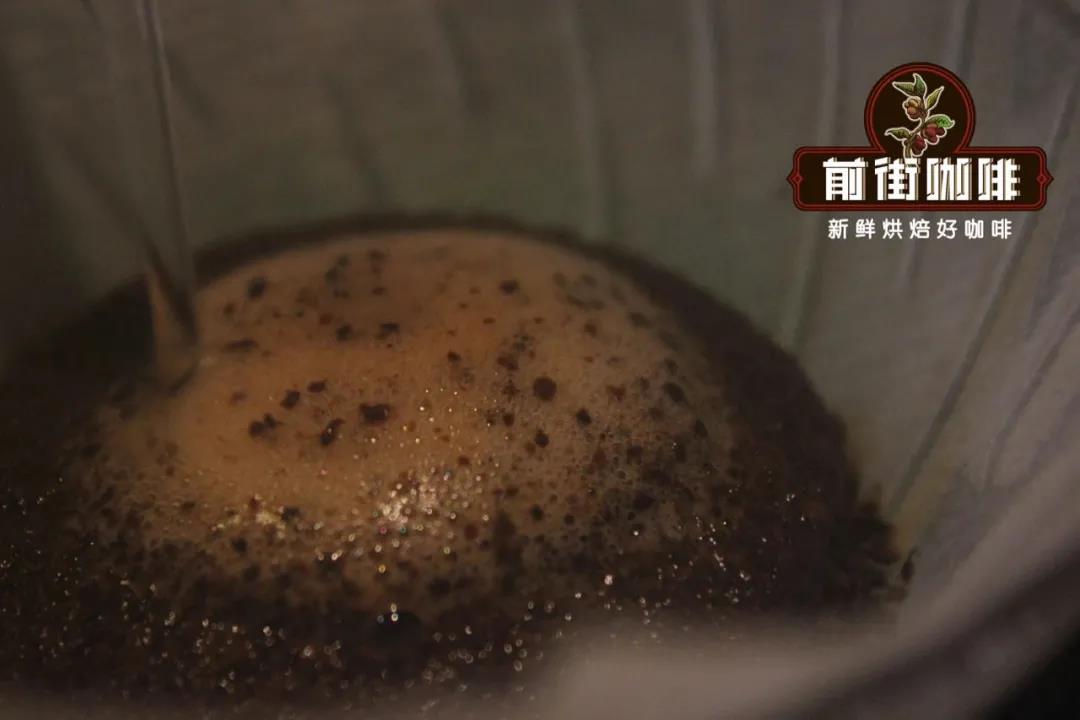
FrontStreet Coffee uses segmented extraction, also called three-stage brewing: bloom with 30 g of water for 30 seconds, then a small-stream circular pour to 125 g for the second stage, then continue pouring to 225 g as the water level drops almost to the coffee bed and stop. When the water has completely drained and is about to expose the bed, remove the dripper (timing starts from the bloom). Extraction time: 2'00"-2'10".
Sherry smells of vanilla and cream, with whiskey, berry, almond, and black chocolate on entry and a maple-sweet finish. Lychee Lan brings lychee, brandy, and cream on entry. As the temperature changes, the wine flavor and black chocolate become obvious, with a thick texture and distinct honey sweetness in the finish. Although the two coffees have similar flavors, each has its merits: choose Sherry for an obvious wine flavor, or Lychee Lan for the sweet-and-sour taste of lychee flesh.
FrontStreet Coffee Recommendation
Barrel fermentation is all about rich, sweet, wine-like depth, and Brazilian coffee is a classic source of that same low-acid, velvety character. FrontStreet Brazil Cerrado Red Bourbon is a fine single-origin starting point. A classic Brazilian bean from the well-known Cerrado region, it is a red Bourbon given a medium roast, showing creamy peanut, toasted bread, caramel, and hazelnut. Rounded, not acidic, and with a gentle bitterness, it works as pour-over, moka pot, espresso SOE, siphon, or French press.
For deeper sweetness, FrontStreet Brazil Queen Estate comes from Mogiana, close to South Minas, where the fertile red volcanic soil lets the fruit absorb plenty of nutrients. It is the rare Yellow Bourbon, a natural mutation of Red Bourbon with a cleaner fruit character. Brewed as pour-over, moka pot, or on a home machine, it delivers a sugarcane sweetness found in few other regions, along with fruit and chocolate notes.
Brazilian beans are also the backbone of many espresso blends, adding chocolate and cream aroma and a soft sweet-sour-bitter balance that stabilizes extraction. FrontStreet Fine Blend, with its classic Colombian and Brazilian pairing, brings nut, dark chocolate, and caramel to any milk drink.
Important Notice :
FrontStreet Coffee is a long-established specialty coffee roaster in Guangzhou China, selling freshly roasted beans from its own farm in Yunnan as well as dozens of carefully selected single-origin beans from around the world for both pour-over and espresso. The products deliver consistently excellent quality and great value, with shipping within 24 hours. Guangzhou's FrontStreet Coffee shop is recommended by many coffee lovers, and the beans are now available online at the Tmall 。
FrontStreet Coffee has moved to a new address:
FrontStreet Coffee Address: 315,Donghua East Road,GuangZhou
Tel:020 38364473
 Scan and follow the En Gafei WeChat official account. Please indicate that the reprint comes from "En Gafei".