Brazil's South Minas & Cerrado: Premium Coffee Regions and Brewing Guide for Pulped Natural Beans
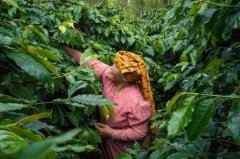
The higher the altitude at which coffee grows, the denser and harder the beans become, and the wide day-night temperature swings found at elevation allow more flavor compounds to form. Brazil, by contrast, sits at relatively low altitudes, its terrain flat and monotonous, with few microclimates, and traditionally relies on sun-drying. That combination produces Brazil's distinctive "soft bean" character. After cupping beans from several Brazilian regions, FrontStreet Coffee finds that Brazilian coffee has low acidity, a medium nuttiness, chocolate-like sweetness and a rich, mellow body.
Brazilian Coffee Cultivation History
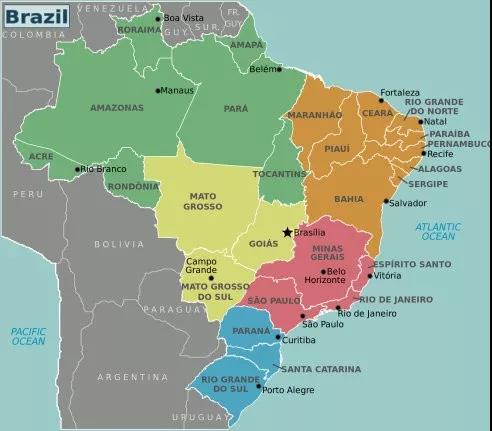
Coffee reached Brazil from French Guiana in the 1720s. Francisco de Mello Palheta, a Portuguese captain serving in Brazil, won the affection of the governor's wife in Cayenne, then the capital of French Guiana, and managed to carry coffee seeds into Brazil. The plant adapted quickly, spreading from the north to the southeastern state of Sao Paulo and the southern state of Parana. The latitude there is a little higher and winter frosts occur, causing serious losses for coffee farmers.
From 1970 to 1980, Brazilian farmers opened up the warmer northern parts of Sao Paulo state, along with Minas Gerais and Bahia. These regions have warm winters with no frost, and today Minas Gerais has become one of Brazil's main specialty coffee regions.
Before 1990, the Brazilian government regulated the coffee industry strictly, combining heavy-handed intervention with price supports. The state consistently guaranteed farmers a minimum price, which led to overproduction.
Since 1990, with the market opened up, the original "Brazilian Coffee Institute" (IBC) was replaced by a non-investment state administrative body, the National Economic Association. This association pursued a policy of non-interference, letting producers and exporters negotiate directly. Export activity is supervised by government legislation, and the relevant departments register legitimate exporters. From three hundred years ago to today, coffee has become a mainstay of Brazil's economy, and Brazil has become the world's largest coffee producer.
Brazilian Coffee Growing Regions
Brazil's main coffee-producing regions are Minas Gerais, Sao Paulo, Bahia and Espirito Santo. Together these four account for 90% of the country's exports. Mogiana, which we see so often, comes from Sao Paulo. In Minas Gerais, Cerrado and Sul de Minas, along with the Minas province, sit at higher altitudes and produce more specialty Brazilian beans.
The size of Brazil's coffee crop depends on whether Minas has a bountiful or a poor harvest, and Minas's harvest in turn depends on Sul de Minas, Cerrado and Mogiana. Brazilian Arabica is grown mainly in southern Minas Gerais (Sul de Minas) and the central Cerrado. Arabica production in Minas accounts for 66.7% of Brazil's Arabica output.
Sul de Minas lies above 1,100 meters, with rolling foothills, rich terrain, distinct wet and dry seasons, a large day-night temperature difference and abundant microclimates. It is well suited to flavorful Bourbon and Yellow Bourbon varieties, and it has naturally become a leading region for specialty coffee.
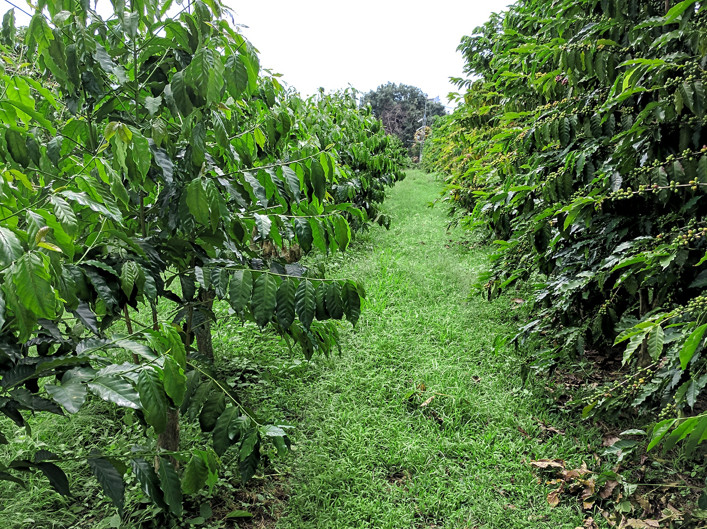
Speaking of Cerrado, we have to mention the Cerrado savanna, which holds some of the most complex species on earth. Yet when it comes to Cerrado coffee, not every bean grown on the savanna earns the name. Only coffee grown between 1,100 and 1,300 meters - the true essence of the Cerrado savanna - can be called Cerrado coffee. Those areas have high altitudes and fertile soil. FrontStreet Coffee finds the beans from this region sweet, full-bodied and free of earthy flavors.
The Mogiana region sits very close to southern Minas. Coffee grows there among shrubs, grasslands and other vegetation. Many farming families work the land, some running traditional large-scale farms and others small modern operations. Modern technology combined with mountain coffee culture produces the highest-quality green beans. Through cupping, FrontStreet Coffee has found that coffee from this region carries a sucrose-like sweetness.
The Impact of COVID-19 on Brazilian Coffee
Brazil's coffee consumption grows by about 5% a year. Per capita consumption has already surpassed that of the United States, making Brazil the world's largest coffee-consuming country. With the largest production in the world, any disruption to its crop directly ripples through the global market.
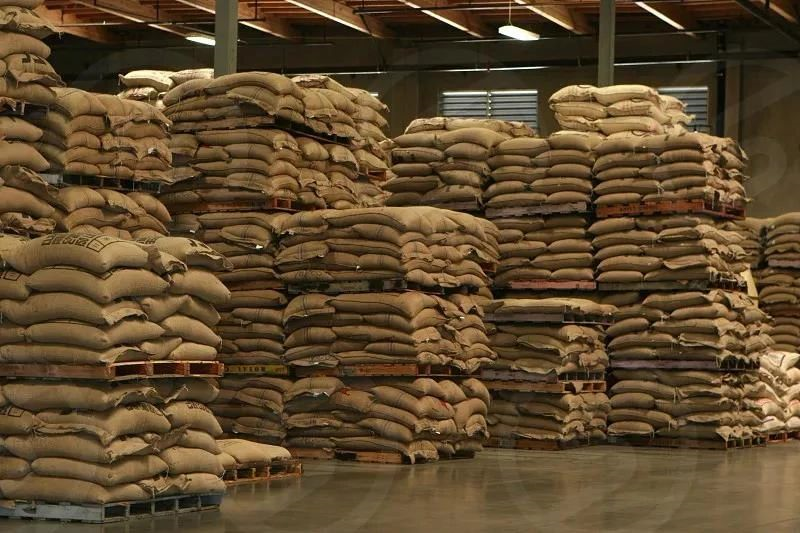
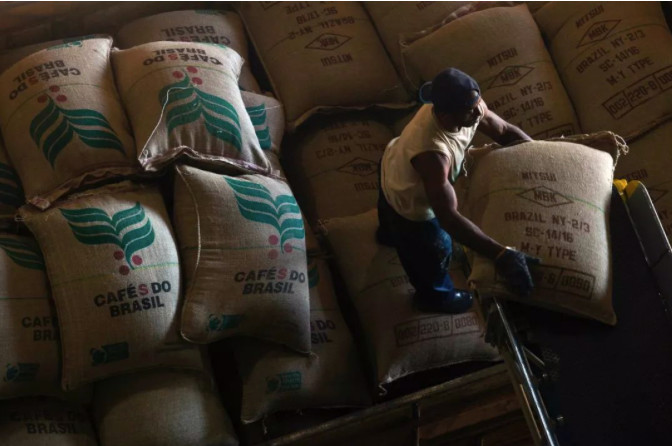
According to the latest news from Coffee Finance Network, as reported by Bloomberg, Brazil's domestic coffee warehouses are almost full, with a backlog unprecedented in history. Trucks loaded with beans from producing regions queue for days outside warehouse entrances before they can unload. Because spot prices are currently high, farmers have already sold a large portion of this year's crop, an estimated 60%, higher than the usual 40%-plus. At the same time, reduced demand and supply-chain disruption from the COVID-19 pandemic have left large quantities of beans sitting in storage. A local Brazilian agricultural consulting firm said unloading takes 6-7 days, and beans destined for cooperatives in southern Minas Gerais are now being placed in outdoor silos to meet demand. Because of the long waits, truck drivers charge double to transport coffee beans.
Brazilian Coffee Varieties
Brazil currently focuses on Red Bourbon, Yellow Bourbon, Mundo Novo and Catuai as its main varieties.
Bourbon
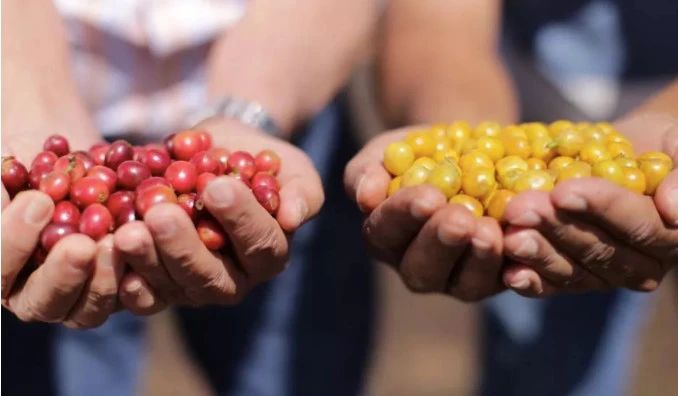
Coffee was first cultivated on Reunion Island, which was known as Bourbon Island before 1789. The Bourbon variety is a subspecies that arose from a mutation of Typica; together with Typica, it belongs to the oldest coffee varieties still in existence. Its fruit ripens to a bright red. Generally, after Red Bourbon trees flower and set fruit, the fruit's color moves through green, light yellow, light orange, ripe red and finally a darker ripe red - which is why some people call it Red Bourbon. In fact, Red Bourbon is what we normally mean by Bourbon. Grown at high altitude, Bourbon usually has a better aroma and brighter acidity, sometimes even wine-like flavors. Put simply, Bourbon is a coffee variety on a branch of the Arabica family, generally bearing red fruit and called Red Bourbon. Yellow Bourbon and Orange Bourbon also exist; Yellow Bourbon yields less but offers better quality.
Mundo Novo
Mundo Novo is the result of a natural hybridization between Bourbon and Typica, first discovered in 1943 in Sao Miguel Arcanjo, Sao Paulo, Brazil. Mundo Novo was initially planted in the town of Mundo Novo, which is now Urupes.
Catuai
Catuai is a variety artificially hybridized from Caturra and Mundo Novo. It inherits Caturra's short stature, needing no shade, which makes it easy to grow and convenient to harvest, and it withstands natural disasters better than Mundo Novo. It has good acidity in the cup. Catuai generally comes in two types: red fruit and yellow fruit.
Brazil's Innovative Pulped Natural Processing Method
Before 1990, Brazil used the rough dry method almost exclusively, which made Brazilian beans prone to woody or earthy flavors: the fruit had to sit in the sun for two to three weeks, and rain or damp could easily produce a musty taste. To break its dependence on the weather, in 1990 Brazil drew on its relatively dry climate and developed the pulped natural method to shorten processing time.
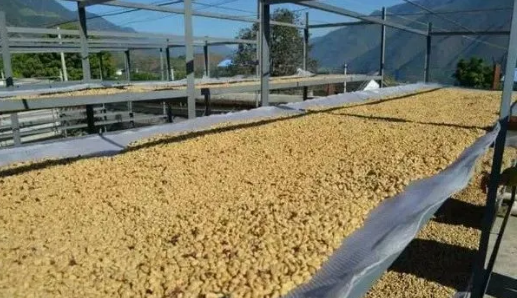
Pulped natural processing removes the skin and pulp of the coffee cherry, then lets the producer control the fermentation of the parchment coffee still coated in mucilage. Traditional dry processing sun-dries the fruit with skin and pulp intact, making the mucilage's fermentation impossible to monitor. Pulped natural sits between dry and wet processing, but it skips the "ferment in tanks, rinse with clean water" step of wet processing and instead sun-dries the beans directly. The methods look similar, yet without the fermentation step the flavors come out completely different. When the skin and pulp are removed, ripe pulp slips off easily while the skin of unripe green cherries is hard to strip - which allows a second screening to filter out unripe fruit and unify the maturity of the cherries. Compared with dry processing, FrontStreet Coffee finds that beans handled this way improve in cleanliness and maturity, bringing more uniform flavor.
The arrival of the pulped natural method does not mean every Brazilian region adopted it. Cerrado, with its lower humidity, still mainly uses dry processing, and there pulped natural plays a supporting role. Even so, the Red Bourbon from Cerrado that FrontStreet Coffee carries is processed using the pulped natural method.
Brazilian Coffee Bean Grading System
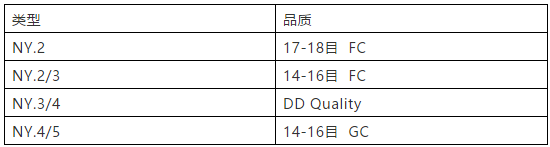
You will often see something like this on a bag of Brazilian coffee: Brazil NY.2 SC - 17/18 FC. This is Brazil's unique three-part grading method, not adopted elsewhere because the producing area is so vast and the beans so numerous. To blend flavors for export, these beans are often mixed, which leads to inconsistent quality and requires "cupping" to grade them. That way, consumers can judge the quality at a glance from the green bean information.
1. Grading by Defect Rate
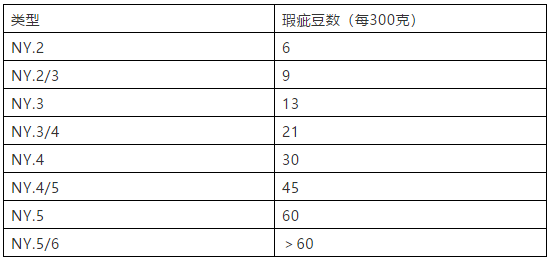
Brazilian coffee is evaluated by a "deduction method," graded on the number of defective beans found in every 300 grams of the main beans. There are seven levels, from No. 2 to No. 8. If deductions fall below 4, the lot can be classified as No. 2. Beans with no defects would certainly deserve the name No. 1, but that is rare and cannot be supplied consistently, so Brazil sets No. 2 as the highest grade rather than No. 1.
2. Grading by Bean Size
Screen size is measured with a mesh based on 1/64 inch as the standard. Screen sizes typically run from 14 to 20. Note that a screen number refers to the short side of the bean, that is, its width. The largest screen size for Brazilian beans is 19, but supply is limited, so 17/18 screen is considered the highest grade.
3. Cupping Quality
Fine cup, fine, good cup, fair cup, poor cup, bad cup. FC (Fine Cup) and GC (Good Cup) are the most common. Many companies or platforms also add the processing method (dry, washed or honey) and the estate.

4. Flavor Grade
Brazilian beans are grouped into five flavor grades: Strictly Soft (very smooth), Soft (smooth), Softish (slightly smooth), Hardish (harsh) and Rioy (an iodine-like medicinal taste). Brazil-Cerrado beans were cupped by the local coffee association and rated Strictly Soft Fine Cup, the best grade. In short, Brazil NY.2SC - 17/18 FC Cerrado means country: Brazil, defect grade: 2, green bean screen: 17-18, cup quality: fine, origin: Cerrado. This is also the Brazilian formula bean FrontStreet Coffee has long used in its FrontStreet espresso blend.
FrontStreet Coffee will now run green bean analysis, roasting, cupping and brewing comparisons on two Brazilian coffees currently on its shelves: Yellow Bourbon from the Mogiana Queen Farm and Red Bourbon from Cerrado.
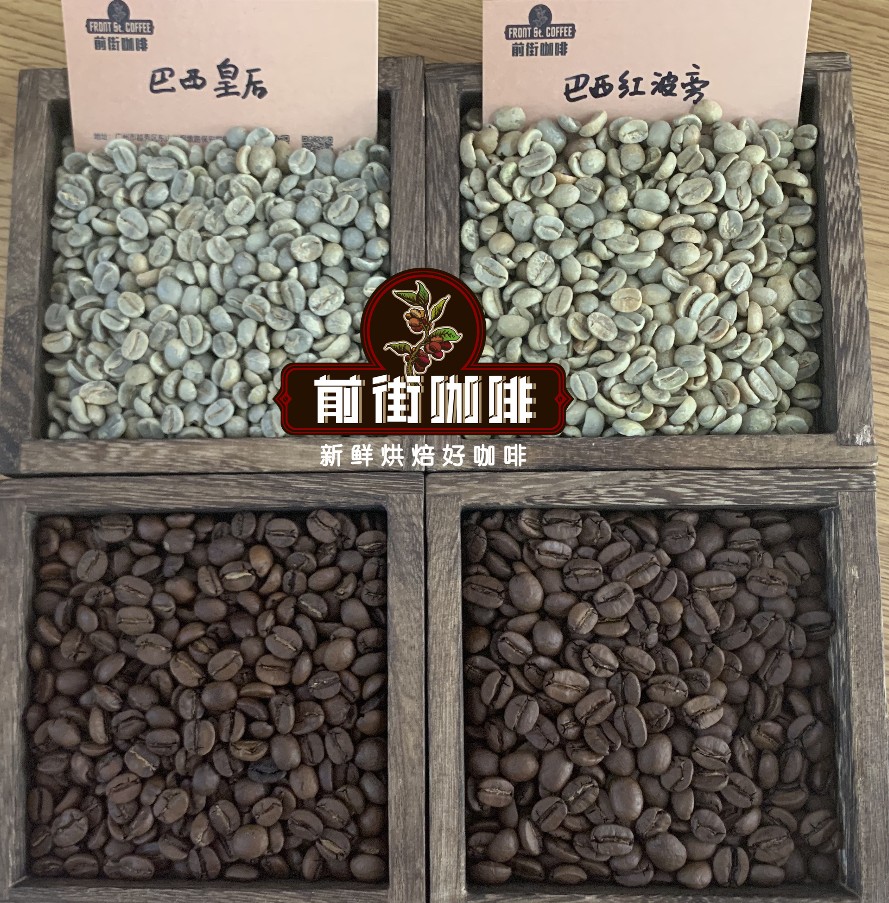
FrontStreet Coffee Green Bean Analysis
Brazilian coffee generally grows at altitudes of 1,000-1,300 meters. FrontStreet Coffee notes that its density is relatively low, its moisture content moderate, its bean texture soft, and the thickness from surface to core thin, making it unsuitable for roasting at too high a temperature, which would bring out bitter, burnt flavors. We use a medium-heat approach when dropping beans, holding the heat through the dehydration stage, and making fine adjustments after first crack as the temperature rises to promote more complete caramelization. This FrontStreet Brazilian semi-washed bean heats slowly after first crack and can be removed from the roaster just before second crack.
FrontStreet Coffee Roasting Experience
FrontStreet Brazilian Queen Farm Yellow Bourbon roasting suggestion: Yangjia 800N, bean load 550g. Preheat to 200°C and load the beans, adjust heat to 150, damper open to 3. Return temperature at 1'30", maintain heat, turn yellow at 5'10" as the grassy smell disappears and the dehydration stage begins, reduce heat to 125, open damper to 3.5. Dehydration completes at 8'20", with wrinkles and black spots on the bean surface and the toast smell turning to coffee aroma as the prelude to first crack. At 178°C, reduce heat to 80 and listen for first crack. First crack starts at 9'14"; fully open the damper to 5. Development time after first crack 3'00"; remove at 201°C.
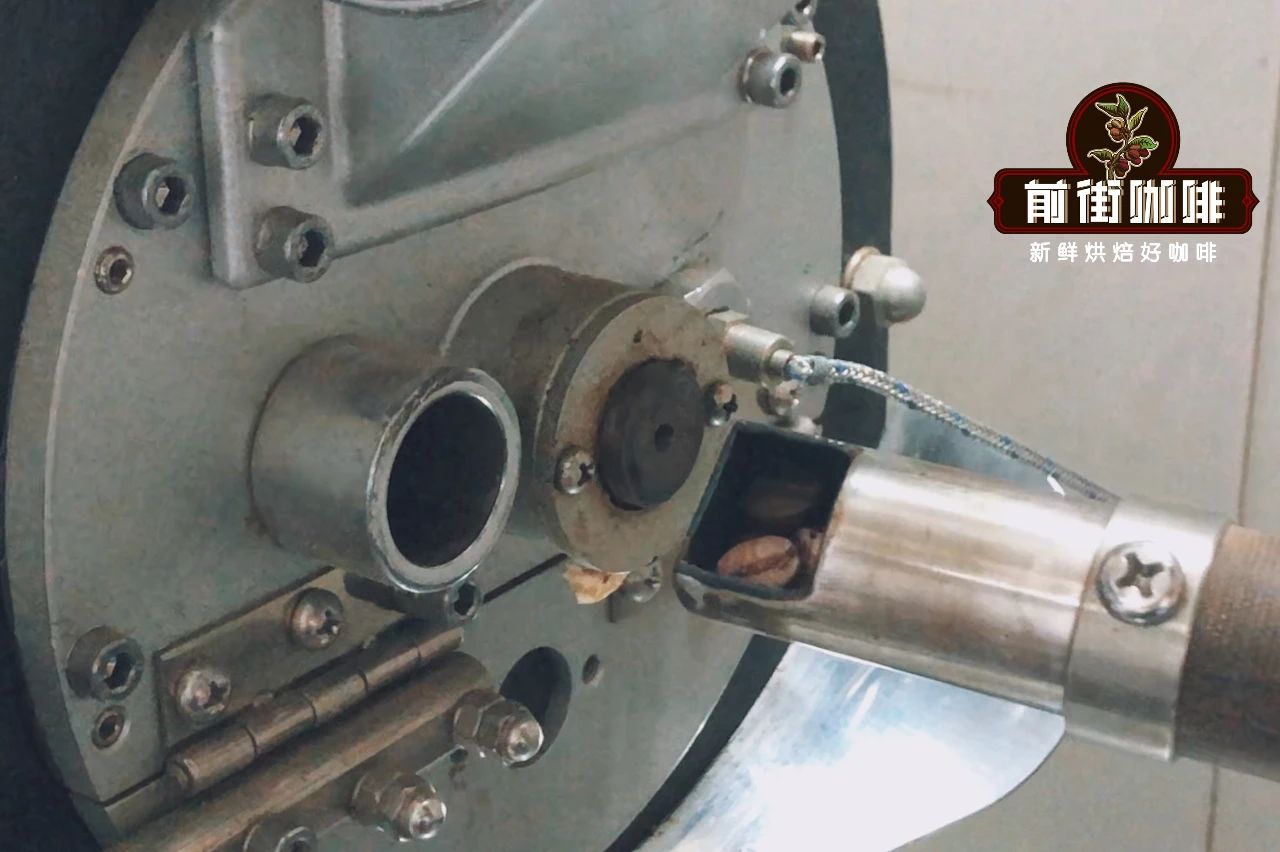
FrontStreet Brazilian Red Bourbon roasting suggestion: Yangjia 800N, bean load 550g. Preheat the roaster to 200°C and load the beans, adjust heat to 160, damper open to 3. Return temperature at 1'30", maintain heat, turn yellow at 5'00" as the grassy smell disappears and the dehydration stage begins, reduce heat to 130, open damper to 4. At 168°C, reduce heat again to 100. Dehydration completes at 8'00", with wrinkles and black spots on the bean surface and the toast smell turning to coffee aroma as the prelude to first crack. Listen for first crack. First crack starts at 8'50"; fully open the damper to 5. Development time after first crack 3 minutes 10 seconds; reduce heat to 50 at 190°C, reduce again to 30 at 194°C, and remove at approximately 200°C.
FrontStreet Coffee Cupping Report
FrontStreet Coffee cups 8-24 hours after roasting sample beans. Its barista typically uses 200 ml ceramic cupping bowls marked with 150 ml and 200 ml measurement lines. The water follows SCAA standards with a TDS of around 150 ppm; too low a TDS easily causes over-extraction, while too high a TDS affects taste and can lead to under-extraction. Cupping water temperature is 94°C. Cupping grind size follows SCAA cupping standards, controlled to a 70-75% passing rate through a #20 standard sieve (0.85 mm). Ratio: 11g of coffee powder to 200 ml of hot water, i.e. 1:18.18, so the extraction concentration falls within the golden cup range of 1.15%-1.35%. Steeping time: 4 minutes.
FrontStreet Brazilian Queen Farm Cupping
Dry aroma: Roasted nuts, cinnamon
Wet aroma: Roasted nuts, peanuts
Flavor: Roasted nuts, peanut butter, fermented fruits, sugarcane sweetness
FrontStreet Brazilian Red Bourbon Cupping
Dry aroma: Roasted hazelnuts, caramel
Wet aroma: Nuts, chocolate
Flavor: Nuts, peanuts, cream, chocolate, caramel
FrontStreet Coffee Brewing Experience
Brewing parameters: Kono dripper
Water temperature: 88°C
Coffee amount: 15g
Coffee-to-water ratio: 1:15
Grind size: Medium-fine grind (70-75% passing rate through a China-standard #20 sieve)
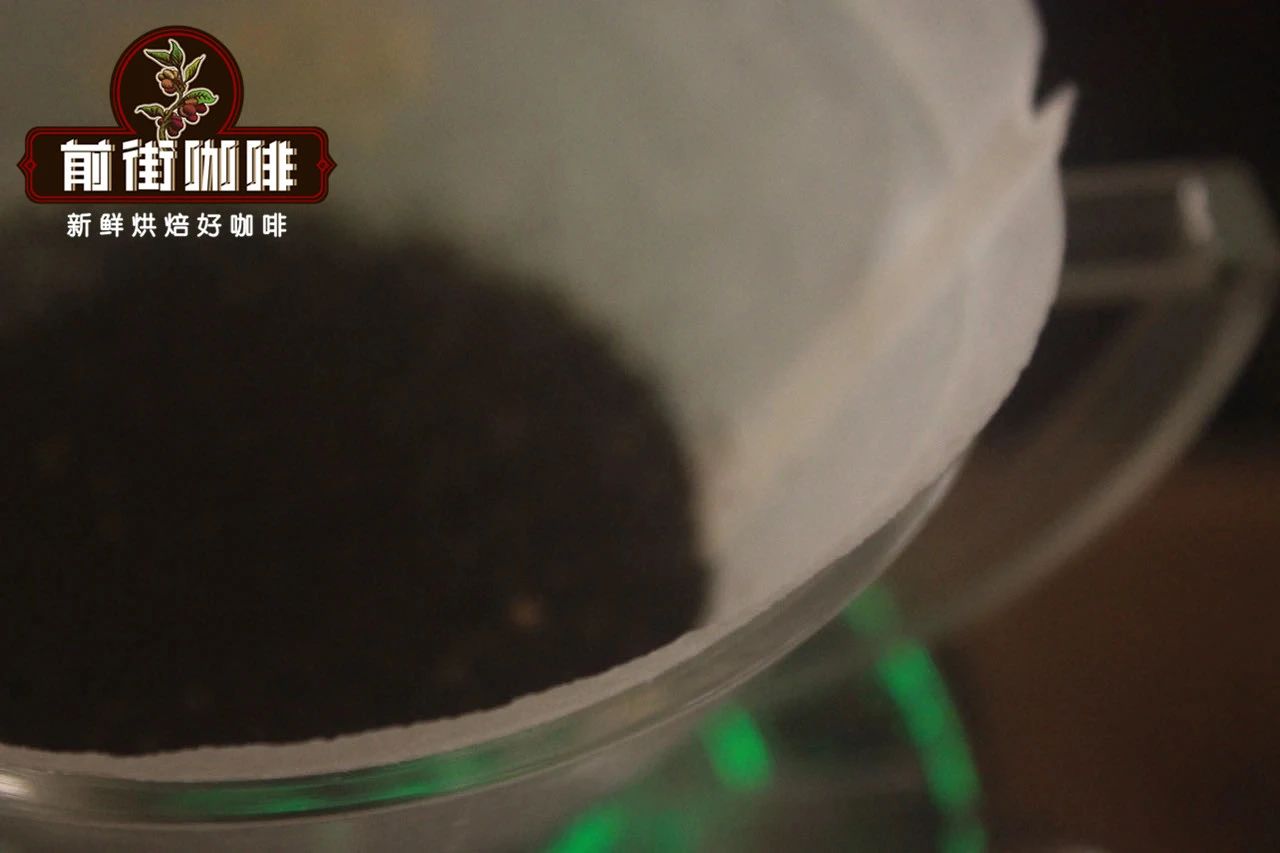
FrontStreet Coffee uses segmented extraction, also called three-stage brewing: use 30g of water for the bloom for 30 seconds, pour in a small circular motion to 125g for the first segment, continue pouring to 225g when the water level is about to expose the coffee bed, stop pouring, and remove the dripper when the water level is about to expose the bed again (counting from the start of the bloom). Extraction time is 2'05"-2'15".
FrontStreet Brazilian Queen Farm brewed flavor: the fresh sweetness of sugarcane juice, black tea, a mellow and smooth fruit sweetness, distinct nutty flavors, balanced and smooth acidity, a weak but clean bitterness, rich chocolate and nut aromas, a bright, refreshing taste and a smooth, delicate texture.
FrontStreet Brazilian Red Fruit brewed flavor: obvious sweetness on entry with a faint lemon aroma, rich nutty flavors, distinct dark chocolate in the aftertaste, and an overall rounded feel.
FrontStreet Coffee Recommendation
To taste Brazil's pulped natural method at its best, start with FrontStreet Coffee's Brazil Cerrado Red Bourbon. Cerrado is one of the country's best-known regions for high-quality beans, and this lot is a classic single-origin pulped natural. Roasted medium, it shows the rich aromas of creamy peanut, toast, caramel and hazelnut, with a rounded body, low acidity and a gentle touch of bitterness - and it works in a pour-over, moka pot, espresso SOE, siphon or French press.
If you want to explore the rare Yellow Bourbon that Brazil is famous for, FrontStreet Coffee's Brazil Queen Farm comes from Mogiana, near Sul de Minas, where fertile red volcanic soil feeds full, aromatic fruit. The Yellow Bourbon variety - a natural mutation of Red Bourbon - gives cleaner fruit, with the sugarcane sweetness, fruit and chocolate notes unique to this region, and it performs well as pour-over, moka pot or home espresso.
Important Notice :
FrontStreet Coffee is a long-established specialty coffee roaster in Guangzhou China, selling freshly roasted beans from its own farm in Yunnan as well as dozens of carefully selected single-origin beans from around the world for both pour-over and espresso. The products deliver consistently excellent quality and great value, with shipping within 24 hours. Guangzhou's FrontStreet Coffee shop is recommended by many coffee lovers, and the beans are now available online at the Tmall 。
FrontStreet Coffee has moved to a new address:
FrontStreet Coffee Address: 315,Donghua East Road,GuangZhou
Tel:020 38364473
 Scan and follow the En Gafei WeChat official account. Please indicate that the reprint comes from "En Gafei".