Why is Golden Mandheling more expensive than Mandheling coffee beans? How to brew Golden Mandheling coffee beans
If you ask FrontStreet Coffee to name a low-acid coffee, the whole team would point straight to Mandheling from Indonesia. Indonesian coffee carries a heavier body than coffee from Central and South America or Africa, and its acidity is far less pronounced. Having cupped beans from across Indonesia's producing regions, FrontStreet Coffee has found that they are defined by spicy, herbal aromatics, while lower-quality lots can drift into woody, earthy territory.
Indonesian Coffee Cultivation
At the end of the 17th century, the Dutch East India Company transplanted Arabica coffee from Arabia to Jakarta on the island of Java. Thanks to the suitable climate and fertile soil, Arabica quickly spread to Sumatra, northwest of Java, and to Sulawesi to the northeast. Around 1880, Java was hit by a devastating leaf rust outbreak that wiped out large numbers of Arabica trees. The Dutch therefore turned to the more disease-resistant Robusta, which stabilized Indonesia's coffee production.
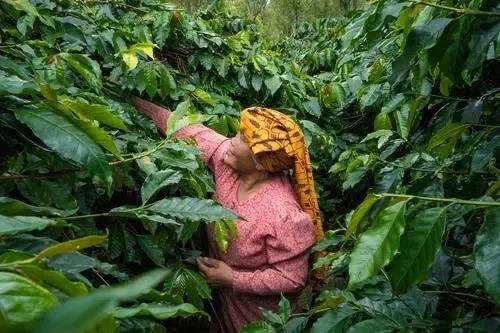
Robusta remains the backbone of Indonesian coffee today, accounting for 90% of the country's output and concentrated in low-altitude areas such as Java. The elegantly flavored Arabica beans, by contrast, grow in northern Sumatra, Sulawesi, and the higher elevations of Java. Although these specialty coffees represent only 10% of national production, the reputation of premium Arabica lots like Mandheling and Golden Mandheling has kept Indonesian coffee famous in specialty circles for decades.
Mandheling Is Actually the Name of an Indonesian Ethnic Group
Many customers ask FrontStreet Coffee whether Mandheling is a variety or a region. It is neither. Digging through historical records, FrontStreet Coffee found that during World War II, Japanese soldiers tasted a remarkably delicious coffee and asked the locals what it was called. The locals misunderstood the question and thought the soldiers were asking where they came from, so they answered that they were from the Mandheling ethnic group.
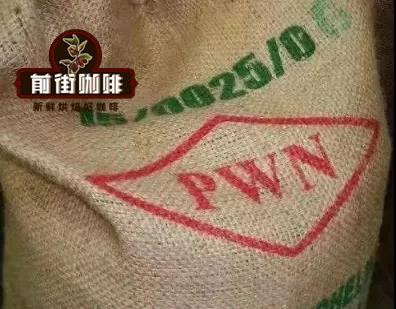
That beautiful misunderstanding gave the coffee its name. The local who answered the Japanese soldiers also spotted the business opportunity and went on to found what is now Pwani Coffee Company (PWN), one of the most famous names in the Indonesian coffee industry and the company that registered the Golden Mandheling trademark. The Golden Mandheling sold by FrontStreet Coffee comes directly from PWN.
Indonesian Specialty Coffee Producing Regions
As noted above, 90% of the coffee grown in Indonesia is Robusta, while the remaining 10% of Arabica comes mainly from the Lake Toba and Lintong region and the Gayo Mountains in Aceh on Sumatra, plus Java and Sulawesi. Indonesian regions typically have two harvests: the main crop around September-October and the fly crop in May-June.
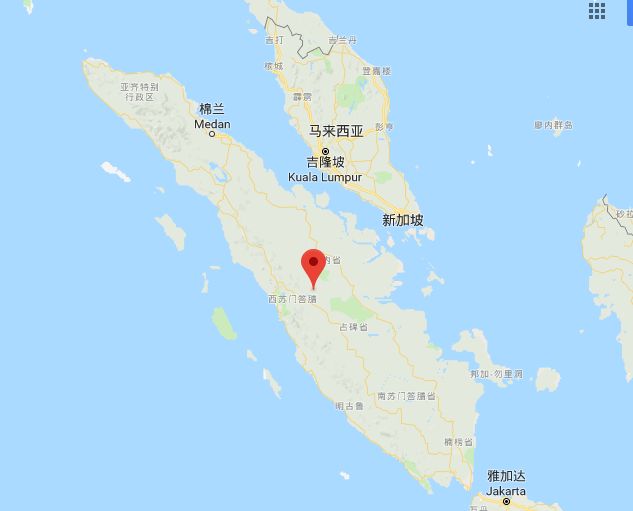
Lake Toba Lintong Region
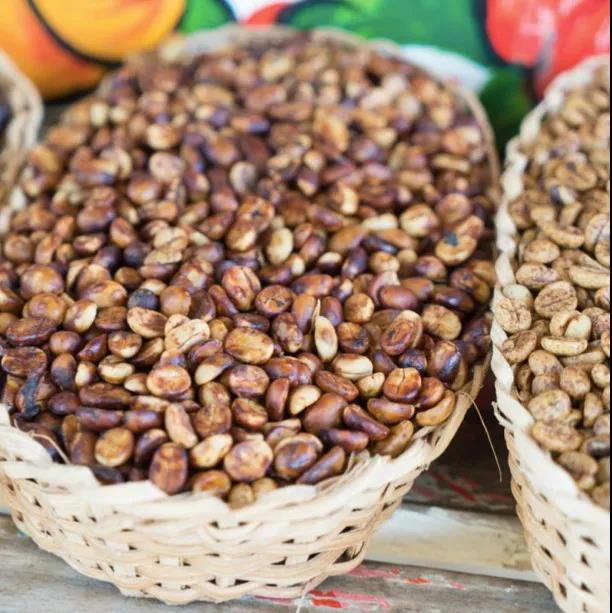
Lake Toba lies north of Medan, the provincial capital of Sumatra, and is a highland freshwater lake sitting at an average elevation of about 900m. Diamond-shaped, it stretches 100 km long and 30 km wide, covering 1,130 square kilometers, and the surrounding highlands average 1100-1600 meters in elevation, making it the world's largest volcanic lake. What is commonly called Mandheling refers to Typica and its variants grown in the mountains around Lake Toba, and Lintong is the most celebrated Mandheling producing area in that zone. Lintong Mandheling is the regular version of Mandheling and is processed with the conventional wet-hulled method, which produces its signature low acidity and heavy body. One side effect of wet-hulling is that when semi-hard, semi-soft moist beans have their parchment and mucilage stripped away, they are easily compressed and damaged, cracking open like goat hooves - the famous "goat hoof beans." These are not defects but one of the defining traits of Mandheling.
Aceh Gayo Mountain Region
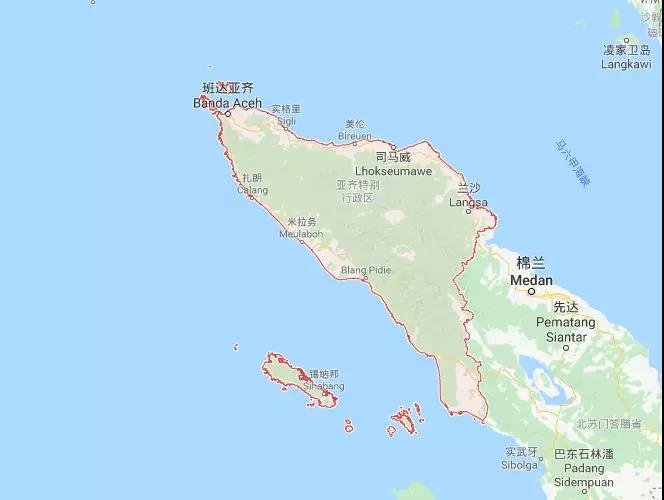
The Gayo Mountain region sits in Aceh Province at the northern tip of Sumatra. Coffee there is grown on the slopes around the town of Takegon and Lake Tawar, at altitudes averaging between 1,110 and 1,600 meters. It is cultivated by smallholder farmers under shade trees and processed with the wet-hulled method, yielding deep, lively, full-bodied flavors. Aceh itself is a fascinating and complex place; due to long-term political instability, it is not an area ordinary travelers typically visit.
Java Island Region
Java holds a pivotal place in coffee history. Unlike most Indonesian coffees grown on smallholder farms, Java's Arabica comes from large farms and plantations, many government operated, all processed with modern washed methods. The variety is S795, known locally as Jember, and is cultivated artificially. Java produces refined, aromatic coffee with relatively low acidity, a delicate palate, and good balance; its aroma and acidity outclass coffee from Sumatra and Sulawesi. The finest Java plantations include Blawan, Jambit, Kayumas, and Pankur, and Java Mocha is a blend of Java coffee with Yemen Mocha.
Sulawesi Island Region
Sulawesi was formerly known as Celebes and is one of the oldest islands in the archipelago, with exposed rock formations millions of years old. The coffee zones sit on yellow-red podzolic soils, which often have several layers of clay beneath the surface and are rich in iron. The most famous producing region is Toraja, in the highlands of South Sulawesi.
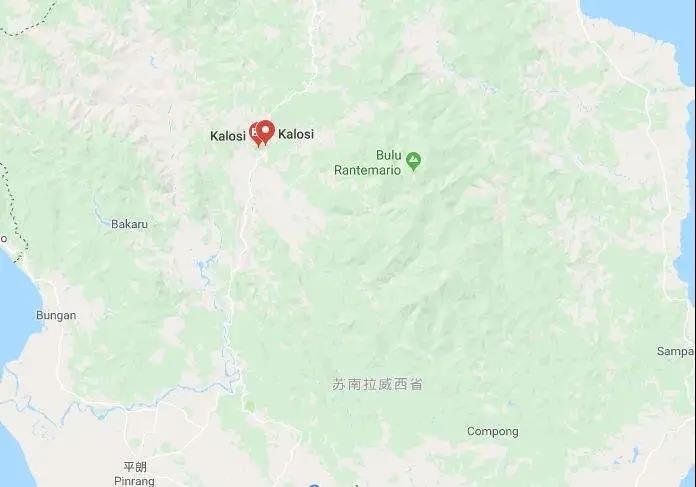
Toraja beans rank among the world's rarest specialty coffees, with an annual output of about 1,000 metric tons grown on the rugged slopes at roughly 1200m altitude in central and southwestern Sulawesi. Cultivation and harvesting are difficult, with an average yield of only 300 kilograms per hectare. Semi-washed processing is the norm on the island, which also produces plenty of Robusta that often lends its name to generic Sulawesi coffee. Specialty lots from Sulawesi Toraja show bright acidity, distinct layers, and rich caramel sweetness, with the heavy herbal and spicy notes held in check and a touch of florals on top.
Indonesian Mandheling Coffee Varieties
More than 20 Arabica varieties circulate in the Indonesian commercial market; common ones include Catuai, Catimor, Timor Hybrid, Typica, Robusta, Liberica, Ekselsa, and Sidikalong. The most famous is Typica, the original cultivated variety introduced by the Dutch. When leaf rust swept Indonesian coffee, much of the Typica disappeared in the late 1880s, and today Indonesian Typica is planted mainly in Sumatra and Sulawesi.
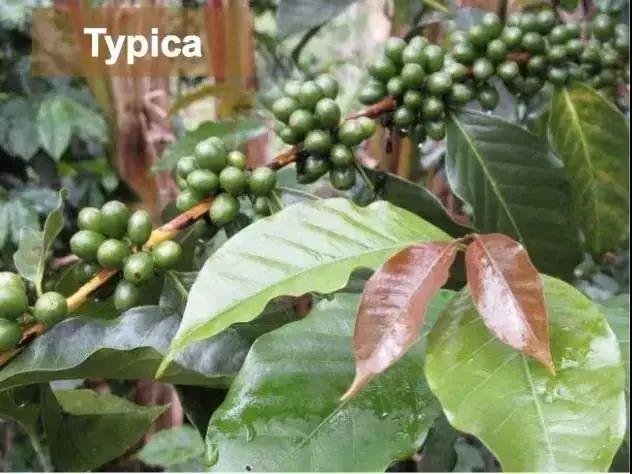
Typica performs beautifully in the cup and is recognized as a specialty variety, but yields are extremely low and the plant is susceptible to rust, demanding labor-intensive management. Typica coffee originates from southeastern Ethiopia and Sudan and is the most widely planted variety in the Western Hemisphere. The plant is relatively robust but intolerant of direct sun, and its young top leaves are reddish-bronze, earning it the nickname copper-top.
Wet-Hulling Processing
With predominantly rainy weather and frequent typhoons, Sumatra simply cannot offer the conditions needed for natural sun-drying, and the local economy cannot absorb the higher cost and water demands of full washed processing. Out of these constraints grew the distinctly local wet-hulled method (giling basah): during regular washed processing the coffee is sun-dried in parchment for 2-3 days until moisture reaches 20-24%, at which point the parchment is hulled off.
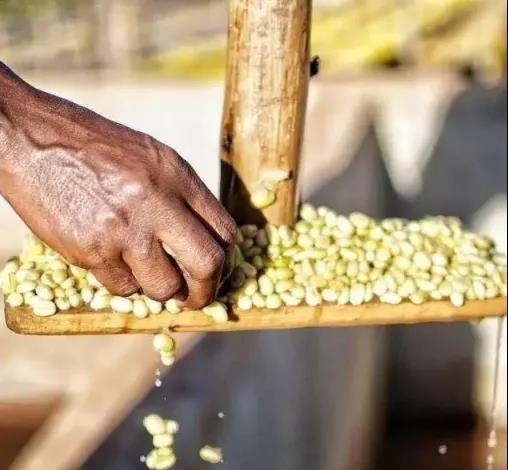
The breakneck speed of wet-hulling also drives up Mandheling's defect rate. Golden Mandheling effectively solves this problem. Its specification calls for screen size 18 and above, fewer than 3 defective beans per 300g sample of green coffee, the top G1 grade, a deep green color, and uniform flat-bean shape.
The Difference Between Mandheling and Golden Mandheling
At this point some readers will ask FrontStreet Coffee: what exactly separates Mandheling from Golden Mandheling? For trained palates, cupping the two side by side reveals a striking contrast. The sweetness, cleanliness, body, and wild spice character of Golden Mandheling all sit a class above standard G1 Mandheling, which is one reason it commands a much higher price.
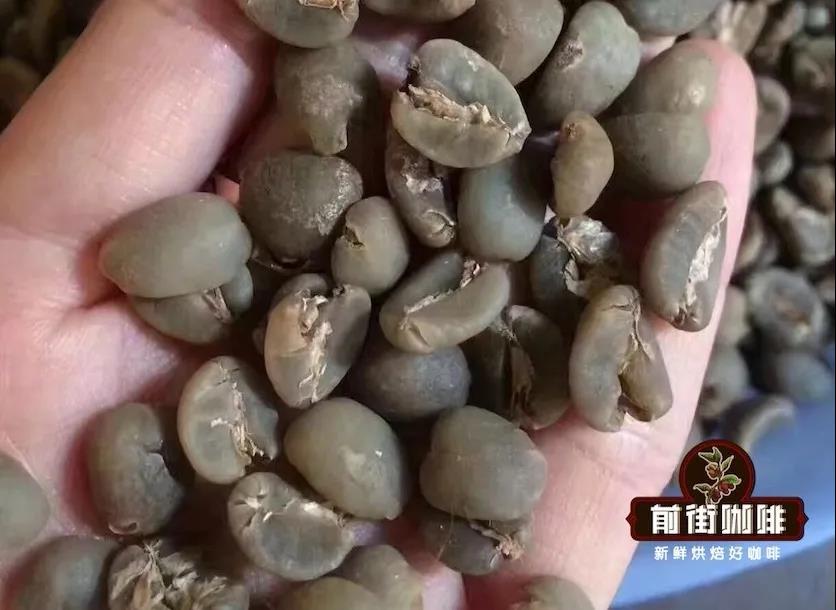
First, regular Mandheling must be screened layer by layer, which FrontStreet Coffee considers absolutely necessary: its defect probability is simply too high, and its looks do not help - sometimes even good beans look defective. Every time FrontStreet Coffee sorts Mandheling, a handful of suspect beans comes out, yet on closer inspection many of them are not actually defective; they are just that unattractive. Roasted, however, Mandheling transforms like a caterpillar into a butterfly, and the finished beans turn out full and quite pleasing to the eye.
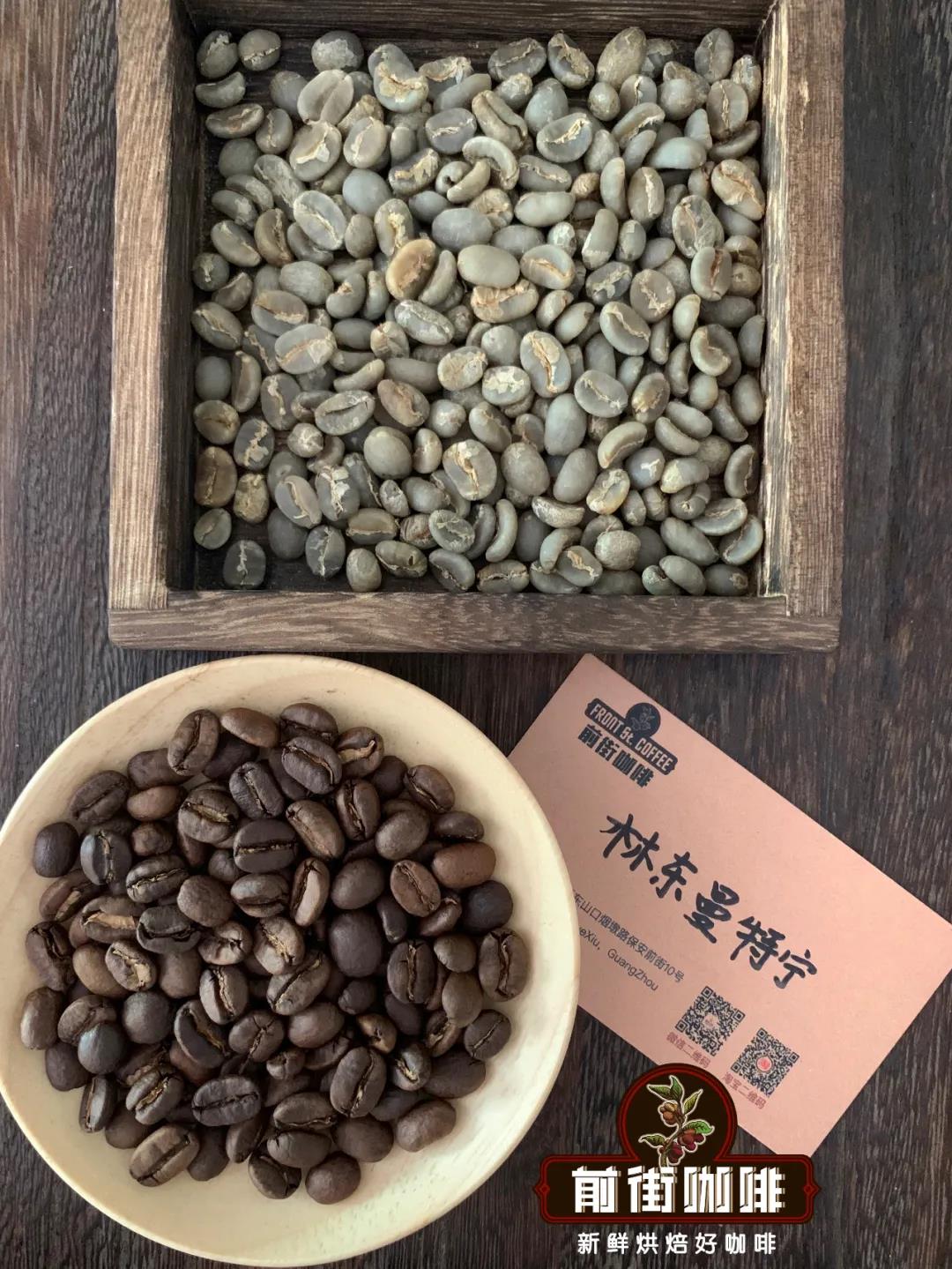
If Mandheling is a standout among Indonesian coffees, Golden Mandheling is the elite pick of the Mandheling crop - full, lustrous beans chosen through meticulous manual selection, truly a showstopper among coffees. In fact, to tackle Mandheling's high defect rate, the Japanese long ago instituted rigorous quality control with four rounds of manual sorting. Unfortunately, the name "Golden Mandheling" was trademarked by Indonesia's Pwani Coffee Company, making the label exclusive to PWN, which was also among the first companies to sell Mandheling to Japan.
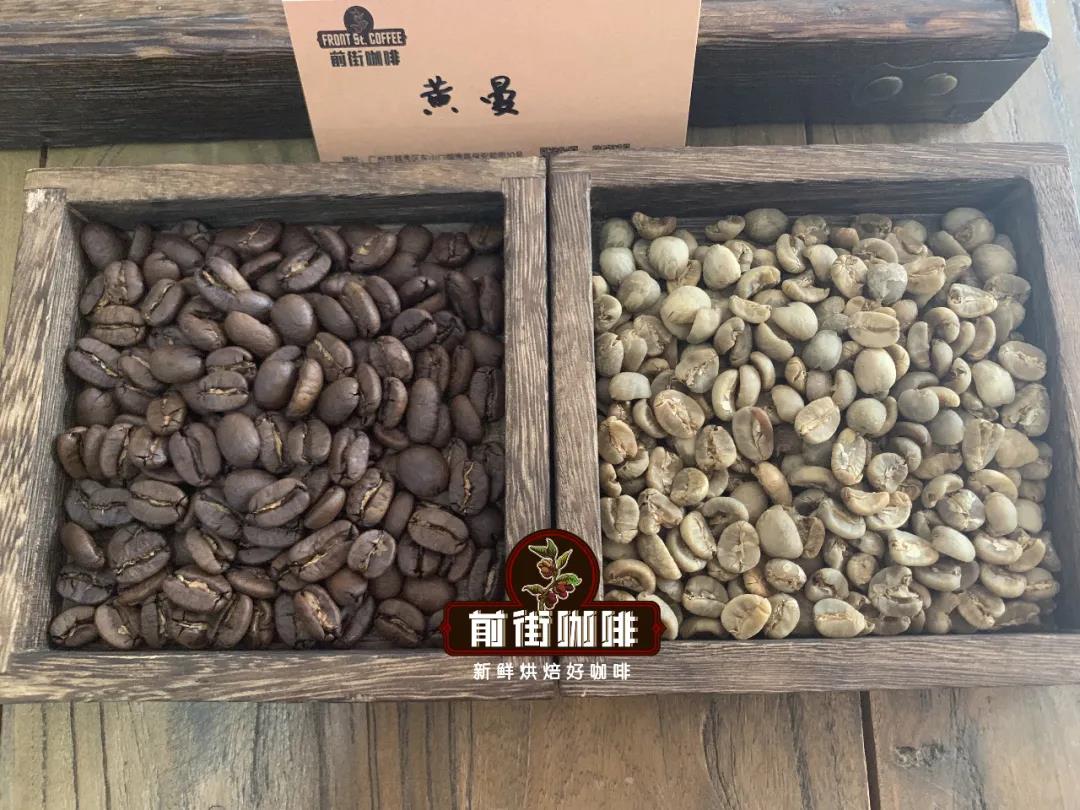
PWN's lot is the true Golden Mandheling in every sense. Beans stamped with the PWN brand go through three manual selections and one machine selection, so they are not only beautiful but remarkably uniform, and the roasted coffee tastes correspondingly cleaner. PWN has registered the Golden Mandheling trademark, meaning only coffee it produces can properly be called "Golden Mandheling." FrontStreet Coffee's Golden Mandheling comes from PWN. Golden Mandheling originates from Mandheling and is best understood as painstakingly selected Mandheling, which is exactly why FrontStreet Coffee chose to stock it. FrontStreet Coffee cups 300-500 groups of beans annually and keeps only the one-fifth with the most regionally representative flavors; Golden Mandheling is a flagship product of that selection, and FrontStreet Coffee believes it captures the Sumatran style superbly.
FrontStreet Coffee knows that listing the differences may still leave some readers unsure, so it took Lintong Mandheling and Gayo Mountain Golden Mandheling and compared them side by side as green beans, through roasting, cupping, and brewing, to see how the two actually perform.
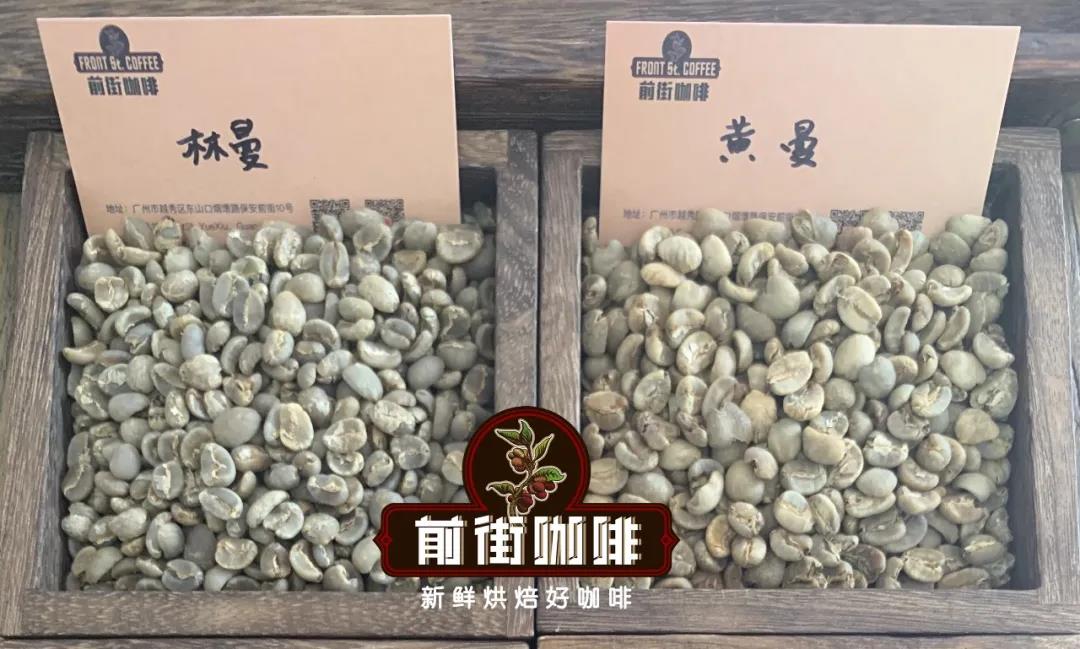
FrontStreet Coffee Green Bean Analysis
Lintong Mandheling is not screened intensively, so bean sizes vary, whereas Golden Mandheling is graded at screen size 18 and above, with fewer than 3 defective beans per 300g sample of green coffee, the top G1 grade, a deep green color, and uniform flat-bean shape. After such strict screening, Golden Mandheling loses the earthy impurities typical of regular Mandheling and tastes cleaner and brighter, with noticeably stronger sweetness.
FrontStreet Coffee Roasting Records
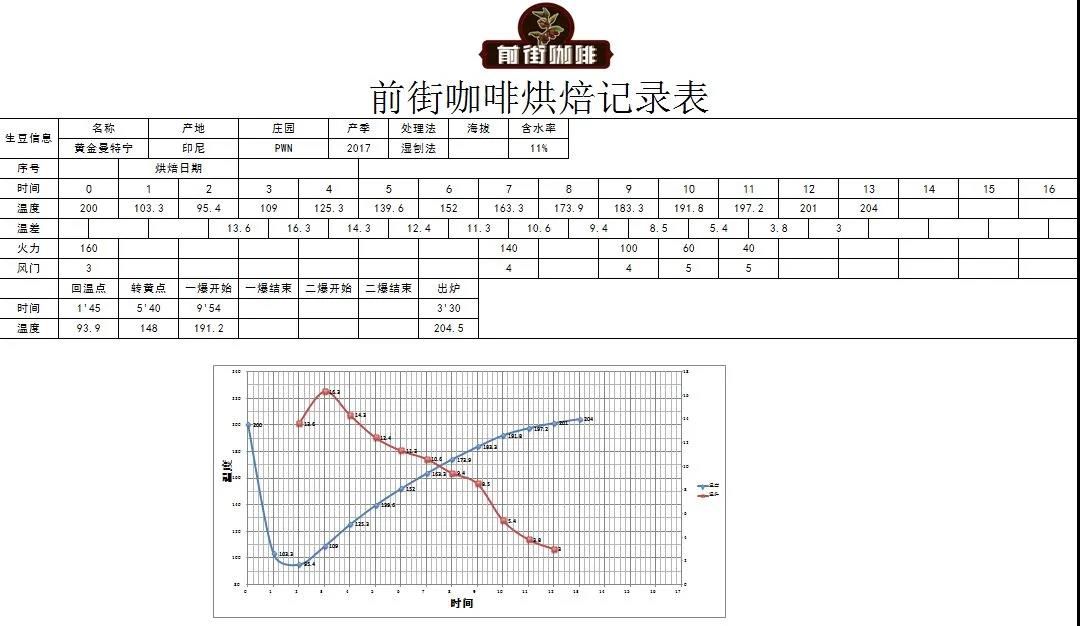
Golden Mandheling
Yangjia 800N, bean input 480g. Charge heat at 200°C with the damper open to 3. After 1 minute, reduce heat to 160°C, damper unchanged. At 5'40" and 148°C the bean surface turns yellow, the grassy smell fully disappears, and dehydration is complete; reduce heat to 140°C and set the damper to 4. At 9'40" wrinkles and black spots appear on the bean surface and the toast aroma clearly shifts toward coffee aroma - the prelude to first crack, so listen carefully from here. At 9'54" first crack begins; reduce heat to 60°C, open the damper to 5, and drop the beans at 204.5°C.
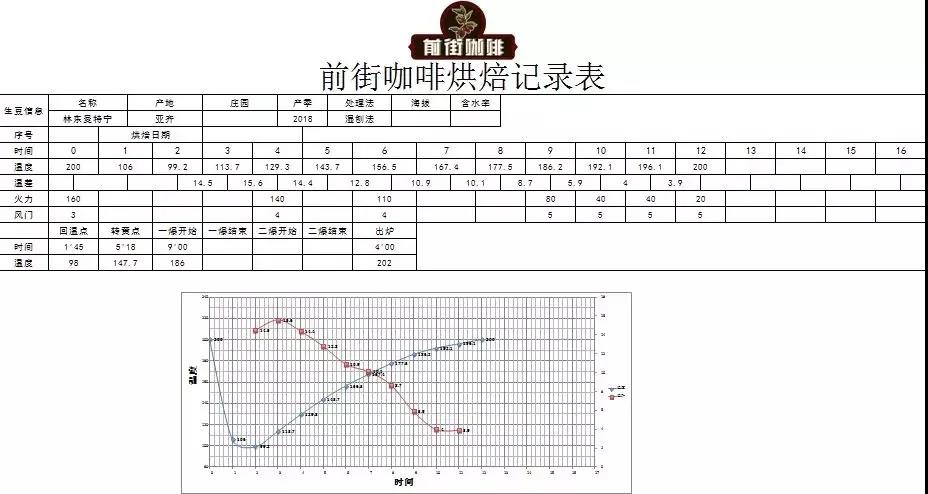
Lintong Mandheling
Yangjia 800N, bean input 480g. Charge heat at 200°C with the damper open to 3. After 1 minute, reduce heat to 160°C, damper unchanged. At 5'18" and 148°C the bean surface turns yellow, the grassy smell fully disappears, and dehydration is complete; reduce heat to 140°C and set the damper to 4. At 8'00" wrinkles and black spots appear on the bean surface and the toast aroma clearly shifts toward coffee aroma - the prelude to first crack, so listen carefully from here. At 9'00" first crack begins; reduce heat to 80°C, open the damper to 5, and drop the beans at 202°C.
FrontStreet Coffee Cupping Reports
FrontStreet Coffee cups its samples within 8-24 hours of roasting. The baristas use 200ml ceramic cupping bowls marked at the 150ml and 200ml lines. Following SCAA standards, the water TDS sits around 150ppm - TDS that is too low encourages over-extraction, while TDS that is too high muddies the taste and causes under-extraction. Cupping water temperature is 94°C, and the grind follows SCAA cupping standards, set so that 70%-75% passes through a #20 standard sieve (0.85mm). The ratio is 11g of coffee to 200ml of hot water - 1:18.18 - keeping extraction concentration within the 1.15%-1.35% golden cup range. Steeping time is 4 minutes.
Golden Mandheling Cupping Report
Dry Aroma: Pine, herbal
Wet Aroma: Herbal, nuts
Flavor: Toasted bread, nuts, pine, herbal

Lintong Mandheling Cupping Report
Dry Aroma: Herbal
Wet Aroma: Dark chocolate
Flavor: Herbal, dark chocolate, caramel
FrontStreet Coffee Brewing Tips
Brewing parameters - dripper: Kono
Water temperature: 88°C
Coffee: 15g
Coffee-to-water ratio: 1:15
Grind size: medium-fine (70-75% pass rate on a #20 sieve)
To foreground the body of these darker-roasted beans, FrontStreet Coffee brews them with a Kono dripper. The Kono's strength lies in its steeping action, which draws out more soluble material and builds a fuller mouthfeel. Because its ribs are few and sit low on the walls, the filter paper presses flush against the dripper, restricting airflow, slowing the drawdown, and extending the coffee-water contact time.
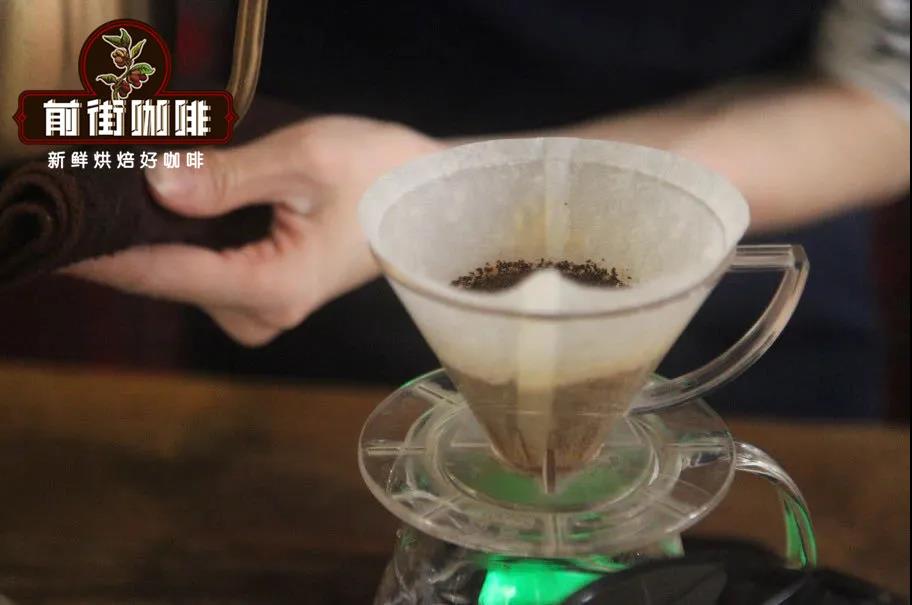
FrontStreet Coffee uses a segmented, three-pour method: start with 30g of water for a 30-second bloom, then pour in slow circles up to 125g for the first segment. Once the water level drops and the coffee bed is about to be exposed, pour again to 225g and stop. When the bed is about to break the surface once more, remove the dripper (timing starts from the bloom). Total extraction time: 2'05"-2'15".
Golden Mandheling: Multi-layered, full-bodied, and clean, with high balance, rich nut and caramel aromas, chocolate notes, and a persistent aftertaste.
Lintong Mandheling: Herbal and medicinal notes on entry, followed by dark chocolate and caramel with a sweet finish.
FrontStreet Coffee Recommendation
For a true taste of Sumatra's wild, full-bodied style, FrontStreet Coffee recommends its PWN Golden Mandheling: beans of screen size 18 and above with fewer than 3 defects per 300g, meeting the highest G1 grade, then sorted through three rounds of hand selection for exceptional cleanliness and pronounced sweetness. If you prefer a bolder, earthier cup, the FrontStreet Lintong Mandheling delivers rich aroma, a thick mouthfeel, and notes of clove, wood, and spice from the classic Lake Toba heartland, and it shines at a medium-dark roast.
Important Notice :
FrontStreet Coffee is a long-established specialty coffee roaster in Guangzhou China, selling freshly roasted beans from its own farm in Yunnan as well as dozens of carefully selected single-origin beans from around the world for both pour-over and espresso. The products deliver consistently excellent quality and great value, with shipping within 24 hours. Guangzhou's FrontStreet Coffee shop is recommended by many coffee lovers, and the beans are now available online at the Tmall 。
FrontStreet Coffee has moved to a new address:
FrontStreet Coffee Address: 315,Donghua East Road,GuangZhou
Tel:020 38364473
 Scan and follow the En Gafei WeChat official account. Please indicate that the reprint comes from "En Gafei".