Where Does the Panama Geisha Coffee Variety Come From? La Esmeralda Estate Launches New Season Natural Process Blue Label Geisha
Since 2004, when Panama's Gesha coffee first revealed its exquisite qualities and consistently achieved outstanding results, the world has recognized Panama as the "birthplace of extraordinary Gesha coffee," establishing it as the new leader in the specialty coffee industry. The rich floral notes, citrusy acidity, and honey-like sweetness of Panama Gesha have captivated many connoisseurs, including FrontStreet Coffee. The success of Panama Gesha owes much to the Peterson family's La Esmeralda Estate in the Boquete region.
Boquete
Panamanian coffee is mainly grown on the eastern and western slopes of the Baru Volcano in the western part of the country. Boquete lies on the eastern slope of Baru Volcano, characterized by cool, foggy conditions and mountainous geography that create unique microclimates. The cool climate and frequent fog help slow the maturation of the coffee cherries, much like the effects of high altitude. Coffee flavors from this region range from cocoa to fruit notes with subtle acidity.
La Esmeralda Estate
La Esmeralda Estate is located in Boquete. In 1964, American banker Rudolph Peterson retired and moved to Panama, purchasing the La Esmeralda Estate in Boquete, which initially focused on dairy farming. Later, his son Price resigned from his medical practice to help his father manage the farm. In 1987 they introduced Caturra and Catuai coffee varieties, and in 1994 they established a wet-processing plant, giving them their own processing facility. In 1996 they acquired the nearby Jaramillo Estate, which had superior geographical conditions and existing coffee varieties with excellent flavor, incorporating it into La Esmeralda Estate.
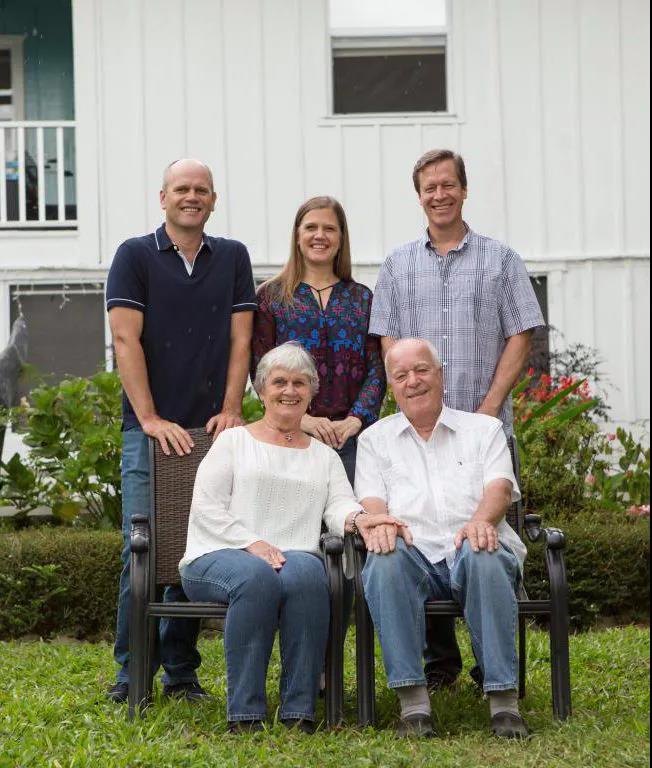
Initially the Peterson family sold coffee from both estates as a blend, but they always noticed a subtle floral and citrus aroma in these beans. This blended flavor somewhat resembled berry fragrance. In 2002 the owner's son believed this aroma came from coffee produced on one of the estates. Through cupping different varieties from various growing areas at different altitudes across both estates, they sought to identify the source of this distinctive aroma.
The Enchanting Aroma from Windbreak Trees in Harsh Conditions
Through cupping, the Peterson family discovered that the beans emitting this captivating aroma actually came from the windbreak area of Jaramillo Estate. The Peterson father and son had been drawn to Jaramillo precisely because of its existing coffee trees, which carried pleasant citrus and fruity aromas unlike typical Panamanian coffee. This was the highest-altitude area of the estate, approximately 1500-2000m, where the coffee trees grew tall with sparse leaves and produced low yields. The owner consequently used them as windbreaks to protect other high-yield coffee areas from strong winds.
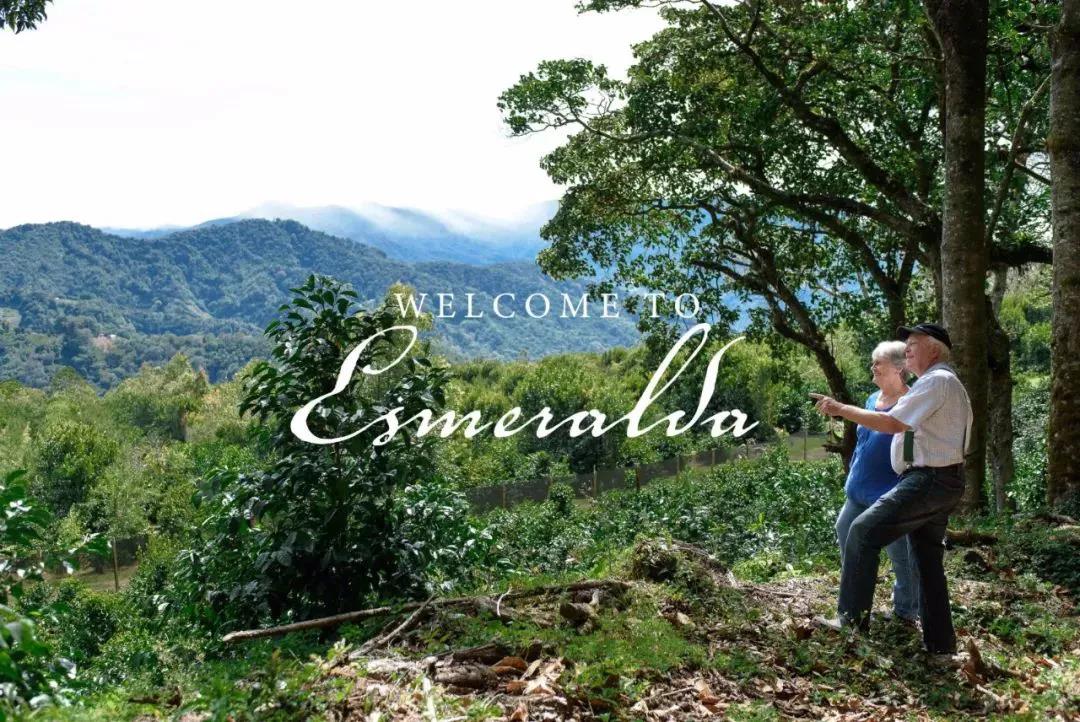
At the time, the owner did not know what variety of coffee tree was planted there. In such windy, low-temperature conditions ordinary coffee trees could not survive, yet this mysterious variety thrived. The cherries were also plumper than those of typical varieties and less likely to be blown off by the wind. Although the yield was only 25-30% of Caturra's, the floral and citrus aromas were captivating. Interestingly, when this variety was planted below 1400m, it lacked the floral and citrus characteristics and developed more bitter notes.
This Mysterious Variety is Now the Renowned Gesha
Gesha beans are elongated in shape with refreshing, pleasant flavors. From these two characteristics, Gesha indeed resembles Ethiopian coffee varieties more than Central and South American varieties. So when was Gesha introduced to Panama? It was discovered in the Gesha forest of Ethiopia in 1931. Afterward it was sent to the Coffee Research Institute in Kenya. In 1936 it was introduced to Uganda and Tanzania, in 1953 to Costa Rica, and around 1960 to Panama.
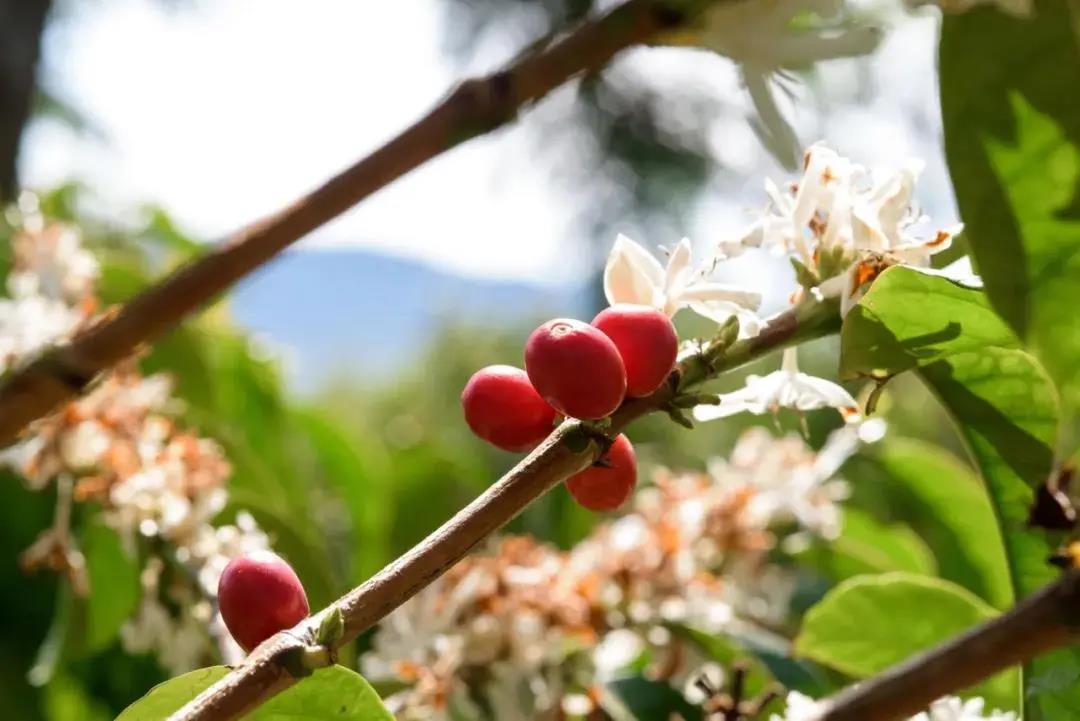
Although Gesha had strong disease resistance, its low yield led to it disappearing after being used for variety improvement. It was not rediscovered until the estate owner found it again in the windbreak area. Although the Petersons were not the ones who originally introduced the variety, they were certainly the "talent scouts" who recognized Gesha's potential. In 2004 the father and son separated the Gesha from this area and entered it in the 2004 BOP (Best of Panama) cupping competition. Its aroma and flavor captivated the judges, making it famous overnight and setting a record price of $21 per kilogram at the time.
La Esmeralda Estate Block Classification
La Esmeralda Estate carefully divides the areas where Gesha is grown, primarily into three main blocks: Jaramillo, Canas Verdes, and El Velo. Each block is further subdivided into smaller plots.
Jaramillo has an annual rainfall of 4000ml, with average daytime temperatures between 19-25°C and nighttime temperatures between 11-15°C. The average altitude is 1600-1700m. The Jaramillo block is subdivided into 5 smaller plots: Mario, Noria, Reina, Bosque, and Buenos Aires.
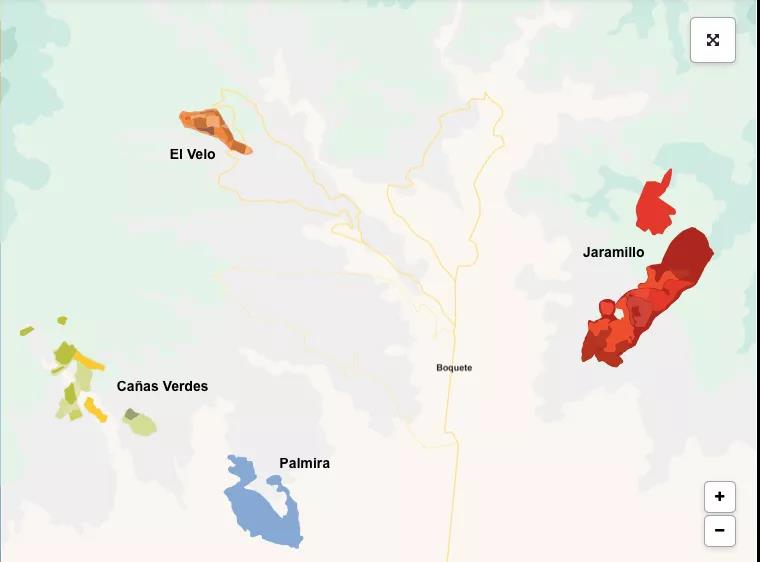
Canas Verdes has an annual rainfall of 3500ml, with average daytime temperatures between 16-23°C and nighttime temperatures between 10-15°C. The average altitude is 1600-1800m. Canas Verdes includes 9 smaller plots: Lino, Coronado, Fundador, León, Montaña, Trapiche, Chinta, Cabaña, and Tumaco.
El Velo is the most recently acquired block of La Esmeralda Estate, with an average altitude of 1700-1900m. In addition to Gesha and Catuai, this block also has small quantities of other exotic varieties such as Laurina, Pacamara, Mocha, and SL28. El Velo is divided into 7 smaller plots: Guabo, Portón, Durazno, Higuerón, Higo, Buena Vista, and Águila.
La Esmeralda Estate Gesha Classification
After years of experimentation, La Esmeralda Estate found that only Gesha grown above 1400 meters displays its refined characteristic flavors. La Esmeralda therefore classifies the Gesha grown on the estate into three grades, based mainly on growing altitude and supplemented by actual cupping results.
Esmeralda Special
Esmeralda Special is what we commonly know as the Red Label. It is selected from Gesha beans grown at altitudes of 1600-1800 meters, with cupping scores above 90 points, produced in the Jaramillo and Canas Verdes regions. Red Label batches may be processed using either washed or natural methods.
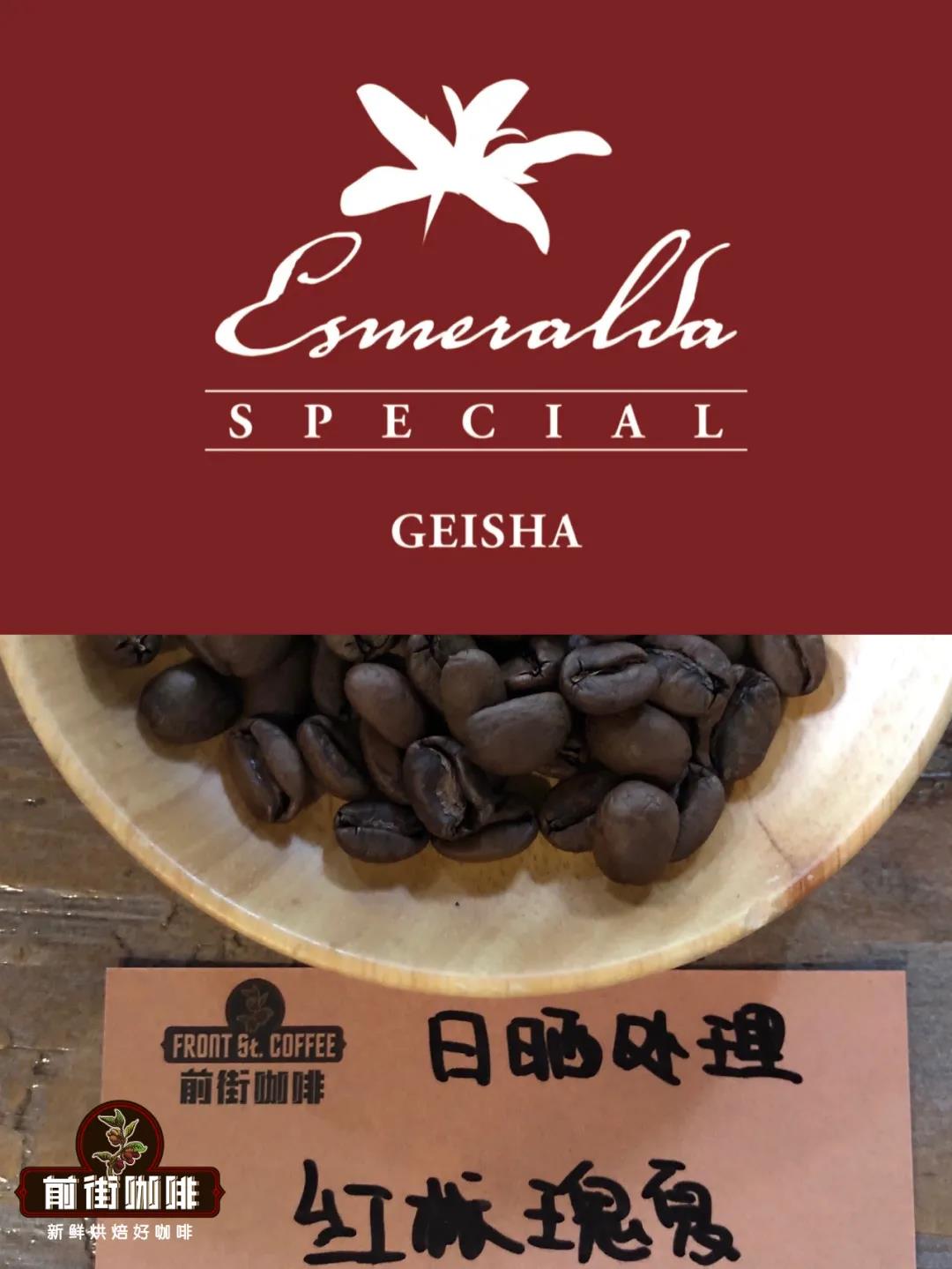
Red Label batches can only be obtained through global auctions. Customers often ask whether auction-winning Red Label or regular Red Label tastes better. In fact, non-auction Red Label and auction-winning Red Label come from the same plots; the only difference is whether they participated in the auction. FrontStreet Coffee believes it is not necessary to drink only auction-level coffee—firstly because the price is indeed higher, and secondly because if you are just trying it out, the regular Red Label is also an excellent choice. FrontStreet Coffee's La Esmeralda Estate Red Label Gesha comes from the El Velo block. This grade uses natural or washed processing, with flavors featuring distinctive, bright floral notes and citrus aromas.
Private Collection
Private Collection, commonly known as the Green Label, consists of batches that do not participate in independent competitions but are still outstanding-quality Gesha. It is selected from Gesha beans grown at altitudes of 1600-1800 meters, representing micro-batch blends from different plots including Jaramillo and Canas Verdes.
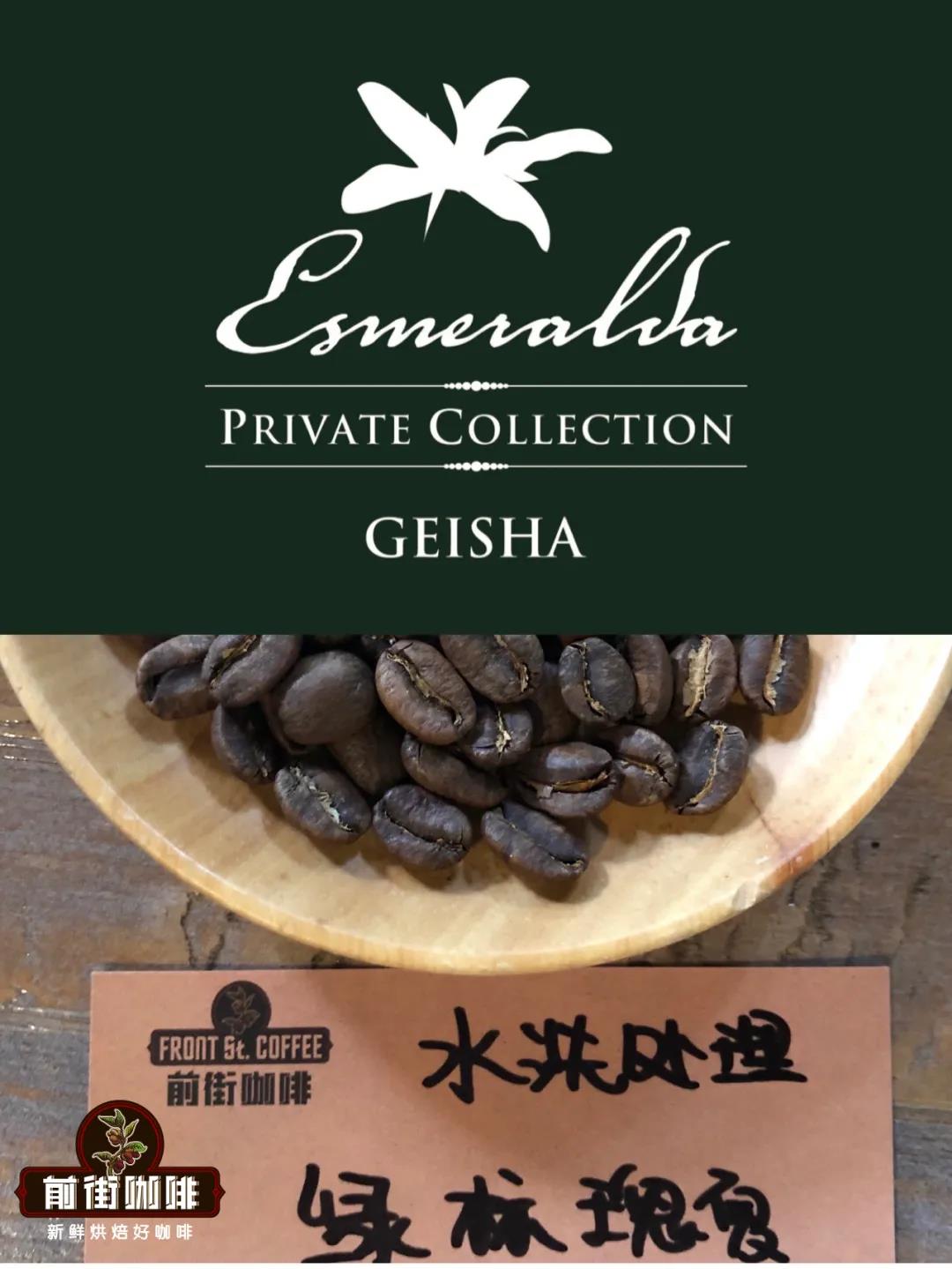
Because it uses a blending approach without detailed plot specifications, the flavor similarity between Green Label and Red Label can sometimes be very high, while the next batch might differ. FrontStreet Coffee feels that drinking Green Label is like a lottery—perhaps this batch might taste like the Red Label. Green Label Gesha is processed using natural or washed methods. FrontStreet Coffee's La Esmeralda Estate Green Label Gesha uses the washed method, yielding fresh jasmine and ginger-flower aromas, bright citrus-like acidity, and a thick, juicy mouthfeel.
Gesha 1500
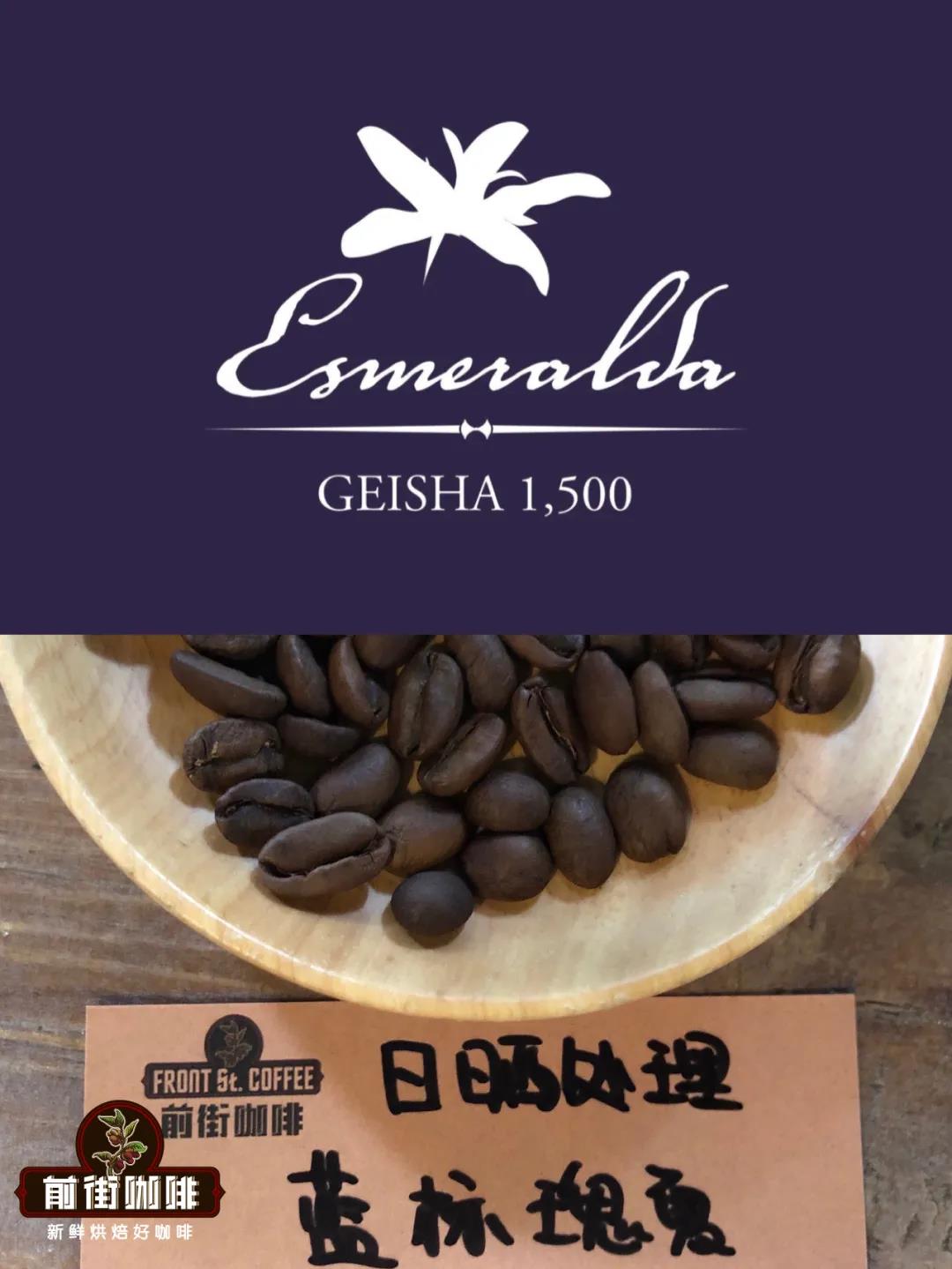
Gesha 1500 is commonly known as the Blue Label. It is grown at altitudes of 1400-1500 meters, blending Gesha beans from three different plots: Jaramillo, Canas Verdes, and El Velo. In previous years, Blue Label Gesha was available only in washed processing, while this year's Blue Label batches have added natural processing.
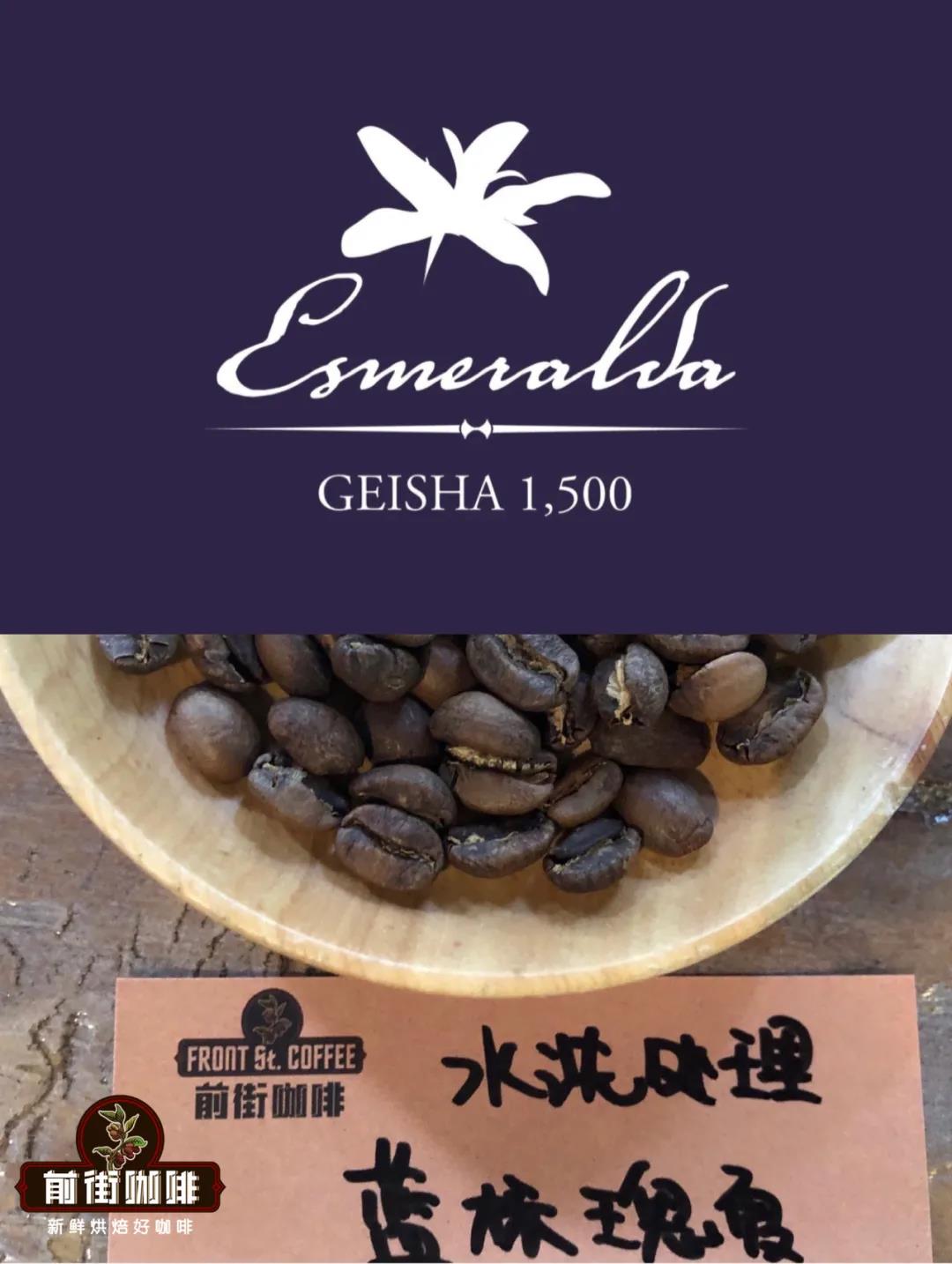
FrontStreet Coffee's washed Blue Label Gesha has subtle floral notes, fruit acidity, and sweetness, with a relatively less full-bodied mouthfeel. The natural Blue Label has subtle floral aromas, noticeable fermentation notes, and a berry-juice-like mouthfeel with high sweetness. FrontStreet Coffee believes that La Esmeralda's introduction of natural processing for the Blue Label this season is undoubtedly a benefit for consumers. Previously, to enjoy natural-processed La Esmeralda Estate Gesha, one had to purchase the more expensive Red or Green Label. Natural Blue Label lets consumers buy a natural-processed Gesha from La Esmeralda Estate at a lower price and with high value.
La Esmeralda Estate Gesha Processing Methods
Natural Processing
For natural processing at La Esmeralda Estate, harvested cherries are sent directly to patios for drying. The cherries dry slowly while the beans inside absorb fruity and aromatic compounds, and they are dried evenly. Depending on weather and patio composition, the coffee is dried on concrete patios for 3 to 5 days (8 hours daily). When it reaches sufficient dryness, it is placed in a Guardiola dryer for 72 hours to complete the drying process and prevent fermentation. After drying is complete, machines are used to remove the pulp and other parts.
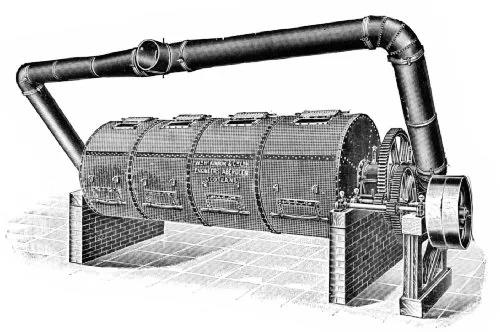
The Guardiola is the preferred drying method when batch size permits, as it can handle large quantities of coffee. It is a horizontally rotating drum that lets warm air circulate around the beans and eliminate moisture. After drying, the beans are placed in nylon bags and stored in the warehouse for 30 to 45 days. This step, also known as "reposo," helps stabilize the beans and improve cup quality.
Washed Processing
For washed processing at La Esmeralda Estate, harvested berries have most of their pulp removed from the beans using a depulper. The parchment coffee is then directed to a clean water tank, where it is soaked in water for fermentation to completely remove the remaining pulp layer. Through water processing, unripe and defective beans are removed by buoyancy differences.
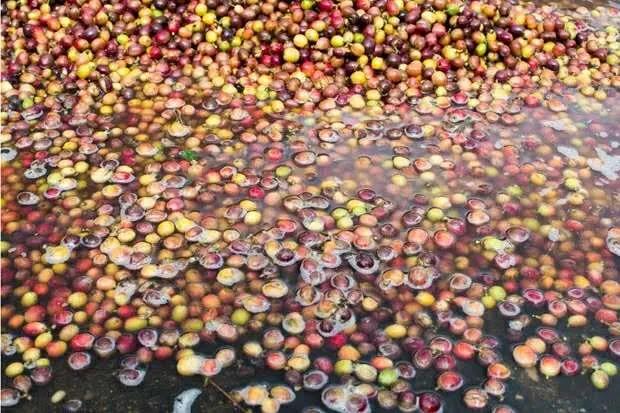
Next comes depulping, also called pulping, which removes the fruit skin from the cherries using machines, leaving beans with mucilage. These are placed in fermentation tanks to ferment for 1 to 2 days to break down the mucilage attached to the beans. The beans are then thoroughly cleaned with clean water, and the parchment beans are dried until the moisture content reaches 12% for storage. The parchment is removed before export.
FrontStreet Coffee Roasting Insights
[Natural Red Label Gesha] Yangjia 800N, 380g bean input.
Heat to 150°C at entry, heat setting 120, damper open to 3; return temperature point at 1'36", when temperature reaches 140°C, open damper to 4, firepower unchanged; when temperature reaches 147.6°C, the bean surface turns yellow, the grassy aroma completely disappears, and the coffee enters the dehydration stage. When temperature reaches 150°C, adjust firepower to 100, damper unchanged; at 7'38", the bean surface shows ugly wrinkles and black spots, the toast aroma clearly transitions to coffee aroma, which can be defined as the prelude to first crack. At this point, listen carefully for the sound of first crack. First crack begins at 8'10", open damper to 4, develop for 1'28 after first crack, discharge at 189.5°C.

[Green Label Gesha] Yangjia 800N, 500g bean input.
Heat to 190°C at entry, firepower 150, damper open to 3; return temperature point at 1'36", when temperature reaches 140°C, open damper to 4, firepower reduced to 130; when temperature reaches 150.8°C, the bean surface turns yellow, the grassy aroma completely disappears, and the coffee enters the dehydration stage. When temperature reaches 166°C, adjust firepower to 110, damper unchanged; at 7'55", when temperature reaches 176°C, adjust firepower to 90; the bean surface shows ugly wrinkles and black spots, the toast aroma clearly transitions to coffee aroma, which can be defined as the prelude to first crack. At this point, listen carefully for the sound of first crack. First crack begins at 8'30", open damper to 5, adjust firepower to 60 at 187°C; develop for 1'30 after first crack, discharge at 193.5°C.

[Washed Blue Label Gesha] Yangjia 800N, 480g bean input.
Heat to 180°C at entry, firepower 130, damper open to 3; return temperature point at 1'32", when temperature reaches 130°C, open damper to 4, firepower unchanged; when temperature reaches 151.6°C, the bean surface turns yellow, the grassy aroma completely disappears, and the coffee enters the dehydration stage. At 7'56", the bean surface shows ugly wrinkles and black spots, the toast aroma clearly transitions to coffee aroma, which can be defined as the prelude to first crack. At this point, listen carefully for the sound of first crack. First crack begins at 8'30", open damper to 5, develop for 1'28 after first crack, discharge at 190°C.
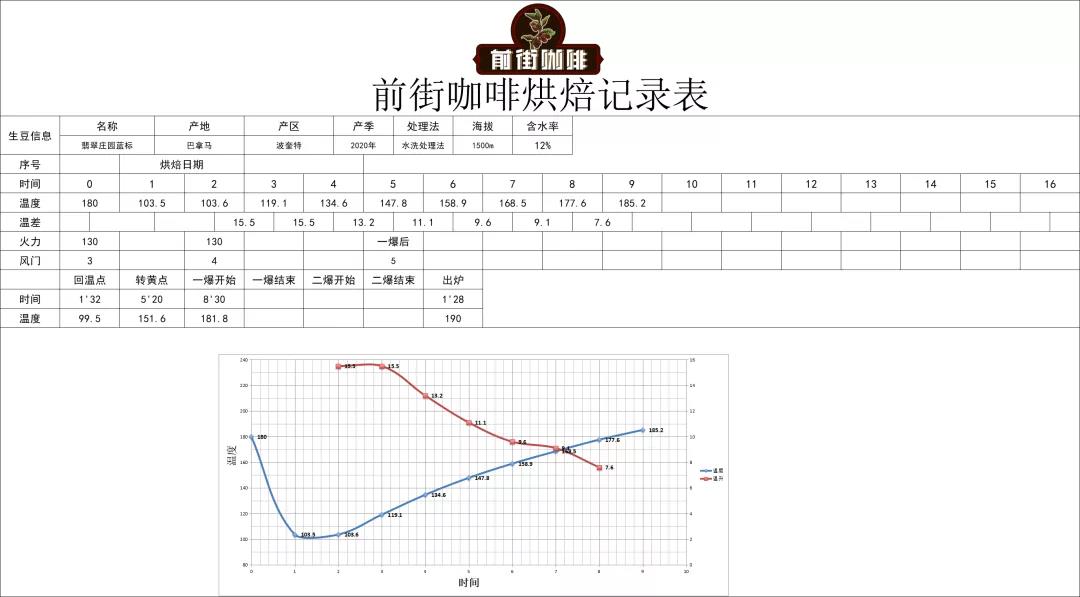
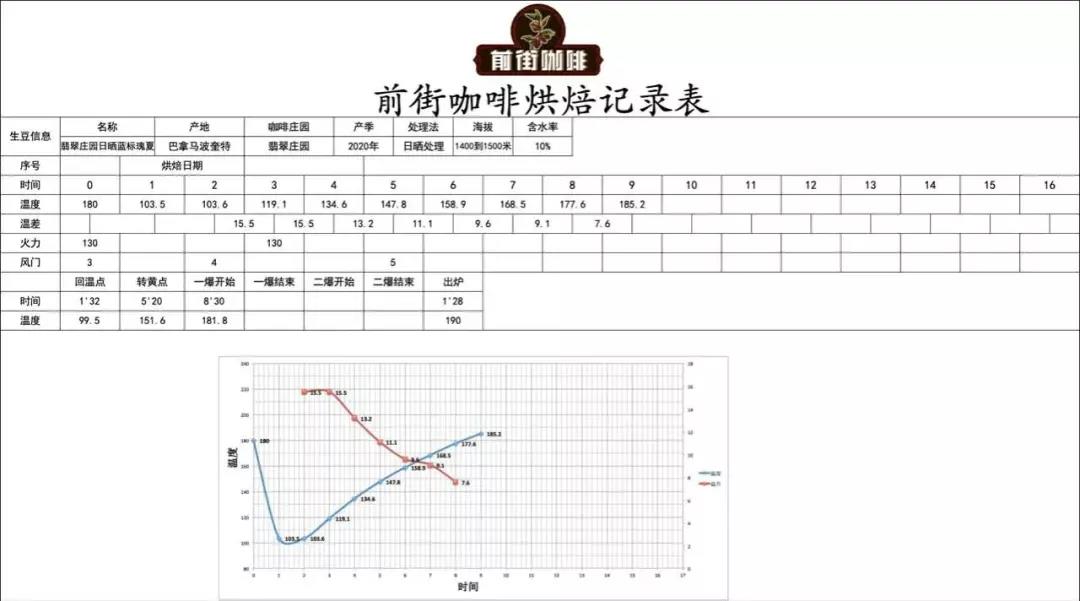
[Natural Blue Label Gesha] Yangjia 800N, 480g bean input.
Heat to 180°C at entry, firepower 130, damper open to 3; return temperature point at 1'32", when temperature reaches 130°C, open damper to 4, firepower unchanged; when temperature reaches 151.6°C, the bean surface turns yellow, the grassy aroma completely disappears, and the coffee enters the dehydration stage. At 7'56", the bean surface shows ugly wrinkles and black spots, the toast aroma clearly transitions to coffee aroma, which can be defined as the prelude to first crack. At this point, listen carefully for the sound of first crack. First crack begins at 8'30", open damper to 5, develop for 1'28 after first crack, discharge at 190°C.
FrontStreet Coffee La Esmeralda Estate Geisha Cupping Report
[Red Label Gesha Cupping]
Dry Aroma: Jasmine, citrus
Wet Aroma: Citrus, lemon, honey
Palate: Lemon, honey, berries, orange peel, mango, cream, citrus, tea-like notes
[Green Label Gesha Cupping]
Dry Aroma: Jasmine, ginger flower
Wet Aroma: Lemon, sweet orange
Palate: Lemon, sweet orange, honey, cream, almond, tea-like notes
[Washed Blue Label Gesha Cupping]
Dry Aroma: Floral, citrus
Wet Aroma: Citrus, lemon
Palate: Citrus, lemon, honey, nuts, tea-like notes
[Natural Blue Label Gesha Cupping]
Dry Aroma: Fermentation, caramel
Wet Aroma: Floral, fermentation aroma
Palate: Lemon, honey, melon, berries, fermentation notes
FrontStreet Coffee Brewing Insights
Dripper: V60 #01
Dose: 15g
Ratio: 1:15
Grind: BG6m (80% passing through #20 sieve)
Water Temperature: 90-91°C
*Regarding grind size, FrontStreet Coffee determines this through sieving. Based on the pour-over grind recommendations provided by the Specialty Coffee Association (SCA) and combined with practical verification, FrontStreet Coffee brews with different grind sizes, which produces noticeably different results. Each coffee variety also requires a different grind size, which is the significance of sieving. If you do not have a sieve at home, FrontStreet Coffee suggests observing flow rate instead—too fast a flow indicates too coarse a grind, while too slow indicates too fine.

FrontStreet Coffee uses segmented extraction, also called three-stage brewing: bloom with 30g of water for 30 seconds, then pour in small circular motions to 125g before the next segment. When the water level drops and is about to expose the coffee bed, continue pouring to 225g and stop. When the water level drops again and is about to expose the coffee bed, remove the dripper. (Timing starts from the bloom.) Extraction time is 2'00"-2'20".
[Red Label Gesha Brewing Flavor] Bright rose and citrus aromas, brown rice, berries, apricots, complex fruits, honey, with a thick juice-like mouthfeel and rich, layered flavor with prominent sweetness.
[Green Label Gesha Brewing Flavor] Rich jasmine aroma, high sweetness, citrus, berries, a juice-like quality, cream, green tea, orange peel, cantaloupe, with overall rich layers and a lasting floral and citrus aftertaste.
[Washed Blue Label Brewing Flavor] Floral notes, with gentle lemon and grapefruit acidity on entry, honey sweetness in the middle, and oolong tea notes and brown sugar sweetness in the finish, with a relatively clean and bright mouthfeel.
[Natural Blue Label Brewing Flavor] Aroma of fermentation and fruit sweetness, with sweet melon and tropical fruit sweetness when tasting, a juice-like mouthfeel, and overall very high sweetness.
FrontStreet Coffee Recommendation
If this deep dive into La Esmeralda has you wanting to taste the estate's Gesha for yourself, FrontStreet Coffee stocks every label. The Emerald Red Label Gesha is the top of the range—harvested from a single plot above 1,700 meters, cupped at 90-plus points, and showing a refined orange-blossom-honey profile; each batch carries its own number so buyers can pick the lot whose subtle flavors suit them. The Emerald Green Label Gesha, originally named "Private Collection," blends several plots to express La Esmeralda's signature high-altitude Gesha character at a friendlier price, making its value excellent. For an introduction to Gesha without the estate price tag, the Boquete Gesha is an entry-level, estate-grade Gesha planted at 1,600 meters, where fertile volcanic-ash soil yields a fragrant cup of jasmine, green tea, honey, citrus, and orange. And if you want to explore beyond Panama entirely, FrontStreet Genlana Gesha—a rare single-variety Ethiopian Gesha from the Genlana station, hand-picked, raised-bed natural-dried for 14-20 days, and roasted medium-light—brings bright citrus acidity, elegant ginger-flower aroma, and full ripe-fruit sweetness with a fine, silky finish.
Important Notice :
FrontStreet Coffee is a long-established specialty coffee roaster in Guangzhou China, selling freshly roasted beans from its own farm in Yunnan as well as dozens of carefully selected single-origin beans from around the world for both pour-over and espresso. The products deliver consistently excellent quality and great value, with shipping within 24 hours. Guangzhou's FrontStreet Coffee shop is recommended by many coffee lovers, and the beans are now available online at the Tmall 。
FrontStreet Coffee has moved to a new address:
FrontStreet Coffee Address: 315,Donghua East Road,GuangZhou
Tel:020 38364473
 Scan and follow the En Gafei WeChat official account. Please indicate that the reprint comes from "En Gafei".