Rwanda Coffee Cultivation History: How to Brew Rwandan Coffee & Flavor Characteristics
Rwanda Coffee: A History of Rebirth, Protecting Hope with Coffee
Rwanda is blessed with everything Arabica coffee could ask for: fertile volcanic soil, abundant rainfall, and mild temperatures year-round — conditions that give its coffees a distinctive character. Join FrontStreet Coffee on a tour of Rwandan coffee.
How Civil War Erased Rwandan Coffee from the Market
German missionaries brought coffee to Rwanda in 1904. From 1930 onward, coffee became the only cash crop through which smallholder farmers could earn an income, and cultivation spread rapidly. In those early decades, however, the coffee was dry-processed and of low quality.
In 1989, as political turmoil deepened, world green coffee prices collapsed. That year marked the start of a prolonged economic crisis for Rwanda.
Then came 1994, and with it civil war: roughly 1 million people were killed and 2 million left homeless. While the nation fought simply to survive, every coffee farm was abandoned, and Rwandan coffee vanished from the world market.
Rwanda's Coffee Economy After Rebirth
After 1995, backed by strong government support and aid from international NGOs, Rwanda's economy — and its coffee industry — got back on its feet. According to the International Coffee Organization (ICO), Rwandan coffee has been undergoing a genuine revival. Production had plummeted 95% in 1994 to just 22,000 kilograms (in 60 kg bags). Yet within a single year it rebounded to 329,000 kilograms, and it has held broadly steady ever since.
In 2001 the Rwandan government created NAEB (the National Agriculture Export Development Board) to lift coffee exports. The state supplied the support, resources, and infrastructure, and actively encouraged agribusinesses and private investors to pour money into coffee processing, raising the value of Rwanda's ordinary export coffee.

In 2017, NAEB and the Japan International Cooperation Agency (JICA) jointly launched a three-year technical program called Rwanda Coffee Upgrade and Promotion (CUP Rwanda), designed to give farmers better cultivation practices and quality improvements in processing.
Over the past 22 years, with international assistance, Rwanda has rebuilt its coffee industry from a very dark past. Output still averages below pre-war levels, but it has remained broadly stable, with a 10% production increase in the 2018/19 season. NAEB aims to grow the cultivated area from today's 37,700 hectares to 39,500 hectares by 2023.
Growing Coffee in Rwanda
Rwanda enjoys superb natural conditions for coffee: high altitude, volcanic soils, and abundant sunshine. Because so many coffee trees are planted on mountainsides between 1,700 and 2,000 meters, the country is fondly known as the "Land of a Thousand Hills." When cupping Rwandan coffee, FrontStreet Coffee benchmarks it against neighboring Kenya's. Rwandan coffee comes across as more balanced, with a cleaner, more precise profile.
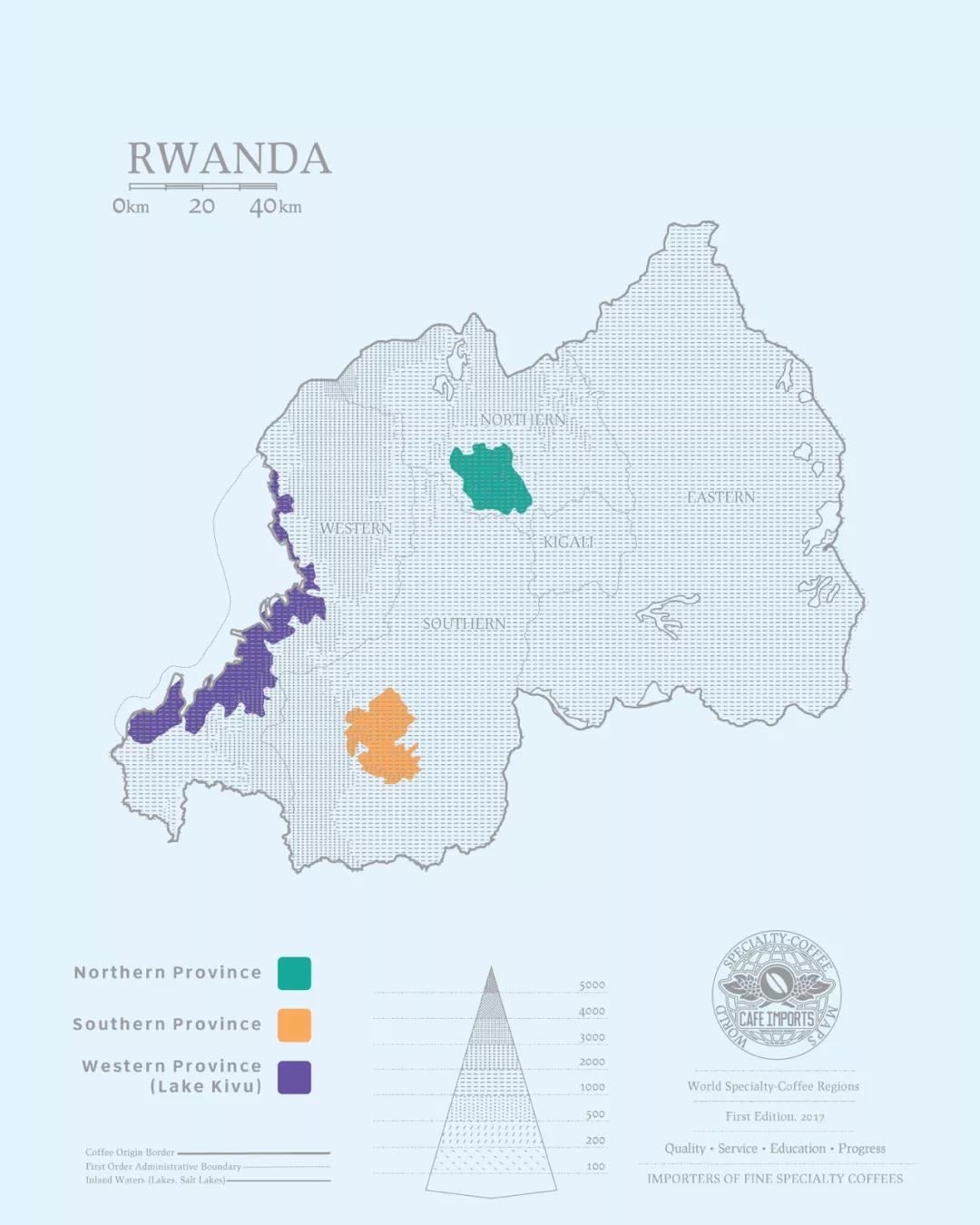
Rwanda's Growing Regions
Rwanda's specialty coffee is concentrated in the south and west. In the southern Huye Mountains and the Nyamagabe district, higher elevations give the beans floral and citrus notes; in the western Nyamasheke district along Lake Kivu, the coffees are richly aromatic and juicy. Lake Kivu, one of the African Great Lakes, lies in the East African Rift, a landscape dotted with active volcanoes. The great lake and its volcanoes create a unique microclimate famous for fruity coffees. Many lots from this area show cherry-like fruit, though Nyamasheke leans more floral and herbal.
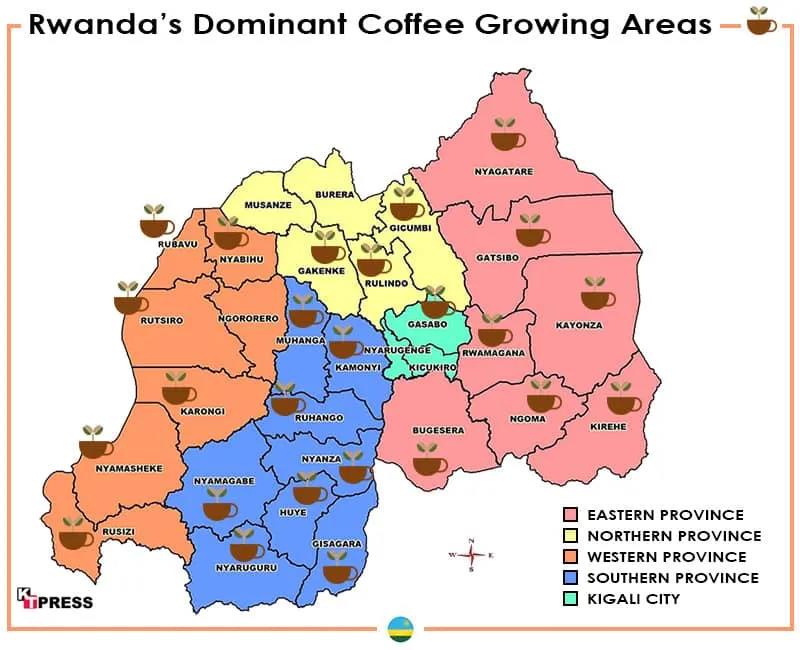
The flavor differences between regions are subtle, but attentive tasting reveals them. Customers often ask FrontStreet Coffee how to tell regions apart, imagining flavor detection to be something mystical. In truth, our team went through extensive sensory training to distinguish flavors from different origins — it simply takes time, effort, and persistence.
Rwandan Coffee Varieties
More than 97% of Rwanda's coffee is Arabica, and about 95% of that is Bourbon. Bourbon traveled from Central America to Puerto Rico, then on to the Democratic Republic of Congo in the 1930s, and finally reached Rwanda in the early 1950s. When the Bourbon line known as Mayaguez first arrived in East Africa, it was crossed with local selections, yielding BM-71 and BM-139 — two varieties with strikingly similar agronomic traits. They grow vigorously, yield well, and cup respectably, and are common across Rwanda and Burundi.
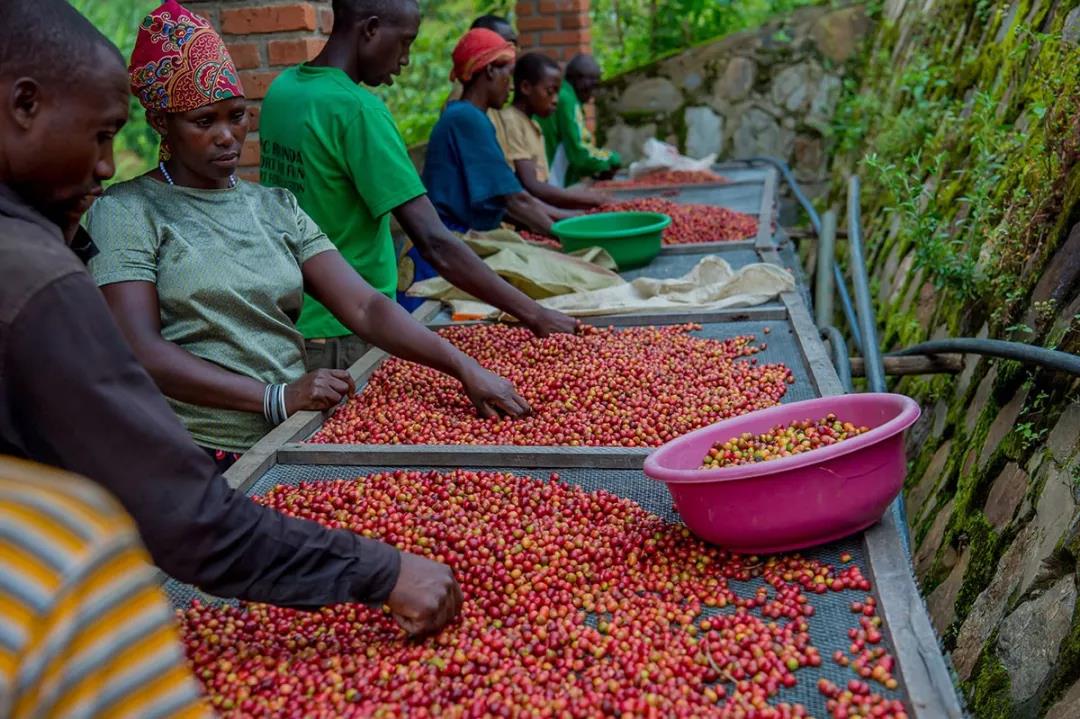
As ordinary Bourbon trees flower and fruit, the cherries change color: green, then pale yellow, then light orange, then mature red, finally darkening to overripe red — which is why some people call it "Red Bourbon." Red Bourbon, in fact, is simply the Bourbon we all know. High-grown Bourbon typically shows better aromatics and brighter acidity.
Processing Rwandan Coffee
In 2000, after the political turmoil had passed, the United States Agency for International Development (USAID) funded two major coffee development programs, PEARL and SPREAD, to support Rwanda's reconstruction. Within just 12 years of their launch, the country's washing stations grew from two to 220. All are now privately owned, by exporters or farmer cooperatives. With average farms small — fewer than 200 coffee trees each — a single station typically serves about 50 to 100 farms.
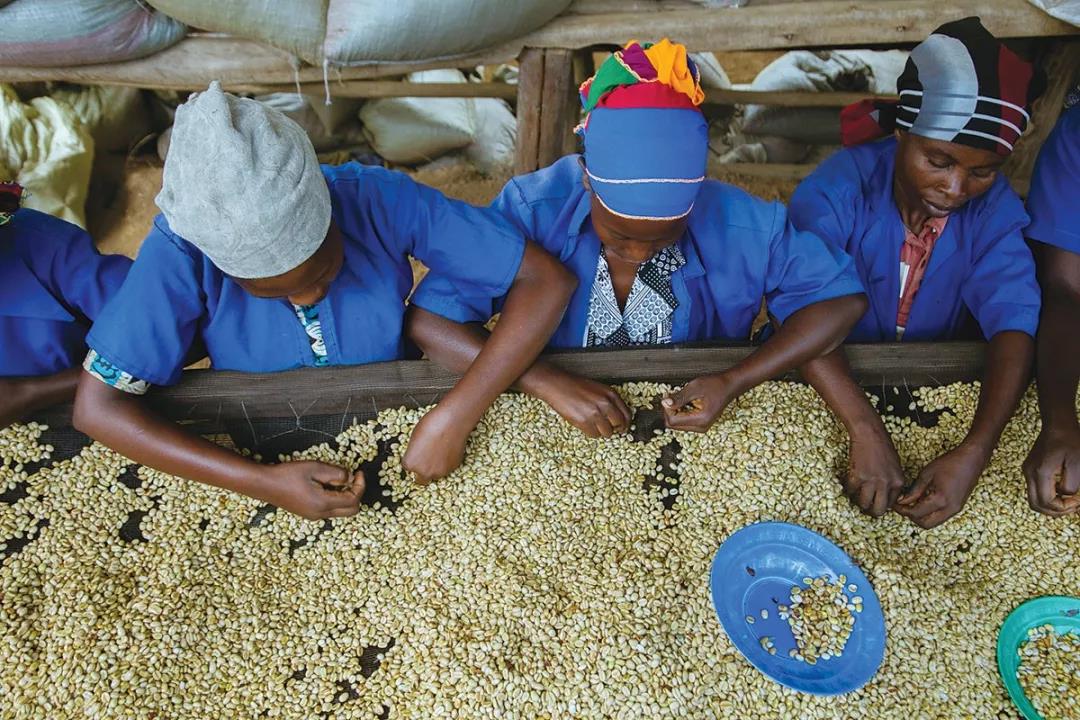
First, the cherries are flooded with water so that unripe fruit and floating debris can be skimmed off. A depulper then strips away skin and pulp. The beans go into fermentation tanks for 18-36 hours, where fermentation bacteria dissolve the sticky mucilage. After a rinse in clean water, they dry in the sun for 1-3 weeks, may pass through a mechanical dryer, and are finally hulled to remove the parchment, husk, seed coat, and silver skin.
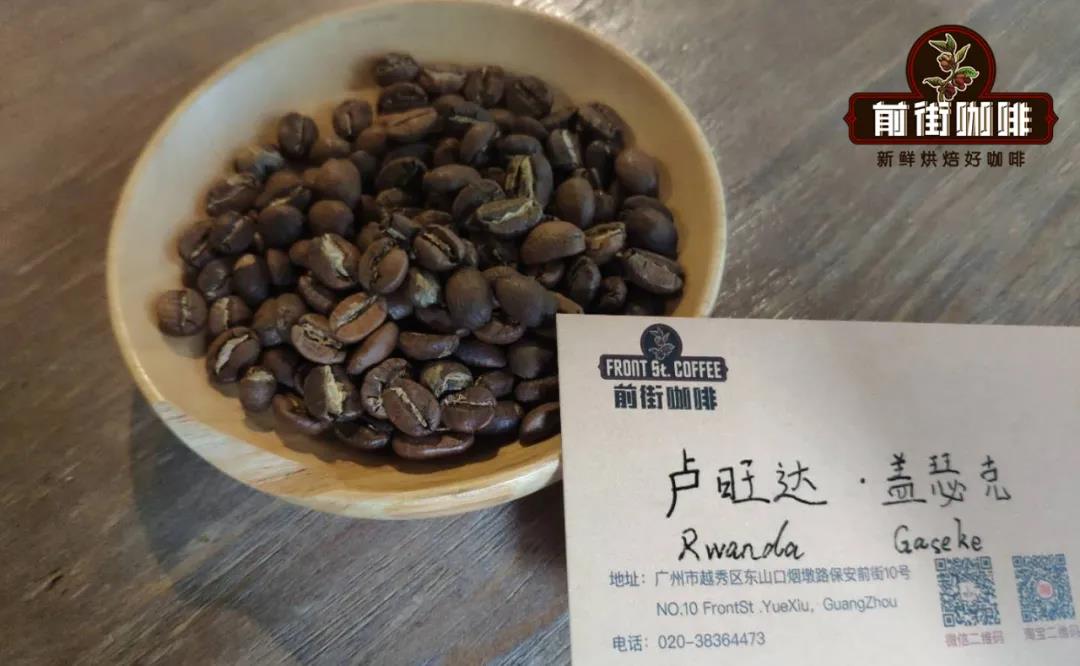
Coffee Region: Nyamasheke
Washing Station: Gisake Washing Station
Growing Altitude: 1,700 to 2,000 meters
Processing Method: Washed
Coffee Varieties: Bourbon, Caturra, Catuai
FrontStreet Coffee Roasting Suggestions
On a Yangjia 800N with a 550 g charge: drop the beans in at 175°C with heat at 120 and the damper at 3. The turning point comes at 1'36"; when the drum temperature reads 112°C, open the damper to 4 and raise the heat to 140. When the drum reaches 151°C, the bean surface yellows, the grassy smell fades completely, and the drying stage begins.
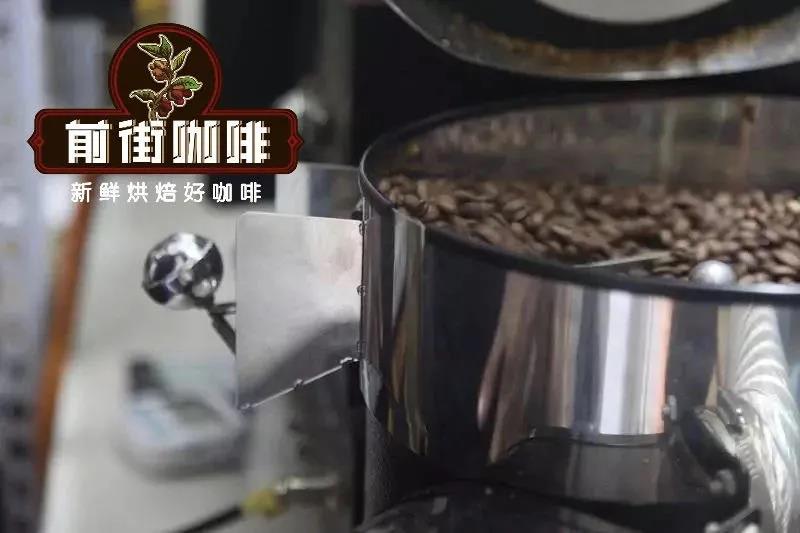
At 8'30", the beans show rough wrinkles and dark spotting, and the toast smell gives way unmistakably to coffee aroma — the prelude to first crack. Listen carefully from here. First crack begins at 9'45"; open the damper to 5, develop for 1'30" past first crack, and drop the beans at 190.6°C.
FrontStreet Coffee Cupping Report
Dry Aroma: Citrus, cherry tomato
Wet Aroma: Citrus, fresh grass
Mouthfeel: Plum, citrus, berries, bright acidity, nuts, honey finish
FrontStreet Coffee Brewing Suggestions
Filter: V60
Water Temperature: 90°C
Coffee Dose: 15 grams
Coffee-to-Water Ratio: 1:15
Grind Size: BG#6m (medium-fine; 80% pass-through on a #20 sieve)
*BG grinder settings are precise, and no two BG grinders grind identically. Different densities and roast levels call for different settings, so FrontStreet Coffee recommends recalibrating your grinder periodically. To check grind size, use a standard #20 coffee sieve; if you don't own one, watch the water flow instead — water racing through means the grind is too coarse, while water pooling on top means it is too fine.
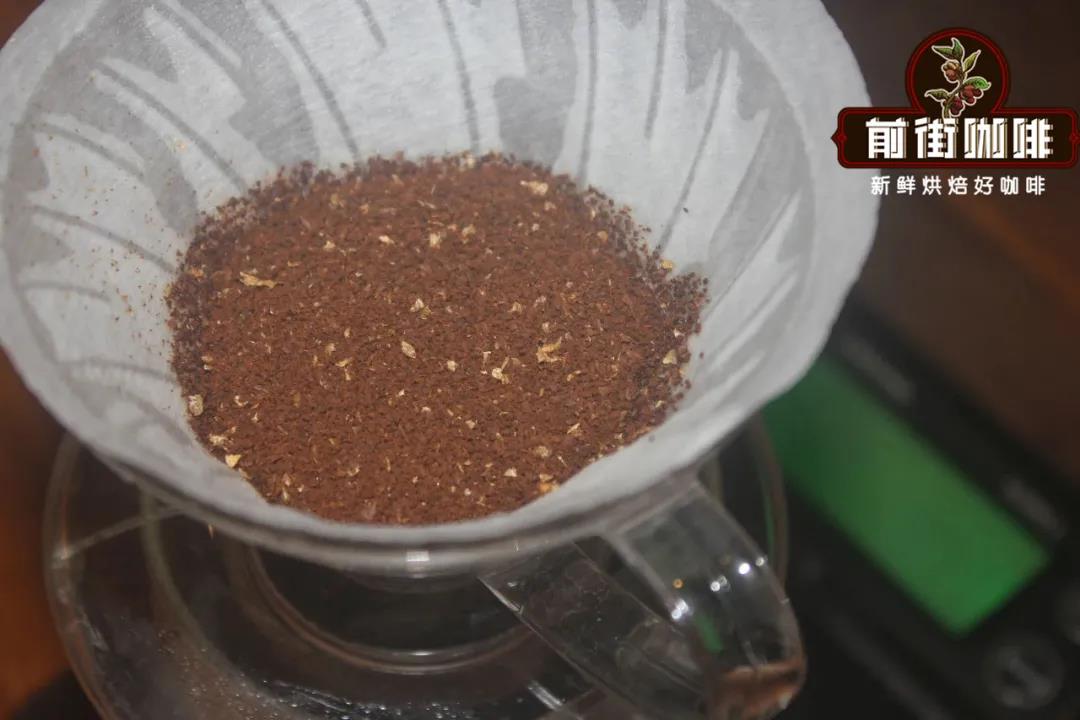
FrontStreet Coffee brews with segmented (three-stage) extraction. Bloom with 30 g of water for 30 seconds, then continue pouring in a small spiral up to 125 g and pause. When the water level drops and the coffee bed is about to break the surface, pour on up to 225 g and stop. Once the level falls again and the bed is about to be exposed, remove the dripper. Total extraction time is 2'03" (timed from the start of the bloom).
In the Cup: A lovely citrusy sweetness with bright acidity, berries, and apple; citrus and honey sweetness through the middle; outstanding sweetness and balance, closing on almond and chocolate.
FrontStreet Coffee Recommendation
Since Bourbon dominates Rwanda's coffee landscape, it is worth tasting the variety at its most charming: FrontStreet Brazil Fazenda Rainha (Queen Estate). Bourbon is one of Arabica's heritage varieties, named after Réunion (formerly Île Bourbon); its trees have broad, densely packed leaves and out-yield Typica by about 30%, with short, round beans that are easy to spot. Fazenda Rainha was among the first estates found growing Yellow Bourbon — a natural mutation whose ripe cherries turn orange-yellow. In the cup expect cream, peanut, toasted bread, and sugarcane aromas: rich, clean, and sweet. It is versatile, too, working beautifully as pour-over, in a moka pot, or through an espresso machine.
For a different side of Arabica's classic heritage, FrontStreet Jamaica Blue Mountain No.1 showcases Typica at its finest — remarkably balanced, gentle, and smooth, with a soft, rounded acidity and pure, full aroma that no other origin has ever quite managed to copy.
Important Notice :
FrontStreet Coffee is a long-established specialty coffee roaster in Guangzhou China, selling freshly roasted beans from its own farm in Yunnan as well as dozens of carefully selected single-origin beans from around the world for both pour-over and espresso. The products deliver consistently excellent quality and great value, with shipping within 24 hours. Guangzhou's FrontStreet Coffee shop is recommended by many coffee lovers, and the beans are now available online at the Tmall 。
FrontStreet Coffee has moved to a new address:
FrontStreet Coffee Address: 315,Donghua East Road,GuangZhou
Tel:020 38364473
 Scan and follow the En Gafei WeChat official account. Please indicate that the reprint comes from "En Gafei".