Nicaragua Coffee Regions Flavor Profile and Brewing Characteristics of Nicaraguan Coffee Beans
Professional Coffee Knowledge Exchange. For more coffee bean information, please follow Coffee Workshop (WeChat public account: cafe_style).
Mention Nicaragua and most people picture the Nicaragua Falls; coffee rarely comes up. In fact, Nicaragua's growing conditions are no less favorable than those of its Central American neighbors, and the coffee it produces is known for a balanced flavor profile. FrontStreet Coffee recently acquired three varieties of Nicaraguan beans, ran roasting, cupping, and brewing comparisons, and ultimately found that the "Professor" from Finca Un Regalo de Dios best captures the character of the Nicaraguan growing region.

Nicaragua Geography
Nicaragua lies in the central part of Central America, bordered by Honduras to the north, Costa Rica to the south, the Caribbean Sea to the east, and the Pacific Ocean to the west. With a total area of 130,400 square kilometers, it is the largest country in Central America. The north-central part of the country is highland; the east is coastal plain with abundant jungle swamps and low, flat terrain; the west is coastal lowland with many volcanoes and lakes toward the east.
The Nicaraguan plains are hot and rainy, with a tropical marine climate; the western coastal lowlands receive much less precipitation than the east, with distinct dry and wet seasons and a tropical savanna climate; the central highlands have an average annual temperature of 18°C and annual precipitation of 1500-2500 millimeters, with the rainy season lasting from May to December.
Coffee Cultivation History
Between 1840 and 1940, Nicaragua experienced a "coffee boom" as coffee became the country's main export crop. Later, dictator Somoza established coffee cooperatives (1936-1979), but they were soon overthrown by the Sandinista National Liberation Front. In 1979, Nicaragua came under communist rule, making the coffee trade extremely difficult. The CIA began supporting Contra rebels in an attempt to topple the new regime. Seeking greater advantage, the rebels attacked coffee workers' vehicles, destroyed processing plants, and stirred up unrest, dealing another heavy blow to Nicaragua's coffee industry. Even so, coffee remained the country's most important export crop.
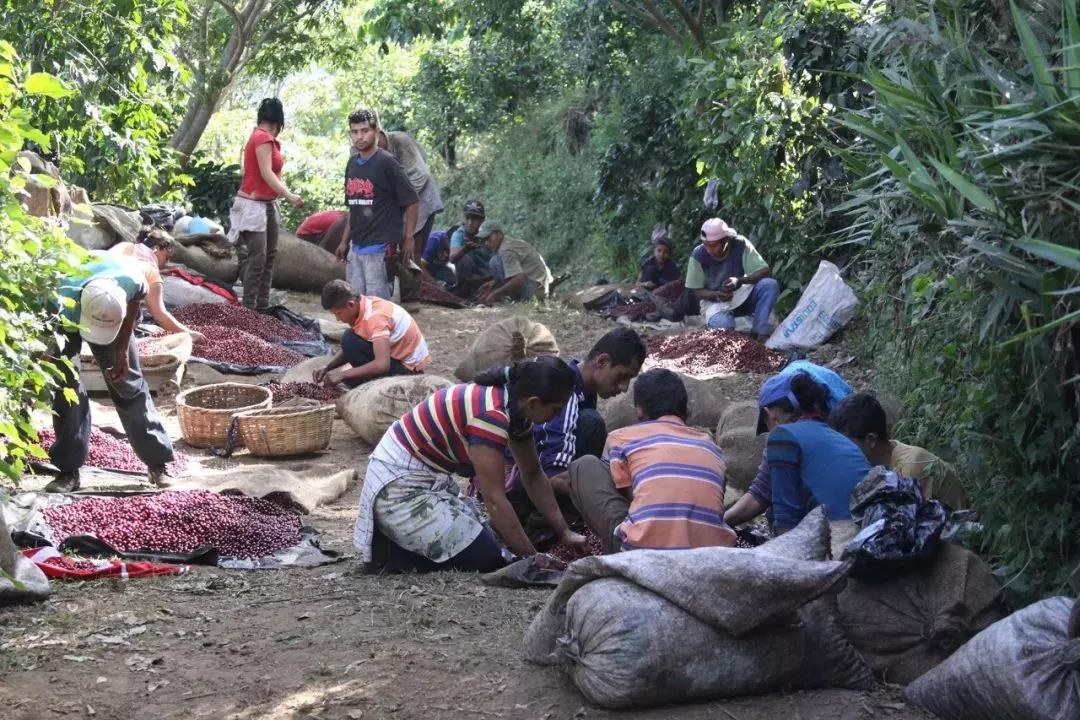
After the turn of the 20th century, Nicaragua endured sharp declines in coffee prices (1999-2003), hurricanes, and a millennium drought. After 2003 the country saw frequent civil conflict, and only in recent years has the hostility eased. Economic development has gradually recovered and the coffee industry has begun to revive.
Coffee Economic Crisis
Because coffee prices plunged to $89 per bag (45 kilograms per bag) in May 2019, and local farmers struggled to obtain credit support, coffee exporters predicted that in the 2019/2020 season the country's coffee production might fall by at least 15%. More pessimistic forecasts suggested a decline of more than 20%. Beyond depressed international prices, Nicaragua has been in a sociopolitical crisis since April 2018, which triggered massive capital flight and forced banks to restrict credit across all sectors. Nicaragua's coffee industry is now facing its most severe crisis in a decade.
Coffee Growing Regions
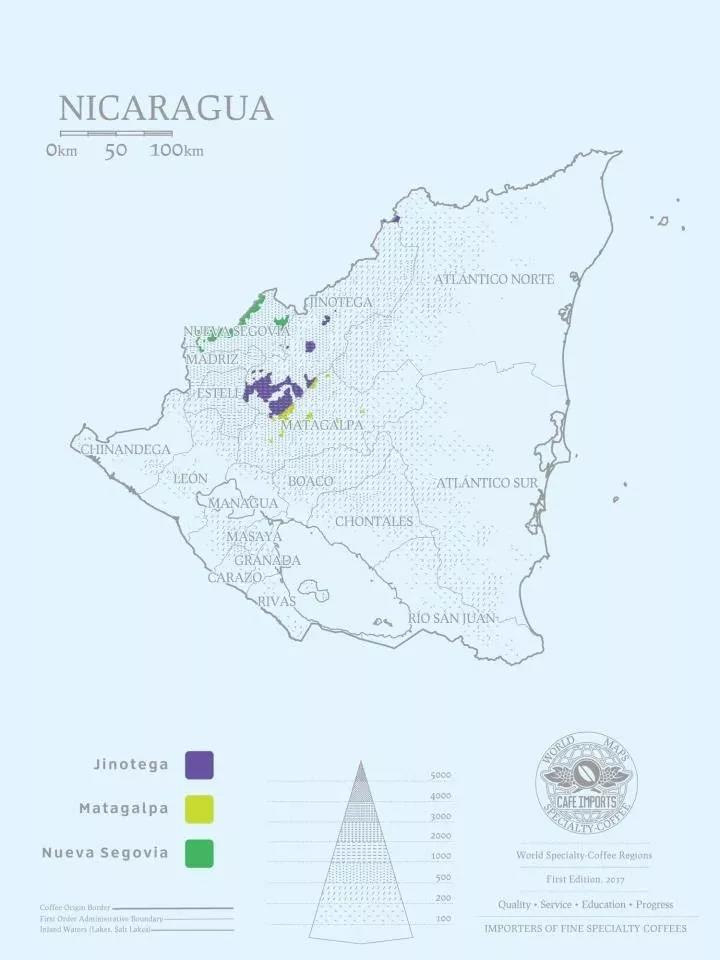
Nicaraguan specialty coffee is grown mainly in three northern regions near Honduras: Jinotega, Matagalpa, and Nueva Segovias, at growing altitudes ranging from 700-1700 meters. The varieties grown in these three regions are stable, with large bean sizes. FrontStreet Coffee finds that Nicaraguan regional flavors tend to run deeper, with sweet notes of chocolate and caramel, distinct almond aromas, and lower acidity, different from the bright, fruity acidity typically associated with Central American coffees.
Jinotega
Both the region and its capital take their name from the Nahuatl word "xinotencatl," meaning "city of old men." The region's economy has long depended on coffee, making it Nicaragua's leading producing region. Altitude: 1100-1700m. Harvest period: December to March of the following year. Main varieties: Caturra, Bourbon.
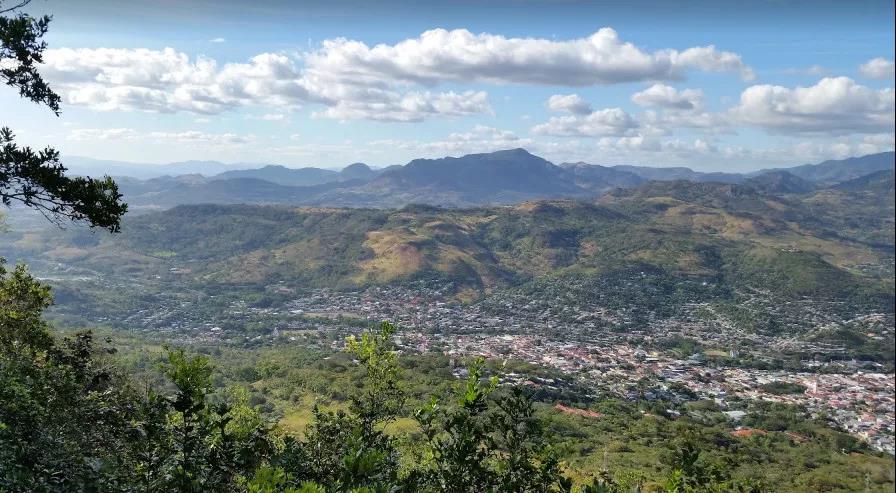
Matagalpa
Another region named after its capital city, which houses a coffee-themed museum, with coffee coming from estates and cooperatives. Altitude: 1100-1400 meters. Harvest period: December to February of the following year. Main varieties: Caturra, Bourbon.
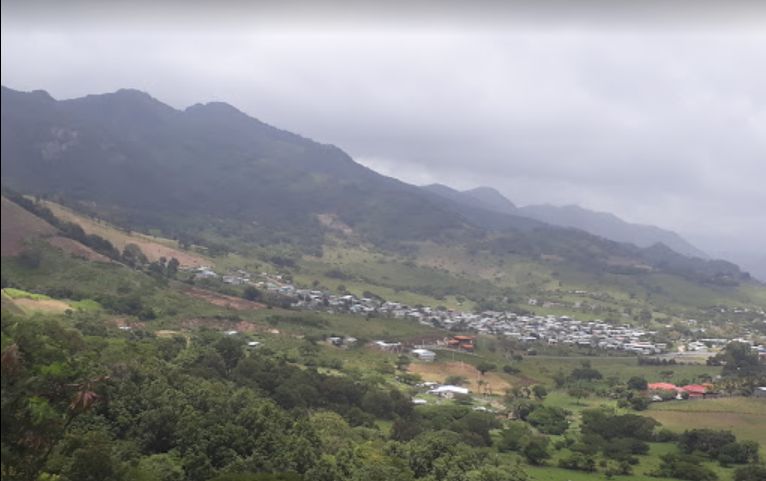
Nueva Segovias
This region lies in northern Nicaragua's border area and has recently begun to build a reputation for the country's best coffee, achieving great success in the Nicaragua Cup of Excellence competition. Altitude: 1100-1650 meters. Harvest period: December to March of the following year. Main varieties: Caturra, Catuai, Bourbon.
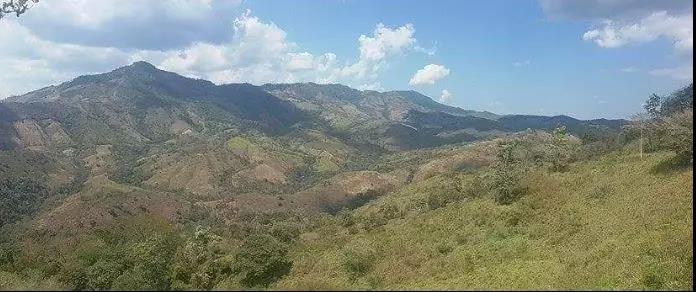
Coffee Varieties
Nicaragua primarily grows the varieties Caturra, Catuai, and Bourbon.
Bourbon
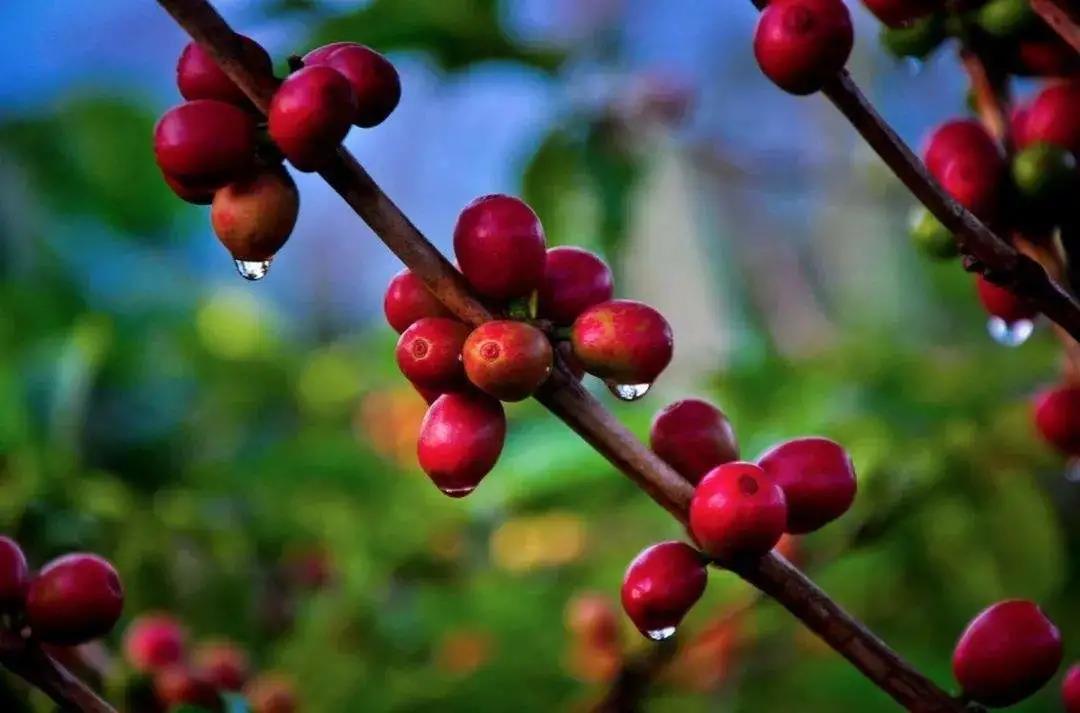
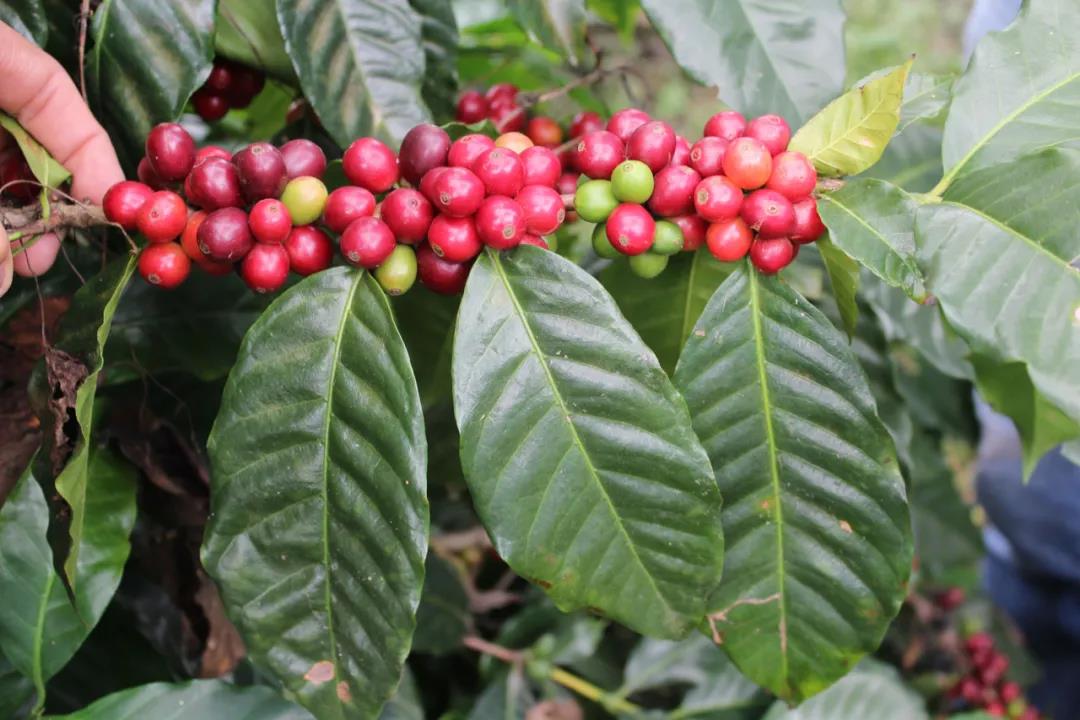
Bourbon is a natural mutation of Typica. The coffee cherries turn wine-red when ripe, and the beans are relatively round. Bourbon grown at high altitude typically has excellent aroma and bright acidity, with flavor characteristics similar to red wine.
Caturra
Caturra is a natural mutation of Bourbon, discovered in Brazil in 1937. Its plant is shorter and more compact than Bourbon. Inheriting Bourbon lineage, it has relatively weak disease resistance but higher yields than Bourbon. Although it was discovered in Brazil, Caturra is not well suited to growing conditions there, so it was never planted on a large scale in the country. Instead it became widely popular in Central and South America, with Colombia, Costa Rica, and Nicaragua growing it extensively.
Catuai
Catuai is a variety created through the artificial hybridization of Caturra and Mundo Novo. It inherits Caturra's compact structure, requires no shade, and is easy to grow and convenient to harvest. It also resists natural disasters better than Mundo Novo and delivers excellent acidity in the cup. Catuai typically comes in two types: red fruit and yellow fruit.
Coffee Processing Methods
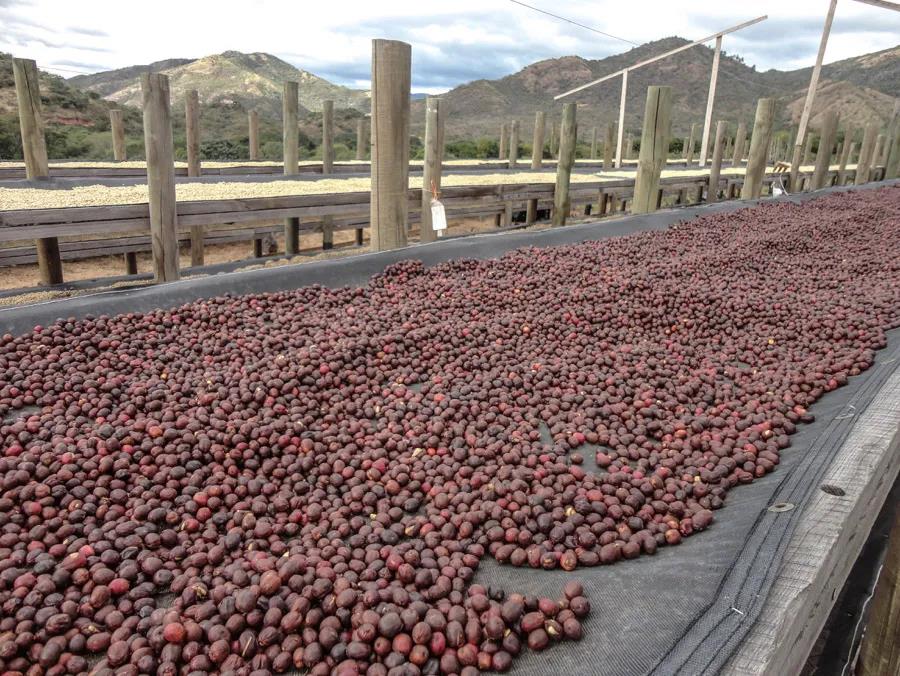
In natural processing, coffee cherries delivered to the washing station are first sorted by hand to remove less dense, defective cherries. The qualified cherries are then spread evenly on raised African beds to dry, with natural drying taking roughly 21 days. The cherries are dried to a moisture content of about 12%. Once natural drying is complete, a hulling machine removes the cherry's skin, pulp, and parchment, after which the coffee is packaged and stored. FrontStreet Coffee finds that naturally processed coffee has the lowest acidity, the highest sweetness, and the clearest mouthfeel, though slightly lower cleanliness. In flavor, it produces more berry-like notes and greater complexity.
Coffee Bean Grading System
Nicaraguan coffee is graded according to cultivation altitude.
Strictly High Grown (SHG): 1500-2000m
High Grown (HG): 1300-1500m
Medium Grown (MG): 1000-1300m
Low Grown (LG): 500-1000m
As noted above, FrontStreet Coffee cupped three Nicaraguan coffees, and the "Professor" from Finca Un Regalo de Dios best displayed almond characteristics.

Coffee Details
Country: Nicaragua
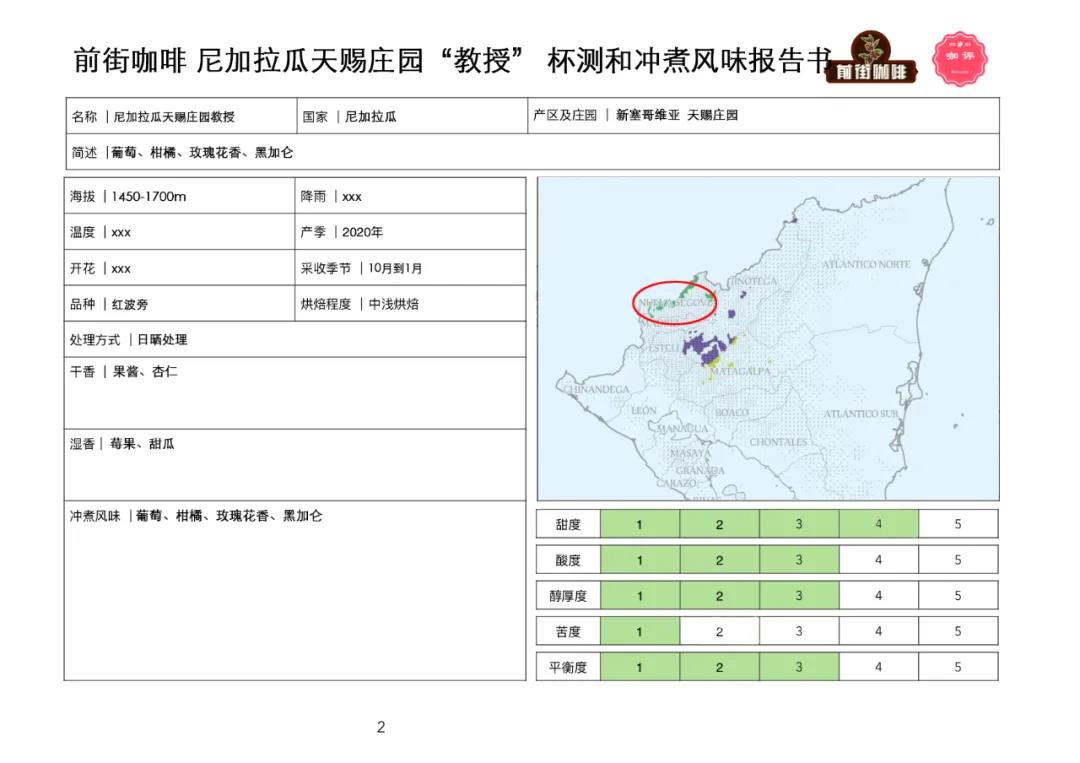
Region: Nueva Segovias
Estate: Finca Un Regalo de Dios
Altitude: 1450-1700 meters
Variety: Red Bourbon
Processing Method: Natural Process
Finca Un Regalo de Dios
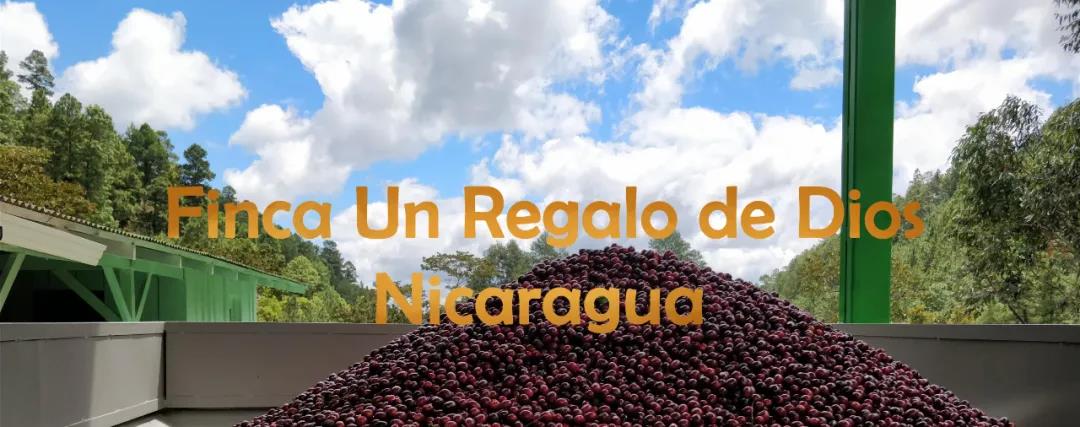
Finca Un Regalo de Dios, meaning "A Gift from God," is located in the municipality of Mozonte, Nueva Segovias, near the Dipilto-Jalapa mountain range and the border with Honduras. The estate owner, Luis Alberto Balladarez Moncada, also owns Finca La Bendición and Finca La Esperanza. Finca La Bendición won first place in the 2018 Nicaragua Cup of Excellence, while Finca Un Regalo de Dios took the championship in the 2020 COE.
FrontStreet Coffee Roasting Suggestions
Charge at 175°C with heat at 140, damper open at 3; return to temperature at 1'36", and when the drum temperature reaches 130°C open the damper to 4 while keeping the same heat; when the drum temperature reaches 150°C the bean surface turns yellow and the grassy aroma disappears completely, entering the dehydration phase; at 8'30" ugly wrinkles and black spots appear on the bean surface and the toast aroma clearly transitions to coffee aroma, the prelude to first crack. From there, listen carefully for the sound of first crack, which begins at 9'25"; open the damper to 5, develop for 2'00" after first crack, then drop at 196°C.

FrontStreet Coffee Cupping Report
FrontStreet Coffee Brewing Suggestions
Dripper: V60#01
Water Temperature: 90-91°C
Dose: 15g
Ratio: 1:15
Grind Size: Medium-fine grind (80% pass-through rate on a Chinese standard #20 sieve)
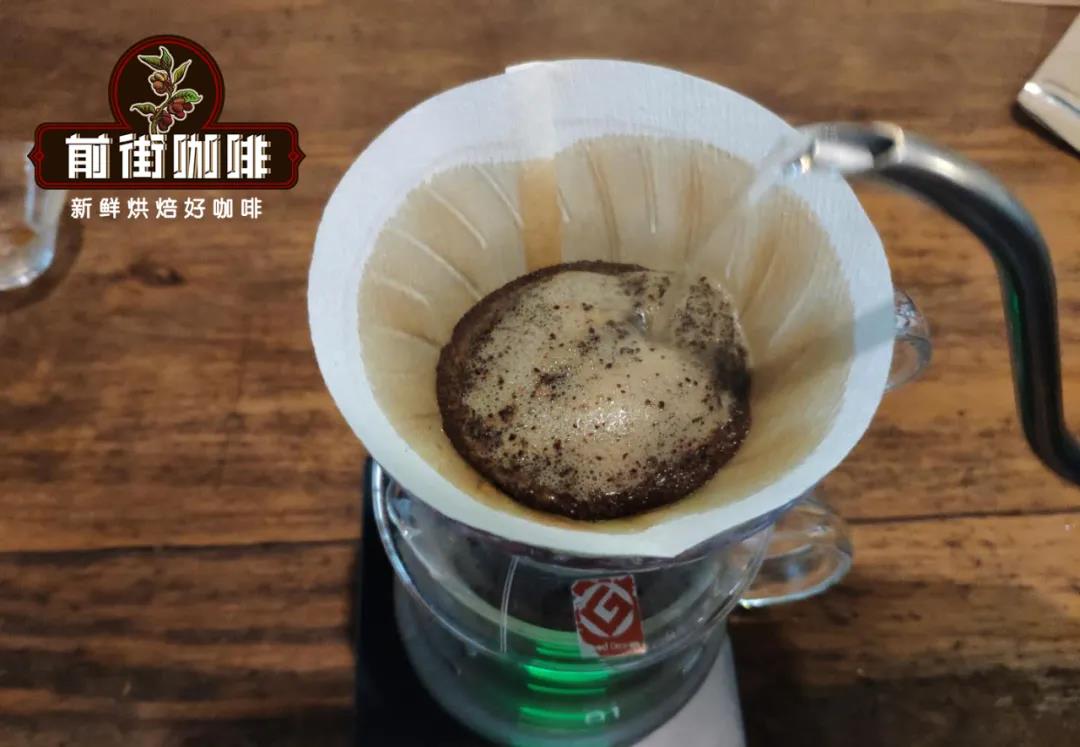
Brewing Method: Three-stage extraction. Use 30g of water for a 30-second bloom, then pour in a small circular motion to 125g for the first pour. When the water level drops to just before the coffee bed is exposed, continue pouring to 225g and stop. When the water level again drops to just before the bed is exposed, remove the dripper. Extraction time from the start of blooming is 1'50".
FrontStreet Coffee Recommendation
Nicaragua's deep chocolate, caramel, and almond character sits comfortably in the medium roast range, and if that balance appeals to you, FrontStreet Brazil Queen Estate is a classic to try. Grown in the world's largest coffee-producing country from the distinctive Yellow Bourbon variety, it is clean and gently sweet, and a medium roast brings out cream, peanut, chocolate, toast, and sugarcane notes. It brews well as pour-over and also works in a moka pot or espresso machine.
If you would prefer a slightly sweeter medium roast, FrontStreet Strawberry Candy Geisha Blend combines a honey-processed Costa Rican coffee with a washed Panama Geisha. Roasted to medium to showcase the best of both, it delivers orange-blossom honey sweetness and a rounded body, suited to cold brew, pour-over, and espresso alike.
Important Notice :
FrontStreet Coffee is a long-established specialty coffee roaster in Guangzhou China, selling freshly roasted beans from its own farm in Yunnan as well as dozens of carefully selected single-origin beans from around the world for both pour-over and espresso. The products deliver consistently excellent quality and great value, with shipping within 24 hours. Guangzhou's FrontStreet Coffee shop is recommended by many coffee lovers, and the beans are now available online at the Tmall 。
FrontStreet Coffee has moved to a new address:
FrontStreet Coffee Address: 315,Donghua East Road,GuangZhou
Tel:020 38364473
 Scan and follow the En Gafei WeChat official account. Please indicate that the reprint comes from "En Gafei".