Mexican Coffee Growing Regions Flavor Characteristics of Mexican Organically Grown and Decaffeinated Coffee Beans
Mexican coffee may be less common on the Asian market, but Mexico is North America's primary coffee supplier. Its high altitude and volcanic soil produce the mild, delicate flavors the country is known for. As bean researchers, FrontStreet Coffee works to source coffee from every region for roasting, cupping and brewing study, and Mexican coffee naturally became one of those subjects.
Mexico's Geography
Mexico sits in North America, bordered to the north by the United States, to the southeast by Guatemala and Belize, to the west by the Pacific Ocean, and to the east by the Gulf of Mexico and the Caribbean Sea. Its capital is Mexico City. Open to the Atlantic on both coasts, Mexico runs from coastal plains up into central plateaus and mountains, many of them volcanic. Coffee-growing areas sit between 1100 and 1700 meters. FrontStreet Coffee holds that high-altitude cultivation in volcanic soil is the key to Mexico's rich, balanced cup.
Cultivation History
Coffee arrived in Mexico relatively late. In the latter half of the 18th century, Spanish immigrants brought trees from the Caribbean islands of Cuba and the Dominican Republic. Commercial cultivation did not begin until the 1790s, when Germans and Italians immigrated from Guatemala and Central America and established the first plantations in Veracruz.
Mexico has kept its smallholder tradition. After the agrarian reforms that followed the Mexican Revolution, Indigenous people and farmers could own small plots for their own use. The 1970s and 1980s were the golden age of Mexican coffee. Yields run around 630 kilograms per hectare, and the country produces roughly 5 million bags a year, making it the world's fourth-largest producer. Most of that comes from nearly 100,000 small-scale farmers.
In 1973 the Mexican Coffee Institute (Instituto Mexicano del Café, Inmecafé) was founded and took control of the industry, overseeing both cultivation and the market for exportable beans. It offered farmers minimum purchase prices, technical advice and other support. Since 1991, however, Inmecafé's activity has dwindled, and its role may weaken further.
Organic Cultivation
Organic coffee can fairly be called conscientious coffee: it forgoes chemical fertilizers and pesticides in favor of organic fertilizer, kitchen waste and compost. It relies on the old shade-growing method, which happens to be the preferred approach for heritage Typica and Bourbon trees. Organic cultivation, though, is costly, and yields tend to be lower.
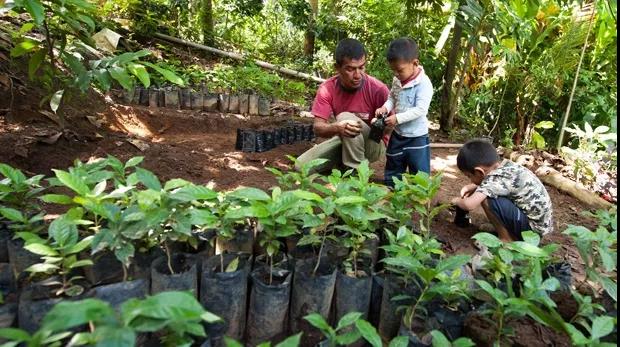
From the moment the seeds go into the soil, no chemical inputs are used — growth depends entirely on natural conditions. Every step of cultivation and production must also be controlled, supervised and certified by professional organizations before the coffee can truly be called organic. The certification process is long, taking about three years, so when a grower commits to it, that marks the start of a demanding investment in both time and money. Mexico is the world's largest producer of organic coffee.
Growing Regions
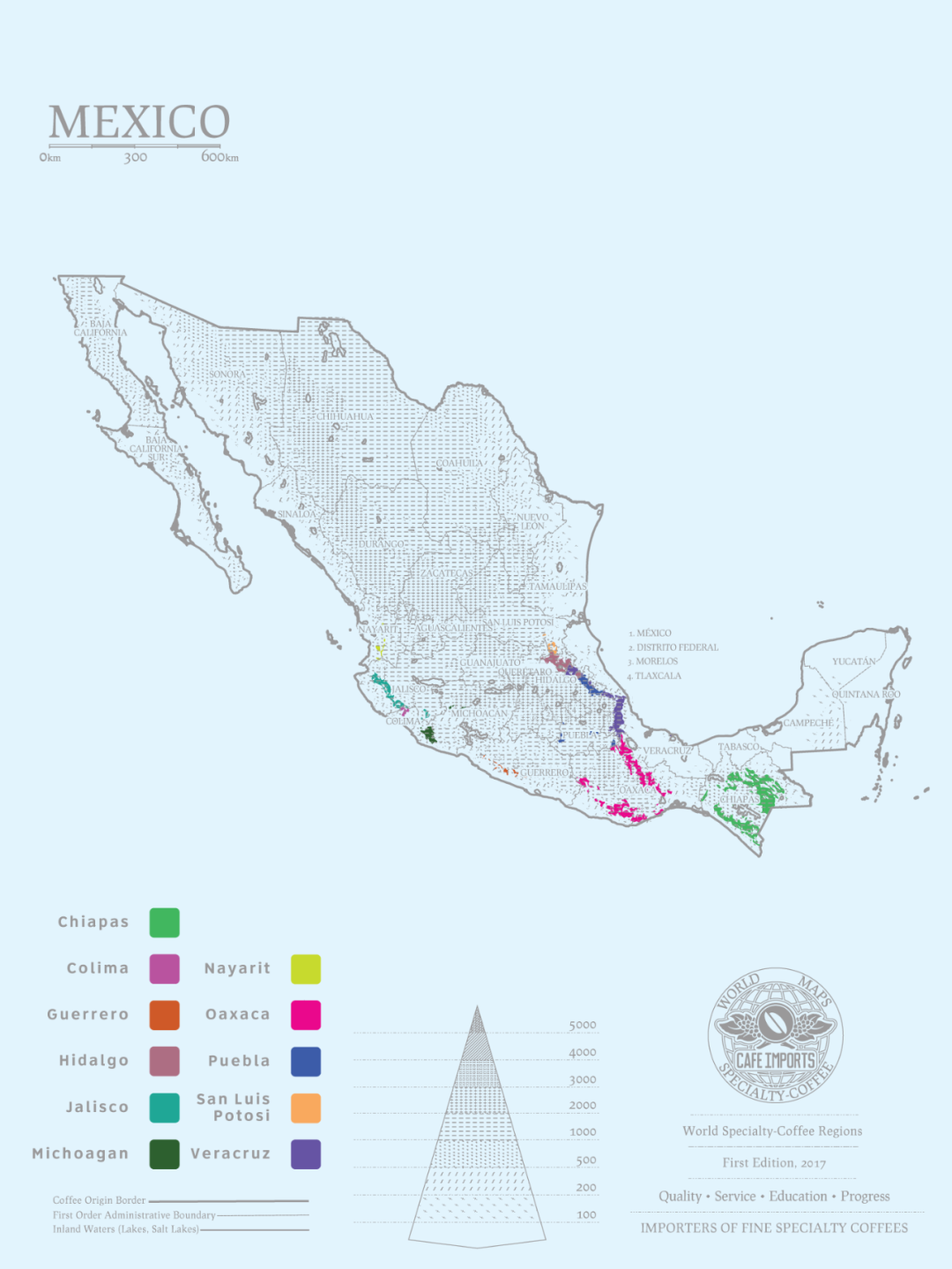
At the northern edge of the coffee belt, Mexican growing regions run from Coatepec and Veracruz in the north through Pluma in the Oaxaca region in the center to the Chiapas highlands in the south, bordering Guatemala's Huehuetenango. The overwhelming majority of Mexican coffee is washed Arabica, notable for its very rich, distinctive aroma, somewhat like over-fermented fruit. The small round beans from Chiapas, in the country's southernmost region, have a mild, delicate taste and an unusual aroma.
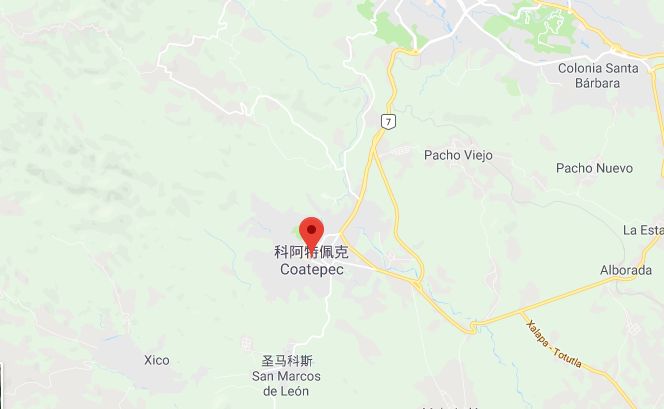
Coatepec:
Altitude 1200-1500m, growing mainly Bourbon and Typica. The flavor is sweet and fragrant with slight grassy notes, mild acidity and a medium, oily body.
Huatusco:
Altitude 1200-1500m, showing a light plum acidity, rich caramel sweetness and a finish of deep dark chocolate.
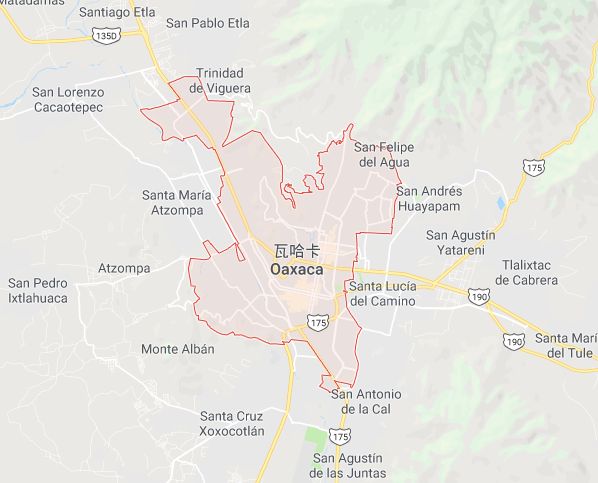
Pluma, Oaxaca:
Most farmers in Oaxaca own less than 2 hectares and belong to one of several large cooperatives, though some larger estates exist, a few of which have developed diversified tourism. Altitude 900-1700m, harvest season December-March, growing Bourbon, Typica, Caturra and Maragogype. The region also produces premium beans, with the naturally grown Pluma Coixtepec rated among the finest, alongside Altura Orizaba and Altura Huatusco.
Chiapas:
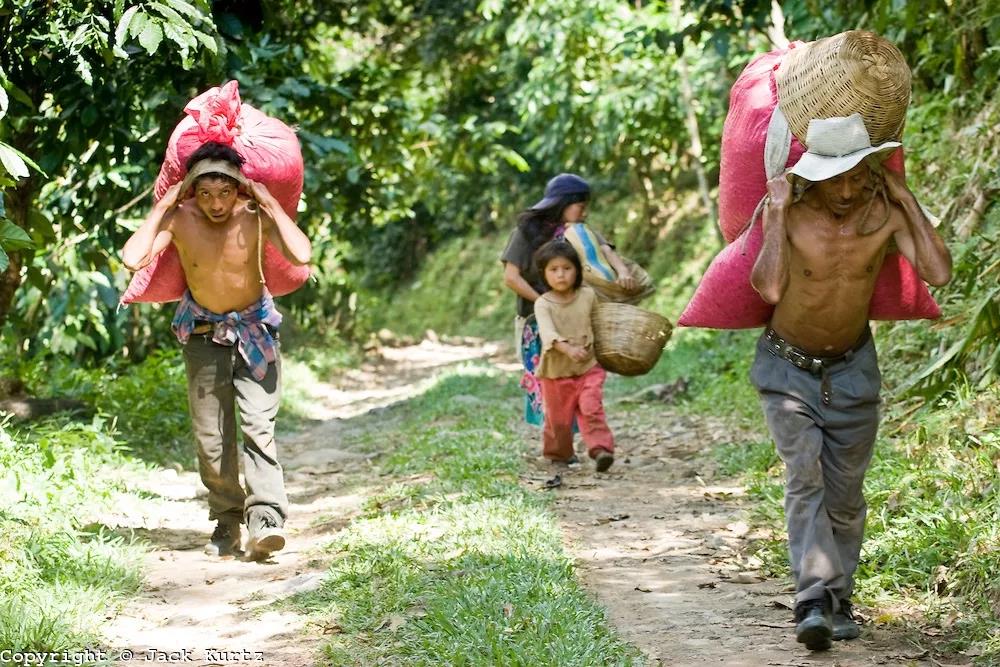
Chiapas is an important premium region, with most of the best beans grown at high altitude. Many high-altitude organic Mexican beans are cultivated by Indigenous growers who have formed numerous cooperatives to gain support from foreign organizations, secure better prices and advance their cultivation techniques. They also farm organically.
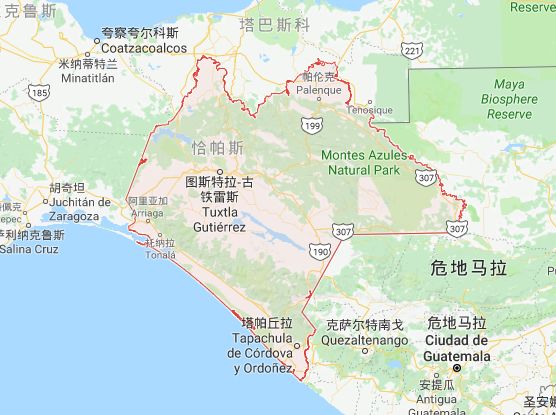
Chiapas altitude 1100-1400 meters, harvest December-April. In the early 1990s the southern state became Mexico's most important coffee region, producing roughly 275,000 tons a year, or 45% of national output. More than two million Mexicans depend on coffee for their livelihood. 75% of Mexican coffee farmers work land smaller than two hectares, and these smallholders grow about 30% of the country's coffee each year, with the remainder coming from larger or higher-yielding farms.
Chiapas coffee has moderate body and a mild yet fresh-sweet flavor. The dry aroma carries notes of banana and cocoa nut, while the wet aroma shows distinct honey sweetness with walnut and marzipan. Its most prominent characteristic is a sugarcane-like flavor; roasted lightly, subtle lemon notes can also be detected. The finish is mild but somewhat short, making this a light, sweet and approachable coffee.
Cultivation Varieties
Among Indigenous growers, the prevailing method is traditional agroforestry intercropping, with coffee grown among native trees in a near-forest ecosystem. The main varieties are Bourbon, Caturra and Typica, along with Maragogype (elephant bean) and Criollo.
Typica and Bourbon are both ancient Arabica varieties, prized for rich fruit acidity and excellent flavor quality.
Caturra is a single-gene mutation of Bourbon, discovered in Brazil in 1937. It yields more than Bourbon and resists disease better, with shorter plants that are easier to harvest. Unfortunately, like Bourbon, it suffers cyclical yield fluctuations every two years.
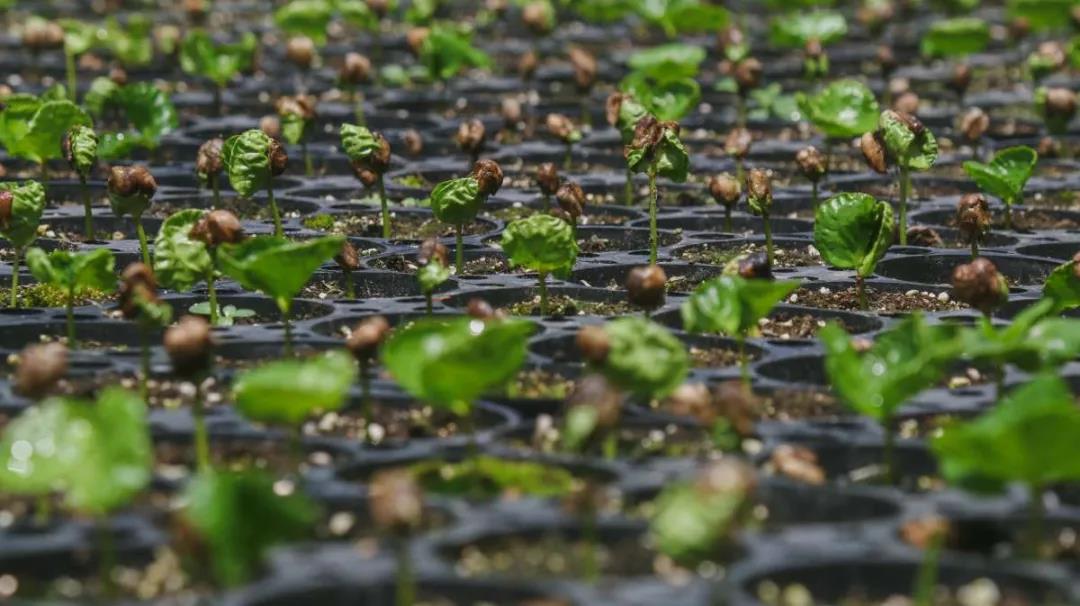
Criollo is a natural mutation of Typica, common in Peru, Bolivia, Colombia and Mexico. Some Latin American producing countries also call Typica "Criollo," so Criollo can be thought of as a localized Typica.
Some hold that the best Maragogype comes from Mexico rather than Guatemala, though supply and quality from both regions vary. Maragogype beans are large and produce a smooth, rich, aromatically appealing cup.
Processing
Most Mexican beans are washed. Harvested cherries pass through a depulper to separate most of the fruit from the bean, then the parchment goes into a clean water tank to ferment and shed the remaining mucilage. In the past — about five years ago — washing was usually the preferred method for quality coffee.
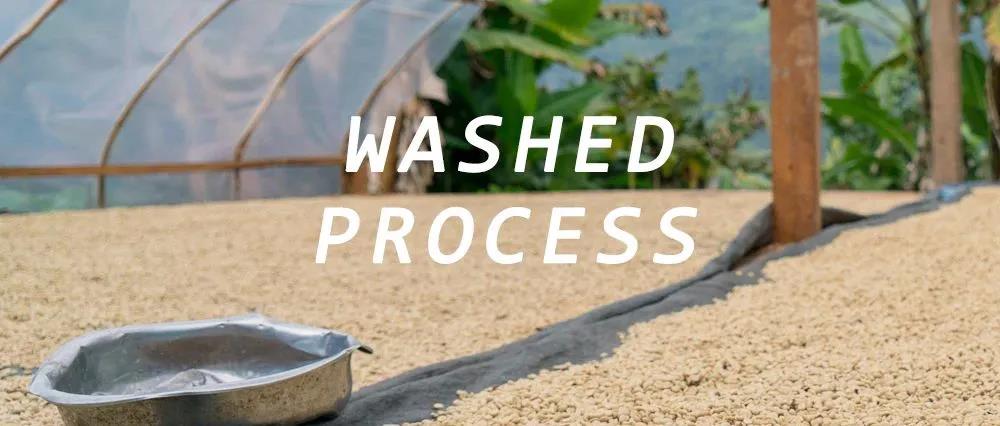
FrontStreet Coffee finds that washed processing gives coffee more pronounced acidity, better cleanliness, a medium mouthfeel and the most consistent green-bean quality. The clearest sign of washed processing in roasted beans is a well-defined silver-skin midline.
Bean Grading
Mexico shares its grading system with Guatemala and Costa Rica.
SHB = Strictly Hard Bean
GHB = Good Hard Bean
HB = Hard Bean
Pacific = Standard Grade
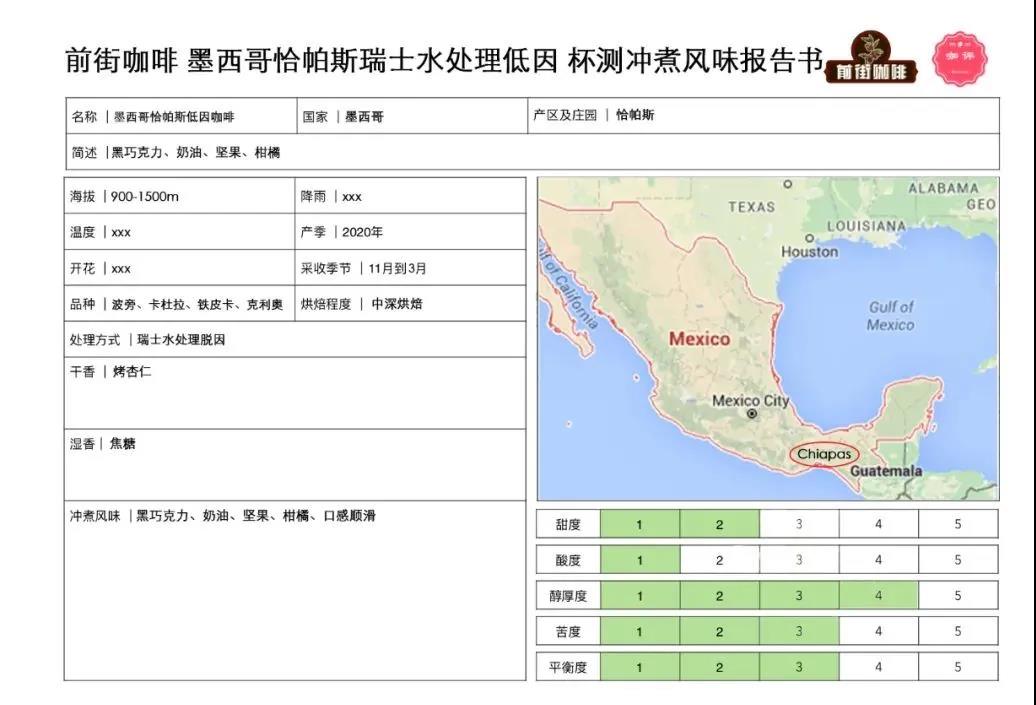
As noted, FrontStreet Coffee acquired Mexican beans for research, and this particular lot is unusual: Mexican decaf.
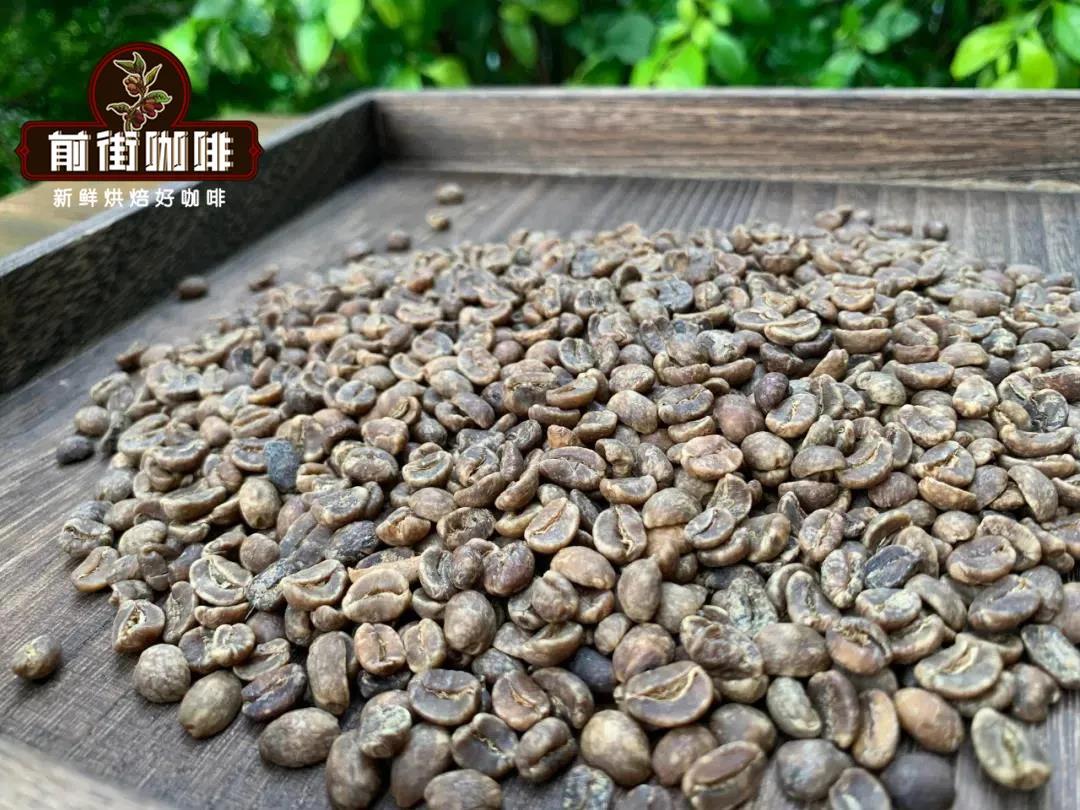
Origin: Mexico
Region: Chiapas
Altitude: 900-1500 meters
Varieties: Bourbon, Caturra, Typica, Criollo
Processing method: Swiss Water Process
Grade: HG
Harvest season: 2020
The Swiss Water Decaffeination Process
This lot uses Swiss Water decaffeination. Green beans are soaked in hot water, a stage during which caffeine is partly removed. The soaking solution is then filtered through activated carbon, and finally returned to the beans.
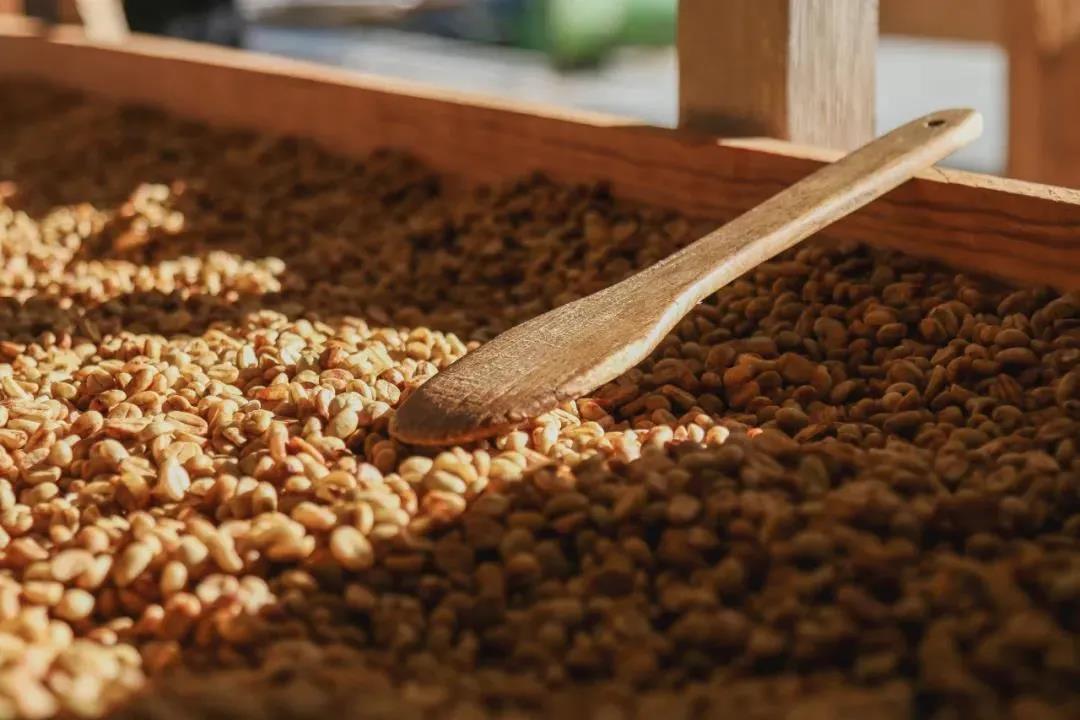
Those steps effectively remove 99.9% of the caffeine. Besides avoiding chemical solvents, the soaking solution can be reused across different batches.
How FrontStreet Coffee Roasts Mexican Decaf
Roaster: Yangjia 800N
Preheat to 200°C, then reduce to 165°C before loading. Set the damper to 3 and the heat to 130. The turning point comes at 1'32"; hold the heat. Yellowing occurs at 5'50" and the grassy aroma fades, marking the dehydration phase. Reduce heat to 110 and open the damper to 4. On reaching 166°C, reduce heat to 110 again.
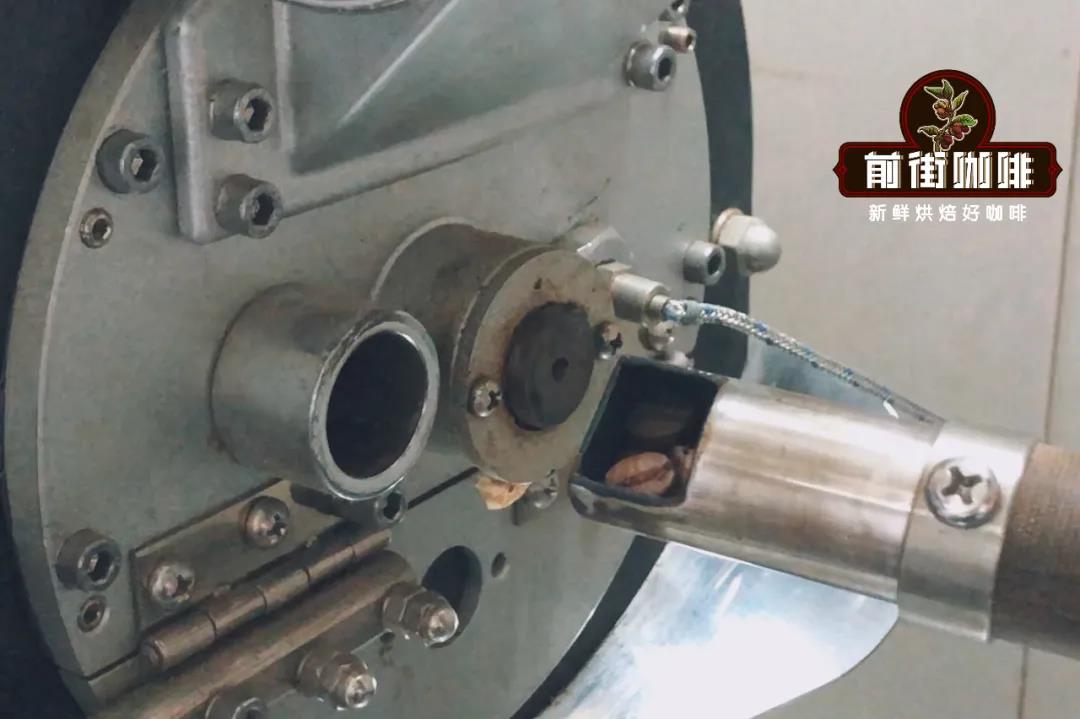
Wrinkles develop on the surface and the toasted aroma turns to coffee aroma — the prelude to first crack. Hold the heat steady, open the damper to 5, and listen carefully. First crack begins at 9'30" and the damper opens fully to 5. Development after first crack runs 3 minutes, ending at 196.4°C when the beans are discharged.
FrontStreet Coffee Cupping Report
FrontStreet Coffee Brewing Recommendations
Filter: Kono dripper
Water temperature: 88.8°C
Coffee dose: 15g
Coffee-to-water ratio: 1:15
Grind size: Medium (75% retention on a Chinese standard #20 sieve)
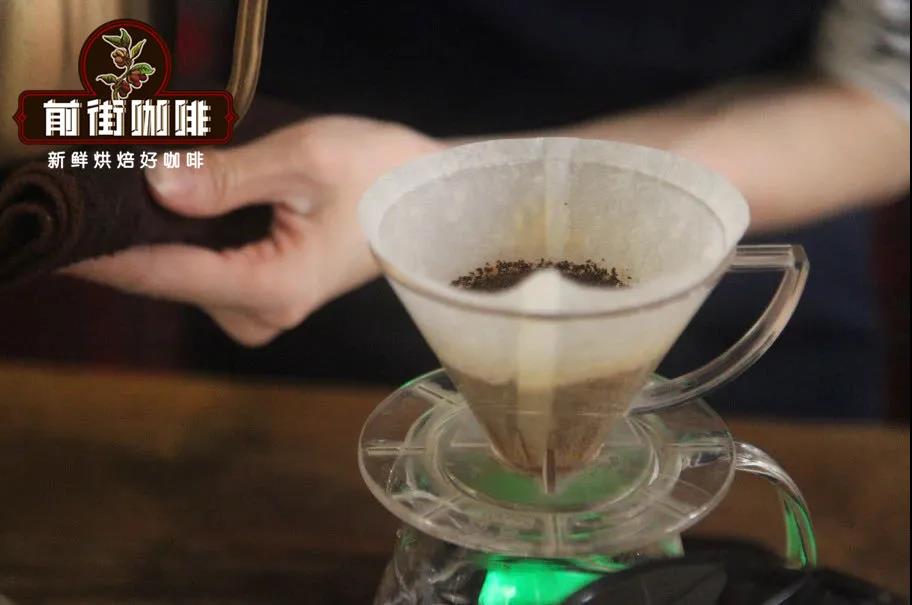
Method: Three-stage extraction. Bloom with 30g of water for 30 seconds. Using a thin stream in concentric circles, pour to 125g and pause. When the level drops and the bed is about to be exposed, continue to 225g and stop. When the bed is about to be exposed again, lift the cone away. Total brewing time is 3 minutes and 10 seconds.
Brewing flavor: Dark chocolate, cream, nuts and citrus, with a smooth mouthfeel.
FrontStreet Coffee Recommendation
Mexican coffee's mild, low-acid balance makes it a natural fit for milk drinks, and the same is true of the beans FrontStreet Coffee blends for that purpose. If you mainly pull espresso or use a moka pot, the Classic Blend is designed exactly for that: a traditional Mocha-Java-style recipe with outstanding crema that cuts cleanly through milk in a latte, cappuccino or Dirty. FrontStreet Coffee's Black Cocoa Blend, made from 100% Arabica, keeps the body and crema while staying economical, and the House Blend combines Brazil Cerrado with Colombia Huila for the familiar, well-rounded espresso profile many cafés pour every day.
For pour-over or cold brew that you plan to soften with milk, choose a medium-dark single origin so the coffee does not disappear behind the dairy. FrontStreet's PWN Golden Mandheling, Papua New Guinea Bird of Paradise and Brazil Queen's Estate all lean toward chocolate, nut and caramel notes that hold their own once milk is added, while the Strawberry Candy Geisha blend and Colombia Papayo — with their rose, passion-fruit and grape characters — make a distinctive cold brew with just a splash of milk.
Important Notice :
FrontStreet Coffee is a long-established specialty coffee roaster in Guangzhou China, selling freshly roasted beans from its own farm in Yunnan as well as dozens of carefully selected single-origin beans from around the world for both pour-over and espresso. The products deliver consistently excellent quality and great value, with shipping within 24 hours. Guangzhou's FrontStreet Coffee shop is recommended by many coffee lovers, and the beans are now available online at the Tmall 。
FrontStreet Coffee has moved to a new address:
FrontStreet Coffee Address: 315,Donghua East Road,GuangZhou
Tel:020 38364473
 Scan and follow the En Gafei WeChat official account. Please indicate that the reprint comes from "En Gafei".