Yemen: An Ancient Coffee Growing Nation and Flavor Profile of Sun-Dried Yemen Coffee
Yemen is one of the ancient coffee-growing countries, with a rather wild flavor profile. Since the 17th century, Europeans have been fascinated by wild Yemen Mocha, and that fascination continues today. Yemen has an extremely dry climate, with annual rainfall of 400-750mm. Fortunately, Yemen's coffee genetics come from the drought-resistant Harrar variety of Ethiopia, so from ancient times to the present, Yemen's coffee has been processed exclusively by the natural method. Yemen is also the only coffee-producing country in the world that uses natural processing exclusively.
The Origin of Yemen Mocha Coffee
Yemen sits at the southwestern tip of the Arabian Peninsula, bordering Saudi Arabia and Oman, with coastlines along the Red Sea, Gulf of Aden, and Arabian Sea. The western and southern regions feature continuous mountains and plateaus, with Jabal an Nabi Shu'ayb reaching 3,666 meters, the highest point in Yemen and the Arabian Peninsula. The northeastern region consists of vast highland areas.
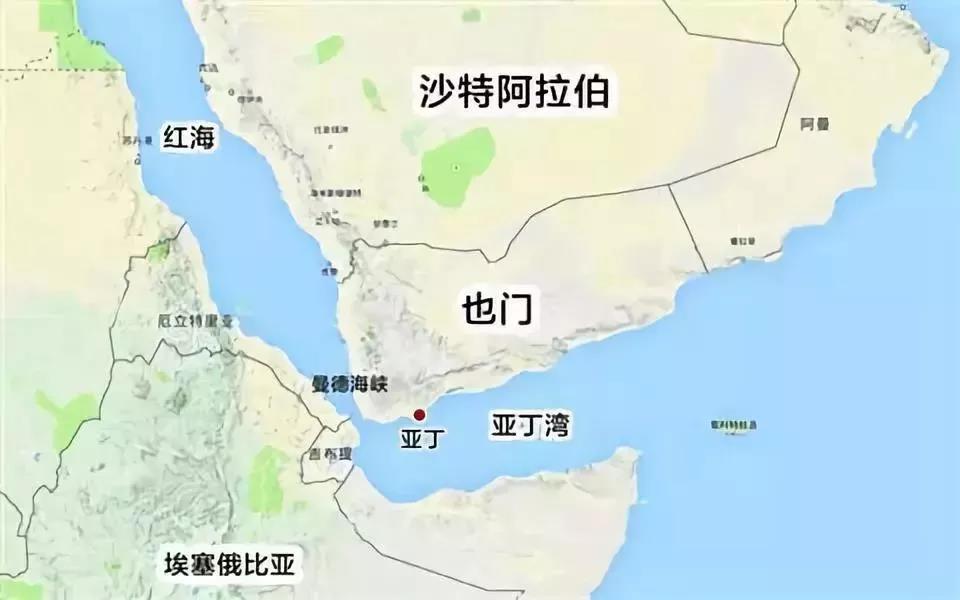
When people hear "Mocha coffee," many think of the Italian milk coffee with chocolate sauce sold in cafés today, or the coffee made with a moka pot. But the Yemen Mocha coffee discussed here refers to the Yemeni coffee first sold to Europe in the early 17th century. It was exported through the ancient small port of Mocha Port, which astonished Europeans. They began calling the delicious coffee from Mocha Port "Mocha coffee," and that is the origin of the term.

Today, the old Mocha port has long been abandoned due to sediment accumulation (now known as Al Makha), becoming a historical port with only white sand beaches remaining. Exports have shifted to the northwestern port of Hodeida. Yet people have long been accustomed to the name Mocha, and its reputation resonates worldwide. The name is used to this day.
Yemen Coffee Growing Regions
Yemen's specialty coffee growing regions are concentrated mainly in the central highlands: Mattari, San'ani, and Ismaili.
Mokha Mattari
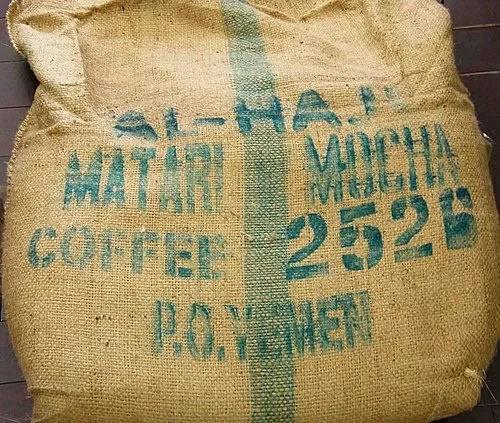
Mokha Mattari is the most renowned coffee market name from Bani Mattar (also spelled Bany Mattar), west of Yemen's capital, Sana'a. It is coffee produced at high altitudes, typically showing good red wine aroma, dried fruit flavors, and a rich body. When dark roasted, it often displays chocolate bittersweet flavors. High-quality Mattari beans are small, with raw beans that have a prominent sweet wine aroma and moderate fermented ripe-fruit notes. It always emerges a winner thanks to its more pronounced Yemeni character. Elevation: approximately 2,000-2,400 meters.
Mokha San'ani
Mokha San'ani is a broad market name for coffee from several growing areas west of Yemen's capital, Sana'a. It is a blend from tens of thousands of small farms on the slopes near the capital (the image shows Yemen's capital, Sana'a). The growing altitude is slightly lower than Mattari's. Generally it has a lighter body than Mattari and lower acidity, but good fruit aroma, often with better ripe-fruit and wild characteristics than Mattari. Elevation: approximately 1,650 meters.

Mokha Ismaili
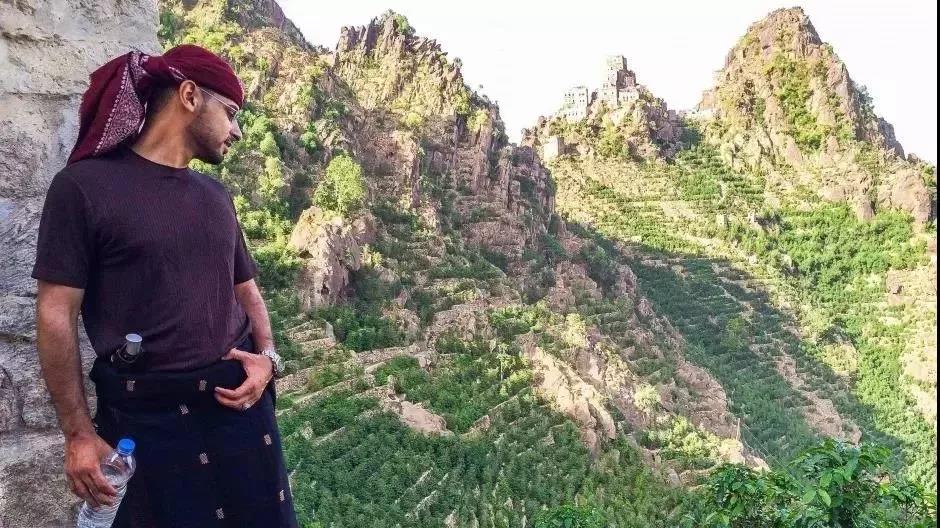
Mokha Ismaili is one of the traditional ancient varieties; some also consider it a growing region. It is a market name for a famous coffee from central Yemen and has also been described as a traditional botanical classification of Yemeni coffee with high beverage quality. It is grown at high altitudes in rugged mountainous areas above 1,981 meters. Its characteristic is rounder-shaped beans with inconsistent sizes, smaller than Mattari beans, with a rich body and high complexity. Generally it often outperforms Mattari. This is the least produced and most expensive Yemen Mocha (Yemen Mocha is already not inexpensive to begin with). High-quality Mokha Ismaili comes from the mountainous side areas of the Hirazi region (though not as famous as Bani Matar, it has the best local reputation in Yemen). The highest altitude in the Hirazi region reaches 2,438 meters.
Yemen Coffee Varieties
In recent years, Yemen has mainly cultivated Typica and Bourbon varieties. The Mocha mentioned above is actually the real variety of Yemen coffee, called Udaini. It is not only an ancient Typica variety but also one of the most common and oldest coffee varieties in Yemen. The beans are very small, and some call them "small Mocha." Mocha is a flat bean, not a round bean, small but aromatic and flavorful.

A Flavor Profile That Divides Opinions
Yemen coffee's wild flavor profile creates polarized reviews among connoisseurs. Those who like this wild character consider it a wild fragrance brought by fermentation, while those who dislike it think it tastes like durian. Such reactions repeatedly sparked FrontStreet Coffee's curiosity, so they procured Yemen Mocha to roast in-house, then experienced this wild sensation through cupping and brewing. FrontStreet Coffee believes that although Yemen Mocha's flavor is wild, with spicy aromatics and a lack of cleanliness, there is always a hint of surprise behind the wildness.

Country: Yemen
Region: Mattari
Elevation: 1,300-1,900m
Varieties: Typica, Bourbon
Processing: Natural
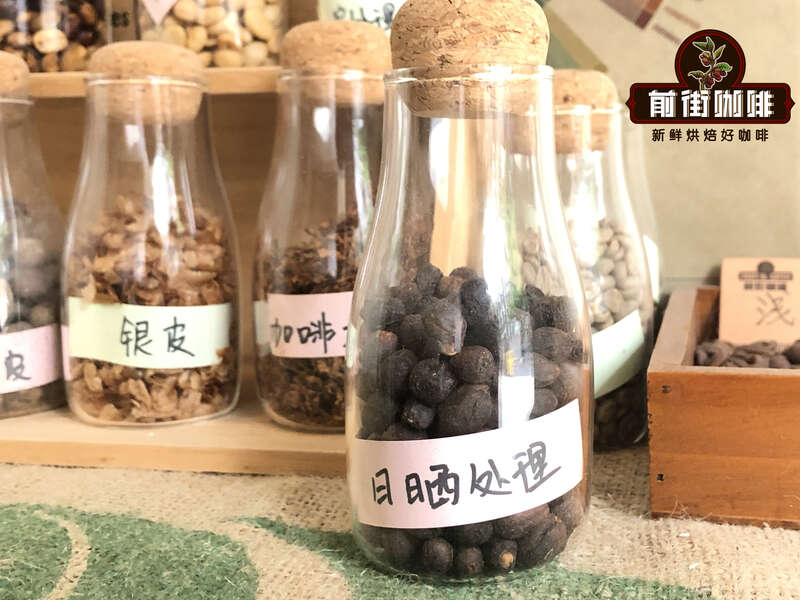
Yemen's Natural Processing Method
Yemeni farmers' natural processing is coarser than Ethiopia's. Coffee cherries are not picked when they turn red; instead, they are left to dry on the branches until they turn purplish-black and fall to the ground, where they are collected. This differs from the refined natural processing of Yirgacheffe or Sidamo, where red cherries are picked and spread on raised African beds. It is the main reason for Yemen's particularly wild flavors. Because farmers store natural-processed beans for varying durations, almost every batch of green beans has its own distinct character.
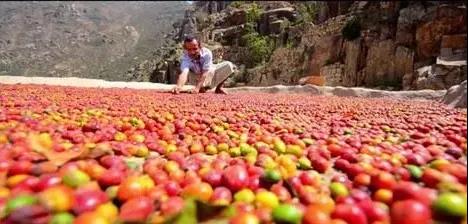
Yemen's natural processing involves hand-harvesting fully ripe coffee cherries and then placing them directly in dedicated coffee drying areas or their own compacted earthen front yards to sun-dry. During drying, much like drying rice, wooden rakes are used to turn the beans for even results. After about twenty days, when the coffee is completely dry, the outer fruit flesh and skin are removed to extract the beans. Yemeni coffee is rich, complex, wild, and mellow, with strong fermentation notes and lower acidity. It also often contains an uncertain factor — the timing of seasonal rainfall — that makes it unpredictable. Calling it the most special coffee in the world is no exaggeration.
FrontStreet Coffee's Green Bean Analysis
When lightly roasted, these Yemen Mocha beans show relatively bright fruit acidity, with fruity sweet aromatics and flavors of spice and chocolate. When medium-roasted, they present red berries, vanilla, cream, caramel, and chocolate. When dark roasted, they show prominent chocolate, nut, and spice flavors.
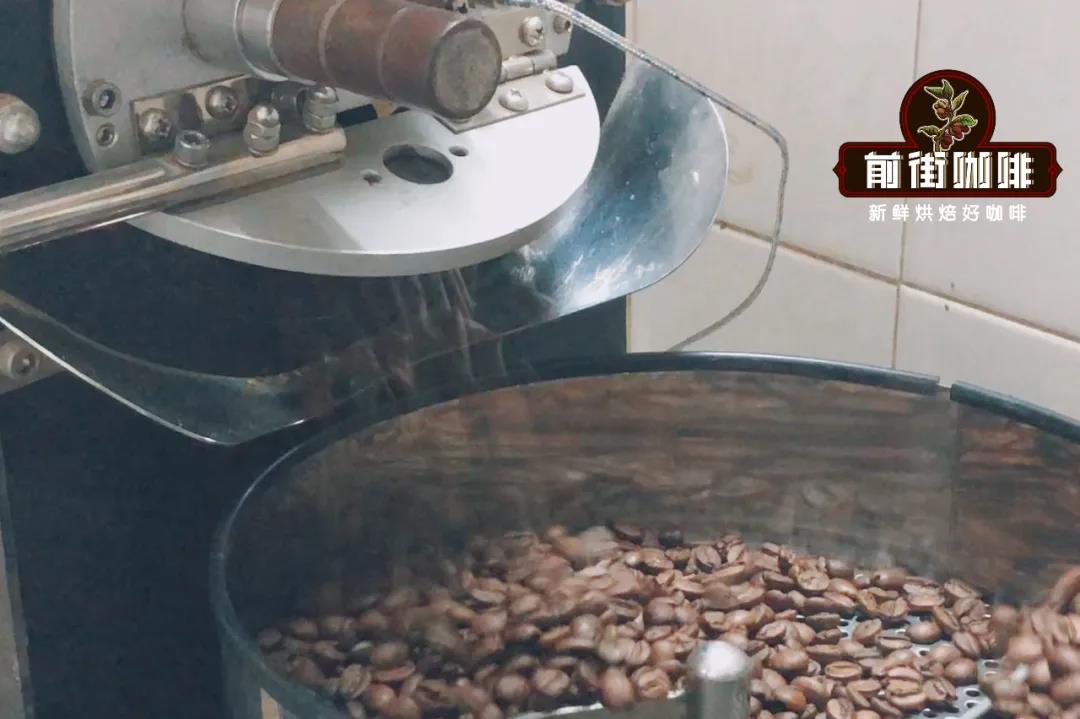
FrontStreet Coffee's roaster chose a medium roast. Yemen Mocha beans have relatively low moisture content, and given the inconsistent bean sizes, the drop temperature for low-moisture beans should not be too high. Early dehydration should also be accelerated to retain moisture for first crack development of flavor and body. Preheat for 30 seconds, open the air damper to 3; once the beans turn light green or white, open the damper to 4; and after first crack, open to 5 (maximum).
FrontStreet Coffee's Roasting Recommendations
Heat the roaster to 170°C and load the beans, with the air damper at 3. After 1 minute, adjust heat to 140°C, keeping the air damper unchanged. Roast to 5'00", when the temperature reaches 147.2°C and the bean surface turns yellow, the grassy aroma disappears completely, and dehydration is complete. Adjust heat to 110°C and the air damper to 4.

At 8'00", ugly wrinkles and black spots appear on the bean surface, and the toast aroma clearly shifts to coffee aroma, which can be defined as the prelude to first crack. At this point, listen carefully for the sound of first crack. At 8'23", first crack begins; reduce heat to 60°C and open the air damper fully (adjust heat very carefully, not so low that cracking stops). Drop at 197.9°C.
FrontStreet Coffee's Cupping Report
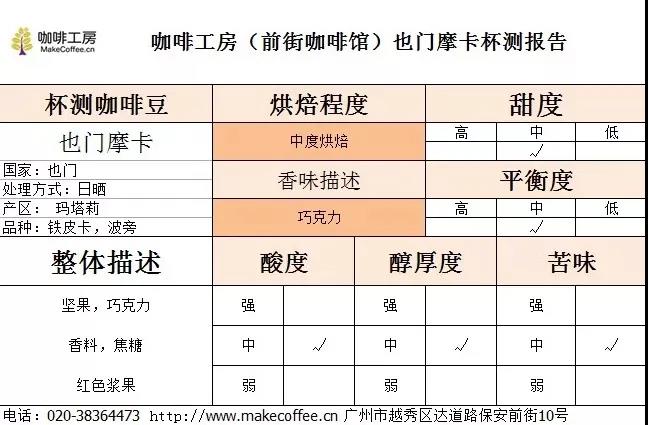
FrontStreet Coffee's Brewing Recommendations
FrontStreet Coffee recommends brewing Yemen Mocha in a Kalita dripper. Viewed from the side, the Kalita's trapezoidal design is wider at the top and narrower at the bottom, with a circular top. This shape helps concentrate the water flow and lets the coffee particles distribute evenly, reducing stacking. The many ribs on the cup wall run in straight lines with consistent spacing, aiming to increase degassing and flow speed. Its flow rate is relatively slow, relying mainly on immersion extraction, which brings out better body and richness.

Grind: granulated-sugar size / medium-coarse (70-75% pass-through on the No. 20 standard sieve)
Water temperature: 90°C
Coffee-to-water ratio: 1:15
Coffee amount: 15 grams
FrontStreet Coffee's segmented technique: first pour 30g in a circular motion to moisten the coffee bed evenly, and bloom for 30 seconds. Then slightly increase the flow and pour directly in the center with a small stream to 125g for the first segment. When the water level drops and is about to expose the coffee bed, continue pouring in the center with a small stream to 225g, then stop. When the water level drops and is about to expose the bed again, remove the dripper. Total extraction time from the start of the bloom is 2'00".
Brewing flavors: medium complexity, with subtle grape acidity appearing at the end of the mouthfeel; a long spice aftertaste; a sweet, smooth, mouth-watering quality with a Middle Eastern milk-tea sensation that lasts a long time, leaving malt sweetness in the bottom of the cup.
FrontStreet Coffee Recommendation
Yemen's wild, sun-dried character comes from leaving the fruit on the bean all the way through drying, and if that style appeals to you, FrontStreet Coffee's Ethiopian naturals are a wonderful next step. FrontStreet's Natural Red Cherry is made only from fully ripe, defect-free cherries that are dried on raised beds for three to five weeks, turned every two to three hours in the first few days. Because the fruit dries with the bean, it keeps the classic Yirgacheffe profile while adding a tropical fruit lift: citrus-like acidity, a juicy berry texture, honeyed sweetness, and a creamy smoothness.
For a bolder, more fermented fruit expression, try FrontStreet's Sun-Dried Flower Queen from the Hambella region of Guji. This traditional natural is dried on raised beds for 21 days, and after a medium-light roast it pours out a light fermented wine aroma, florals, citrus, and mango, with honeyed sweetness, cocoa, a touch of spice, and a dense, lingering body — close in spirit to the wild pleasure of a good Yemen Mocha.
Important Notice :
FrontStreet Coffee is a long-established specialty coffee roaster in Guangzhou China, selling freshly roasted beans from its own farm in Yunnan as well as dozens of carefully selected single-origin beans from around the world for both pour-over and espresso. The products deliver consistently excellent quality and great value, with shipping within 24 hours. Guangzhou's FrontStreet Coffee shop is recommended by many coffee lovers, and the beans are now available online at the Tmall 。
FrontStreet Coffee has moved to a new address:
FrontStreet Coffee Address: 315,Donghua East Road,GuangZhou
Tel:020 38364473
 Scan and follow the En Gafei WeChat official account. Please indicate that the reprint comes from "En Gafei".