Asian Coffee Growing Countries: India's Coffee Growing Regions, Monsooned Coffee Brewing Recommendations & Production
Professional Coffee Knowledge Exchange
An Ancient Coffee Variety
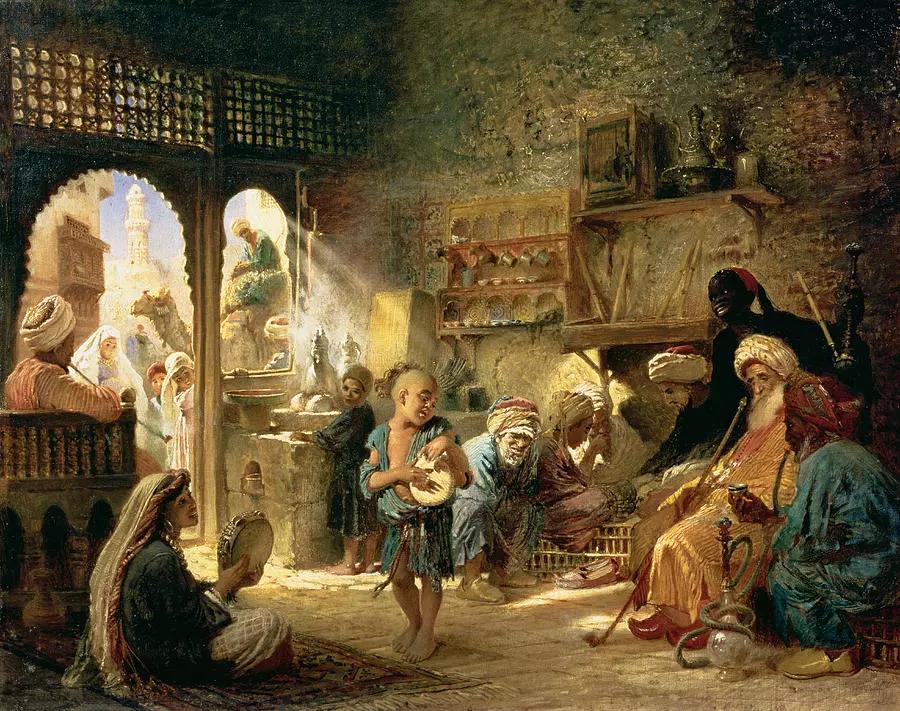
When people list ancient coffee varieties, Ethiopia's native heirlooms and Yemen's Mocha are beyond dispute. India actually began cultivating coffee in the sixteenth to seventeenth centuries too, making it the third oldest origin. Botanists still leave India off the ancient-variety list, because the genetic polymorphism of the coffee grown there at the time can no longer be observed.
The Boundary Between Old and New World Coffee
Legend holds that Indian coffee began in 1600, when a Sufi saint made the pilgrimage to Mecca and, on the return journey, stole seven coffee seeds from Yemen to plant in southwestern India. Documentary records, however, trace the introduction to 1695. The timelines disagree, but both agree that India was cultivating coffee by the seventeenth century at the latest - earlier than Europe's eighteenth-century transplant of "Old World" Ethiopian and Yemeni coffee to the "New World" of Central and South America and Indonesia. India's coffee tradition sits exactly on the line between the old and new worlds.
Without Indian coffee, there would be no coffee in Java, Indonesia (where Indian plants were transplanted), and none of the eighteenth-century craze for New World coffee cultivation.
India's Geography and Climate
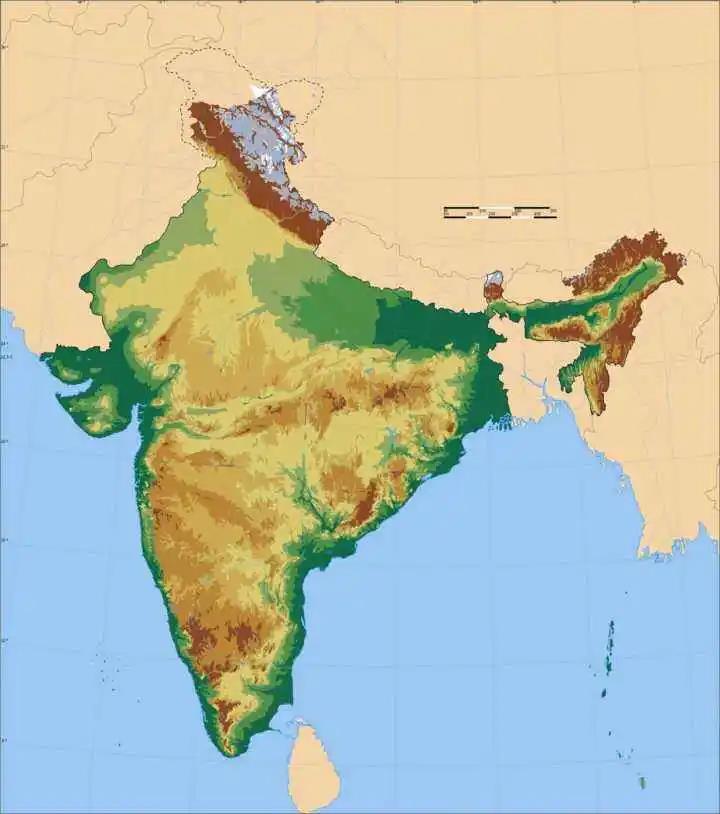
India occupies the Indian Peninsula of the South Asian subcontinent and has a coastline of 6,083 kilometers. Plains, plateaus and gentle hills account for roughly 60% of the land. The country falls into three broad regions: the northern mountains, the central plains and the southern plateau. The northern mountains belong to the Himalayan system, towering in places, with many peaks above 7,000 meters. The central Indus and Ganges plains form one of the world's great plains, while the southern Deccan Plateau mostly sits between 300 and 800 meters.
Narrow alluvial plains line the coast. The northwest holds the sandy Indian Desert. The major rivers include the Ganges, Brahmaputra, Narmada, Godavari and Krishna, all carrying large volumes of water with strong seasonal swings. Most of the country has a tropical monsoon climate - hot, with sharply defined dry and rainy seasons. The northwest has a mountain climate, the Indus plain a subtropical grassland and desert climate, and the southwest a tropical rainforest climate.
Indian Coffee Varieties
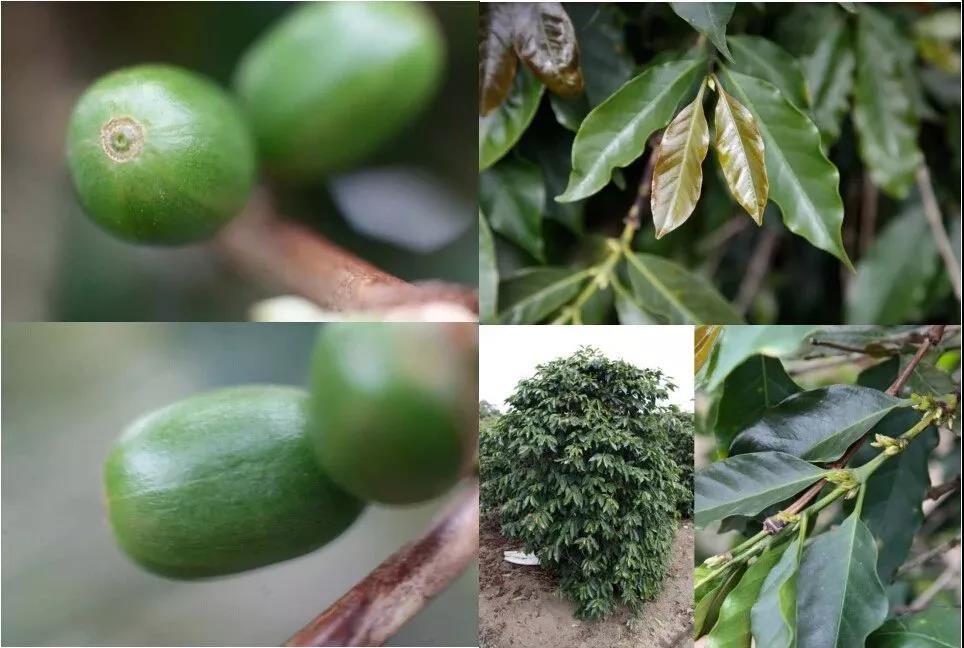
India's main producing areas lie in southwestern Karnataka, where both Arabica and Robusta are grown, and southwestern Kerala, which is dominated by Robusta. "Old World" Indian coffee is famous for a wild flavor, and that reputation made India one of the first countries to improve its varieties. Between 1918 and 1920 the horticulturist Kent selected a drought-tolerant, leaf-rust-resistant Typica variant on Indian plantations - named Kent - and introduced it to New World producing countries. India later bred more alternatives, yet the coffee kept its wild streak.
The Varieties in Detail
Sln288: A hybrid of Indian Arabica and Liberica, resistant to leaf rust, with a flavor close to Arabica but slightly wild.
Sln795: A hybrid of SLN288 and Kent that avoids Liberica's off notes, with a more elegant flavor and stronger disease resistance than SLN288. It remains India's leading cultivated variety.
Sln9: A carefully developed low-grade variety, a cross of the Ethiopian wild variety Tafarikela and Timor, with high yield, excellent disease resistance and a slight Geisha-like flavor.
Sln12: A hybrid of Caturra and Timor, shortened to Indian Catimor, with a wild flavor, high disease resistance and high yield.
Sln:274: Small-grained Robusta with a wheat-tea flavor, sweetness, and peanut and nut aromas - considered emperor-level among Robusta varieties.
SlnC x R: A hybrid of Congoensis and Robusta with Indian spice character, a touch of fruit aroma and acidity, mainly used for espresso blends.
That recurring "wild" flavor is what drew FrontStreet Coffee in. To explore it firsthand, we sourced a monsoon-processed Indian coffee - also known as wind-cured coffee - and put it through roasting, cupping and brewing trials.

Coffee Details
Region: Malabar Coast, southern India
Altitude: 1,100-1,200 meters
Varieties: Kent, Sln795, Catimor, SLN9
Processing: Monsoon / wind-cured natural processing
The Origin of Monsoon, or Wind-Cured, Processing
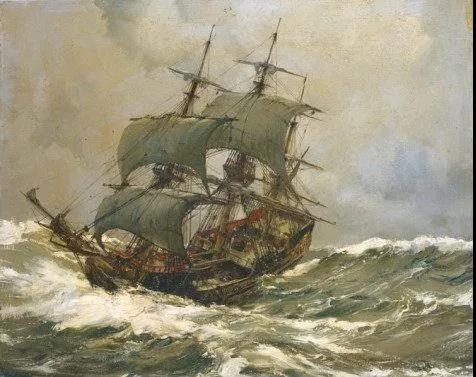
From the seventeenth to eighteenth centuries, India shipped coffee beans to Europe by sailing ship, a voyage of six months. The green beans sat at the bottom of the ship's hold, absorbing moisture and salt from the sea air. By the time they reached Europe they had deteriorated, their color shifting from deep green to the yellow-brown of rice grains. The fruity acidity had almost vanished, replaced by an unexpectedly strong nutty, grainy flavor and a rich texture, something like brown rice tea. Odd flavors always find admirers, and Scandinavians in particular loved this golden alternative. In 1869 the Suez Canal opened and steamships appeared, cutting the travel time from India to Europe. Customers began complaining that Indian coffee had "lost its flavor," missing the old yellow color and nutty taste. Orders fell sharply, and Indian exporters went looking for a fix.
How Modern Monsoon, or Wind-Cured, Processing Works
Every May and June, monsoon winds sweep southwestern India. Wind-cured coffee must start as natural-process beans. Farmers spread them about 12-20 centimeters deep in curing warehouses for 5 days, raking them repeatedly so every bean meets the extremely humid air. The beans are then loosely bagged and stacked so the monsoon wind can pass through the sacks. The curing warehouse faces west to catch the salty, humid wind blowing from the southwest, with all windows open and the beans spread flat in the yard. After a certain degree of curing, the beans are bagged again - but the sacks cannot be filled too full, and cannot be stacked too densely, or poor ventilation will invite mold. There the bags are repacked and restacked once a week for a total of 7 weeks, until the beans change color and flavor. The beans must also be periodically emptied and the burlap sacks replaced to prevent mold - a process that is time-consuming and labor-intensive.
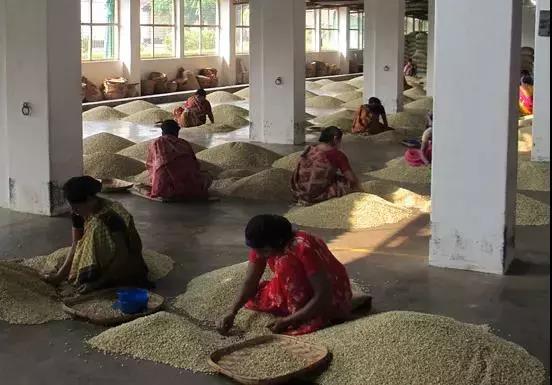
The wind-curing period lasts about twelve to sixteen weeks. After maturation the beans get a smoke treatment to repel weevils, and finally a manual sorting to remove beans that never turned golden yellow. Starting in June and after three to four months of wind-curing, the green beans expand to one or two times their original volume, their color shifts from green to golden yellow, weight and density drop, moisture content reaches about 13%, and acidity falls - a substantial change in both quality and quantity. Beans that were not properly cured, along with other debris and defective beans, are filtered out again, leaving only those affected by the "monsoon." Then come cupping, grading, bagging and export. Every year from October to February is the best season for making "monsoon" coffee.
To FrontStreet Coffee, monsoon coffee tastes like barley tea: grain notes lead the profile, with a light fruit acidity behind them. In another coffee that flavor might read as a defect, but in monsoon coffee it is entirely normal.
FrontStreet Coffee's Green Bean Analysis
Monsoon coffee green beans are pale, almost yellowish-white, with moderate density. FrontStreet Coffee opted for medium heat and a gradual climb. The yellowing point arrives at around 4 minutes 50 seconds, after which heat is reduced and airflow increased to enter the Maillard reaction. At first crack the airflow is fully opened while the temperature holds at roughly 184.4°C, and the beans are dropped 2 minutes 30 seconds after first crack.

FrontStreet Coffee's Roasting Recommendations
Roaster: Yang's 600g Semi-direct Heat
Preheat the roaster to 200°C before loading, set the air damper to 3, turn on the heat after 30 seconds and adjust it to 160. The temperature return point comes at 1'25". Hold the heat; yellowing arrives at 4'50" as the grassy aroma disappears and the dehydration stage begins. Reduce heat to 140 and open the air damper to 4; at 168°C, reduce heat again to 110.
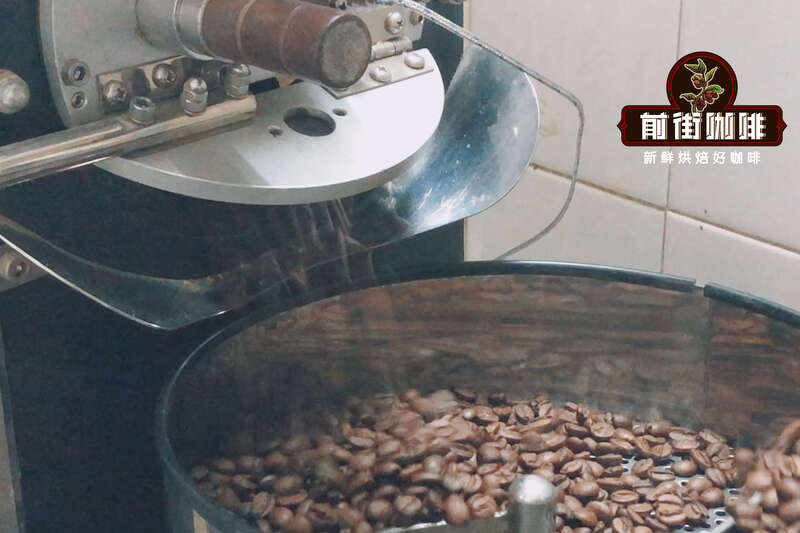
After 8 minutes of dehydration, wrinkles and dark markings appear on the bean surface and the toast aroma turns to coffee aroma - the signal that first crack is near. Keep the heat unchanged, open the air damper to 5 and listen for the crack. First crack begins at 8'55" with the air damper fully open to 5. Development time after first crack is 2 minutes 30 seconds, dropping at 197.8°C.
FrontStreet Coffee's Cupping Report

FrontStreet Coffee's Brewing Recommendations
For a darker roast, and to spotlight the rich body, FrontStreet Coffee brews with a Kono dripper. Its defining feature is its soaking action: soaking extracts more from the grounds and amplifies the full mouthfeel. The Kono has few ribs, all at the bottom, so the filter paper seals tightly against the dripper to restrict airflow, slowing the flow and extending contact time between water and coffee.

Brewing Parameters
Water Temperature: 88-89°C
Ratio: 1:15
Grind Size: Medium-coarse, coarse-sugar size (70-75% pass-through on a #20 sieve)
FrontStreet Coffee's Three-Stage Method: First pour 30 g of water for a 30-second bloom, then pour 95 g more (the scale reads around 125 g), finishing in about 1 minute. When the water level drops to two-thirds of the coffee bed, pour the remaining 100 g (the scale reads around 225 g), finishing in about 1 minute 40 seconds. Complete the drip between 2 minutes and 2 minutes 10 seconds, remove the dripper and finish extraction.
Brewed Flavor
Rich caramel, raisin and herbal notes, with a texture like brown rice tea and a berry-like aftertaste.
FrontStreet Coffee Recommendation
Indian monsoon coffee is all about a wild, earthy, grain-led character that few origins can match. If you want to keep exploring coffee with real personality, the FrontStreet Ethiopia Hambella Sun-Dried Hualkui is a thrilling counterpart. Grown in the Hambella area of Guji, Sidamo, on a 200-hectare farm and dried traditionally on raised beds for 21 days with regular turning and hand sorting every three to five days, it is roasted light-to-medium. Expect a light fermented-wine aroma, florals, citrus and mango, with honeyed sweetness, a cocoa through-line and a touch of spice - a thick body and a long finish.
For a deliberately wilder, forest-grown profile, try the FrontStreet Ethiopia Kafa Forest. These trees grow in shade between 1,400 and 2,100 meters, and the medium-light roast keeps the cup focused: pronounced white florals, bright lemon acidity, sweet orange and bergamot, a faint melon-and-nut sweetness on the return, and a green-tea-like body.
Important Notice :
FrontStreet Coffee is a long-established specialty coffee roaster in Guangzhou China, selling freshly roasted beans from its own farm in Yunnan as well as dozens of carefully selected single-origin beans from around the world for both pour-over and espresso. The products deliver consistently excellent quality and great value, with shipping within 24 hours. Guangzhou's FrontStreet Coffee shop is recommended by many coffee lovers, and the beans are now available online at the Tmall 。
FrontStreet Coffee has moved to a new address:
FrontStreet Coffee Address: 315,Donghua East Road,GuangZhou
Tel:020 38364473
 Scan and follow the En Gafei WeChat official account. Please indicate that the reprint comes from "En Gafei".