African Coffee Uganda Coffee Regions Uganda Coffee Processing Methods & Hand-dripped Uganda Coffee Flavor
Introduction to Uganda Coffee
Ugandan coffee is almost unheard of in the specialty coffee industry. The country has primarily cultivated Robusta beans. In recent years, with coffee production booming, Uganda has also started growing Arabica. The local government has introduced new laws to manage coffee cultivation and help Uganda improve the quality of its main export, coffee beans.
Country Overview
Uganda sits at the source of the Nile River, an inland African country with no coastline. It has fertile land with volcanic soils in both the eastern and western regions, plus abundant rainfall. Some areas enjoy two harvest seasons, April to June and October to February. FrontStreet Coffee believes Ugandan coffee has plum notes, ripe fruit flavors, a full-bodied juice texture, and rich, solid character.
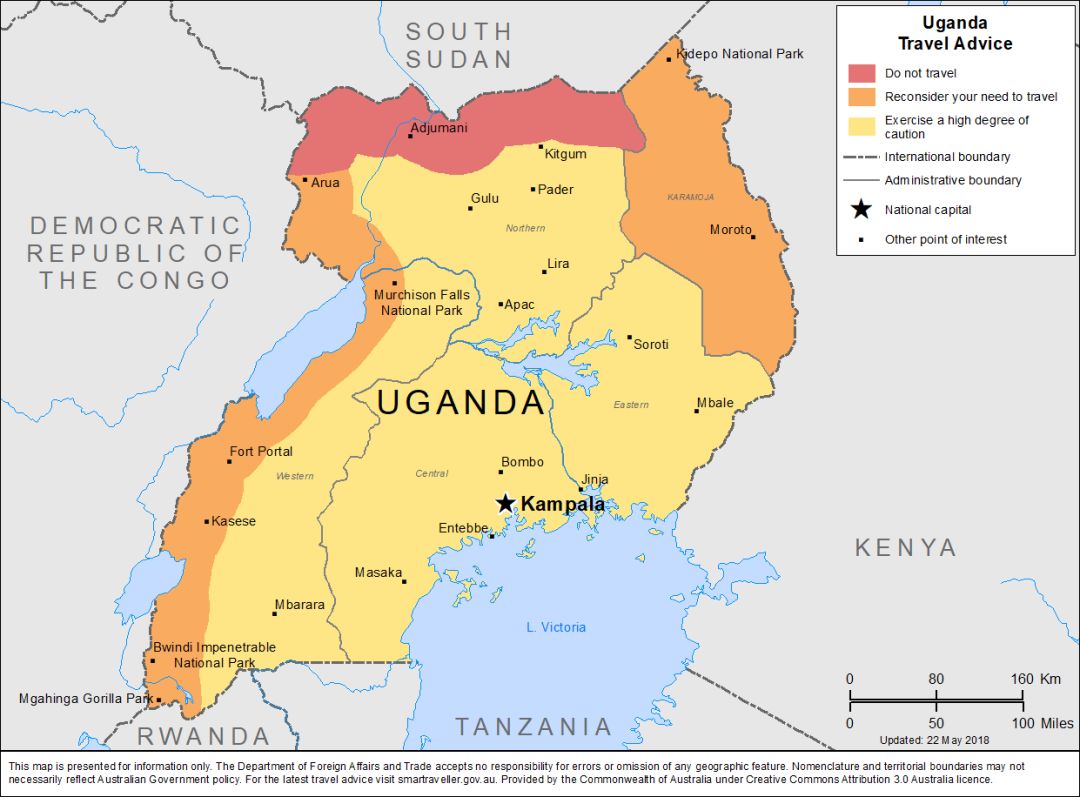
Although Uganda shares a long coffee production history with other East African countries, quality improvements have been hindered by ethnic conflicts and wars. High-quality coffee is mostly grown in regions bordering Kenya, and some fine beans are even transported to Kenya and sold as Kenyan coffee.
Uganda is an excellent location for coffee cultivation. Even so, armed conflicts damaged the industry over the past few decades, particularly in the West Nile production regions during the 1990s. Since the fighting stopped 15 years ago, Uganda has emerged as a country with rapidly developing coffee production.
Improving Coffee Quality Through Cultivation Methods
According to Financial Network reports, under new laws effective from 2020, all coffee growers will be registered and receive identification numbers indicating their land area, number of trees, coffee buyers, sellers, and nursery operators. This new legislation is currently awaiting presidential approval.
The legislation aims to "reform laws that enable the Uganda Coffee Development Authority to regulate, promote, and oversee the coffee industry, and standardize all farm and non-farm activities in the coffee value chain." Parliament stated that it will also help farmers build connections with buyers, construct irrigation systems, and provide planting materials and extension services.
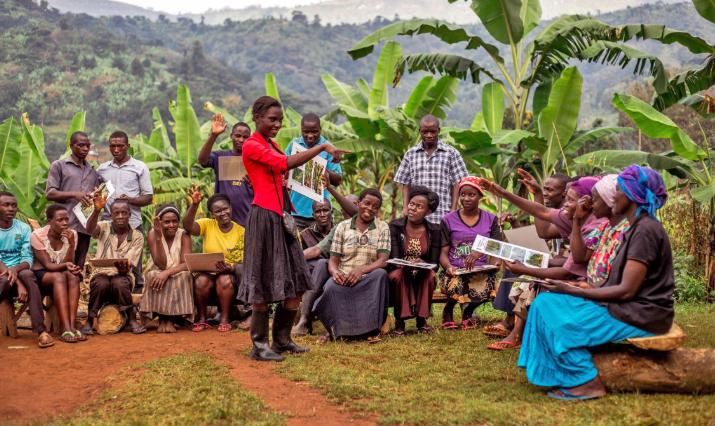
Coffee Growing Regions
Uganda has long been famous for its Robusta coffee, a native species still growing wild in the country's rainforests. You will also find Arabica coffee growing in three regions: Mount Elgon in the east, the Rwenzori Mountains in the southwest, and the West Nile region in the northwest. Each origin is unique, with different coffee characteristics and production methods.
Mount Elgon
Located on the country's eastern border with Kenya, Mount Elgon is actually East Africa's oldest volcano. Coffee farms inhabit its forested slopes, drawing essential moisture from steep ravines. In lower altitude areas, the harvest season runs from June to December; at higher elevations, it does not begin until July and continues through February.
West Nile
The West Nile region lies in northwestern Uganda, with farms at elevations between 1,300 and 1,600 meters. Indigenous trees such as fig trees provide shade for multi-generational farms. Coffee from this region is typically washed processed and known for its citrus aromatics.
Rwenzori Mountains
Often called the "Mountains of the Moon," this range lies on Uganda's southwestern border with the Democratic Republic of Congo. Coffee grows on slopes between 1,500 and 2,300 meters elevation. The nitrogen-rich volcanic soil creates terroir exceptionally suited to coffee. Natural processing is most common here, though washed methods can also be found.
Coffee Grading
Uganda coffee grading follows the same system as Kenya, with AA grade being the best, representing consistently sized and uniform beans.
- AA Plus (AA+): AA grade beans with particularly excellent cup quality (flavor, mouthfeel)
- AA: Screen size 17-18
- AB: Screen size 15-16, representing the majority of production
- C: Screen size smaller than AB
- TT: Lighter beans separated from AA and AB grades using air screeners
- T: Lighter beans separated from C grade using air screeners
- UG: Beans not meeting the above standards
- E Elephant Bean: Large mutated beans where two have merged, also called Elephant ear
- PB Peaberry: Classified by shape, unrelated to flavor or weight
Coffee Varieties
The main Arabica varieties cultivated in Uganda are Bourbon, Kent, SL14, and SL28.
Bourbon
An early variety (pre-coffee history) that evolved from Typica transplants to Yemen, changing from slender pointed beans to round ones. In 1715, France transplanted the round Yemen Mocha beans to Bourbon Island on Africa's east coast (renamed Réunion Island after the French Revolution), giving rise to the name Bourbon. The round Bourbon beans spread to Brazil and Central and South America by 1727. In 1732, Britain transplanted Yemen Mocha to St. Helena Island (later Napoleon's prison), also featuring round Bourbon beans.
Kent
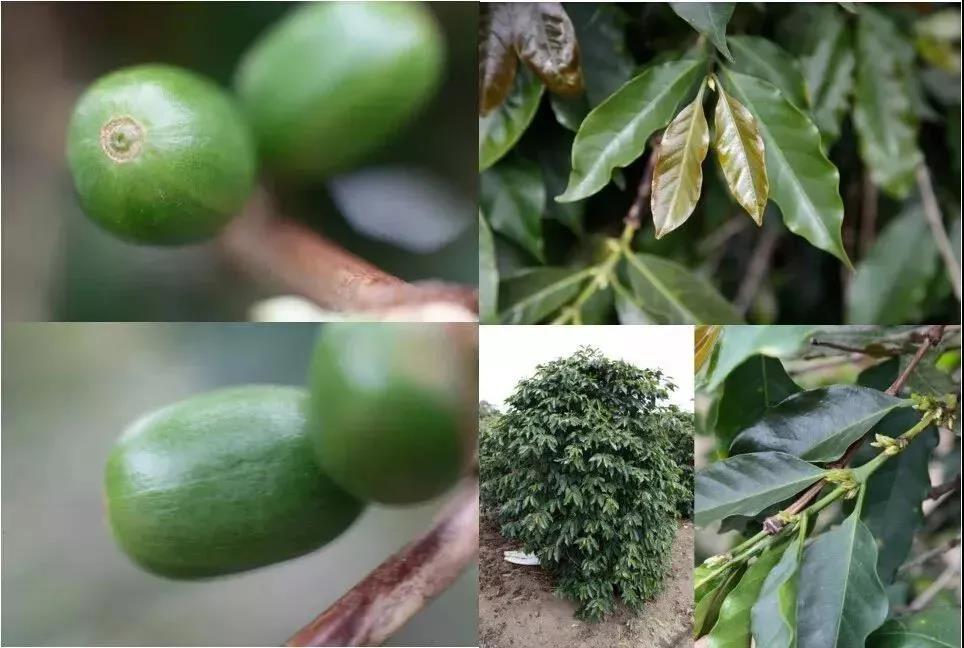
Discovered in 1911 at the Kent Coffee Estate in the Mysore region of India, this is a hybrid of Typica created by crossing S288 with Typica, characterized by high yield and rust resistance. Its aroma has more body than Bourbon varieties, and it has been introduced to New World producing countries like Kenya and Indonesia with remarkable contributions.
SL14 and SL28
SL varieties come from research and selection at Scott Laboratories. Kenyan coffee became world-famous thanks to SL28 and SL34, leading the Ugandan government to vigorously promote and distribute SL seeds to farmers. Among them, SL14 not only has excellent flavor but also drought resistance, and can be harvested just two years after planting, making it highly suitable for farmers' needs.
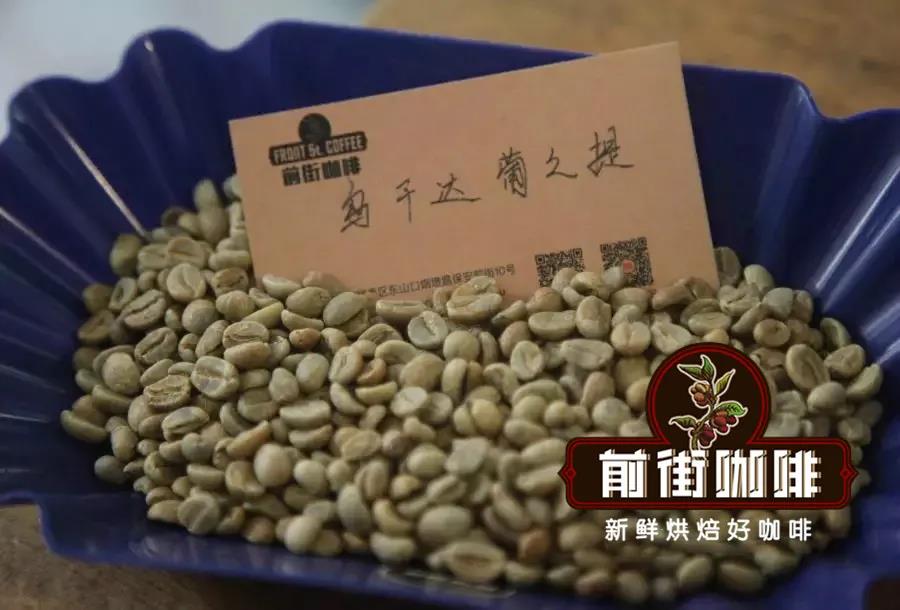
Coffee Bean Processing Methods
Ugandan Arabica coffee has typical African characteristics with distinct fruit juice qualities, and beans from western regions are relatively fuller-bodied. Sun-processed beans are commonly known as "sun-dried Drugar," while washed processed beans are called "washed Bugisu." Uganda primarily uses washed processing, with some micro-batches of natural processing.
Washed Processing
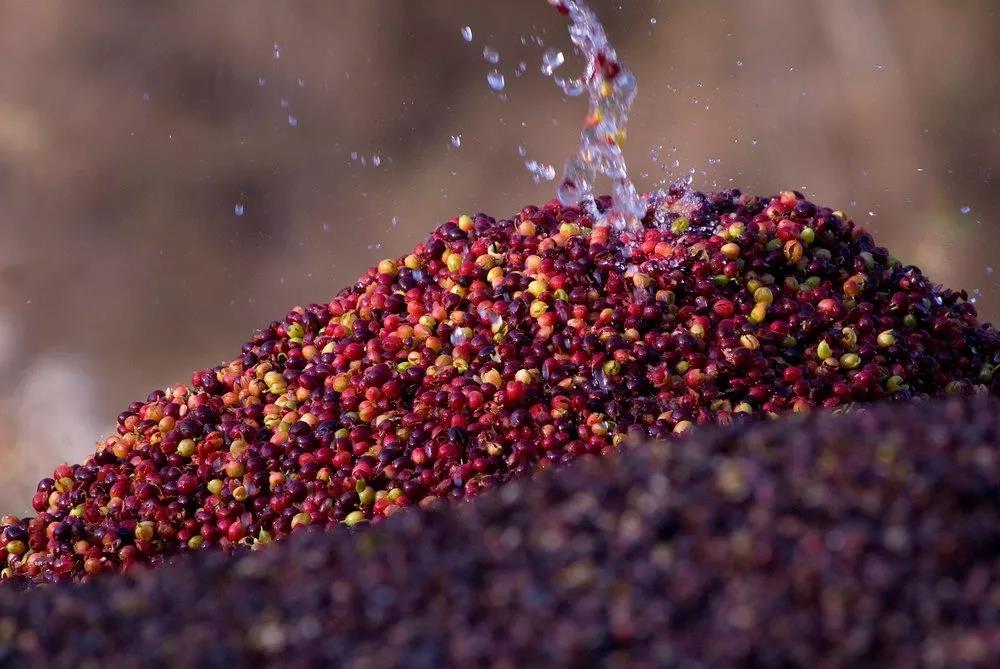
Coffee farmers first pour harvested cherries into large water tanks. Underdeveloped beans float to the surface, while mature, full fruits sink to the bottom, at which point the defective floating beans are removed. Then a pulp screener removes the outer skin and pulp, leaving a slippery mucilage layer on the beans. The mucilage-covered beans go into fermentation tanks for 16-36 hours, during which microorganisms break down the mucilage. After fermentation, large amounts of clean water rinse off the remaining mucilage, and the cleaned beans are dried in the sun. Washed processing offers balanced acidity, moderate body, and sweet, spicy aromatics.
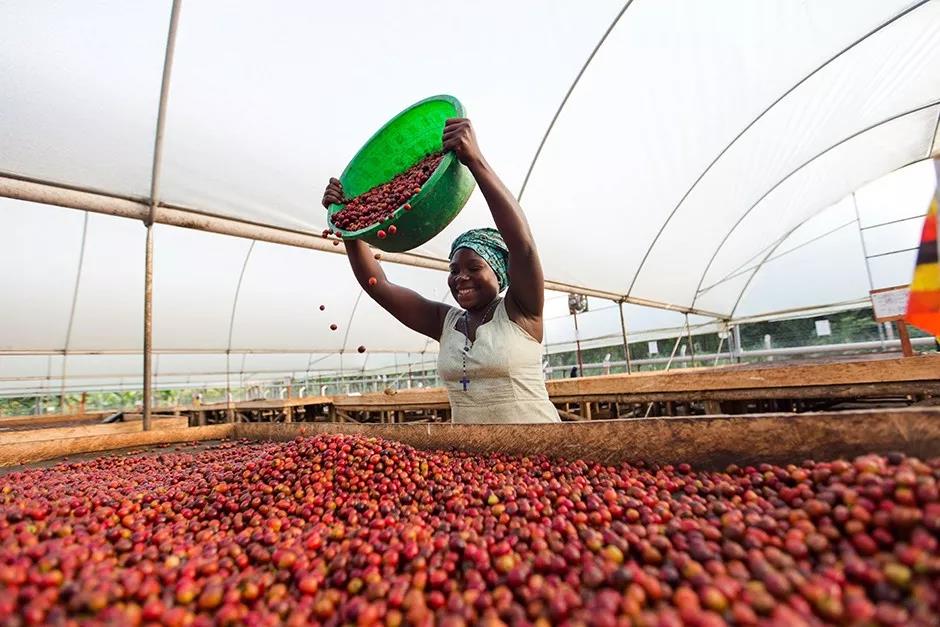
Natural Processing
After harvesting, defective and unripe or overripe cherries are screened out. The rest are placed directly on raised beds to dry flat. Naturally processed coffee like this takes 25-30 days to dry. Drying is complete when the coffee moisture content drops to around 11%. Coffee processed this way has higher sweetness and rich layering.
FrontStreet Coffee has acquired a batch of coffee beans from Mount Elgon in Uganda. Next, let us see how FrontStreet Coffee roasts Ugandan coffee beans.
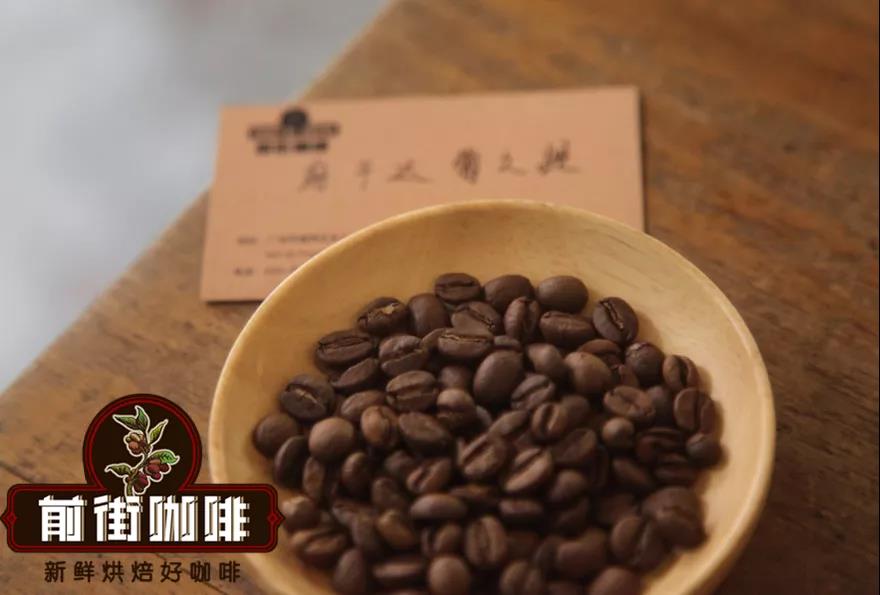
Uganda Natural Anaerobic Fermentation
Region: Mount Elgon, Uganda
Altitude: 1,600-1,850 meters
Processing Method: Anaerobic Fermentation Natural
Variety: SL14 & SL28
This batch uses anaerobic fermentation natural processing, in which whole cherries first undergo anaerobic fermentation before natural processing. In essence, the anaerobic process makes coffee more uniform and easier to monitor, while aerobic processes are more complex and difficult to control. In anaerobic environments, mucilage sugars decompose more slowly and pH declines more gradually, extending fermentation time to develop better sweetness and more balanced flavors. Anaerobic fermentation must be controlled at temperatures below 10-15°C. In airtight, clean stainless steel fermentation containers, the beans ferment anaerobically for three days before being placed on raised beds for natural drying.
FrontStreet Coffee's Roasting Suggestions
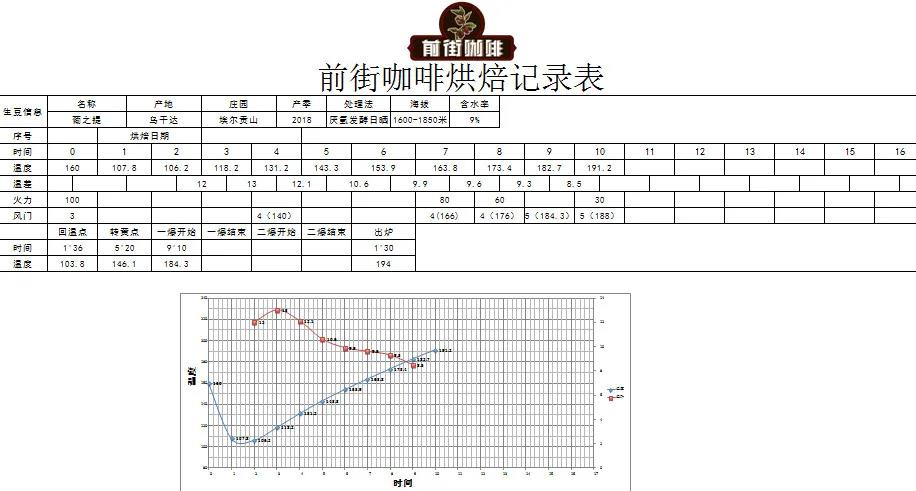
Heat the drum to 160°C, set power to 100, and air damper to 3. Return temperature at 1'36". When the drum reaches 140°C, open the air damper to 4 while keeping power unchanged. When the drum reaches 146.1°C, the bean surface turns yellow, the grassy aroma completely disappears, and the dehydration phase begins. When the drum reaches 166°C, reduce power to 80 while keeping the air damper unchanged. At 8'27", the bean surface shows ugly wrinkles and black patterns, with the toast aroma distinctly transforming into coffee aroma, which can be defined as the prelude to first crack. At this point, listen carefully for the first crack sound. First crack begins at 9'10", open the air damper to 5, develop for 1'30" after first crack, then drop at 194°C.
FrontStreet Coffee's Cupping Report
FrontStreet Coffee's Brewing Suggestions
Dripper: V60 #01
Water Temperature: 90-91°C
Dose: 15g
Ratio: 1:15
Grind Size: Medium-fine grind (Chinese standard #20 sieve with 80% pass-through rate)

FrontStreet Coffee's Brewing Method: Three-stage extraction. Use 30g of water for a 30-second bloom. When the water reaches 125g, pause pouring. When the water level drops to just expose the coffee bed, continue pouring to 225g and stop. Wait until the water level drops to just expose the coffee bed before removing the dripper. Counting from the start of the bloom, extraction time is 1'50".
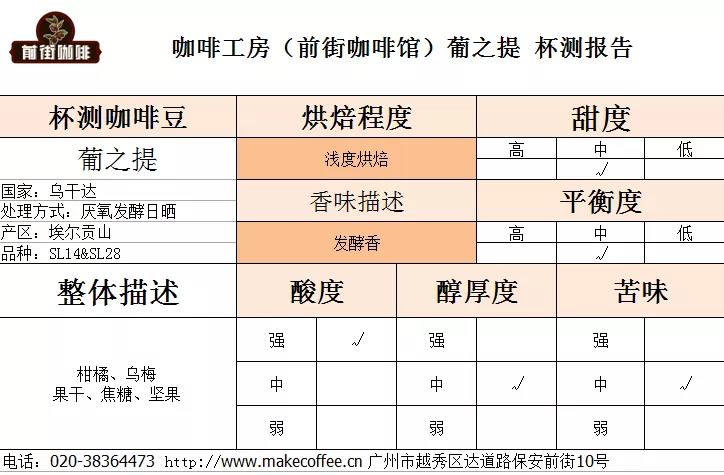
Flavor: Aromas of fermentation and light green grape acidity. In the cup, notes of grape, citrus, lime, and berry acidity. Creamy notes in the middle, with caramel sweetness and a cocoa aftertaste in the finish, carrying a juicy sensation. This bean tastes more intense and full-bodied when hot, but as it cools it offers a sweet and sour sensation.
FrontStreet Coffee Recommendation
Ugandan Arabica leans on bright fruit juice character, and if that is what you enjoy, FrontStreet Coffee's Kenya Cherry Tomato makes a natural counterpart from the same region. It comes from Kenya's Thika region, grown at 1,550-1,750 meters from SL28 and SL34, then given Kenya's classic 72-hour double washed fermentation and a light roast. Expect concentrated cherry tomato and black plum aromas with a bright, firm acidity, pear and black plum mid-notes, and a clean yellow-sugar and green-tea finish.
For another clean, bright washed profile, FrontStreet Coffee's Yirgacheffe Gedingding is an Ethiopian G1 washed lot with elegant white florals, citrus, orange, and green tea. And for a fuller, sweeter African cup, FrontStreet Coffee's Ethiopia Huakui is a natural processed coffee with strawberry, passion fruit, and jackfruit aromas, a smooth body, and very low bitterness.
For brewing, FrontStreet Coffee suggests a V60 #01, 90-91°C water, 15g of coffee at a 1:15 ratio, and a medium-fine grind at 80% pass-through on a China standard #20 sieve.
Important Notice :
FrontStreet Coffee is a long-established specialty coffee roaster in Guangzhou China, selling freshly roasted beans from its own farm in Yunnan as well as dozens of carefully selected single-origin beans from around the world for both pour-over and espresso. The products deliver consistently excellent quality and great value, with shipping within 24 hours. Guangzhou's FrontStreet Coffee shop is recommended by many coffee lovers, and the beans are now available online at the Tmall 。
FrontStreet Coffee has moved to a new address:
FrontStreet Coffee Address: 315,Donghua East Road,GuangZhou
Tel:020 38364473
 Scan and follow the En Gafei WeChat official account. Please indicate that the reprint comes from "En Gafei".