African Coffee Cultivation in Tanzania's Growing Regions: Hand-Poured Kilimanjaro Coffee Flavor and Taste Profile
Tanzanian coffee has won over many drinkers who love African-origin coffee but prefer less assertive acidity, thanks to its gentle fruit acidity and smooth mouthfeel. Although it borders Kenya, Tanzanian coffee is softer and more balanced in the cup. FrontStreet Coffee's customers have paid it a lovely compliment: "This coffee has a smooth, velvety texture."

Tanzania's Planting History
Coffee first became an economic crop in Tanzania, then known as Tanganyika, during German colonial rule. By 1911, the colonial government ordered Arabica trees to be planted around Bukoba, but its methods differed sharply from the traditional practices of the Haya people, who were unwilling to replace food crops with coffee trees. Even so, coffee production in the region continued to rise.
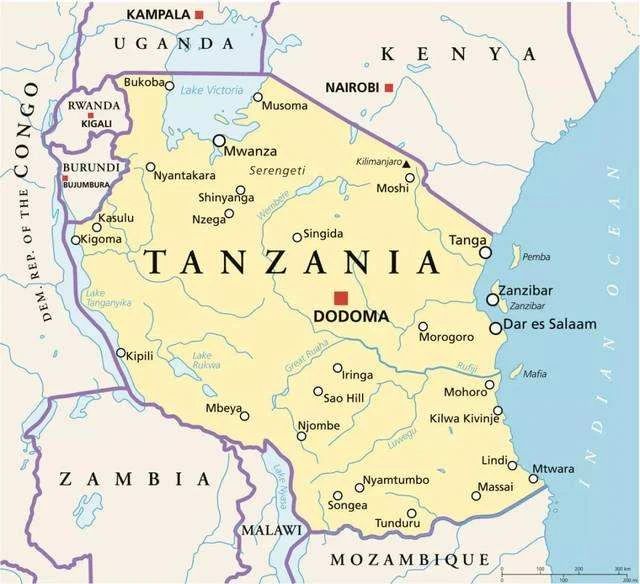
After World War I, control of the region passed to the British. They planted more than 10 million coffee seedlings around Bukoba, but ran into the same friction with the Haya people, and the seedlings were often uprooted. As a result, the coffee industry here never developed as strongly as it did in the Chagga region.
The first cooperative union was founded in 1925 under the name Kilimanjaro Native Planters' Association (KNRA). It was the earliest of several cooperative unions and gave its producers more freedom to sell directly to London, which in turn earned them higher prices.
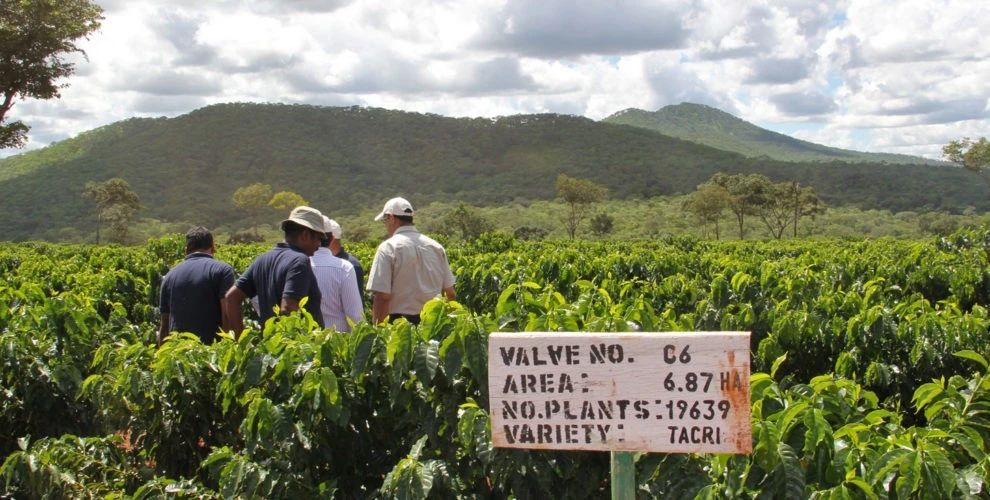
After Tanzania gained independence in 1961, attention turned to the coffee industry, and an attempt was made in 1970 to double production, though the plan was never realized. From the 1990s onward, the industry went through a series of reforms. Unfortunately, a coffee branch disease spread in the late 1990s, sharply reducing coffee volumes in northern Tanzania.
Coffee Growing Regions
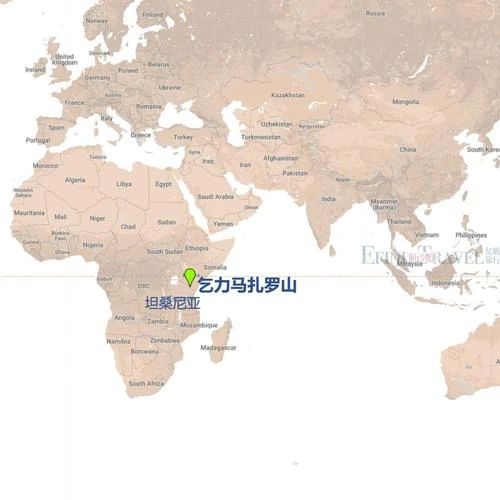
Tanzanian coffee is grown mainly in the Kilimanjaro region and in the south.
Mount Kilimanjaro, the highest mountain in Africa, spans elevations of 1,050 to 2,500 meters. The combination of ample altitude, volcanic soil and pure snowmelt water makes it the most suitable area for coffee. Some of the trees planted here are more than 100 years old. Coffee was first introduced and cultivated by Christians from Kenya. The trees need careful attention - weeding, fertilizing and pruning old branches so new growth can come through - to keep bean quality high. The harvest in the Kilimanjaro region runs from July to December each year, and the main varieties are Bourbon, Typica and Kent.
The southern regions include Ruvuma and Mbeya, with altitudes between 1,200 and 2,000 meters. These southern areas are seen as potential sources of high-quality coffee. Development was once held back by a lack of funding, but in recent years they have drawn attention from certification bodies and non-governmental organizations working to lift the quality of coffee, which had not been especially high. The southern harvest runs from June to October each year, and the main varieties are again Bourbon, Typica and Kent.
Coffee Varieties
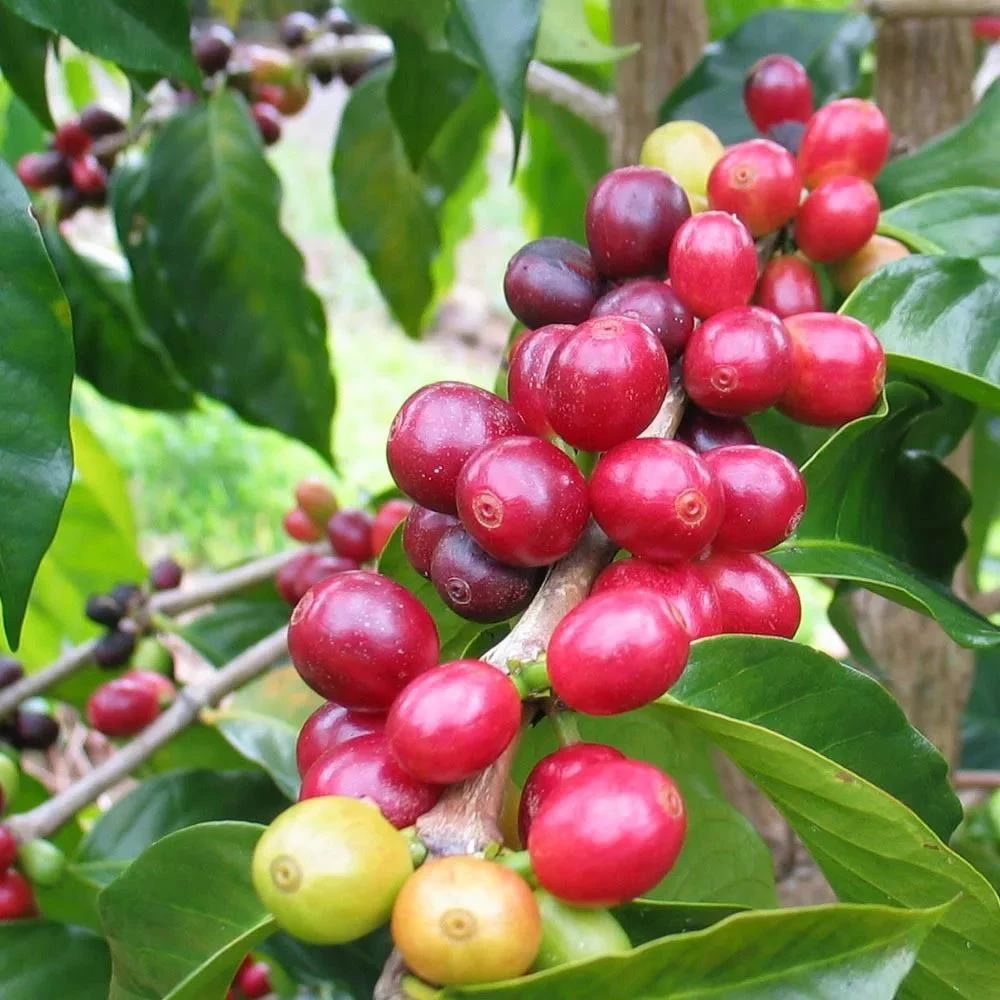
Bourbon: When we speak of Bourbon, we usually mean Red Bourbon. After a Red Bourbon tree flowers and sets fruit, the cherries change color from green to light yellow to light orange to ripe red, and then to a deeper red at full ripeness, which is why it is called Red Bourbon. Bourbon grown at high altitude generally has a better aroma, brighter acidity and even wine-like flavors.
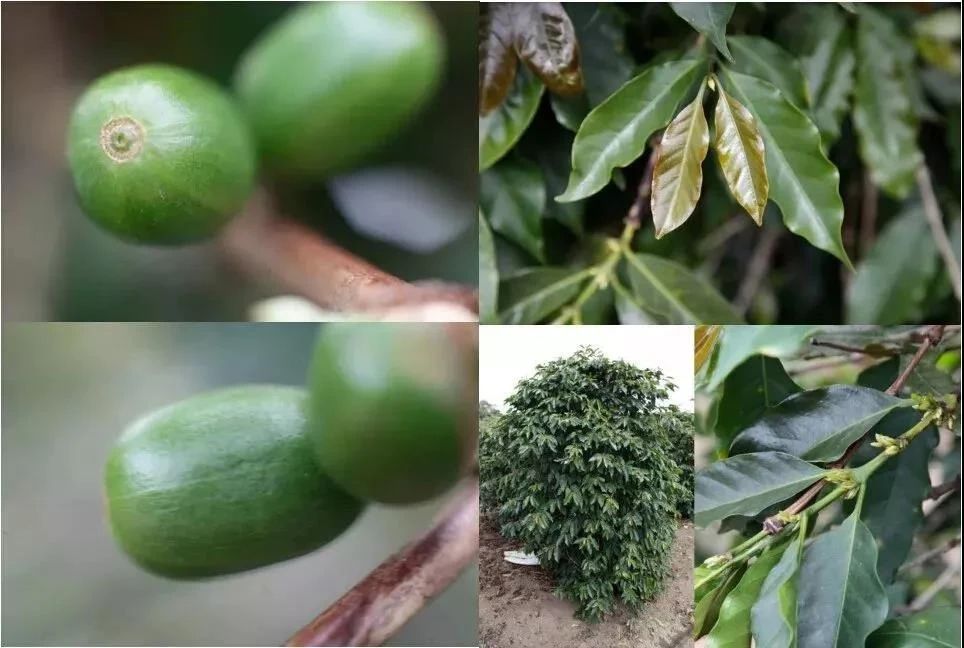
Typica: Typica delivers excellent flavor and is recognized as a specialty coffee variety, but its yields are extremely low and it is prone to leaf rust, so it demands more labor and management. Typica coffee originates in Ethiopia and southeastern Sudan and is the most widely planted coffee variety in the Western Hemisphere. The plants are fairly robust but cannot tolerate strong light. Typica's young leaves are bronze-colored, which earned it the name "copper-topped coffee."
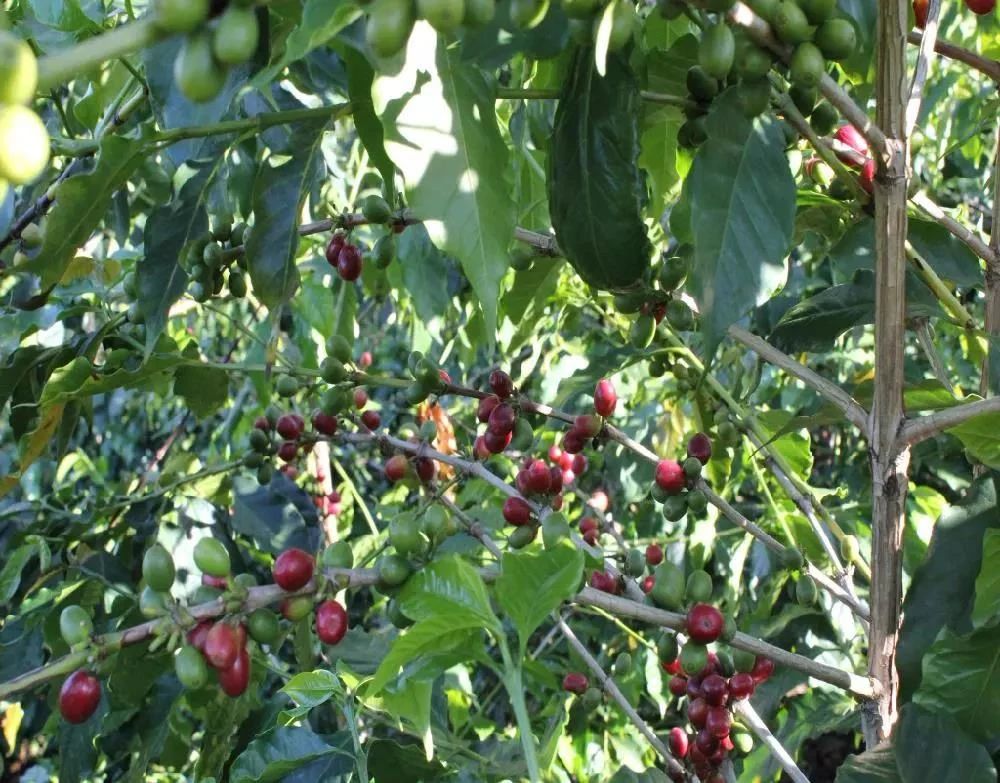
Kent: A Typica hybrid discovered in 1911 at the Kent coffee estate in the Mysore region of India, created by crossing S288 with Typica. It offers high yields and resistance to rust. Its coffee aroma has more body than Bourbon, and it has been introduced to New World producing countries such as Kenya and Indonesia, where it made an outstanding contribution.
Coffee Bean Processing Methods
Tanzanian coffee is mostly processed using the washed method. After harvesting, farmers deliver their cherries to the nearest processing station.
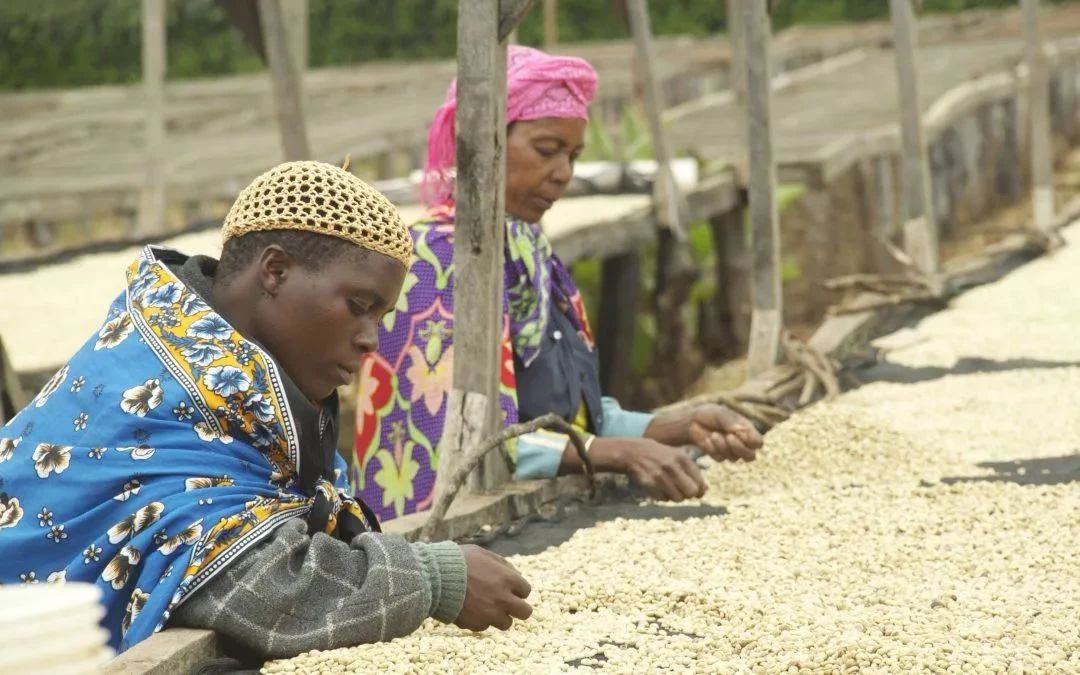
The steps of the washed method:
- Screen the cherries and remove any mixed-in impurities.
- Remove the pulp and outer skin.
- Ferment in tanks for 18-36 hours to break down the mucilage layer still attached to the parchment.
- Rinse thoroughly, then move on to drying.
Coffee Grading
Tanzanian coffee is graded the same way as Kenyan coffee, by bean size. During screening, green beans pass through sieves with fixed-size holes; a larger sieve number means a larger green bean.
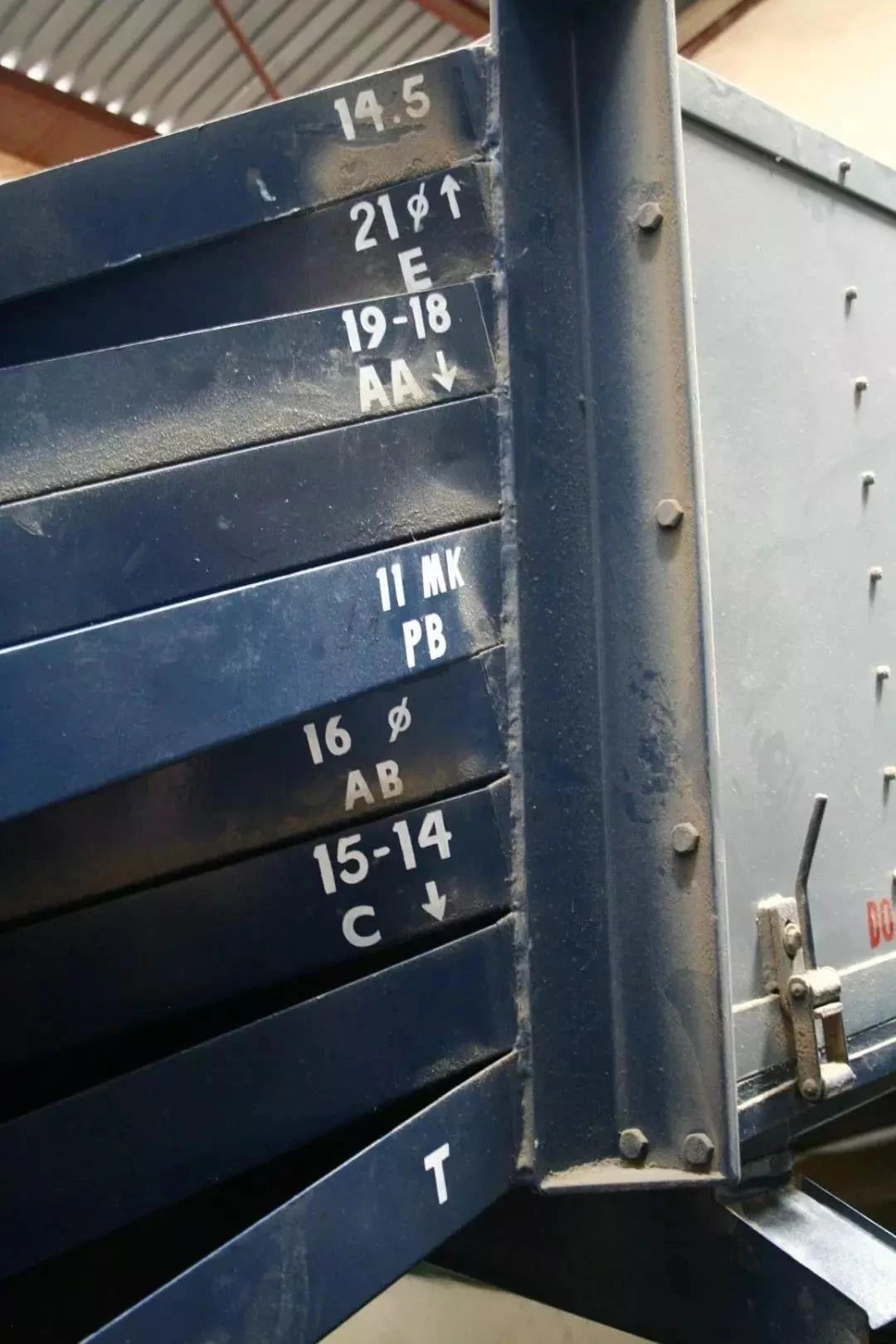
AAA grade: screen size above 19
AA grade: screen size between 17-18
AB grade: screen size between 15-16
PB grade: round green beans, making up about 10% of all coffee beans
C grade: screen size between 12-14
The fertile volcanic ash gives the coffee here a rich body and gentle acidity, with the typical character of African beans. FrontStreet Coffee chose to feature Kilimanjaro coffee because this bean is top AA grade, showing superior quality in cupping, brewing and many other respects. The cup captures the regional character of Tanzanian coffee.
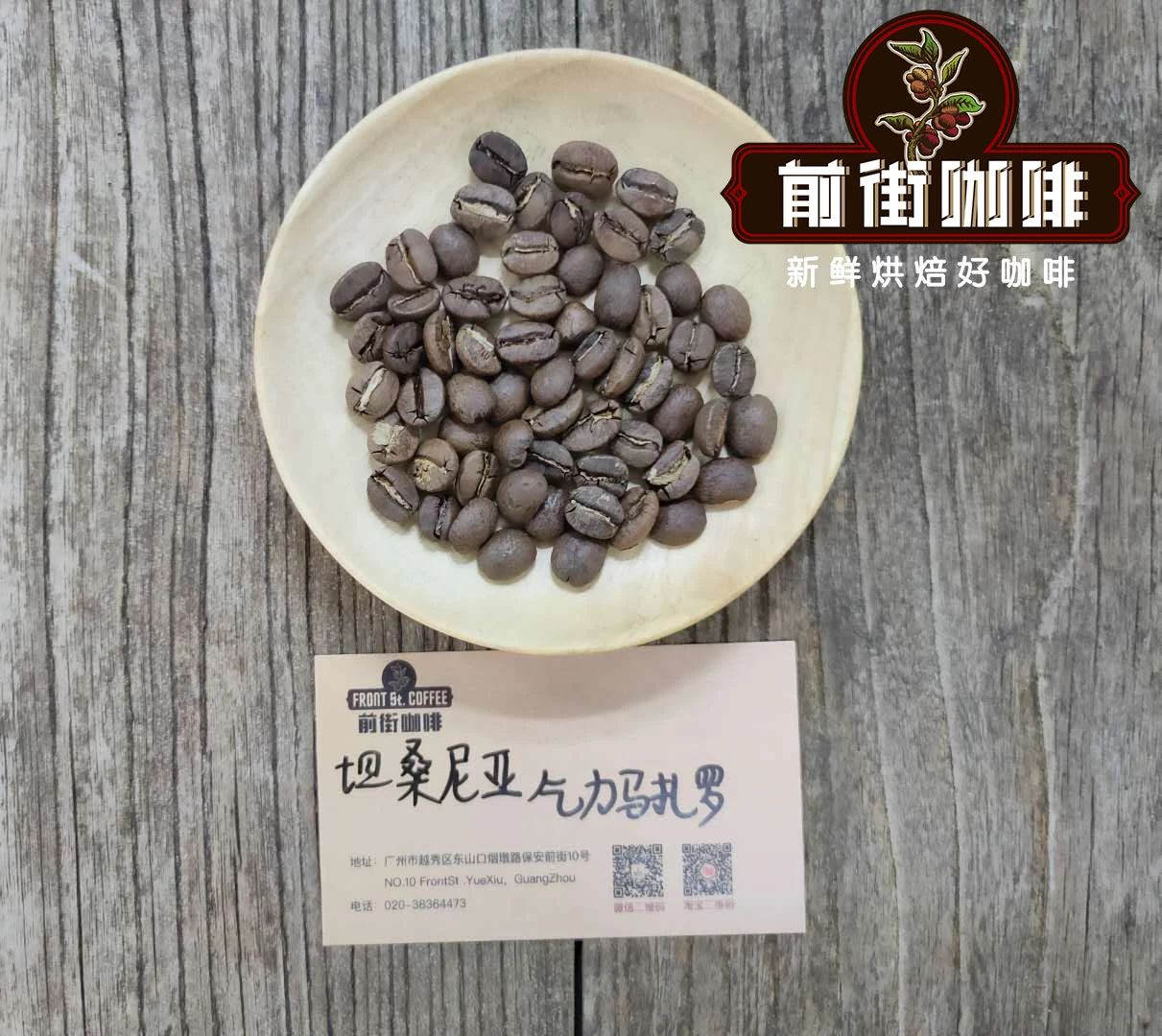
Region: Northern Highlands, Mount Kilimanjaro volcanic area
Processing method: washed
Grade: AAA
Variety: Typica
Altitude: 1,300-2,000 m
FrontStreet Coffee Roasting Suggestions
Kilimanjaro coffee has uniformly large beans with a gray-green color. It shows fairly strong acidity and a sweet fragrance, with excellent flavor overall. After a medium-light roast it releases sweetness and delicate acidity.
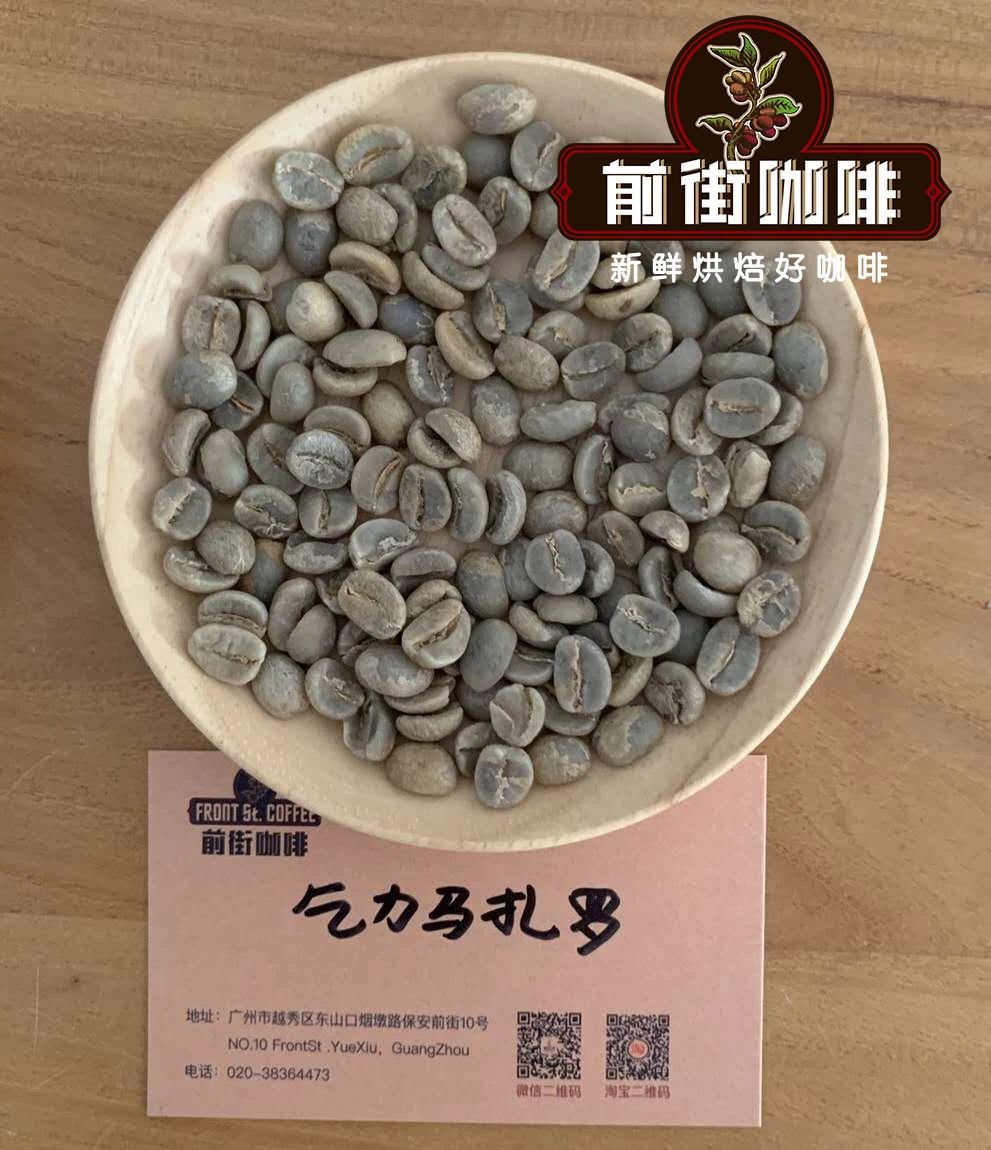
Charge temperature: 170°C; yellowing point: 6'30 at 150.8°C; first crack: 10'16 at 182.7°C; develop for 1'45 after first crack, then discharge at 193°C.

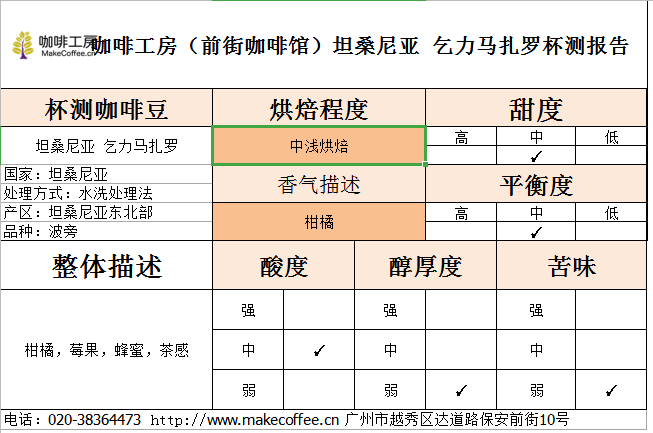
FrontStreet Coffee Cupping Report
Dry aroma: caramel
Wet aroma: berries
Cupping results: citrus on entry, berries and tea-like notes
FrontStreet Coffee Brewing Suggestions
FrontStreet Coffee recommends the V60 conical dripper. Its larger opening and distinctive spiral ribs let air escape more easily, which improves extraction quality. The mouthfeel may be less full-bodied, but the high concentration draws out Kilimanjaro's sweet-and-tart character and its clear aroma, which is the standout feature here.
Water temperature: 90-91°C
Grind size: fine-sugar size / 20% retention on a #20 sieve
Coffee-to-water ratio: 1:15
Coffee amount: 15 grams

FrontStreet Coffee uses a staged extraction, pouring in three stages. First, 30 g of water for the bloom, lasting 30 seconds. Second, a small circular pour to 125 g, then pause. Wait for the water level to drop, then pour again slowly and evenly, keeping the water level from rising too high. Finally, pour to 225 g and stop. Total extraction time: 2 minutes 3 seconds including the bloom.
Brewing flavors: berry aroma, gentle citrus acidity, a nutty mid-palate and a honey-like aftertaste.
FrontStreet Coffee Recommendation
If Tanzania's place among Africa's gentler, fruitier coffees appeals to you, its northern neighbor is worth exploring next. FrontStreet Kenya Little Tomato is a Kenyan specialty washed lot built around bright cherry-tomato and smoked plum acidity with a full, juicy body. It comes from the Sika region of Kenya, grown at 1,550-1,750 meters from classic SL28 and SL34 varieties, and processed with Kenya's signature 72-hour double washed fermentation. FrontStreet roasts it light to protect the lively acidity and layered fruit; the dry aroma already shows concentrated dried cherry tomato and florals, the entry is clean cherry tomato and smoked plum, and the finish is clean and long with brown sugar sweetness and a hint of green tea.
For a fruitier African profile, FrontStreet Huakui uses the most common native Ethiopian varieties, a field blend whose mixed genetics give the beans their uneven size. Fermented as a classic natural process, it delivers ripe tropical fruit - creamy strawberry, mango, jackfruit, citrus and blueberry - the signature ripe-fruit character of a natural Sidamo, and a cup that balances great flavor with a fair price.
Important Notice :
FrontStreet Coffee is a long-established specialty coffee roaster in Guangzhou China, selling freshly roasted beans from its own farm in Yunnan as well as dozens of carefully selected single-origin beans from around the world for both pour-over and espresso. The products deliver consistently excellent quality and great value, with shipping within 24 hours. Guangzhou's FrontStreet Coffee shop is recommended by many coffee lovers, and the beans are now available online at the Tmall 。
FrontStreet Coffee has moved to a new address:
FrontStreet Coffee Address: 315,Donghua East Road,GuangZhou
Tel:020 38364473
 Scan and follow the En Gafei WeChat official account. Please indicate that the reprint comes from "En Gafei".