Ecuadorian Organic Coffee Beans: Flavor Profiles and Characteristics from Ecuador's Coffee Regions

Introduction to Ecuador's Coffee Industry
When discussing South American coffee regions, countries like Panama, Colombia, Costa Rica, and Brazil immediately come to the minds of coffee enthusiasts. However, Ecuador, known as the country with the highest altitude for Arabica coffee cultivation, has quietly stood in the shadows of these coffee-producing giants. In this article, FrontStreet Coffee explores why Ecuadorian coffee hasn't been more prominent in the specialty coffee market.
Ecuador holds a special title as the "Equator Country" because the entire nation is crossed by the equator. In Ecuador, the Andes Mountains run from north to south, with numerous volcanoes, including the world's highest active volcano (at an altitude of 5897m). Thanks to its low latitude, high altitude, and volcanic ash soil, all essential conditions for growing specialty coffee, Ecuador possesses every necessary element for producing exceptional coffee.
Historical Development of Coffee in Ecuador
Coffee was introduced to Ecuador in the 19th century. The first coffee plantations were established in the 1860s in the coastal areas of Manabí Province. As one of the most biodiverse countries on Earth, Ecuador's unique ecosystem provided an ideal environment for the plant to thrive, and coffee quickly became one of Ecuador's main export commodities.
It wasn't until the late 1920s, when the cocoa industry was threatened by disease, that coffee became Ecuador's primary commercial crop. Even then, coffee remained largely an afterthought in the national economy, with production declining significantly during the price crisis of the 1990s. In the early 2000s, Ecuador's economy relied primarily on oil, with agriculture playing a smaller role than in many other coffee-growing countries.

Recent Development in Ecuador's Coffee Cultivation
Ecuador is one of only 15 countries that produce both Arabica and Robusta coffee. In recent years, due to new specialized practices and the efforts of local farmers and roasters, Ecuador's coffee industry has taken off again. Restoration of old plantations and replacement of old, low-yield trees have begun to rebuild the country's production. Because of international demand for high-quality coffee, this growth has mainly affected Arabica plantations and specialty coffee farms. As a lower-yield variety with lower caffeine content, Arabica is used for specialty coffee. Robusta, by contrast, has high yield and high caffeine content and is used only for blending espresso and instant coffee. Although Ecuador's popular Robusta varieties still outshine Arabica in terms of production, Robusta output is actually beginning to decline for the first time.
In 2016, at the US Roasting Championship, Tony Querio of Spyhouse Coffee roasted a perfect Ecuadorian classic coffee and won first prize. At the 12th Golden Cup held in Quito, Ecuador in 2018, Arabica coffee purchased by a Korean company broke the country's previous price record. This indicates that although Ecuador's specialty coffee production is still small compared with neighboring countries, a recent focus on quality is beginning to bear fruit.
Challenges Facing Ecuador
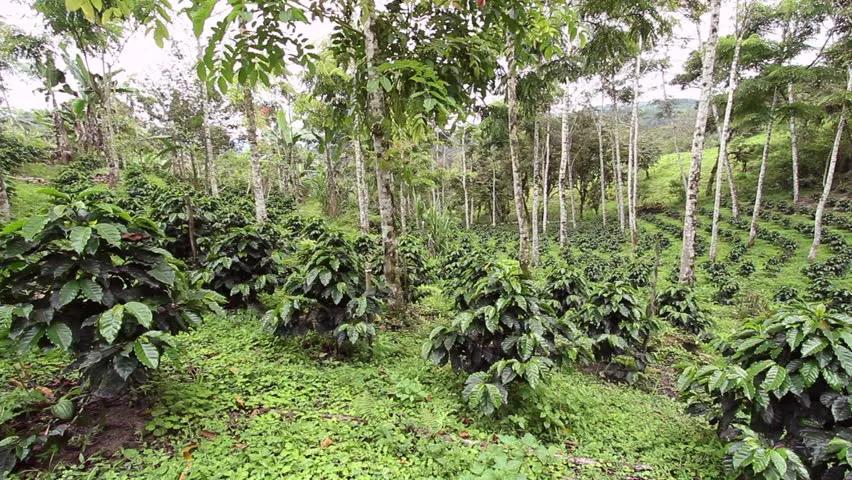
Ecuador's selective harvesting is particularly difficult: because the country sits on the equator, coffee needs to be harvested year-round.
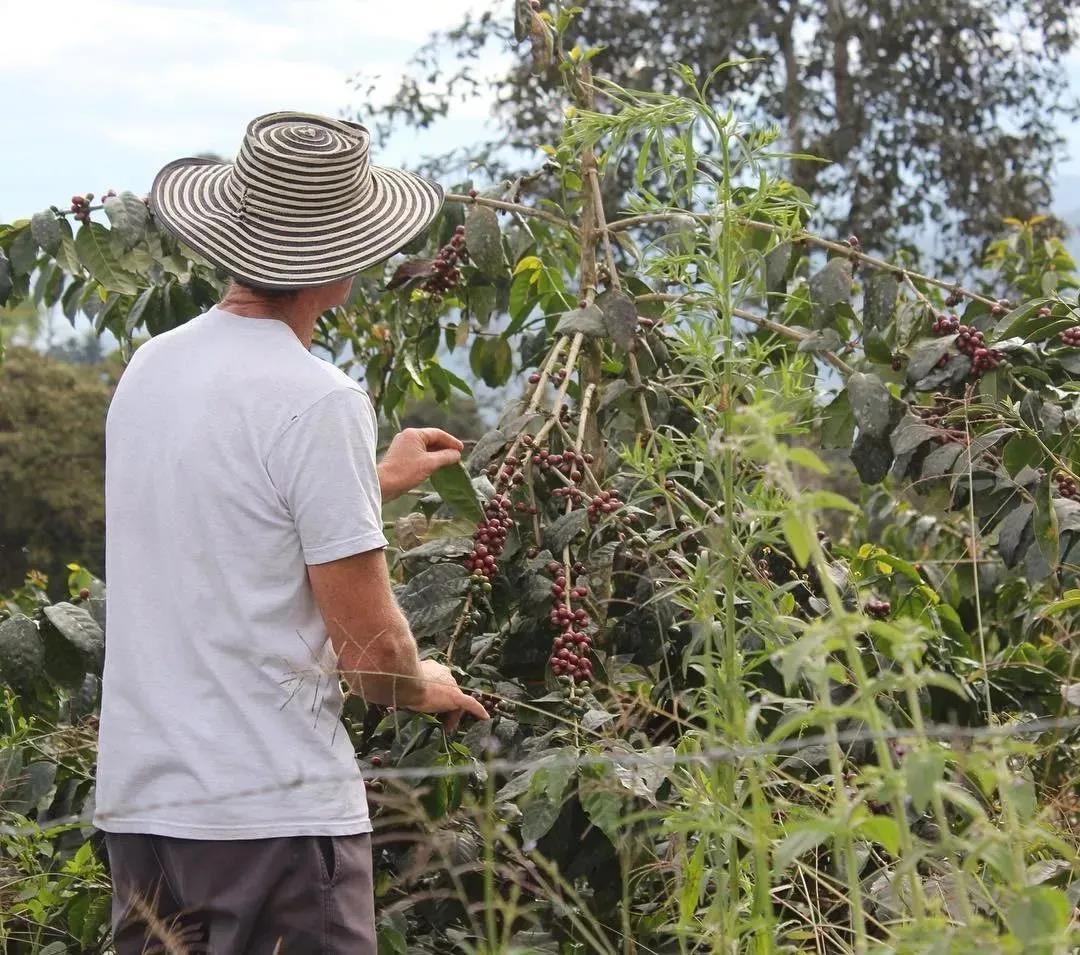
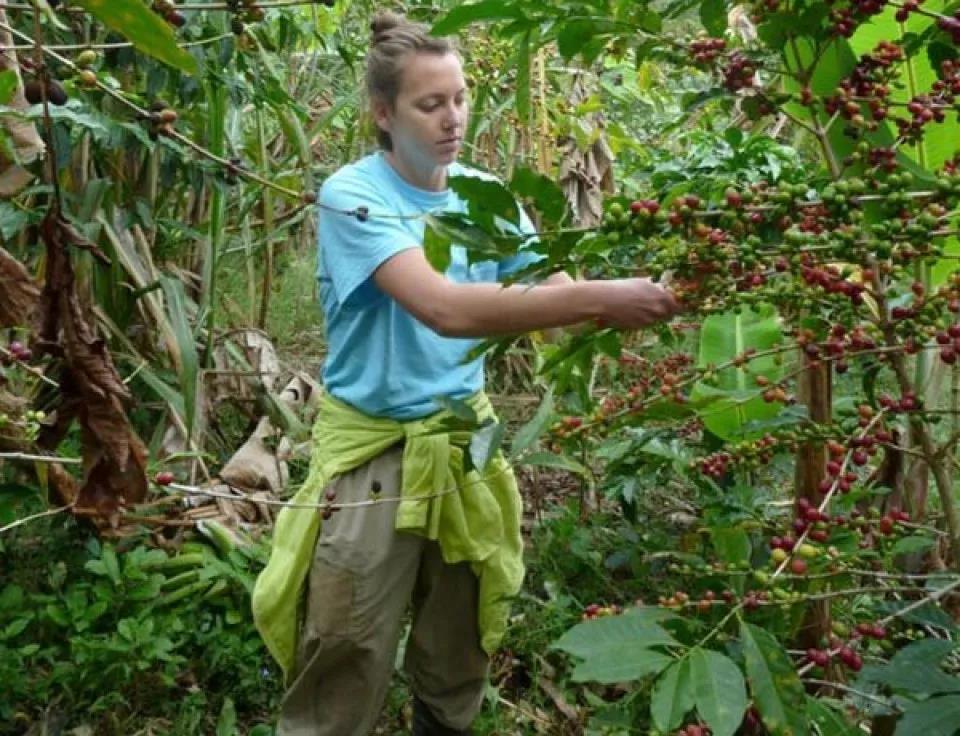
The country's altitude ranges from sea level to over 2000 meters; the wide variation in terrain and climate, combined with specific challenges related to its equatorial position, presents a unique but not impossible challenge. A single branch often holds all stages of coffee development at once: unripe coffee berries, ripe coffee berries, and coffee flowers blooming simultaneously. This forces farmers to pick coffee continuously while processing, in order to obtain sufficient export volume, leading to higher labor costs from the extended harvesting period.
Another challenge is Ecuador's subtle climate changes. Whether because of altitude and the equator, or the eastern jungles and western oceans, slight climate shifts can have a huge impact on farmland. In places where morning fog gives way to afternoon sun, the land can sometimes be shrouded in fog all day, so that even a drying plant cannot dry the coffee. To grow coffee of the same quality as in previous years, coffee farmers must invest more time.
Coffee Growing Regions
In fact, Ecuador's coffee plantations are generally not large, with about eighty percent of coffee farmers cultivating areas below 5 hectares, 13% between 5 to 10 hectares, and only 7% with plantations over 10 hectares. According to statistics, among the country's approximately 300000 hectares of planted area, twenty percent of coffee plantation land is illegally occupied.
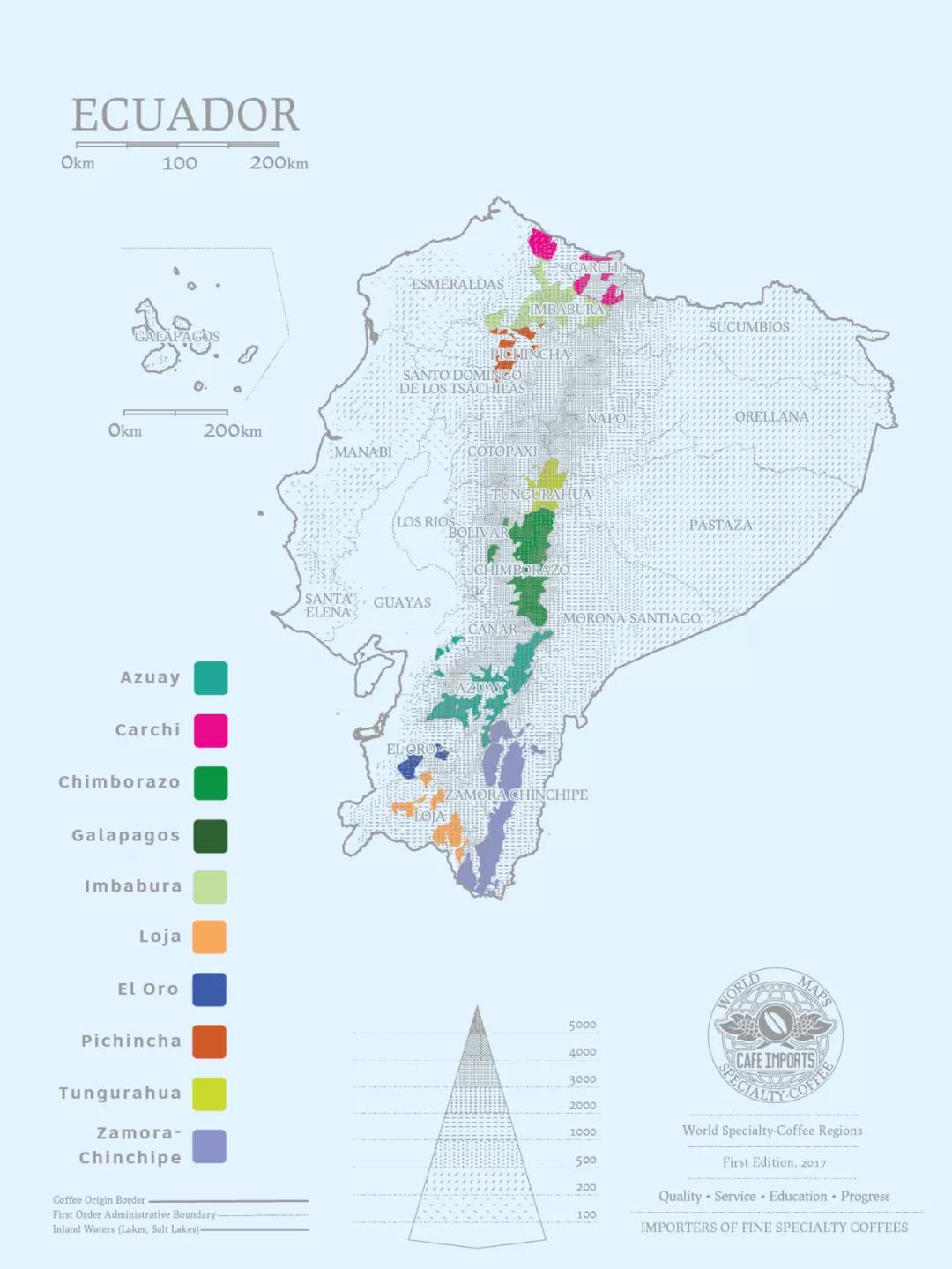
Loja Region
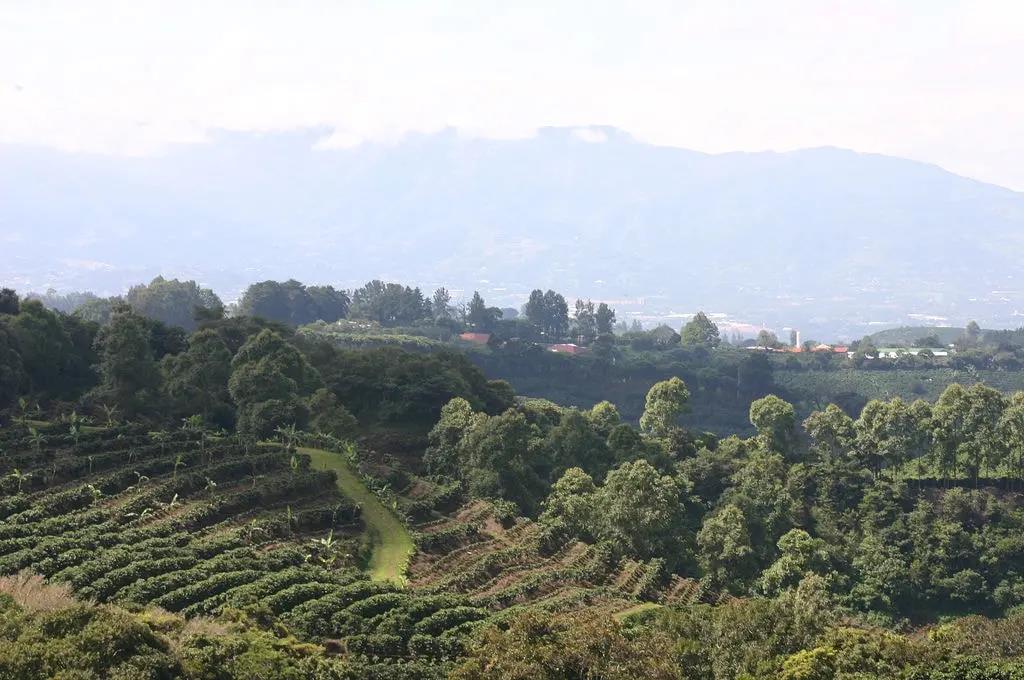
The Loja region in southern Ecuador, adjacent to the Andes Mountains, is one of the highest coffee growing areas in the world, with altitudes ranging from 1450-2000 meters, and is also an important coffee export city in the country. The coffee bean variety is Typica, processed using the washed method, and mostly grown under natural shade. The local high altitude, climate variation, and soil quality are very suitable for coffee growth, offering many excellent conditions for coffee cultivation.
Galapagos Islands
Coffee beans produced on the Galapagos Islands are organic coffee beans. Thanks to the unique ecological environment of volcanic soil and microclimate, combined with the use of no fertilizers and no pesticides, they are recognized as natural green specialty coffee. This naturally grown coffee has a mild taste with light floral and fruity notes and a caramel aroma. It is understood that the Galapagos Islands are approximately 1000 kilometers from Ecuador's mainland, located at the intersection of the eastern Pacific Ocean and three major ocean currents.
Intag Valley
The western foothills of the Andes Mountains south of Guayaquil and the hilly areas of the Manabí Province coast are famous for growing Arabica coffee beans, which have a perfect balance of acidity, sweetness, and bitterness.
Pichincha Province
Located in the northwestern region of Ecuador, it mainly cultivates Robusta coffee beans.
Ecuadorian Coffee Flavor Profile
Due to its geographical location, Ecuador's climate varies by region, with different temperature and rainfall patterns. Highland areas tend to be mild and cool, with continuous growth associated with higher northern latitudes, while coastal areas are warm and tropical with fertile soil. FrontStreet Coffee believes that when grown at high altitudes, coffee beans exhibit rich fruit acidity. Ecuador's coffee is juicy and complex, with some jam-like flavors, prominent sweetness, medium acidity, and notes of yellow fruits.

Coffee Varieties
Ecuadorian coffee beans have two varieties, Galapagos and Gigante, both characterized by large grains and heavy weight. However, the main coffee variety grown in Ecuador is Bourbon.
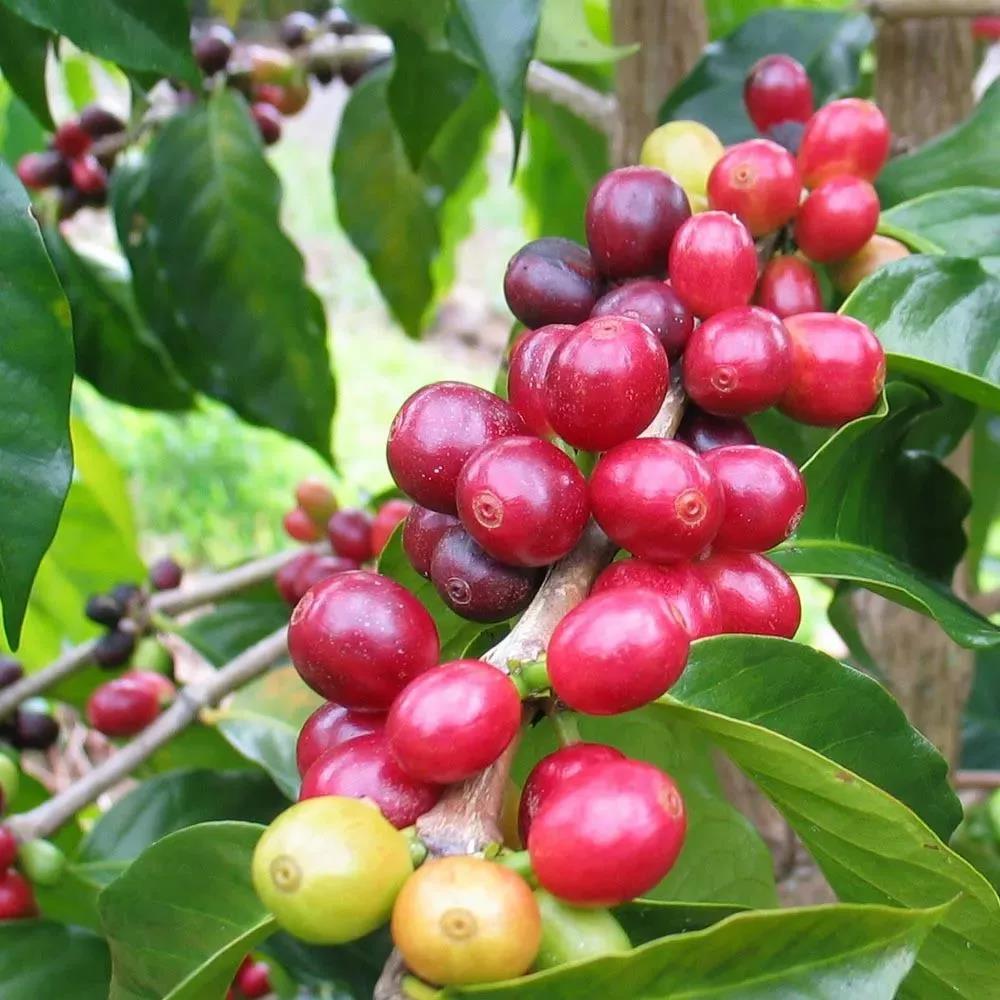
Early (pre-coffee history) Typica was transplanted to Yemen and later mutated, with the bean shape changing from slender and pointed to round. In 1715, France transplanted the round Yemen Mocha beans to Bourbon Island on the east coast of Africa (renamed Réunion Island after the French Revolution) before naming it Bourbon. The round Bourbon beans were passed on to Brazil and Central and South America in 1727. In 1732, Britain transplanted Yemen Mocha to St. Helena Island (later the place where Napoleon was imprisoned), which were also round Bourbon beans. Bourbon is the consistent winner of American specialty coffee cupping competitions.
Coffee Bean Processing Methods
Ecuador's coffee processing method is mainly the washed method, which can produce coffee with a cleaner taste.
Bean selection, pulp removal, fermentation, washing, drying, hulling

First, a large amount of water is added to the coffee berries to wash away the immature fruits and impurities floating on the surface, which is the bean selection step, then a pulping machine removes the skin and pulp. Next, the beans are placed in a fermentation tank for 18-36 hours, allowing fermentation bacteria to dissolve the mucilage on the surface of the coffee berries. After cleaning with clear water, they are dried in the sun for 1-3 weeks, then dried by machine. A hulling machine removes the inner pericarp, hull, and silver skin. The process is quite tedious.
FrontStreet Coffee Roasting Recommendations
FrontStreet Coffee considers that Ecuadorian high-altitude grown coffee beans have rich fruit acids. To highlight the sweetness and fruit acidity of beans from this region, FrontStreet Coffee's roasters recommend a light to medium roast.
Most Ecuadorian coffee beans grow in high-altitude areas, where the maturation of the coffee fruit slows down, producing more sugar and thus more complex sweetness in the beans. At the same time, this also leads to a harder and denser bean texture, commonly known as hard beans.

Hard beans have a better ability to absorb heat than soft beans, so their flavor development is more complete. On the other hand, because hard beans have high density and high moisture content, they also hinder heat transfer. Therefore, FrontStreet Coffee's roasters suggest using higher heat and a higher bean drop temperature during roasting.
FrontStreet Coffee Brewing Recommendations
FrontStreet Coffee recommends using the V60 conical filter. The V60 has a large opening, and its unique spiral ribbed design allows air to be discharged more easily, thereby improving extraction quality. The taste may not be rich enough, but its high concentration brings out prominent acidity and obvious aroma, which is one of its major characteristics.

Water temperature: 90-91°C
Grind size: fine sugar size / 20# sieve screen 80%
Coffee to water ratio: 1:15
Coffee amount: 15 grams
For the brewing technique, FrontStreet Coffee adopts segmented extraction, that is, three-stage pouring. First, pour 30ml of water for a 30-second bloom. Second, use a small stream to pour water in a circular motion to 125ml, then stop. Wait for the water level to drop before slowly pouring again, with even speed, keeping the water level not too high. Finally, pour to 225ml and stop. The extraction time is 2 minutes to 2 minutes 10 seconds (including bloom time).
FrontStreet Coffee Recommendation
Because Ecuador's high-grown coffees are prized for juicy fruit acidity and yellow-fruit sweetness, it is worth comparing them with another classic South American origin. FrontStreet Brazil Cerrado is a very typical Brazilian single-origin: it uses the Red Bourbon variety common across South America, and with a medium roast it shows cream, peanut, toasted bread, caramel, and hazelnut aromas. The cup is round and smooth, not acidic, with a light bitterness, and it works as a pour-over, in a moka pot, as an espresso SOE, in a siphon, or in a French press.
If you want something sweeter and fruitier, FrontStreet Brazil Queen's Farm comes from Mogiana, close to South Minas, where the fertile red volcanic soil lets the fruit absorb abundant nutrients. Its rare Yellow Bourbon variety, a natural mutation of Red Bourbon, gives a cleaner fruit character; through a pour-over, moka pot, or home espresso machine you can taste a sugarcane sweetness that other regions rarely offer, along with fruit and chocolate notes. Together these two Brazilian lots offer a good contrast to Ecuador's high-altitude, fruit-forward profile.
Important Notice :
FrontStreet Coffee is a long-established specialty coffee roaster in Guangzhou China, selling freshly roasted beans from its own farm in Yunnan as well as dozens of carefully selected single-origin beans from around the world for both pour-over and espresso. The products deliver consistently excellent quality and great value, with shipping within 24 hours. Guangzhou's FrontStreet Coffee shop is recommended by many coffee lovers, and the beans are now available online at the Tmall 。
FrontStreet Coffee has moved to a new address:
FrontStreet Coffee Address: 315,Donghua East Road,GuangZhou
Tel:020 38364473
 Scan and follow the En Gafei WeChat official account. Please indicate that the reprint comes from "En Gafei".