Island-Style Coffee Cuban Coffee How to Brew Cuban Crystal Mountain Coffee? Cuban Coffee Bean Grading System
The Rise of Island-Type Coffee
Island-type coffee rose to prominence between the 18th and 19th centuries, with growing regions located in vast oceans and unconnected to any mainland. Mention island-type coffee and most people think immediately of Blue Mountain or Kona. In fact, Taiwan province, Bourbon Island, Saint Helena, Puerto Rico, the Dominican Republic, Haiti, and Cuba can all be classed as island-type origins. In this article, FrontStreet Coffee looks at Cuban coffee.
The History of Cuban Coffee Cultivation
In 1720, a French naval officer planted the first Typica mother tree in Central America on the French island of Martinique in the eastern Caribbean. Nearby islands such as Jamaica and Cuba, thanks to their geography, quickly caught the coffee-growing craze and sold well to European colonial powers, enjoying a coffee golden age of up to two hundred years. By the 20th century, major political and economic shifts had pushed the island-type producing countries that never rose further down to second-tier status. Cuban, Puerto Rican, and Haitian coffee farmland shrank dramatically, production value fell, and the once-booming industry faded from view. Quality suffered too, declining from its original magnificent fragrance and mellow richness to dull, bland flavors, and these countries ended up as third-tier producers.
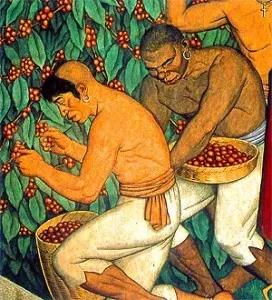
After the 1959 revolution, volunteer forces were sent to reorganize the coffee industry. Those volunteers had no experience with coffee, and experienced growers in the east were displaced, so quality declined further. After 1990, Cuba entered another period of economic difficulty. Coffee farmers drifted back to the cities to make a living, farmland went untended, and Cuba's coffee industry ultimately could not be saved.
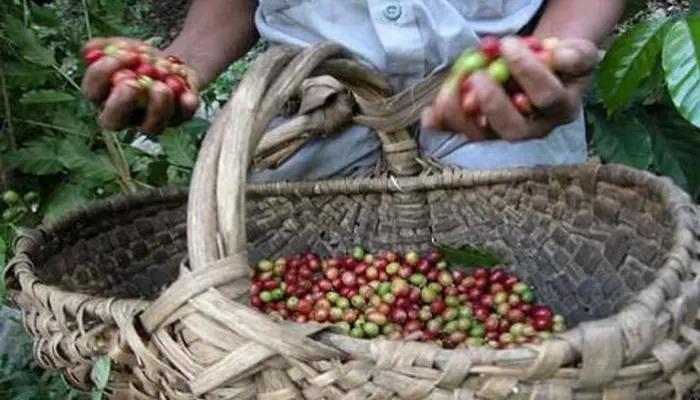
Though Cuban coffee declined sharply, a small amount of specialty coffee was still bought by Japanese drinkers who loved island-type coffee, and the Japanese became the benefactors of Cuban coffee at the time. As demand rose while production fell - from nearly 3,000 tons in 2004 to a sharp drop to 500 tons in 2008 - Cuba shifted from cultivating Typica to ordinary quality Arabica and even Robusta to meet buyers' needs. From then on, Cuban coffee ceased to appear in the specialty coffee market.
Coffee Growing Regions
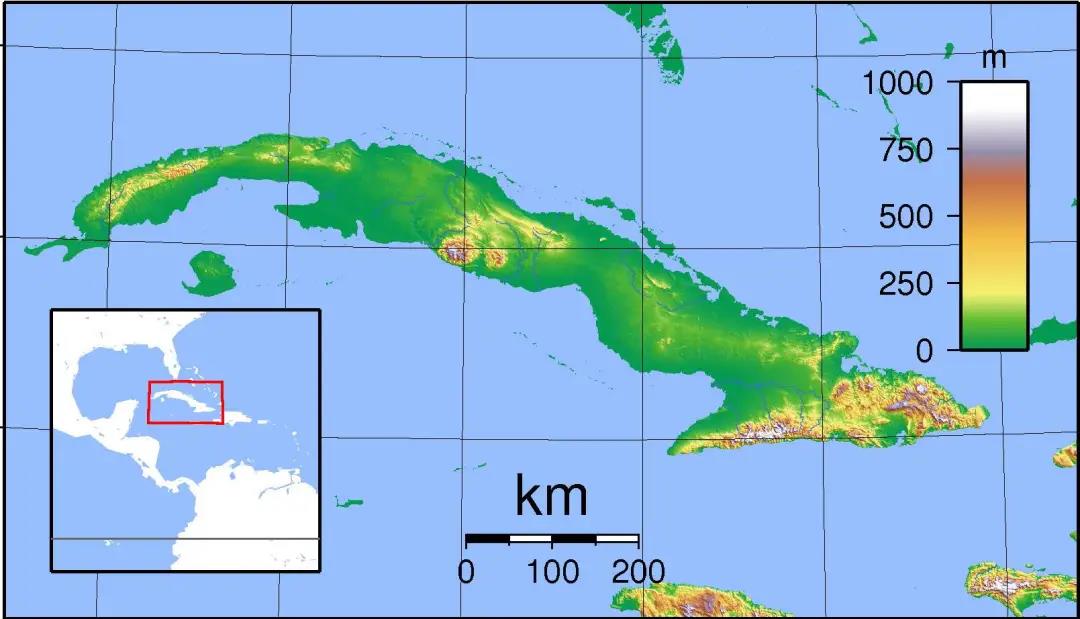
The name Cuba comes from the now-extinct Taino people of the West Indies and originally meant "fertile land everywhere." When people speak of Cuban coffee, FrontStreet Coffee thinks of Crystal Mountain. Its flavor is similar to Blue Mountain, so many call it "Cuban Blue Mountain," which adds to the interest of Cuban Crystal Mountain.
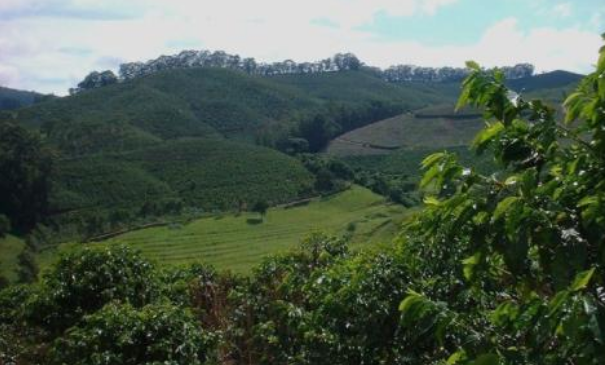
Crystal Mountain (Sierra Cristal) reaches an elevation of 900-1200m and lies in northeastern Cuba. It is the country's second-highest mountain range and, together with the main range in the southeast (Sierra Maestra) and the Escambray range in the south-central region (Sierra Escambray), forms Cuba's three major coffee-producing regions. Not all Crystal Mountain coffee on the market comes from the Crystal Mountain area, however; it may come from the other two ranges. The name is mainly because Crystal Mountain was exported primarily to Japan, France, Italy, and Germany, and the Japanese considered it the highest grade of Cuban coffee, so they gave Cuban coffee the elegant name "Crystal Mountain Coffee."
Coffee Varieties
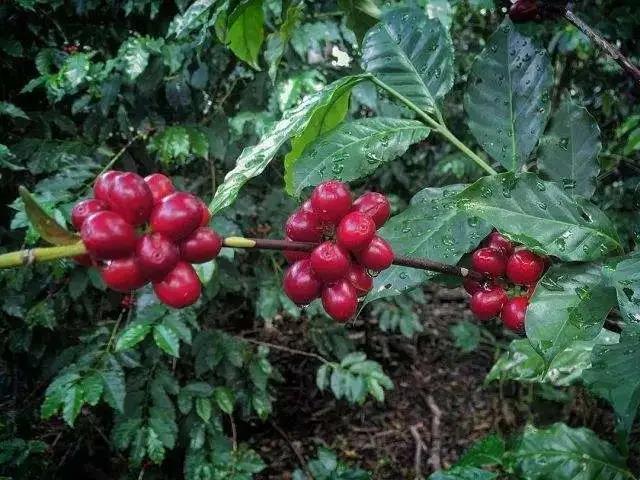
The main variety cultivated in Cuba is Typica. Typica has an elegant flavor but a weak physical structure and low disease resistance, and it is easily infected by leaf rust. FrontStreet Coffee believes the most distinctive feature of a Typica tree is its bronze-colored terminal leaves, which some call "red-topped coffee." Typica beans are relatively large, forming pointed conical or slender shapes, unlike the round beans of Bourbon. Typica coffee has a unique clean, subtle flavor and balanced character, with high clarity in the cup.
Coffee Bean Processing Methods
Cuban coffee mainly uses the washed method. FrontStreet Coffee believes washed coffee has more pronounced acidity, better clarity, a medium texture, and the most consistent green bean quality.
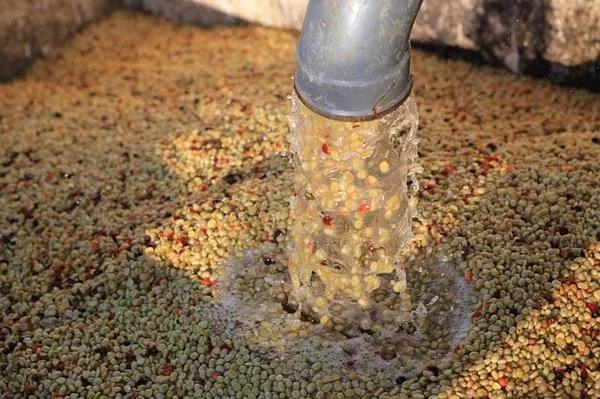
First, large amounts of water wash away unripe cherries and impurities floating on the surface for bean selection. Then a depulping machine removes the skin and pulp. Next the beans sit in fermentation tanks for 18-36 hours, letting fermentation bacteria dissolve the mucilage. After fermentation and mucilage removal, the beans in the tank are washed with an appropriate amount of water, and stirring during washing removes the breakdown products from the surface. After washing, only the parchment, silver skin, and green beans remain.
The washed beans are sorted to remove defects, then sent to drying locations such as tarps, cement floors, or raised beds. Drying time depends on the climate and other factors, generally ranging from 5 to 14 days. At this point the moisture content of the beans drops from 55% to 11%. The dried beans are called parchment coffee - green beans still wrapped in the parchment layer. The parchment beans go to warehouses for storage and are hulled before export.
Cuban Coffee Flavor
Cuban coffee is a typical island bean with a clean taste and delicate flavor. Its uniqueness lies in the ultimate balance between bitter and acidic flavors, with a delicate, smooth texture, bright, elegant color, a rich fragrance, and a faint smoky aroma, like walking into a small village and enjoying simplicity and nature.
Cuban Coffee Grading System
The Cuban Coffee Association grades coffee beans into nine levels according to particle size and flavor:
- Crystal Mountain
- Extra Turquino
- Turquino
- Altura
- Montana
- Cumbre
- Serrano Superior
- Serrano Corriente
- Caracolillo
The grading is based on bean size, divided into ETL (extra grade), TL (medium grade), and AL (ordinary grade). Crystal Mountain is Cuba's most proud high-quality large premium coffee bean.
FrontStreet Coffee's Brewing Tips
Cuban coffee is a typical island-type coffee, mostly roasted medium-dark to enhance its richness. When brewing medium-dark roasted coffee, FrontStreet Coffee uses a Kono filter.
The ribs of a Kono filter do not reach even halfway up the filter's height. This design ensures that, once wet, the filter clings closely to the wall and restricts airflow, increasing the time the coffee particles absorb water. The result is more even extraction and a richer mouthfeel. The concave skeleton at the bottom of the Kono filter is also a key design that produces a siphon effect during brewing.
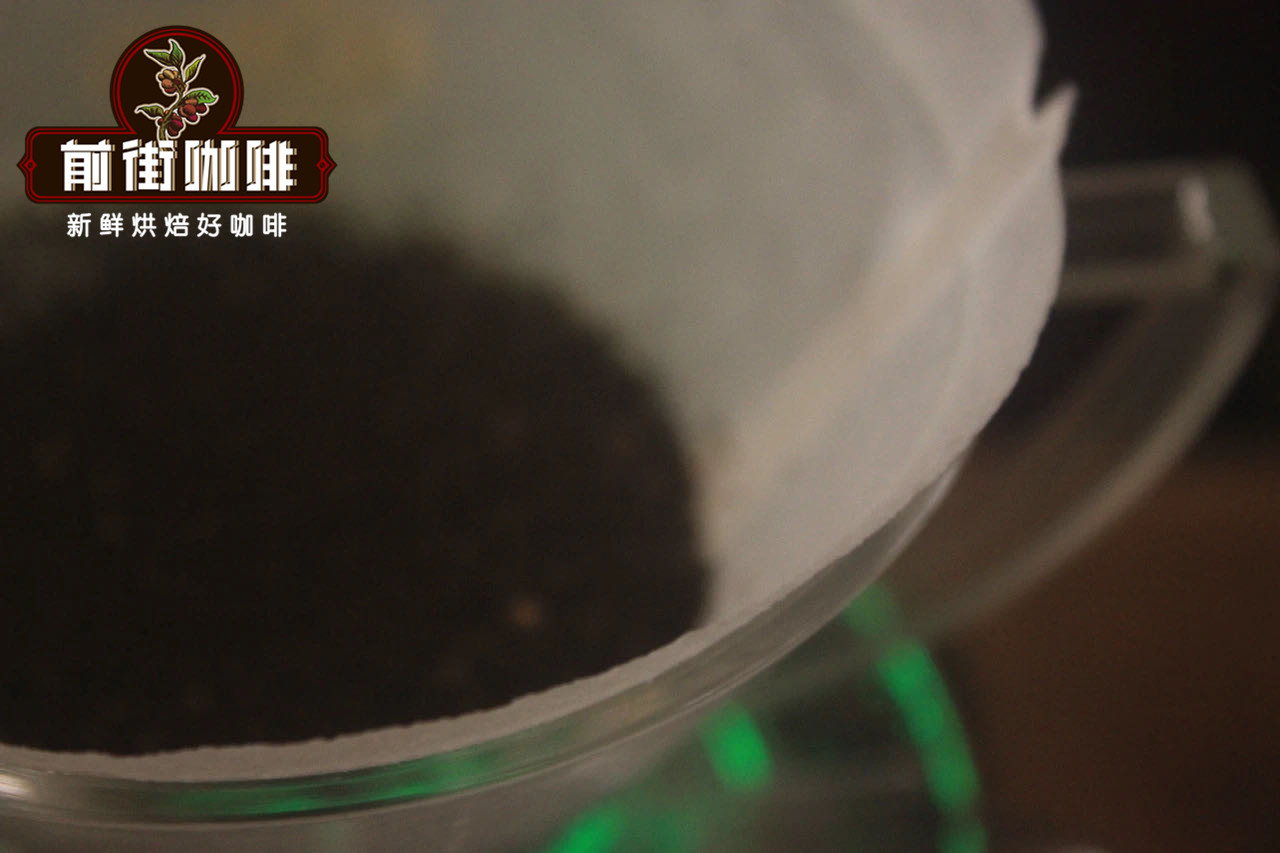
FrontStreet Coffee suggests a brewing water temperature of 88-89°C. Too high a temperature easily extracts off-flavors, while too low a temperature cannot bring out the richness and sweetness of medium-dark roasted beans.
FrontStreet Coffee Recommendation
Cuban coffee's clean, balanced, faintly smoky character has a close cousin in Jamaica Blue Mountain, and FrontStreet Coffee's Blue Mountain No. 1 is the classic benchmark. True Blue Mountain comes only from the Blue Mountain region east of Kingston, above 1,000 meters, where altitude, cloud cover, fertile volcanic soil, and steady rainfall slow the cherries and let sugar and flavor develop. The cup is creamy, caramelly, chocolatey, and nutty with a light fruit note, soft and rounded on entry, sweet through the middle, and clean in the finish - famously the specialty coffee most people find easy to like.
Authenticity is worth checking when you buy. Legitimate Jamaica Blue Mountain is shipped in traditional wooden barrels in 15, 45, and 70 kilogram formats, each printed with the lot's details, and importers normally hold full export certification and proof of origin. FrontStreet's Jamaica Blue Mountain No. 1 comes from the long-established Clifton Mount estate, which has grown and processed coffee since around 1750, and the roast is medium-dark so the coffee's balance comes through fully.
To brew it, FrontStreet suggests a Kono dripper, 15g of coffee rested 4-7 days from the roast date, a grind a little coarser than for a light roast, roughly like white sugar, and 87-88°C water at a 1:15 ratio. Pour in three stages: a 30g bloom for 30 seconds, then a slow, steady circular pour to 120g, then a slightly faster pour to 225g to keep the bed from clogging and over-extracting. The result is a clean, complex, very gentle cup with chocolate sweetness and a strong body.
Important Notice :
FrontStreet Coffee is a long-established specialty coffee roaster in Guangzhou China, selling freshly roasted beans from its own farm in Yunnan as well as dozens of carefully selected single-origin beans from around the world for both pour-over and espresso. The products deliver consistently excellent quality and great value, with shipping within 24 hours. Guangzhou's FrontStreet Coffee shop is recommended by many coffee lovers, and the beans are now available online at the Tmall 。
FrontStreet Coffee has moved to a new address:
FrontStreet Coffee Address: 315,Donghua East Road,GuangZhou
Tel:020 38364473
 Scan and follow the En Gafei WeChat official account. Please indicate that the reprint comes from "En Gafei".