Nicaragua Specialty Coffee: Tienshun Estate Coffee Beans Professor & Gift Coffee Brewing Flavor
Nicaraguan Specialty Coffee: Professor & Gift from Finca Un Regalo de Dios
For years, Nicaragua flew under the radar in the specialty coffee world; recurring civil conflicts stunted the development of its coffee industry. As the fighting ended and the economy recovered, however, the country's coffee scene began to flourish again. Nicaraguan coffee is loved for its captivating almond aroma, and FrontStreet Coffee has brought in two coffees from Finca Un Regalo de Dios: Professor and Gift.
The Growing Regions
Nicaragua enjoys a remarkably favorable setting. Sitting in the heart of Central America, it fronts the Pacific to the west and the Caribbean to the east. The north-central part of the country is highland country, while the east is coastal plain — all of it part of the Central American volcanic belt. The eastern lowlands are hot and rainy under a tropical maritime climate, and fertile volcanic soil spreads across the country. Combined with shade-growing practices, this makes for an outstanding coffee environment. The three main producing regions are Nueva Segovia, Jinotega, and Matagalpa, with altitudes from 700 to 1,700 meters. FrontStreet Coffee finds Nicaraguan flavor profiles run deeper than most Central American coffees: chocolate, caramel sweetness, and a signature almond note.
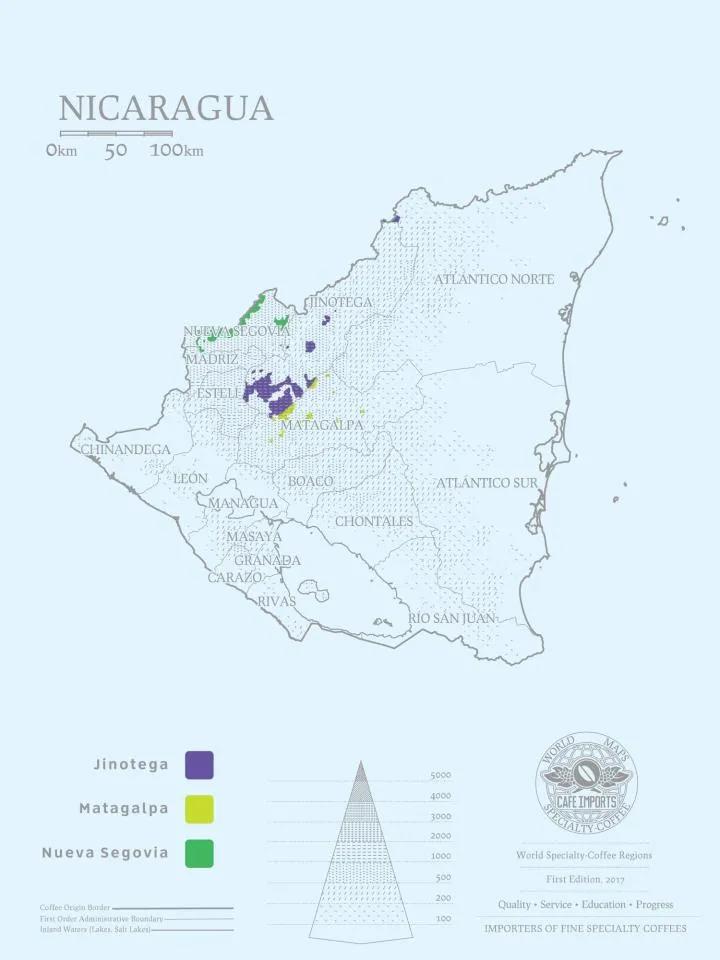
Finca Un Regalo de Dios sits in Nueva Segovia — a collective name for the coffee lands of Nicaragua's three northernmost departments: Madriz, Estelí, and Nueva Segovia.
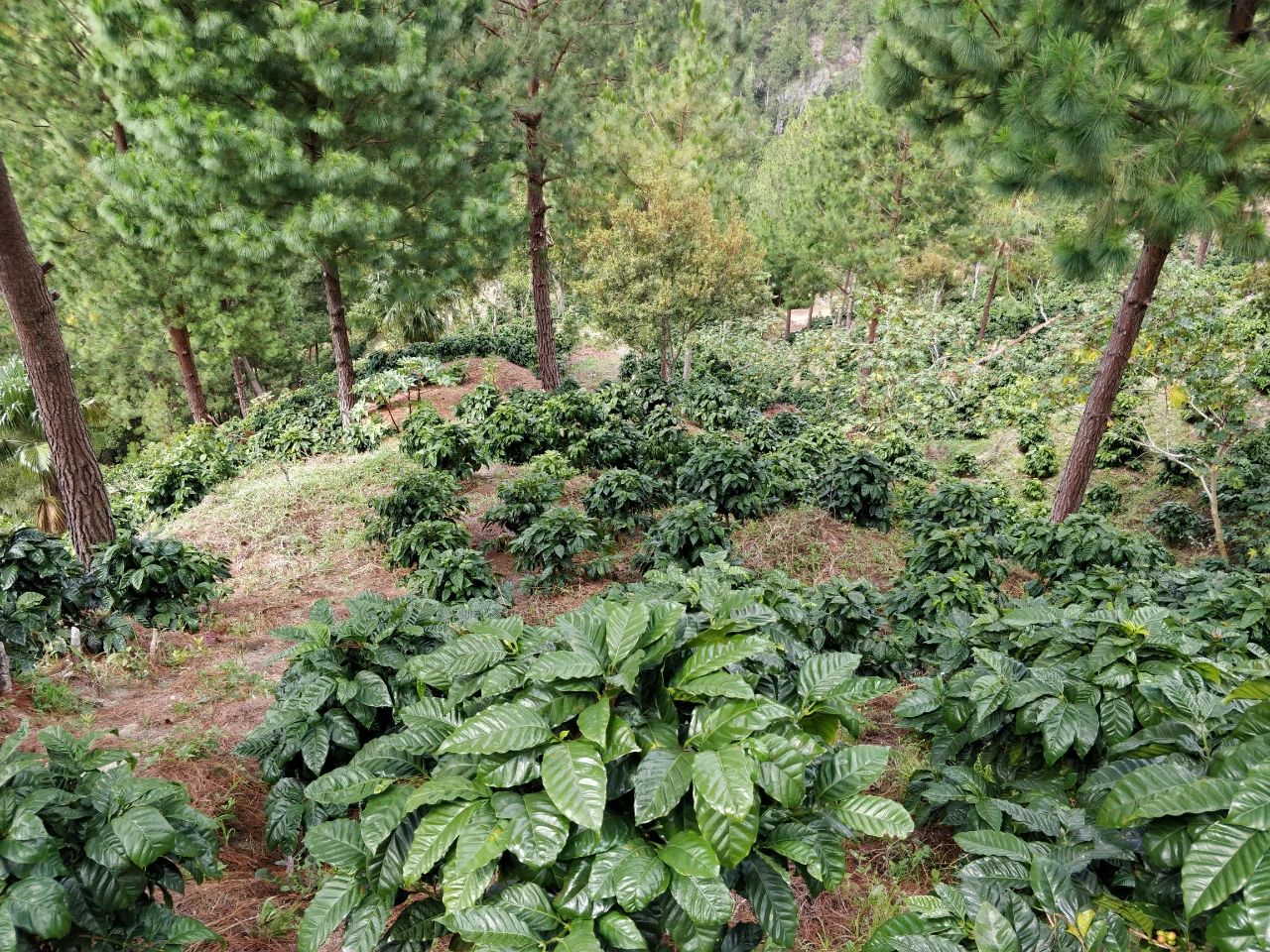
The farm's name means "A Gift from God." It lies in the municipality of Mozonte, near the Dipilto-Jalapa mountain range on the Honduran border. Tucked into lush forest and walled by mountains on three sides, the estate spans 179 hectares, 130 of which are planted with coffee. Luis grades his plots by altitude — though, interestingly, this turns out to have little direct bearing on cup quality. As his coffees earned international recognition, owner Luis Alberto Balladarez Moncada put ever more emphasis on selective, cherry-by-cherry harvesting.
The Varieties
Professor is a Red Bourbon. Red Bourbon is the variety most of us simply call Bourbon — a natural mutation of Typica whose ripe cherries turn a wine-red, with noticeably round beans. High-grown Bourbon typically shows superior aromatics and lively acidity, and on the palate it can recall a good red wine.
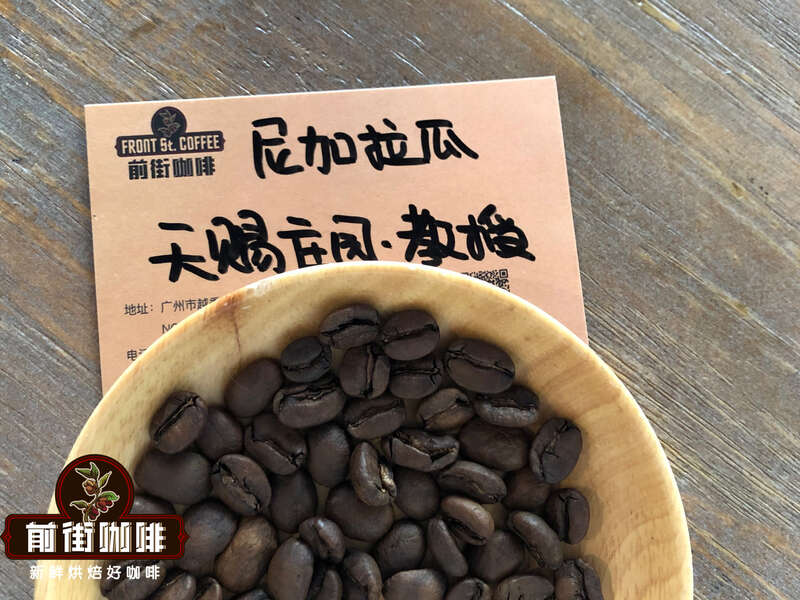
Gift is a Red Catuai, a variety bred deliberately by crossing Caturra with Mundo Novo. Catuai inherits Caturra's dwarf stature, so it needs no shade canopy and is easy to grow and pick, while standing up to weather better than Mundo Novo. In the cup it delivers excellent acidity. Catuai comes in red- and yellow-fruited forms.
Processing
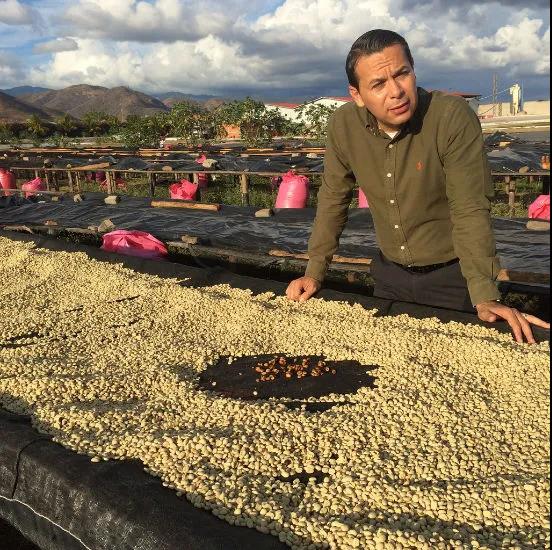
Both coffees are processed as naturals. Luis has deep experience in specialty cultivation and post-harvest work, and his years of experimenting with natural processing have made him one of the driving figures of Nicaraguan specialty coffee. Each lot gets exceptional care from start to finish: it begins with picking only the best cherries and culling defective, underripe, or overripe fruit, after which the cherries are spread directly on raised drying beds. Naturals here typically dry for 25-30 days until moisture reaches about 11%. The result is a coffee with elevated sweetness and richly layered flavors.
FrontStreet Coffee Roasting Recommendations
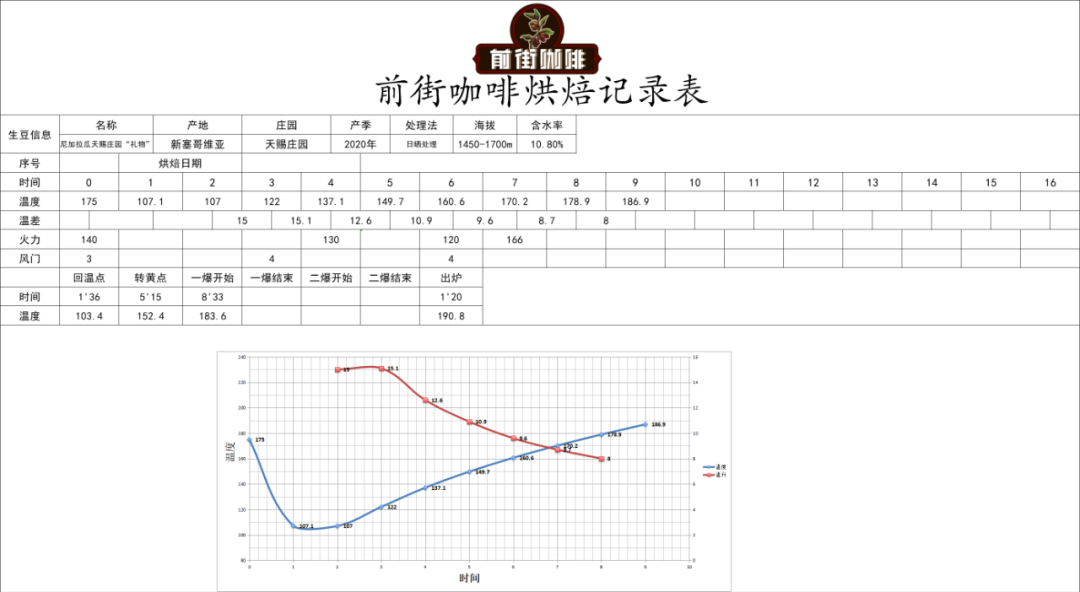
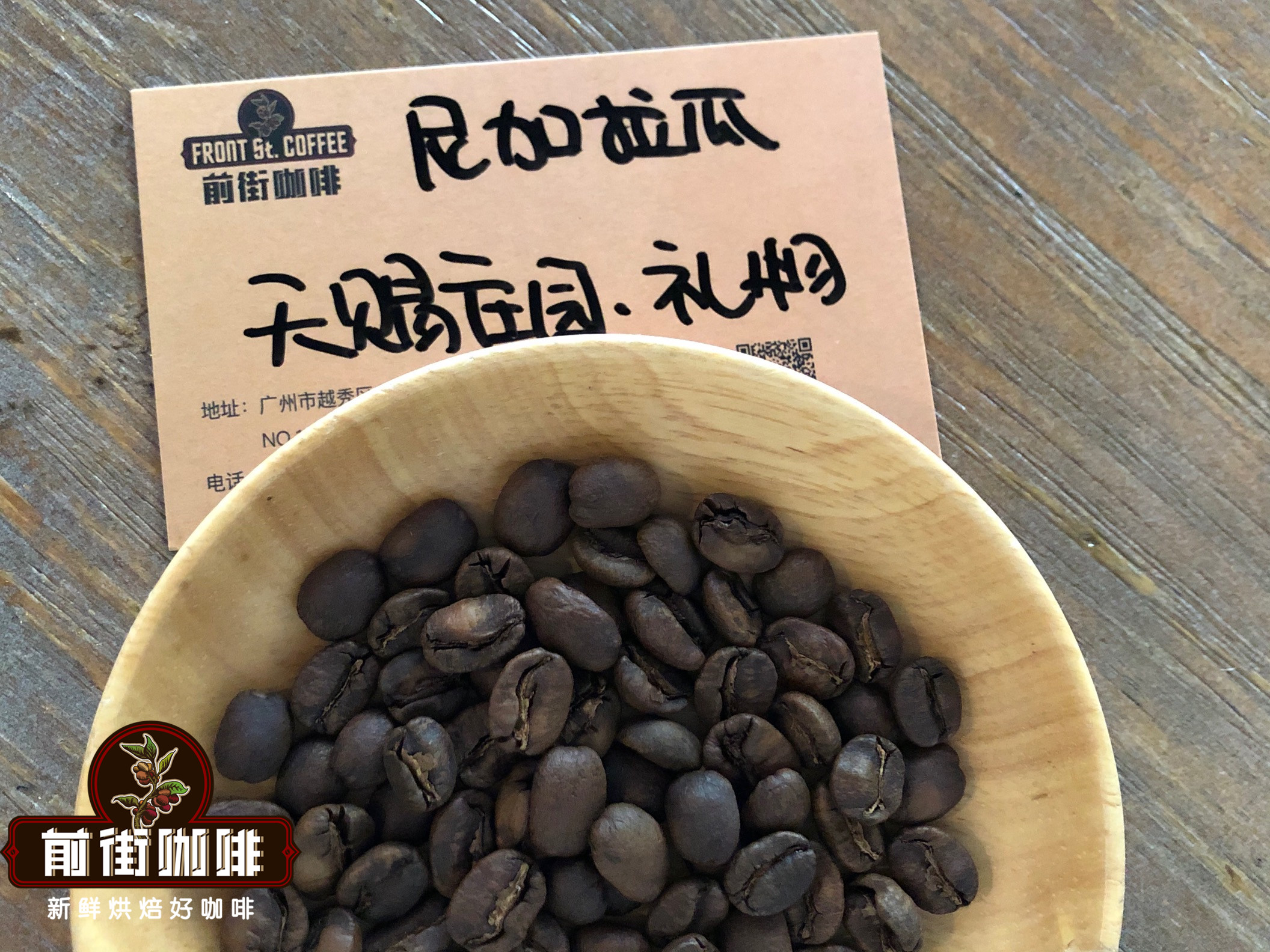
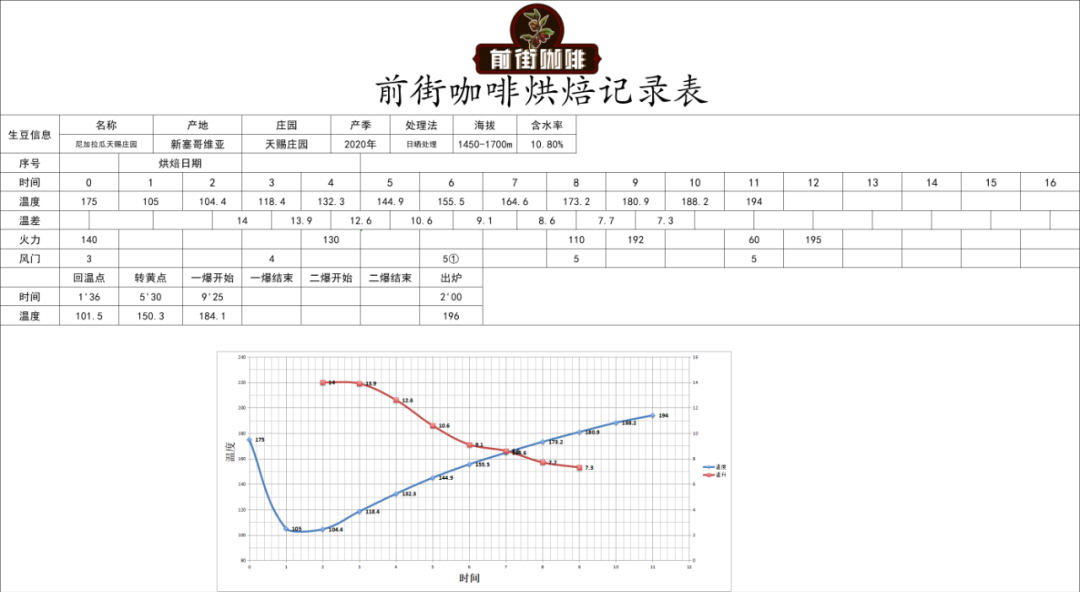
The current-season beans from Finca Un Regalo de Dios arrive with higher moisture content, so FrontStreet Coffee's roasters lengthen the drying phase to heat the surface and core of the bean evenly. Nicaraguan beans are plump but can taste muted, so the roasting team favors a medium-light profile — cutting the heat 30 seconds before drop and allowing a coasting phase with reduced airflow — to draw out that characteristic almond aroma.
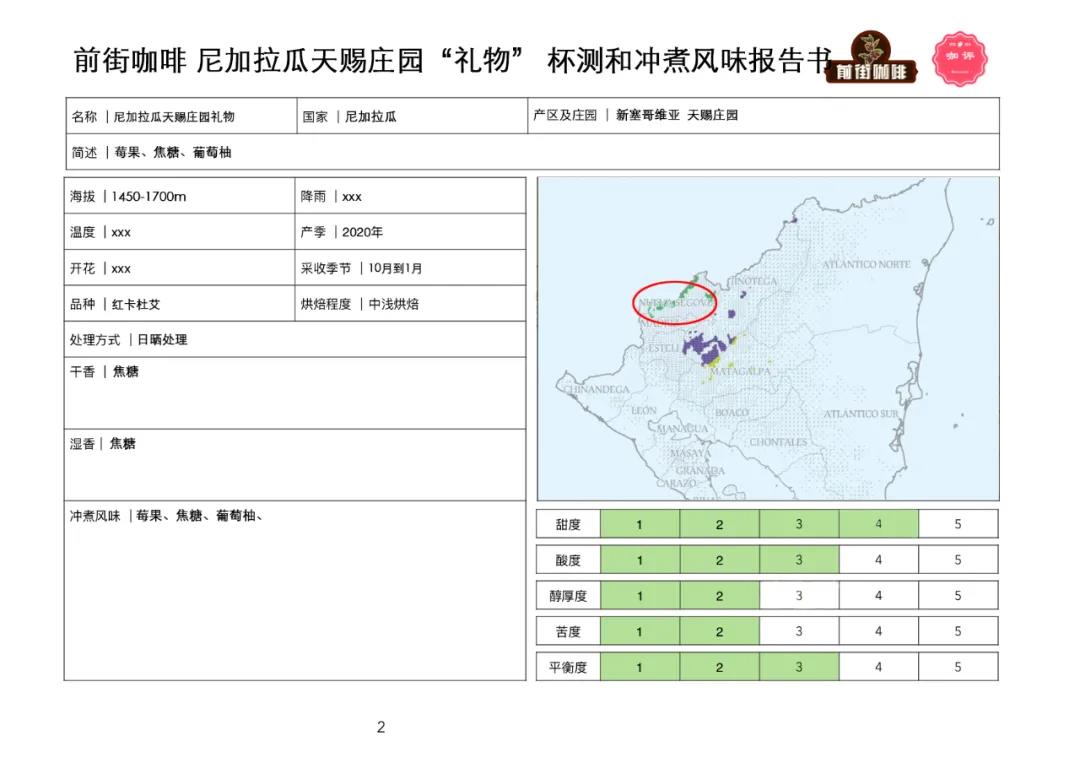
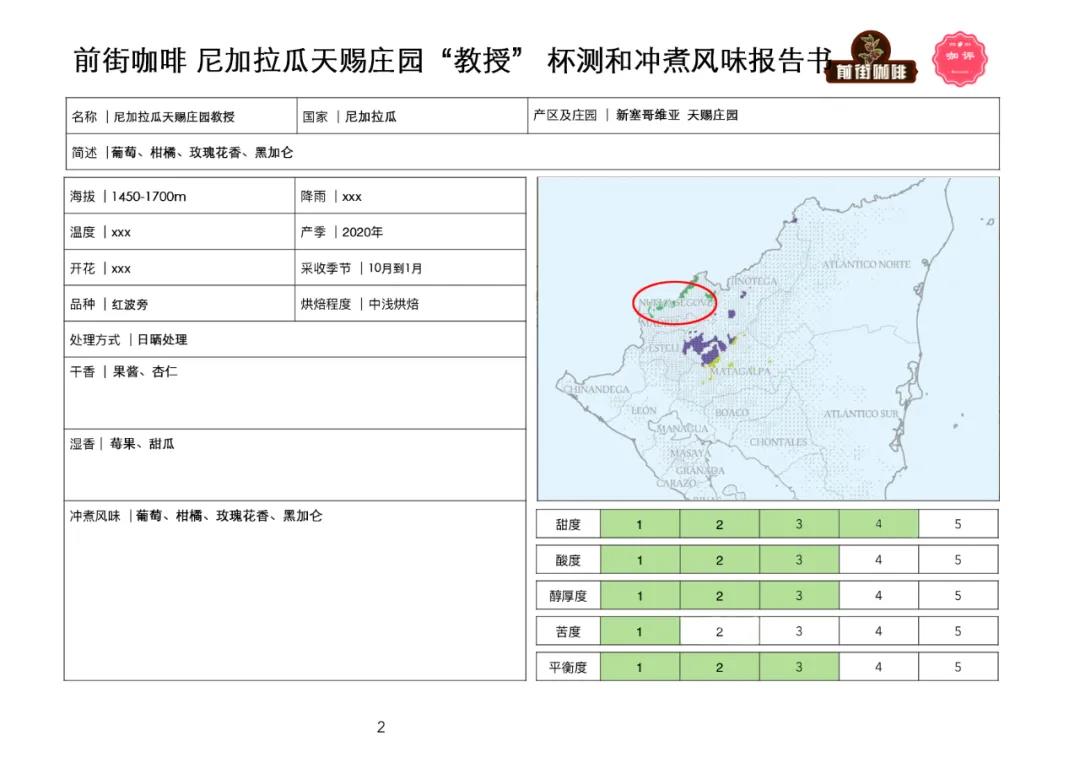
FrontStreet Coffee Cupping Notes
FrontStreet Coffee Brewing Recommendations
Filter: V60 #01
Water Temperature: 90-91°C
Coffee Dose: 15 g
Coffee-to-Water Ratio: 1:15
Grind Size: Medium-fine (80% pass-through on a #20 sieve)
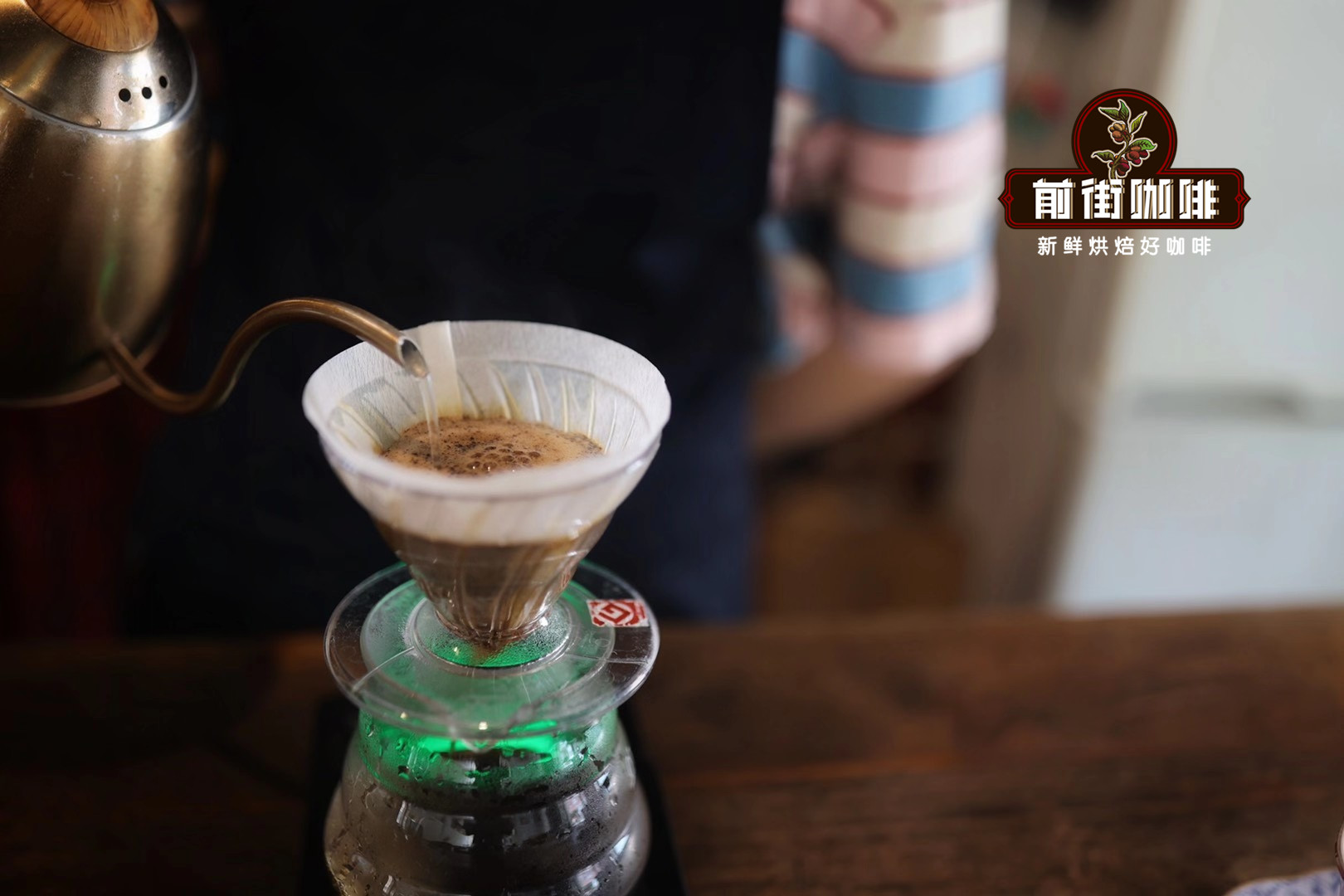
FrontStreet Coffee's method is a three-pour extraction. Bloom with 30 g of water for 30 seconds. Using a small, steady stream, pour in circles up to 125 g, then pause. When the bed is about to break the surface, pour again to 225 g and stop. Once the bed resurfaces a second time, lift off the dripper. (Timing starts from the start of the bloom.) Total extraction time is 1'50".
FrontStreet Coffee Recommendation
If the chocolate-and-almond character of these Nicaraguan naturals appeals to you, two more FrontStreet Coffee beans deliver that same cozy, nutty-chocolate profile. The FrontStreet Brazil Fazenda Rainha (Queen Estate) Single Origin comes from a small estate farmed with unusual care, built on the distinctive yellow Bourbon variety. Roasted, it offers Brazil's classic nuts, cream, roasted peanut, and caramel-cookie flavors with restrained acidity and an even, balanced body — plus a clean sweetness that lingers in the finish. Its rich aroma works beautifully as pour-over, French press, or clever dripper coffee, and it also shines through a moka pot or home espresso machine.
For a blend built around the same flavor family, the FrontStreet Signature Espresso Blend pairs Brazil-forward body with Colombian complements, layering almond, walnut, and other nut aromatics over a gentle bitterness and milky-chocolate sweetness. As a latte it is silky and smooth; as straight espresso it is balanced and expressive — an easy choice for anyone chasing a bold, comforting cup.
Important Notice :
FrontStreet Coffee is a long-established specialty coffee roaster in Guangzhou China, selling freshly roasted beans from its own farm in Yunnan as well as dozens of carefully selected single-origin beans from around the world for both pour-over and espresso. The products deliver consistently excellent quality and great value, with shipping within 24 hours. Guangzhou's FrontStreet Coffee shop is recommended by many coffee lovers, and the beans are now available online at the Tmall 。
FrontStreet Coffee has moved to a new address:
FrontStreet Coffee Address: 315,Donghua East Road,GuangZhou
Tel:020 38364473
 Scan and follow the En Gafei WeChat official account. Please indicate that the reprint comes from "En Gafei".