Introduction to Six Major Coffee Growing Regions in African Kenya, Kenyan Coffee Varieties & 72-Hour Washed Process
The bright fruit acidity of Kenyan coffee, with its vibrant, full-bodied and outstanding taste, leaves an unforgettable impression on anyone who tries it. FrontStreet Coffee has cupped many beans from different regions in Kenya. If high acidity is the soul of good coffee, then Kenyan coffee is the representative of that soul. Kenyan beans have another special trait: most coffees with bright acidity lack a thick mouthfeel, and while Ethiopian beans feel clean and refreshing in the mouth, Kenyan coffee coats the whole palate with a berry-juice sensation, close to tomato juice.
Kenya Introduction
Kenya lies in eastern Africa, with the equator crossing its center and the East African Rift Valley running north to south. It borders Somalia to the east, Tanzania to the south, Uganda to the west, and Ethiopia and Sudan to the north, with the Indian Ocean to the southeast. The country is mostly plateau, averaging 1,500 meters in elevation. Mount Kirinyaga (Mount Kenya) in the central region reaches 5,199 meters, with snow on its summit, making it the second-highest peak in Africa.
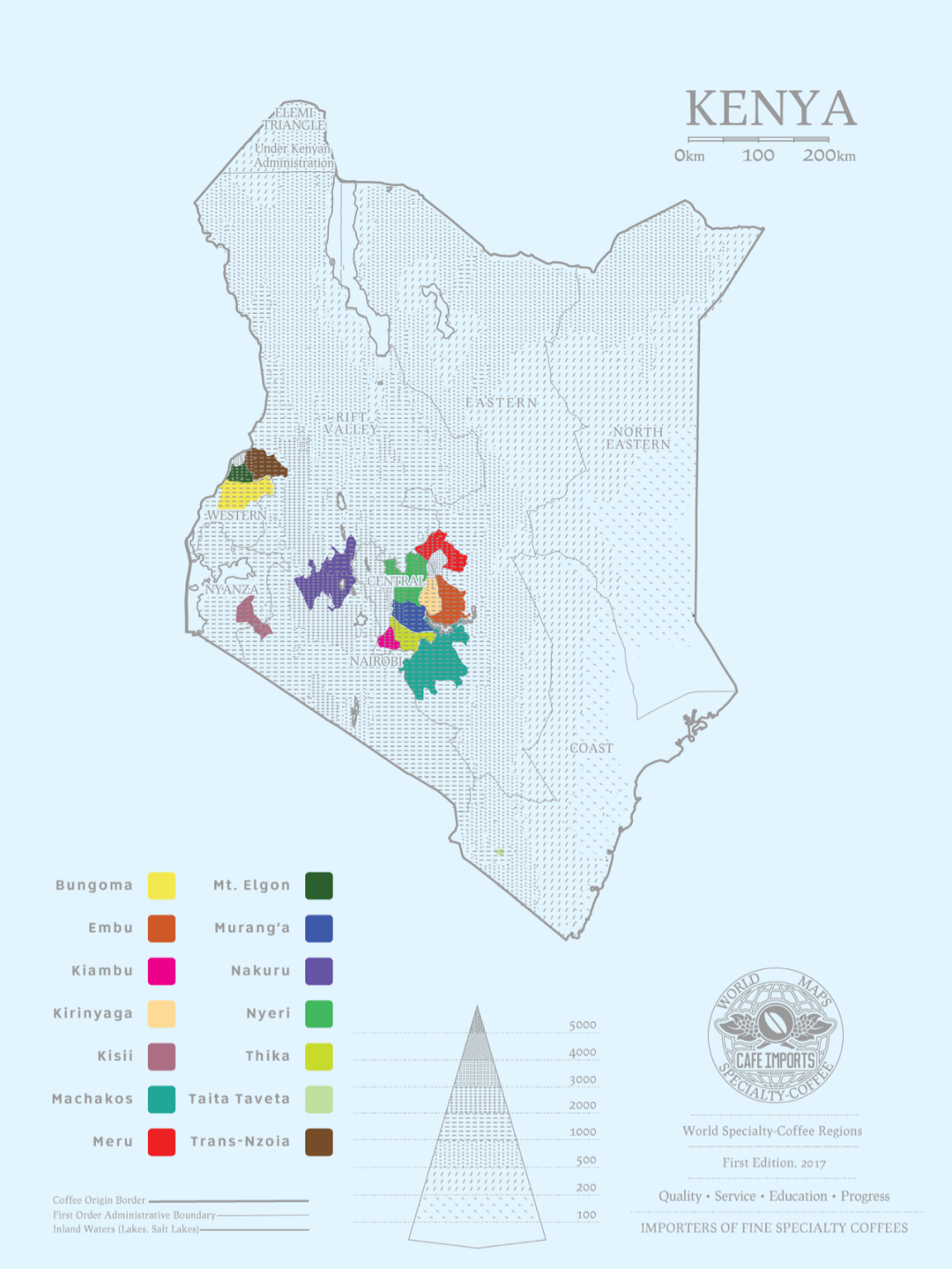
Kenya is a tropical producing region with two rainy seasons a year, which allows two harvests. 60% is concentrated from October to December, and the remaining 40% falls from June to August. Coffee is mainly grown in volcanic areas at elevations of 1,600-2,100 meters, running from the capital Nairobi out toward the Kenya mountain region. This altitude suits flavor development because the mountain temperatures are lower and growth is slower, letting the aromatic components of the beans develop fully, sharpening the fruit acidity and hardening the texture. This crescent-shaped belt of fertile soil is the main source of Kenya's specialty beans.
Kenyan Coffee Regions
Kenyan coffee regions consist of six major growing areas: Thika, Kirinyaga, Mt. Kenya West, Nyeri, Kiambu and Muranga. These six harvest from October to December in the main season and from June to August in the secondary season.
Thika
Thika is a small town near Kenya's capital, Nairobi. There are many coffee fields around Nairobi, and while Thika is an industrial town, it is surrounded by agriculture and waterfalls. The Thika region has approximately 2,000 farmers. Coffee cultivation in Thika traces back to the late 19th century, when varieties were introduced from neighboring Ethiopia to the north. After local improvements, common varieties now include Bourbon, Kents (SL34, SL28), Typica and Riuri 11. About 90% of the coffee planted today is SL34 and SL28. The newer Batian variety, released in 2007, has not yet spread widely. The flavor profile of this region features bright fruit acidity, a thick berry-juice sensation and honey-like sweetness.
Elevation: 1,550-1,750 meters
Varieties: SL-28, SL-34
Kirinyaga
The Kirinyaga region lies on the slopes of Mount Kenya, next to the Nyeri region, and is known worldwide for coffee with intense flavor, rich layers and a solid mouthfeel. Together with Nyeri, it is recognized as one of Kenya's two most excellent regions. Most producers here are smallholder farmers who have joined cooperatives, which play a coordinating role by providing washing stations where farmers deliver their cherries for processing. The flavor profile features bright fruit acidity with moderate oiliness and delicate sweetness.
Elevation: 1,300-1,900 meters
Varieties: SL-28, SL-34, Ruiru11, Batian
Mt. Kenya West
Mt. Kenya West takes in Kisii and the Bungoma area of Mount Elgon. The Kisii area lies in southwestern Kenya, not far from Lake Victoria, and is a relatively small producing region where most beans come from cooperatives formed by small producers. The coffee here tastes quite different from the central regions, featuring roasted nuts and gentle fruit acidity, and is widely favored by buyers who dislike bright acidity.
Elevation: 1,450-1,800 meters
Varieties: SL-28, SL-34, K7
Nyeri
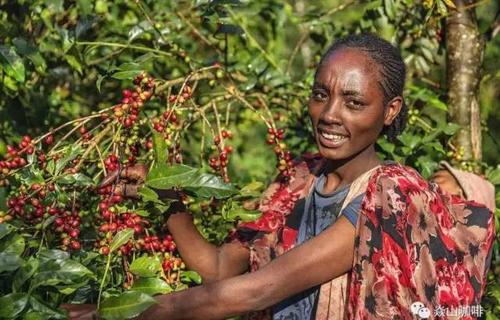
Located in central Kenya, Nyeri is home to the extinct volcano Mount Kenya. The red soil here nurtures Kenya's finest coffee. Agriculture is extremely important, with coffee as the main crop, and cooperatives formed by small farmers are more common than large estates. The region has two harvests, but coffee from the main season is usually of higher quality. It features a bright berry-juice sensation with citrus and subtle floral notes. The beans grown here are what made Kenyan coffee famous worldwide.
Elevation: 1,200-2,300 meters
Varieties: SL-28, SL-34, Ruriu11, Batian
Kiambu
This region in central Kenya has the highest-elevation coffee growing areas within the district. Some coffee trees at high altitudes suffer from dieback disease, which stops their growth. The region is named after Nakuru town. Coffee here is grown both by estates and by small farmers, though production is relatively small.
Elevation: 1,850-2,200 meters
Varieties: SL-28, SL-34, Ruiru11, Batian
Muranga
The Muranga region belongs to the Central Province, with approximately 100,000 coffee farmers. This inland region was one of the first settlement areas chosen by missionaries, because the Portuguese barred them from living in coastal areas. It is another region that benefits from volcanic soil, with more small coffee farmers than estates. The coffee features bright acidity and a thick juice sensation.
Elevation: 1,350-1,950 meters
Varieties: SL-28, SL-34, Ruiru11, Batian
Coffee Varieties
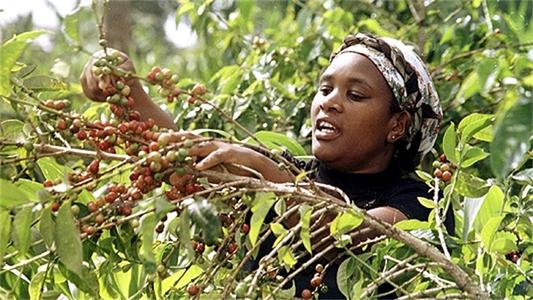
SL-28 and SL-34 are two of the 40 varieties developed by a research program led by Guy Gibson at Scott Laboratories, cultivated and named in the 1930s. According to SL laboratory botanists, SL28 and SL34 are genetic variants. They make up the majority of Kenya's high-quality coffee production, though both are susceptible to leaf rust. SL34 has more French Mission, Bourbon and Typica lineage. Its copper-colored leaves and broad, bean-shaped seeds give wonderful sweetness, balance and complex flavors, with prominent citrus and black plum characteristics.
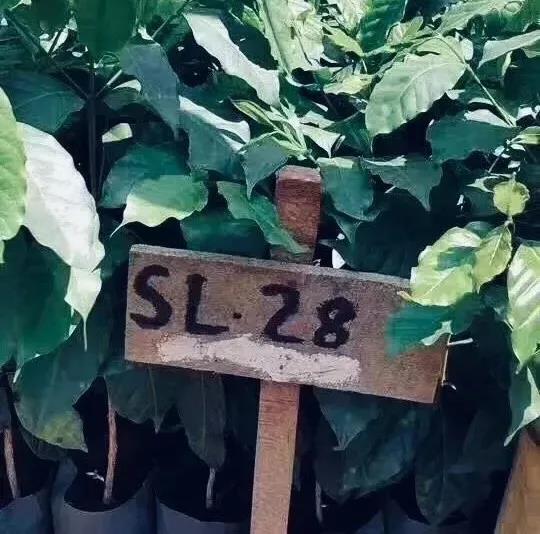
Ruiru 11: in 1985, during a global rust outbreak, Kenya developed this hybrid variety with an emphasis on yield over quality. Its flavor quality is far inferior to SL28 and SL34, and it has not gained traction in the specialty coffee industry. Even so, many suppliers, including some importing premium coffee, blend this hybrid in to reduce costs.
Coffee Processing Method - Kenya 72-Hour Washed
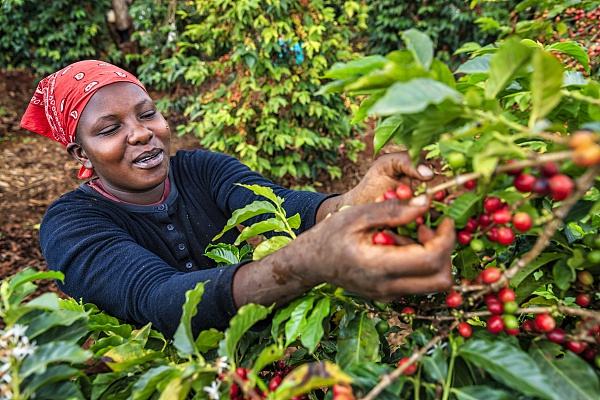
Kenya employs a repeated washing and fermentation method. Processing begins on the day of harvest, selecting the highest-quality cherries for pulping and fermentation. Fermentation lasts 24 hours, after which the beans are washed with clean river water. They then undergo another 24-hour fermentation in clean river water, followed by washing again. After this cycle is repeated 3 times to reach 72 hours, it is called the Kenyan 72-hour fermentation washed method, or K72 for short.
First Wash and Fermentation
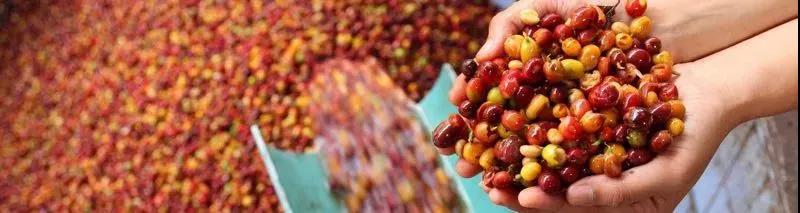
Once the cherries are harvested, they go through water density sorting. The principle is to use differences in density and quality within the fruit itself: high-density, heavy beans sink, while low-density beans float. Fully ripe, high-quality fruit has high density and is selected for further processing.
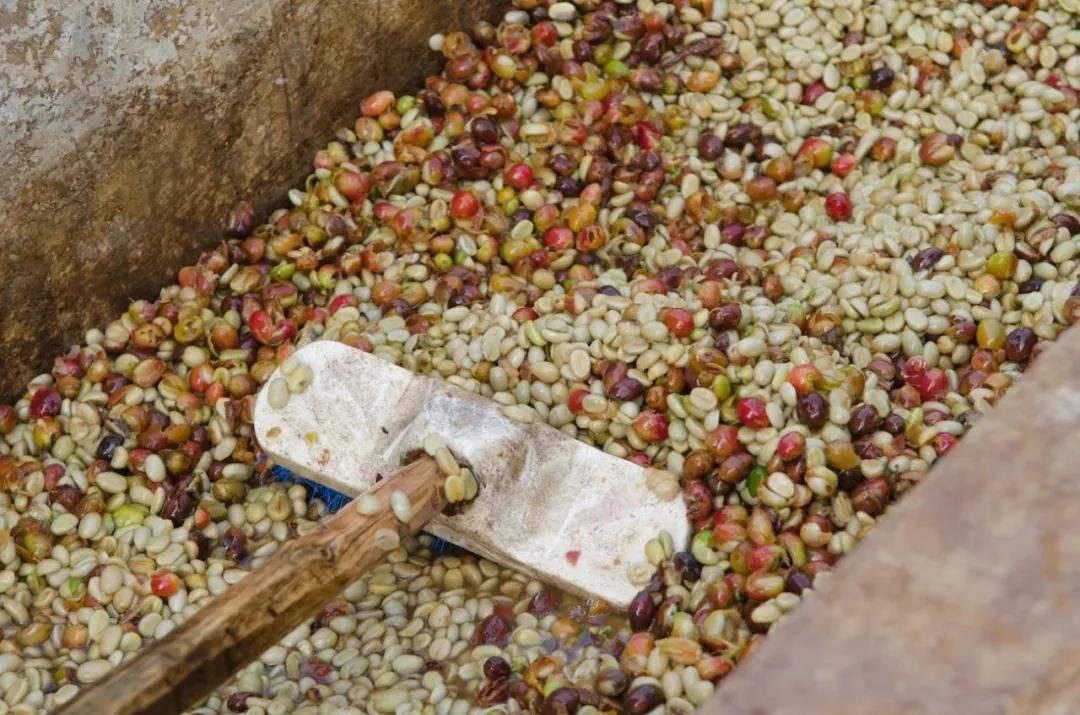
After selecting high-quality, sufficiently ripe fruit, the skin is removed for washed soaking, letting the mucilage attached to the outer layer of the raw beans ferment. The mucilage contains natural sugars and alcohols that play a crucial role in developing the coffee's sweetness, acidity and overall flavor. Fermentation lasts up to 24 hours, after which 80-90% of the mucilage is removed, leaving only the flavor within the beans.
Second Wash and Fermentation
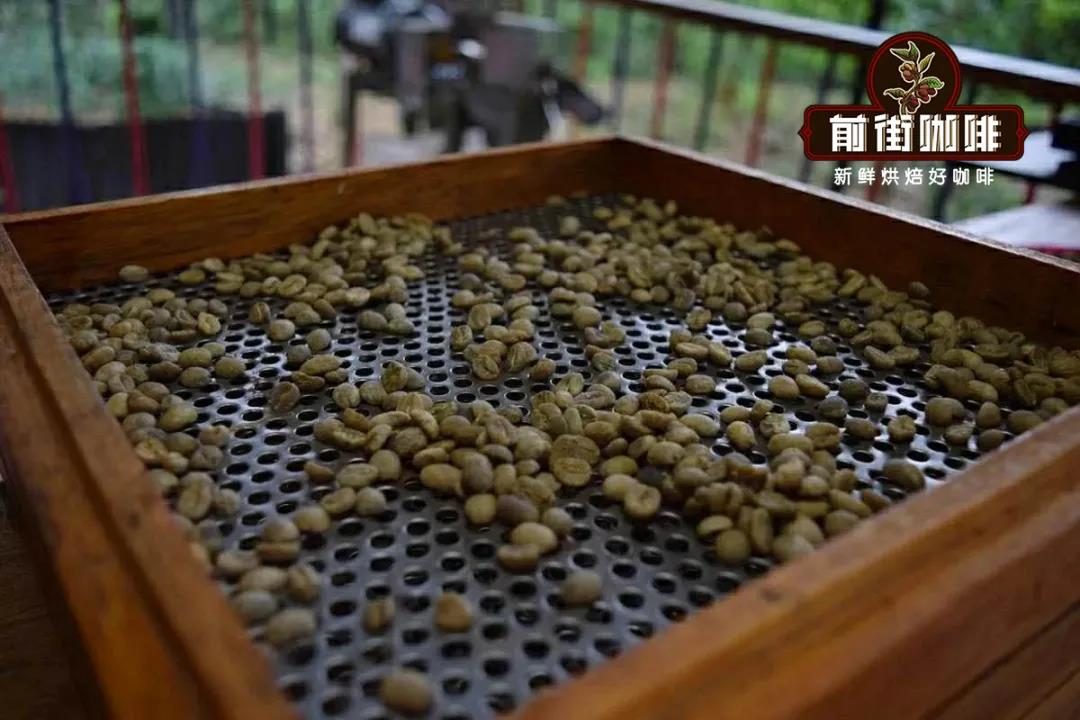
Next comes the second wash and fermentation. After cleaning the beans from the previous stage, they are soaked again in water for 24-48 hours. This process increases proteins and amino acids, creating complex and delicate layers in the coffee's acidity. Finally, all remaining mucilage is removed, and the beans are moved to raised racks for sun drying.
Drying time depends on the weather, generally taking about 5-10 days to complete.
FrontStreet Coffee believes that beans processed with the Kenyan 72-hour fermentation washed method, which undergo long-term fermentation at low temperatures and are finished only after sun-drying and dehydration, end up with brighter, cleaner yet fuller flavors.
Coffee Bean Grading System (by Size)
AA Plus (AA+): exceptionally excellent AA grade in cup quality, meaning flavor and mouthfeel.
AA: size (screen size) 17-18 mesh.
AB: size (screen size) 15-16 mesh, accounting for the majority of production.
C: size (screen size) smaller than AB.
TT: lighter-weight beans blown out by air classifiers from AA and AB grade beans.
T: lighter-weight beans blown out by air classifiers from C grade beans.
E Elephant Bean: large mutant beans where two beans merge, also called elephant ear beans.
PB Peaberry: classified by shape, unrelated to flavor or weight.
For AA and AB grade green beans, special grading based on cupping results has been added, though it is not officially recognized by Kenya and was established by exporters. It ranks from high to low as TOP, PLUS (+) and FAQ. The Kenya Asalia flavor grade on FrontStreet Coffee's bean list reaches TOP grade. As mentioned earlier, though, this is not an officially recognized grading system. Not every Kenyan regional coffee FrontStreet Coffee procures carries a flavor grade, so there is no need to worry about it too much. Once beans reach AA and AB grades, their flavor is already considered very high quality by default.
The Kenya Asalia offered by FrontStreet Coffee comes from AA grade coffee beans in the Thika region. Next, FrontStreet Coffee explains how we roast this bean and how we brew it, to show its flavor performance.
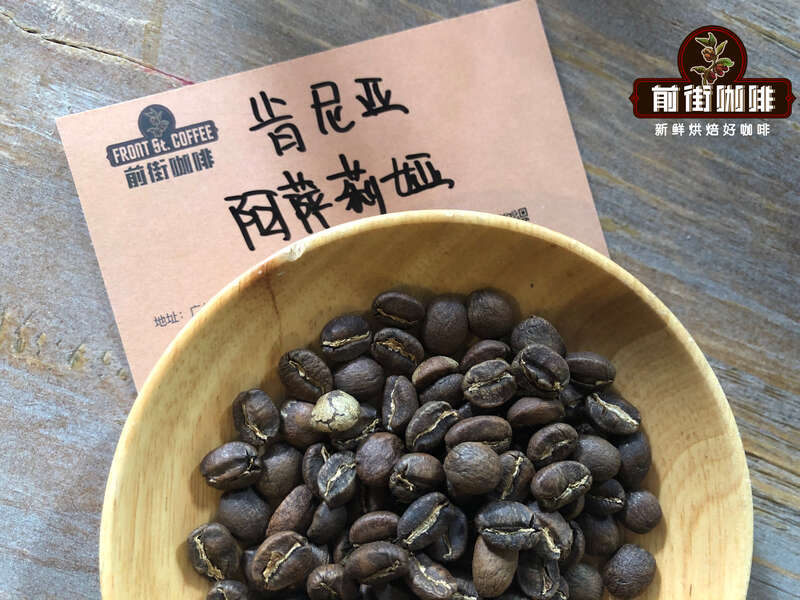
Region: Kenya Thika
Processing Station: Asali Honey Processing Station
Elevation: 1,550-1,750 meters
Grade: AA TOP
Varieties: SL28, SL34
Processing Method: Kenyan 72-hour washed
FrontStreet Coffee Roasting Suggestions
When FrontStreet Coffee roasts this Kenyan coffee, mindful of the need to highlight its rich fruit acidity and full berry-juice mouthfeel, we use a medium-light roast.
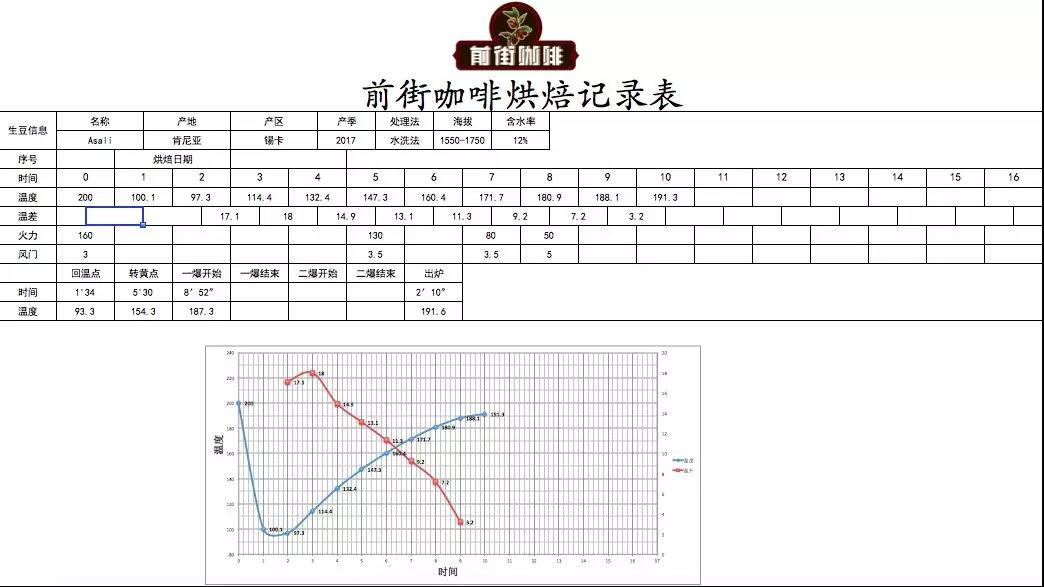
Machine: Yangjia 800N, with 550 g of raw beans
Bean entry temperature: 200°C
First crack: 5'30", 154.3°C
2'10" of development after first crack, discharged at 191.6°C
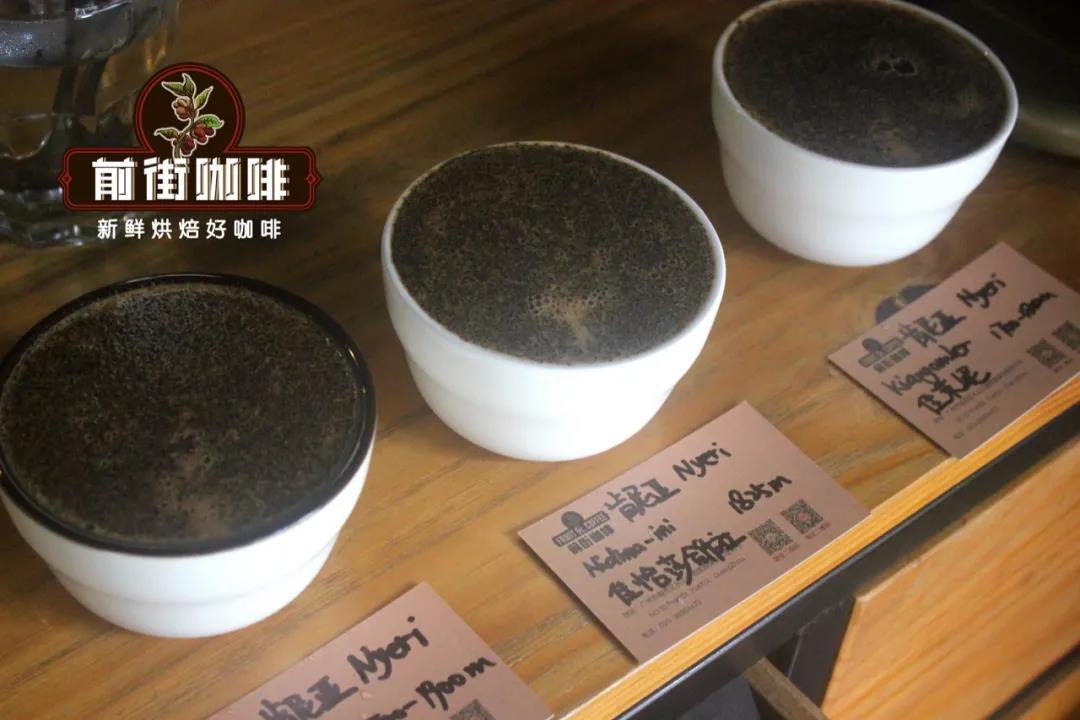
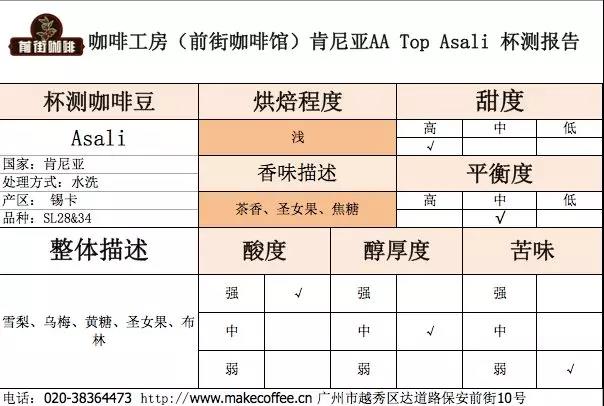
FrontStreet Coffee Cupping Report
FrontStreet Coffee Brewing Suggestions
Because this bean uses a medium-light roast, FrontStreet Coffee uses a higher water temperature and a faster-flowing dripper. We want to extract its bright acidity at high temperature, but we do not want to cause over-extraction, so we choose the faster-flowing V60.
Coffee-to-water ratio: 1:15, 15 g of coffee to 225 ml of water
Water temperature: 90°C-91°C
Grind size: fine sugar size (80% passing a No. 20 standard sieve)
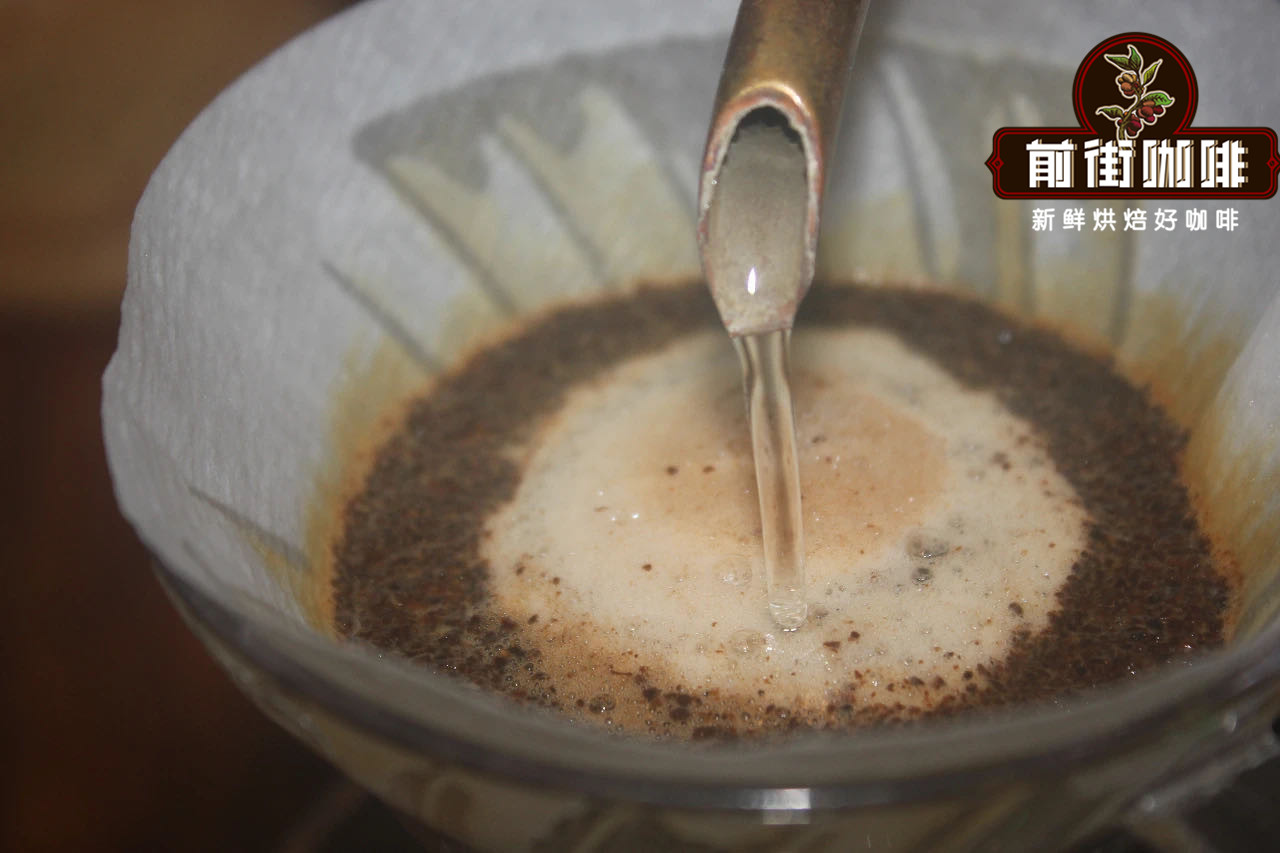
First pour 30 g of water for a 30-second bloom, then pour 95 g more (the electronic scale shows around 125 g), completing in about 1 minute. When the water level drops to 2/3 of the coffee bed, pour the remaining 100 g (the electronic scale shows around 225 g), completing in about 1 minute 40 seconds. Finish the extraction at 2'00", then remove the dripper.
Brewing flavor: the entry has black plum and cherry tomato flavors, with a strong, thick acidity in the mouthfeel. The middle section shows prominent sweetness with a juice sensation. The aftertaste carries berry aroma and brown-sugar sweetness, with a green-tea fragrance.
FrontStreet Coffee Recommendation
If Kenyan coffee's juicy, berry-like acidity appeals to you, FrontStreet Coffee's Ethiopian single origins offer a different reading of African coffee. FrontStreet Coffee washed Yirgacheffe, the classic introduction to the region, brings clear jasmine and bright citrus-lime acidity with a tea-like body, and it remains one of the easiest ways to step into East African coffee.
FrontStreet Coffee Gedingding, from the Gedingding cooperative, was originally part of the Worka cooperative under the YCFCU union before becoming an independent single-origin site in 2012 with around 300 farmer members. Its traditional washed processing keeps the cup transparent, with citrus and lemon acidity and an elegant white floral character over a bright, delicate body.
For something wilder, FrontStreet Coffee Kafa Forest comes from trees growing wild between 1,400 and 2,100 meters in shade, and after a medium-light roast it shows white florals, bright lemon acidity, sweet orange and bergamot, with a light melon and nut finish and a green-tea-like mouthfeel.
Important Notice :
FrontStreet Coffee is a long-established specialty coffee roaster in Guangzhou China, selling freshly roasted beans from its own farm in Yunnan as well as dozens of carefully selected single-origin beans from around the world for both pour-over and espresso. The products deliver consistently excellent quality and great value, with shipping within 24 hours. Guangzhou's FrontStreet Coffee shop is recommended by many coffee lovers, and the beans are now available online at the Tmall 。
FrontStreet Coffee has moved to a new address:
FrontStreet Coffee Address: 315,Donghua East Road,GuangZhou
Tel:020 38364473
 Scan and follow the En Gafei WeChat official account. Please indicate that the reprint comes from "En Gafei".