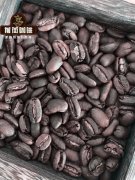
Indonesia West Java Specialty Coffee Region - Honey Process West Java Coffee Brewing Flavor Characteristics
When people talk about Indonesian coffee, the first name that comes to mind is Mandheling. Mandheling refers to coffee from the island of Sumatra, known for its mellow flavor and low acidity, and it is deeply loved by many coffee connoisseurs. Among the Indonesian coffees available at FrontStreet Coffee, besides Mandheling from Sumatra there is another bean from West Java. West Java coffee has a completely different character from Mandheling, and this article introduces that distinctive Indonesian bean.

Coffee Information
Name: Indonesia West Java Imani
Region: Mount Tangkuban Perahu, West Java
Altitude: 1400-1600m
Variety: S795 Jember
Processing Method: Natural Honey Process
Coffee Growing Region
West Java Province is a first-level administrative division of Indonesia, located in the western part of Java Island. It borders the Java Sea to the north and the Indian Ocean to the south, and includes nearshore islands, covering an area of 46,300 square kilometers. Java has a tropical rainforest climate, remaining hot and humid throughout the year. The plain areas along the northern coast are the hottest, while the mountainous areas are much cooler. High humidity often creates a draining climate. From November to March of the following year is the northwest monsoon period, with more rain and cloud; from April to October is the southeast monsoon period, with more sunny days and less rainfall. Jakarta's average annual rainfall is about 1,760 millimeters (69 inches). Jakarta's average daily high temperature is 30°C (86°F) and its low is 23°C (74°F). In the highlands of Tosari (altitude 1,735 meters [5,692 feet]), the average temperature ranges from 22-8°C (72-47°F). Java's soil is very fertile because volcanic ash periodically fertilizes the land.

Java holds an extremely important place in coffee history. Unlike most other Indonesian coffees, which are grown on small farms and given initial processing there, Java's Arabica grows on large farms and plantations, mostly government-run, all using modern washed processing. The variety is S795, called Jember locally, which is artificially cultivated. FrontStreet Coffee chose to offer this bean because it expresses the delicate aroma of the Java region, with relatively soft acidity, a fine texture, and good balance. The fragrance and acidity of Java coffee are superior to coffees from the islands of Sumatra and Sulawesi.
Java Coffee Bean Varieties
S795 beans have a blue-green color. Their natural variation originates from S288, which was originally an excellent hybrid variety cultivated by India in 1946. The predecessor of S288 came from the first-generation S288 crossed with Typica, named S26. Because the first generation of S288 was a hybrid of Arabica and Liberica, it always carried Liberica's earthy flavor. Indian botanists then crossed first-generation S288 with the Kent variety (itself a hybrid of first-generation S288 and Typica) and with second-generation S288 to create today's S795.

The S795 grown in West Java was introduced from India by the Jember Coffee Research Center in East Java and given to Java farmers to cultivate, so local farmers simply call S795 "Jember."
Coffee Bean Processing Method - Honey Process
Honey processing is relatively complex, time-consuming, and difficult. The first step is to select high-quality fruit, then remove the pulp while leaving the endocarp, which is the core of the method. The endocarp contains rich sugars and acids, and during drying, sweetness and acidity slowly penetrate the coffee beans. The second step is drying, the most important condition for producing high-quality beans. Honey processing lets coffee keep the cleanliness of washed processing; the brightness decreases, but sweetness and caramel flavors increase. Depending on how much mucilage is left on, honey-processed coffee is divided into yellow honey, red honey, and black honey.

FrontStreet Coffee believes honey-processed coffee has the better flavor, with balanced acidity and sweetness, and, like natural processing, it also goes through sun-drying, which amplifies the beans' natural aroma and gives a rich, mellow taste.
FrontStreet Coffee Roasting Records
FrontStreet's roasters noticed that West Java green beans have high density, so heat adjustments must be especially careful. To highlight fruit flavors and sweetness, a medium roast is chosen to express the full uniqueness of the green beans. After the first minute the initial heat is relatively high, until the heat is adjusted early in the dehydration stage, which makes the coffee's taste and aroma uniform.

FrontStreet Coffee Cupping Report
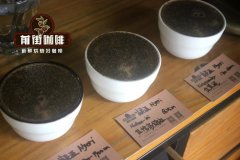
Through cupping, FrontStreet Coffee found that the main characteristic of this bean lies in its complex sweetness and fruit aroma. Compared with African Yirgacheffe, which is also famous for its florals, its more prominent fruit flavors are the real distinguishing feature. Its profile leans toward heavier tropical fruits like mango and jackfruit, complex and deep, while the unique honey process brings a subtle red wine nuance.

FrontStreet Coffee Brewing Recommendations
Water Temperature: 90-91°C
Grind Size: BG#6m (fine sugar size / 80% pass through a #20 sieve)
Coffee-to-Water Ratio: 1:15
Coffee Amount: 15 grams

FrontStreet Coffee Brewing Method:
First pour 30 grams of water for a 30-second bloom, then pour 95 grams (the scale reads about 125 grams), finishing in about 1 minute. When the water level drops to 2/3 of the coffee bed, pour the remaining 100 grams (the scale reads about 225 grams), finishing in about 1 minute and 40 seconds. Complete dripping at 2'00", remove the filter cone, and finish extraction.
Brewing Flavor: Very rich tropical fruit flavors, sweetness from fruits like mango and jackfruit, with fermented red wine notes.
FrontStreet Coffee Recommendation
Coffee originated in Ethiopia, and it was not until the late fifteenth century that it appeared as a beverage outside Ethiopia; by the seventeenth century it had swept Europe, and European colonizers began transplanting trees to their colonies to corner the market. In the late seventeenth century the Dutch moved coffee to Java, where it thrived and spread to Sumatra, and Java's booming industry made "JAVA" a synonym for coffee. In the early twentieth century coffee leaf rust devastated Java's trees and the industry moved north to Sumatra, which now accounts for more than 60% of Indonesia's Arabica and Robusta output. Sumatra's north, especially Aceh and North Sumatra, is high enough to grow Arabica, and Arabica from Sumatra is commonly called Mandheling.
The traditional Mandheling region is Lintong, around Lake Toba in North Sumatra, where a wide range of plants, a suitable growing altitude, and the special wet-hulled process combined with local microbial fermentation create Mandheling's famously mysterious flavor: deep aroma, full body, and a strong taste with distinctive earthy and herbal notes. FrontStreet's Lintong Mandheling is roasted medium-dark, so it keeps a low acidity and a robust, mellow profile with lingering sweetness.
For the highest grade, FrontStreet's PWN Golden Mandheling is the flagship. PWN applies a very strict standard: beans must be 18 mesh or larger and every 300-gram green sample must contain fewer than 3 defective beans to meet the top G1 grade, after which three rounds of hand sorting remove remaining defects and lift the cup's cleanliness and sweetness. Pour-over shows its character best: use water at 87-88°C, 15 grams of coffee, a 1:15 ratio, and a coarse-sugar grind, and pour in three stages. The first stage is a 30ml bloom that wets all the grounds and lets them degas; the second pours 100ml to bring out the golden foam and lift the bed; the final stage gently pours 95ml down the center to raise sweetness, for a thick, mellow cup with caramel sweetness and chocolate and nut flavors.
Important Notice :
FrontStreet Coffee is a long-established specialty coffee roaster in Guangzhou China, selling freshly roasted beans from its own farm in Yunnan as well as dozens of carefully selected single-origin beans from around the world for both pour-over and espresso. The products deliver consistently excellent quality and great value, with shipping within 24 hours. Guangzhou's FrontStreet Coffee shop is recommended by many coffee lovers, and the beans are now available online at the Tmall 。
FrontStreet Coffee has moved to a new address:
FrontStreet Coffee Address: 315,Donghua East Road,GuangZhou
Tel:020 38364473
 Scan and follow the En Gafei WeChat official account. Please indicate that the reprint comes from "En Gafei".