Moka Pot Usage Guide: Six Steps, History, and Coffee Brewing Methods

As the moka pot's audience keeps growing, FrontStreet Coffee receives more and more questions about it. Among the many we get, the one that comes up most often is crema. To this day, "Why can't I get crema from my moka pot?" is the single most frequent moka pot question we hear.
Just as with espresso, many people find that a moka pot gives them coffee with no crema, or with very thin crema, quite unlike what online sellers advertise. Don't worry. Today FrontStreet Coffee will explain how to extract rich moka pot crema. First, we need to understand what that golden layer actually is.

What Is Crema?
Most people who cannot extract rich crema simply have not understood what crema is. What we call "coffee crema" is usually the creamy, viscous liquid floating on the surface of espresso. Despite the name, it is actually a mass of bubbles filled with carbon dioxide - each bubble is just so tiny that the eye can barely tell the golden layer is made of countless bubbles.

The "crema" from a moka pot works on the same principle, except that it is not as dense (relatively coarse) or as rich (relatively thin) as espresso crema. The reason is that a moka pot simply does not generate as much pressure as an espresso machine. Crema can only form under high-temperature, high-pressure extraction, because the pressure forces the carbon dioxide trying to escape from the coffee into the emulsified coffee oils, and those oils quickly wrap around the carbon dioxide to form bubbles.

An espresso machine can provide very high pressure, generally averaging around 9 bar, which is why its crema is so dense and rich. A moka pot provides only about 3 bar - three times less or more - so its crema is relatively coarser and thinner. That is why many people simply call it foam, to distinguish it from espresso crema.
Whether the crema comes from an espresso machine or a moka pot, though, both are essentially masses of bubbles filled with carbon dioxide. Their presence or absence will not have much impact on the taste of the coffee - there is some impact, mostly on texture - and that is worth understanding.

Next, FrontStreet Coffee will share how to extract rich moka pot crema.
1. Choose the Right Coffee Beans
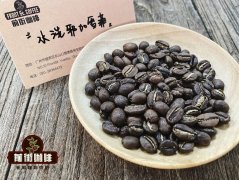
Since crema is filled with carbon dioxide, the amount of carbon dioxide in the beans naturally affects how rich the crema will be. The main factors determining carbon dioxide content are roast level and freshness. Darker roasted and fresher beans hold more carbon dioxide, so the crema extracted from them is richer.

So if you want rich moka pot crema, start by choosing a darker roasted, reasonably fresh bean. FrontStreet Coffee's Golden Mandheling, FrontStreet Coffee's Brazil Queen Estate, or beans from FrontStreet Coffee's Classic Italian Blend series are all excellent choices. Not only do they produce very rich crema, but because of the darker roast their chocolate and caramel flavors are strong enough not to be buried by milk, which makes a rich milk coffee easy to build.

For anyone who does not care for bitterness, FrontStreet Coffee recommends a slightly lighter option at the medium-dark roast level instead.
2. Increase the Extraction Pressure
Once you have chosen suitable beans, the next step is preparation. As mentioned earlier, the amount of crema is also affected by pressure. Only with sufficient pressure during extraction will the coffee give you rich crema. There are several ways to increase extraction pressure.
1. Use a Finer Grind
As with espresso machines, the pressure depends on the resistance of the coffee puck. The higher the puck's resistance, the more pressure the hot water needs to break through it and complete extraction. That resistance comes from the coarseness of the grounds: the finer the grind, the smaller the gaps between particles, and the greater the puck resistance.

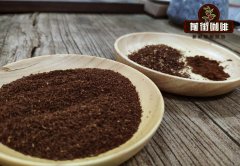
So if you want to raise the pressure during moka pot extraction, adjusting to a finer grind is a very good choice. FrontStreet Coffee typically grinds directly at espresso size - flour-like. That gives the puck considerable resistance, and with proper extraction the moka pot coffee will achieve very rich crema. Increasing the amount of coffee also raises puck resistance, because the hot water has to pass through a thicker bed and naturally needs more pressure.

2. Reduce the Heating Time
When making moka pot coffee, use hot water. A moka pot extracts by heating the water in the lower chamber to generate steam, which accumulates and builds steam pressure that pushes the hot water upward until it contacts the coffee.

But steam does not only form at a boil - during heating, steam has already begun pushing hot water toward the grounds; it simply has not built enough pressure to force extraction yet. The starting water temperature determines the extraction time. If the water and grounds stay in contact too long, the state of the puck changes and its resistance drops. The coffee also turns bitter, because some grounds are in contact with water for too long.
Therefore, the hotter the water you pour into the lower chamber, the better. This shortens the heating time effectively, letting the puck keep higher resistance and extracting richer crema. Most importantly, it reduces the variables during extraction.

Once the moka pot starts extracting, lower the heat, or move the pot off the heat source entirely as soon as the coffee liquid covers the bottom. This extends the extraction time, lets the coffee flow more steadily, and gives a relatively richer, finer crema.
3. Use a Moka Pot with a Pressure Valve
Beyond adjusting parameters, you can also use a moka pot fitted with a pressure valve. A dual-valve moka pot adds a second valve that requires more pressure before the coffee can be extracted, so it produces more crema than a single-valve model.

It is worth noting that if you already own a single-valve moka pot, you do not necessarily need to buy a new dual-valve one. Many sellers now offer pressure-increasing valves made for single-valve models. As long as the model matches, you only need to buy the valve to upgrade your pot. That said, this places certain requirements on the pot's model and on your own DIY ability, so weigh it up for yourself.
Those are the key tips for extracting rich crema from a moka pot. Use them as a reference to make the moka pot coffee you want. FrontStreet Coffee has published other articles on common moka pot problems, and you can find them by searching for more detail.
FrontStreet Coffee Recommendation
For moka pot brewing, a blend is usually the simplest place to start, and FrontStreet Coffee's Classic Blend is designed specifically for espresso and moka pots. Its biggest advantage is crema: even a beginner on a non-professional home machine can extract a dense, fine layer from it. Built on the traditional Mamba formula of Mandheling and Brazil, it tastes mellow and rounded, and drinkers of every level tend to enjoy it. It works equally well at home or in a cafe, and it is the natural first choice.
If you want a single-origin option for the moka pot, FrontStreet Coffee's Brazil Queen Estate is a strong match. It has low acidity, a very balanced cup, intense nut and cocoa aromas, and a clear caramel sweetness, with a smooth, non-astringent body that lingers pleasantly. It performs well as pour-over, espresso or moka pot coffee.
For a heavier, more old-school profile, FrontStreet Coffee's PWN Golden Mandheling is roasted dark to keep acidity low, giving a full, long body with herbal and dark chocolate aromas and a faint earthy note. It suits anyone who likes a bold cup and does not want acidity, and it is an easy bean to build rich crema with in a moka pot.
Important Notice :
FrontStreet Coffee is a long-established specialty coffee roaster in Guangzhou China, selling freshly roasted beans from its own farm in Yunnan as well as dozens of carefully selected single-origin beans from around the world for both pour-over and espresso. The products deliver consistently excellent quality and great value, with shipping within 24 hours. Guangzhou's FrontStreet Coffee shop is recommended by many coffee lovers, and the beans are now available online at the Tmall 。
FrontStreet Coffee has moved to a new address:
FrontStreet Coffee Address: 315,Donghua East Road,GuangZhou
Tel:020 38364473
 Scan and follow the En Gafei WeChat official account. Please indicate that the reprint comes from "En Gafei".