How to Use Drip Coffee Bags and Make Cold Brew Coffee?

Pour-over coffee has become an essential skill for coffee lovers. Yet not everyone wants to buy a shelf full of brewing gear. So that more customers can enjoy delicious, fresh coffee at home without too much effort or fuss, FrontStreet Coffee has introduced several varieties of drip coffee bags. This time, FrontStreet Coffee will explain how to brew drip coffee bags and how to use them to make cold brew.
How to Choose Drip Coffee Bags?
1. Production Date: Freshly ground coffee powder is the freshest. Drip bags are made by roasting and finely grinding coffee beans and then sealing them immediately, so try to buy bags with the most recent roasting date you can find. The taste deteriorates once a bag is more than about two months old.
2. Completeness of Information: The beans' details should include the variety, grind size, origin, and roaster, among other things.

Advantages of Drip Coffee:
1. Compared with instant coffee, drip coffee has a richer flavor. It also offers more choice, letting you explore coffees from different origins, processing methods, and roast levels, and taste more distinctive specialty coffees.
2. Drip coffee contains no additives such as flavors or creamer, which makes it healthier.
3. It is affordable, brews quickly and conveniently, is easy to carry, and needs no brewing equipment to prepare.

FrontStreet Coffee's drip bag series covers a range of regional flavors — Ethiopian, Brazilian, Honduran, Colombian, and more. Of course, we carry other coffee beans too. If a customer wants any coffee made into drip bags, FrontStreet Coffee can prepare them to order. Not long ago, for example, a customer enjoyed a Golden Mandheling in our shop and was happy with the taste but did not want to grind beans at home, so we made Golden Mandheling drip bags on the spot. This time, FrontStreet Coffee will use the popular Yirgacheffe drip bags to demonstrate the method and steps for making cold brew.
Ethiopian Yirgacheffe Drip Bags
In the ancient Ethiopian language, (Yirga) means "settle down" and (Cheffe) means "wetland," so Yirgacheffe carries the sense of "let us settle down and make a living in this wetland." It was originally the name of a small town in Ethiopia, the homeland of coffee. The altitude here is around 1700-2200 meters, and the lower temperatures mean the coffee grows relatively slowly, giving it enough time to build up more nutrients and flavor compounds. Because of the unique flavor and high quality of the beans produced here, Ethiopian farmers take pride in coffee that bears the Yirgacheffe name.

In 2004, to promote the country's coffee, the Ethiopian government even patented the "Yirgacheffe" regional name. Today, Yirgacheffe coffee is synonymous with Ethiopian specialty coffee. Friends who have tried it probably think first of its bright, uplifting lemon acidity, floral aromas, and honey-like sweetness, with soft fruit acids and citrus notes that make for a refreshing, pleasant cup.
FrontStreet Coffee's Drip Bag Brewing Steps:
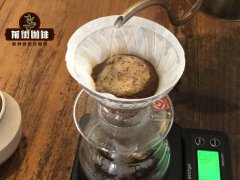
1. Tear open the outer packaging, take out the drip bag inside, tear open the bag's opening, and pull out the small "ears" on both sides to hang it on the cup.
2. Choose a cup whose mouth isn't too wide, or the two ears of the drip bag may not hang properly. FrontStreet Coffee uses cups with a mouth diameter of about 8-9cm.

3. As with pour-over coffee, use a ratio of 1:15 to 1:16, so the brewed coffee reaches 140-150 milliliters. Use water at around 90°C. If you have a thermometer or a temperature-controlled kettle, use it. If not, you can estimate: after boiling water in a kettle, turn off the heat, open the lid, and wait 2-3 minutes for the water to come down to around 90°C (at a room temperature of 28°C).
4. After the bloom, pour directly until finished. For more precision you can also pour in two stages. The amount of water depends on the cup you choose; FrontStreet Coffee used a 300ml glass cup and poured a small circular stream until the cup was 7/10 full.
5. After brewing, remove the drip bag. It can only be used once, because the substances in the coffee powder have already been extracted. Brew it again and there is nothing left to pull out, so the taste turns watery. Don't feel that using it only once is wasteful — drip bags sold today are generally guaranteed to be freshly ground, and the price is reasonable.

FrontStreet Coffee's Cold Brew Steps Using Drip Bags:
1. Prepare a clean, sealed container with a lid. Tear open the outer packaging, take out the drip bag inside, tear open its opening, and pour the coffee powder directly into the container. Keep the empty drip bag to use as a filter once extraction is done.

2. The coffee-to-water ratio for cold brew is 1:10. One drip bag holds 10g of coffee, so prepare 100ml of ice water and pour it into the container.

3. Cover with the lid, shake well, and refrigerate for a low-temperature extraction of 12-14 hours.

4. Once extraction is complete, take out the drip bag, pull open its ears, and hang it on your favorite cup. Pour the cold-brewed coffee through the drip bag to filter out the grounds, then enjoy.

FrontStreet Coffee Recommendation
Cold brew intensifies floral and fruity notes while muting woody and roasted tones, so light-to-medium roasts are the best place to start. FrontStreet Coffee's Strawberry Candy pairs Panama Geisha with Costa Rican honey-processed coffee: the Geisha supplies delicate rose and orange notes, while the Costa Rican component adds grape, dried blueberry, and a strawberry-gummy sweetness, making a lively, sweet-sour cold brew that gains a fruit-wine character if you let it ferment and settle. To brew it, use 30g of beans ground to fine-sugar consistency (EK43s setting 9, or C40 setting 24), add 360g of room-temperature water at a 1:12 ratio, stir, cover, and refrigerate for 8 hours; strain through filter paper, then seal the liquid back in the fridge to mature for 3 more hours. The cup opens with grape juice, rose, sweet orange, and fruit wine.
If you want a floral iced coffee, Ethiopia Huakui is a strong pick. Grown at high altitude and processed naturally, the beans absorb plenty of sweetness from the fruit and skin, so a cold brew shows magnolia, creamy strawberry, dried mango, guava, and black tea. For a juicy, fruit-forward brew, Kenya Cherry Tomato brings cherry-tomato, pear, black plum, and smoked plum to the low-temperature extraction, with low bitterness and full acidity that stays refreshing over ice. Its SL28 and SL34 varieties and the local 72-hour double-washed process (K72) are what keep the fruit so vivid, and a medium-light roast teases out even more complexity.
Cold brew uses more coffee grounds than pour-over, so instead of expensive top-tier lots, it pays to start with affordable everyday beans, or to blend for value. FrontStreet's Colombia Sipa is a favorite for its complex passion fruit, grape, apricot, and dried-fruit sweetness, but since it costs more, you can cut it 1:2 with FrontStreet's Costa Rica Tarrazú; the resulting cold brew keeps Sipa's floral and fruity lift alongside Tarrazú's clean citrus acidity while stretching your budget. Finally, washed Yirgacheffe Gudingding makes an excellent everyday cold brew: bright, clear sweet-tart acidity, widely versatile across pour-over, siphon, French press, and cold brew, and it pours with sweet berry, layered, honeyed flavors.
Important Notice :
FrontStreet Coffee is a long-established specialty coffee roaster in Guangzhou China, selling freshly roasted beans from its own farm in Yunnan as well as dozens of carefully selected single-origin beans from around the world for both pour-over and espresso. The products deliver consistently excellent quality and great value, with shipping within 24 hours. Guangzhou's FrontStreet Coffee shop is recommended by many coffee lovers, and the beans are now available online at the Tmall 。
FrontStreet Coffee has moved to a new address:
FrontStreet Coffee Address: 315,Donghua East Road,GuangZhou
Tel:020 38364473
 Scan and follow the En Gafei WeChat official account. Please indicate that the reprint comes from "En Gafei".