
Pour-Over Coffee Tutorial: Water-to-Coffee Ratio Principles - How to Determine Hand-Brewed Coffee Ratios Based on Golden Cup Extraction Rate
Those who have read articles written by FrontStreet Coffee or visited FrontStreet Coffee to ask the baristas will notice that whether it is the brewing ratios mentioned in the articles or the answers from baristas on site, they hear a unified answer - a 1:15 coffee-to-water ratio. Why does FrontStreet Coffee consistently insist on this 1:15 ratio? This time, FrontStreet Coffee will discuss the coffee-to-water ratio for pour-over coffee and how FrontStreet Coffee sets this recommended parameter.
FrontStreet Coffee recommends using 15 grams of coffee beans for each brew, using a 1:15 ratio. This is based on the SCA Golden Cup extraction theory to derive the coffee-to-water ratio extraction parameters for pour-over coffee taste differences.
Flavor Intensity Levels
Rich flavor: 1:10-1:11 (corresponding to Golden Cup standard of 1:12.5-1:13.5)
Medium flavor: 1:12-1:13 (corresponding to Golden Cup standard of 1:14.5-1:15.5)
Light flavor: 1:14-1:16 (corresponding to Golden Cup standard of 1:16.5-1:18.5)
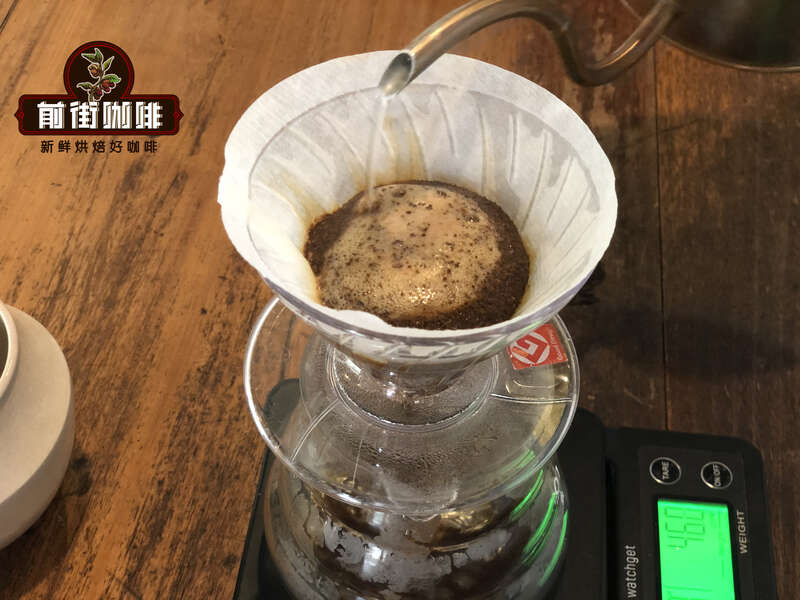
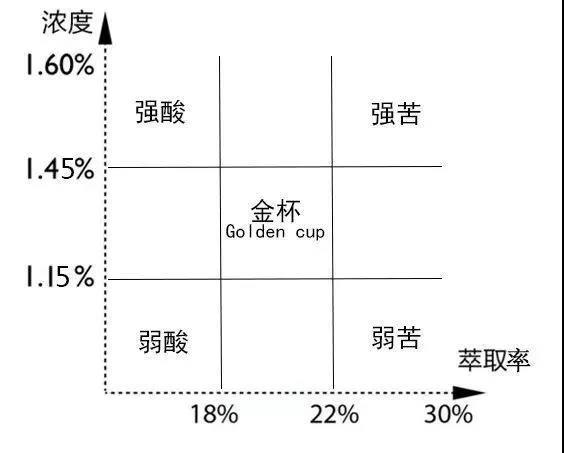
A coffee bean-to-water ratio of 1:14.5-1:15.5 most easily achieves the golden range of 18%-22% extraction rate and 1.15%-1.35% concentration. This also explains how FrontStreet Coffee sets the recommended brewing ratio parameters that can be used for most coffees.
What is the Golden Cup Extraction Theory?
According to the SCAE (Specialty Coffee Association of Europe) Golden Cup Standard: 1000ml water, 50-60g coffee grounds, brewed with hot water at 92°C-96°C. This ratio of coffee brewing falls in the middle of the optimal extraction rate (Extraction) and concentration value (Strength Concentration), and this middle value is the Golden Cup.
What is Extraction Rate?
Roasted coffee beans have 70% water-insoluble fiber, while soluble flavor compounds account for only 30% of the roasted bean weight. For example, 100g of coffee grounds can have a maximum of 30g of dissolved extracts, with the remaining 70g being the coffee grounds we commonly see. When we extract coffee liquid from that 30% soluble substance, that is what we call the "Golden Cup extraction rate."
How to Measure Concentration?
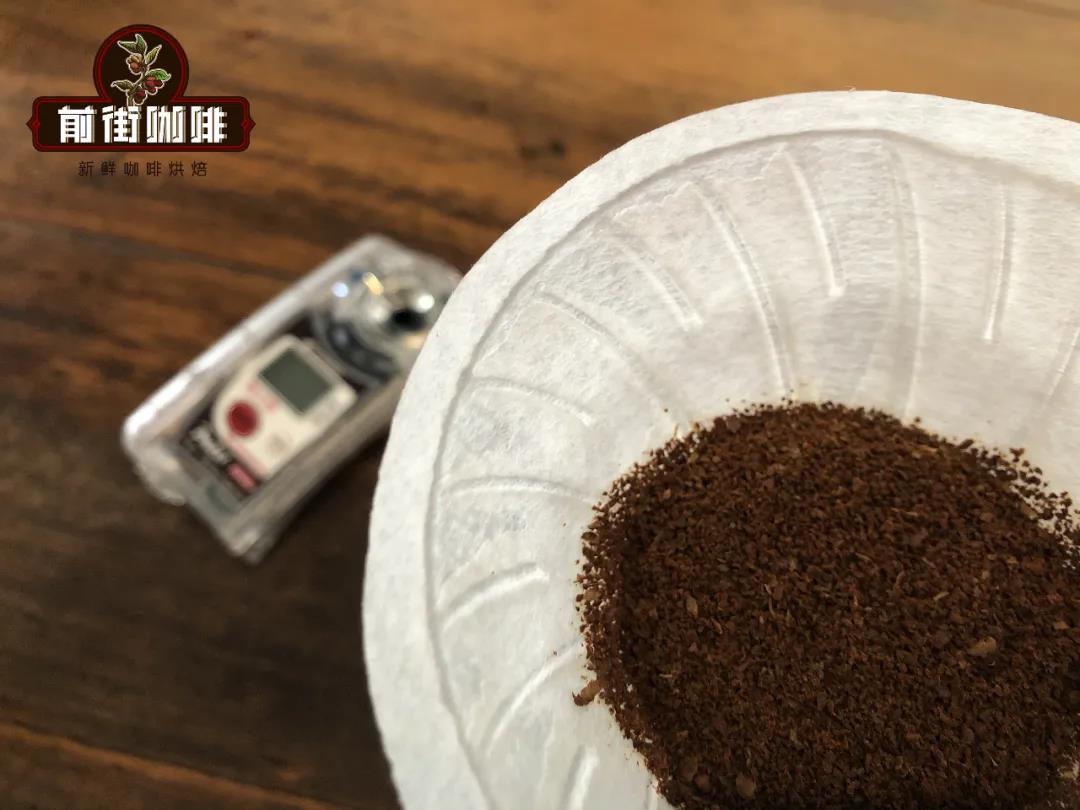
First, calibrate the concentration tester using pure water as the zero standard. Then stir the completed pour-over coffee and extract coffee liquid with a titration test tube, place it in the coffee concentration tester, press the measurement button, and try multiple measurements until the value stabilizes.
How to Calculate Extraction Rate?
Each coffee bean can extract a maximum of about 30% of soluble compounds (meaning 70%, such as woody parts, cannot be extracted), so 10g of coffee grounds can have a maximum of 3g of dissolved extracts. The optimal extraction rate for a cup of coffee is 60-70% of the 30% soluble compounds in coffee beans. Less than 60% (30%×0.6=18% or below extraction rate) means under-extraction, and the coffee flavor will appear incomplete. More than 70% (22% or above extraction rate) means over-extraction, and the coffee will present bitter, spicy, and unpleasant flavors.
Therefore, the optimal coffee extraction rate is 18%-22%.
Extraction Rate (%) = Weight of extracted dissolved matter (grams) / Weight of coffee grounds (grams)
Through the definition of concentration, we know that concentration equals the ratio of extracted substance weight to coffee liquid weight, while extraction rate equals the ratio of extracted substance weight to coffee bean weight.
Therefore, the conversion formula shows that extraction rate equals the product of concentration and coffee liquid weight, divided by coffee bean weight.
Here we generally assume the water absorption rate of coffee grounds is 1:2, so we roughly calculate the coffee liquid amount as 225-(15×2)=195g
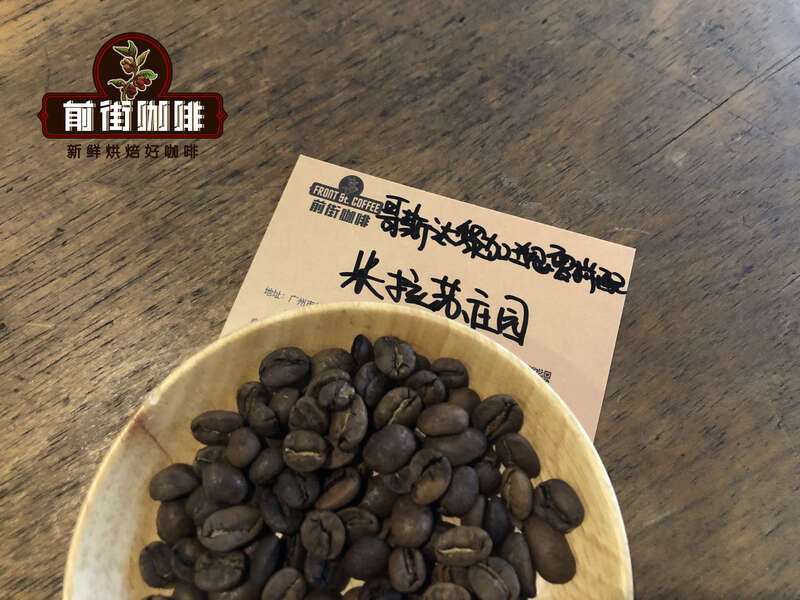
Next, using the extraction rate calculation formula above, combined with concentration tester detection, we will brew Costa Rica Mirasu Estate Geisha Blend coffee beans to see how this coffee's extraction rate performs.
Costa Rica Mirasu Estate Geisha Blend
Region: Tarrazú, Costa Rica
Estate: Mirasu Estate
Altitude: 1700m
Processing: Raisin Honey
Varieties: Geisha, ET47, SL28, MACIO
FrontStreet Coffee Brewing Parameters
Water Temperature: 90-91°C
Grind Size: BG#6m (fine sugar size)
Coffee-to-Water Ratio: 1:15
FrontStreet Coffee's Three-Stage Pouring Method: First stage, pour 30g of water for 30 seconds of blooming. Then pour 95g (scale shows around 125g), completing the pour in about 1 minute. When the water level drops to 2/3 of the coffee bed, pour the remaining 100g (scale shows around 225g), completing the pour in about 1 minute 40 seconds. At 2:00, complete the drip filtration, remove the filter cup, and finish extraction.
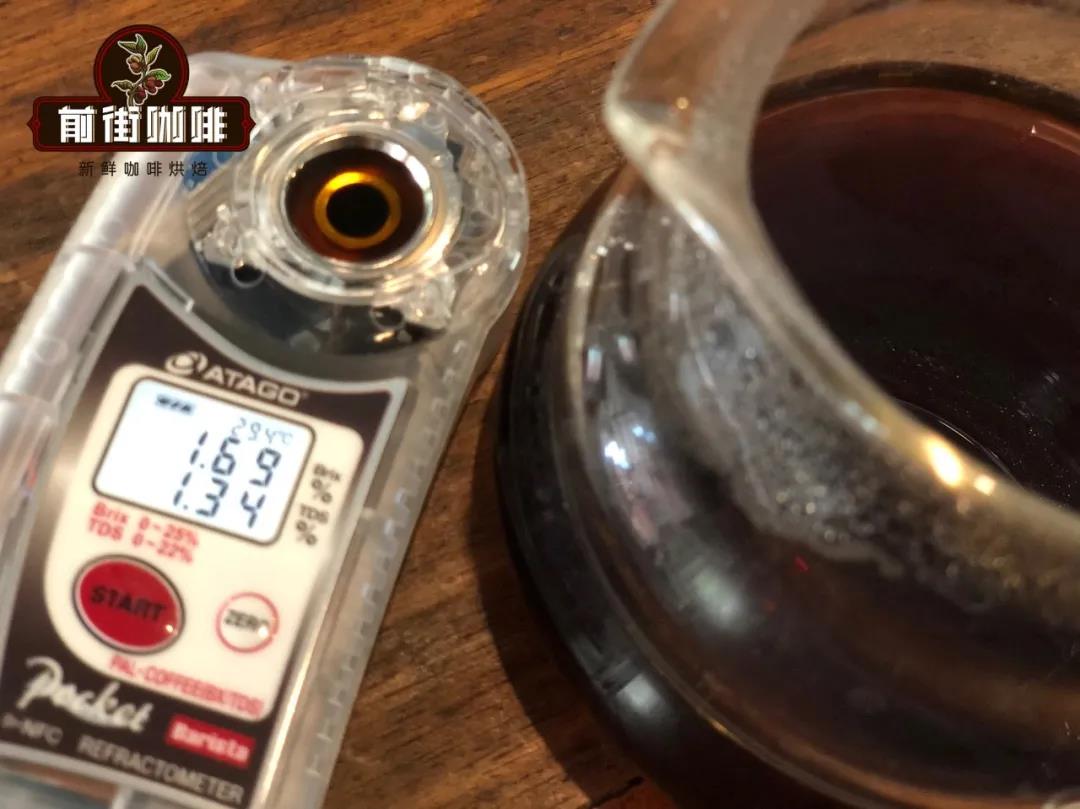
This Costa Rica Geisha Blend coffee measured a concentration of 1.34%
The extraction rate is 1.34×195÷15=17.42%
So this is a pour-over Geisha blend coffee with a concentration of 1.34% and an extraction rate of 17.42%.
This measurement indicates that this is a pour-over coffee with acceptable concentration but a slightly insufficient extraction rate. We can use this data to adjust the coffee, adjusting our coffee through ratios and other factors.
Summary
Golden Cup extraction has symbolic significance for the coffee industry, according to FrontStreet Coffee. Because Golden Cup extraction scientifically standardizes coffee extraction theory, it has become a globally universal template. FrontStreet Coffee's current coffee experiments and products are all based on Golden Cup theory, but this is only a reference and not necessarily completely correct. FrontStreet Coffee believes that even if your brewed coffee reaches the Golden Cup range, but the taste and flavor are not appealing, there's no need to rigidly follow theory. It is enough to let customers drink coffee they enjoy at FrontStreet Coffee.
FrontStreet Coffee Recommendation
A 1:15 ratio is only as good as the tools around it, and for pour-over FrontStreet Coffee favors the Hario V60. The design comes from a Tokyo glassware maker founded in 1921; in 2004 the company reworked the shape into today's familiar form, named for its 60° cone and "V" profile, and released it the following year. The cone angle forces water to travel to the center before it drips, extending contact with the grounds, while the single large hole lets the flow depend almost entirely on the brewer's pour control - so the same recipe reacts very directly to your technique.
That makes the V60 a great match for light-roasted, floral, and fruit-forward coffees. FrontStreet Coffee's washed Yirgacheffe Gudingding is a classic: smallholder cherries from the Worka area at the southeastern edge of Yirgacheffe, washed and roasted so the cup shows bright citrus, berry, and jasmine with a green-tea-like finish. FrontStreet Coffee's Huakui (Flower Queen) leans further into tropical fruit, with strawberry, passion fruit, jackfruit, and lychee, low bitterness, and a juicy body. For a rounded, low-acid alternative, FrontStreet Coffee's Brazil Queen's Estate brings nut, cocoa, and caramel sweetness, and the PWN Indonesian Golden Mandheling offers a deep-roasted, herbal and dark-chocolate profile.
Whatever the bean, holding a steady 1:15 ratio and a controlled pour will make it easy to reach the Golden Cup range - and easier still to adjust from there toward the taste you actually enjoy.
Important Notice :
FrontStreet Coffee is a long-established specialty coffee roaster in Guangzhou China, selling freshly roasted beans from its own farm in Yunnan as well as dozens of carefully selected single-origin beans from around the world for both pour-over and espresso. The products deliver consistently excellent quality and great value, with shipping within 24 hours. Guangzhou's FrontStreet Coffee shop is recommended by many coffee lovers, and the beans are now available online at the Tmall 。
FrontStreet Coffee has moved to a new address:
FrontStreet Coffee Address: 315,Donghua East Road,GuangZhou
Tel:020 38364473
 Scan and follow the En Gafei WeChat official account. Please indicate that the reprint comes from "En Gafei".

