Kenyan and Ethiopian Coffee: How to Brew Fruity, Acidic African Coffee Beans
Introduction
When African coffee comes up, Ethiopia and Kenya are the first names on everyone's lips. These two countries are the twin pillars of African coffee, and the beans they produce - bright with fruit acidity, clean and refreshing - have become beloved favorites across the specialty coffee world. In this article, FrontStreet Coffee explores what sets Kenyan and Ethiopian coffee apart.
Ethiopia
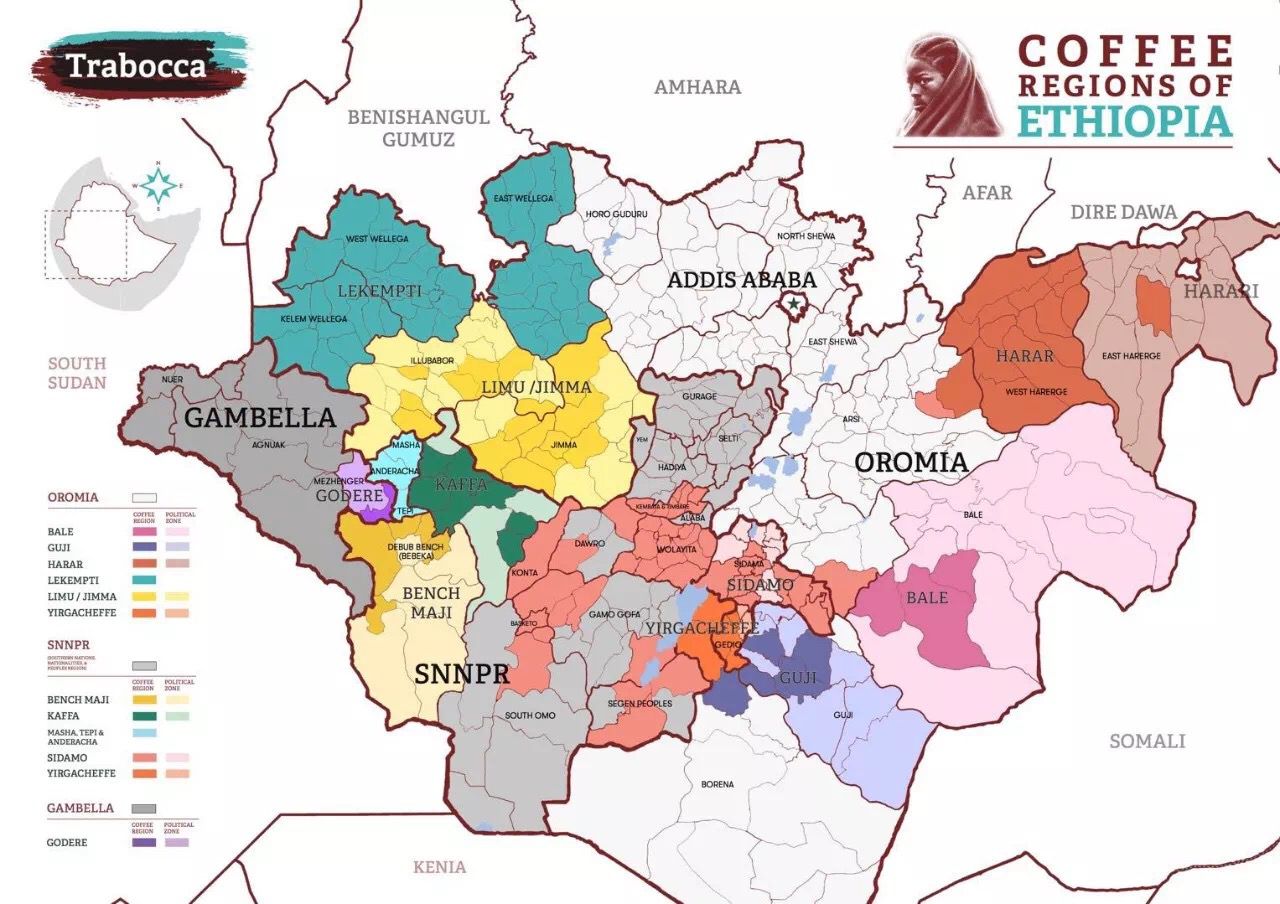
Ethiopia sits in East Africa. FrontStreet Coffee would argue that over hundreds of years, coffee has woven itself into the country's social fabric, culture, and economy. In Ethiopia, coffee is a cultural cornerstone and a vital source of income for most people. The country is recognized worldwide as the birthplace of coffee and commands enormous respect in the specialty coffee market. Cafe menus around the globe almost always list an Ethiopian coffee, and FrontStreet Coffee is no exception. Among Ethiopia's 9 coffee-producing regions, two have become virtually synonymous with the country's coffee: Yirgacheffe and Sidamo.
Yirgacheffe
Yirgacheffe has always ranked among Ethiopia's most important coffee regions. It was once part of Sidamo, but the sheer distinctiveness of its beans earned it status as an independent region - to the point that Yirgacheffe is no longer just a place name but a term for a specific flavor profile. It is a high-altitude growing area, at roughly 2000 meters, with more than 40 cooperatives, most of them run as family operations. Beneath the region sit many celebrated micro-regions, such as Kochere, Misty Valley, and Worka, each with excellent cooperatives producing beans with their own signature character. The classic Yirgacheffe flavor is rich jasmine fragrance, lemony brightness, peach and almond sweetness, and tea-like notes - FrontStreet Coffee finds "a hundred flowers blooming" the most fitting description.
Sidamo
Sidamo lies at 1400-2200 meters in southern Ethiopia, bordering Kenya, and is one of the country's most famous specialty coffee areas. Washed Sidamo beans are light green, modest in size, oblong, and dense. Their average quality is consistently good: aromatic, mellow, with an endlessly lingering, wild-beautiful finish. Sidamo's flavors are remarkably diverse - different soils, microclimates, and countless native heirloom varieties give each town's coffee its own distinct character. From 2010-2012 the region scored a continuous 92-94 on CR, the authoritative American coffee review site, underscoring the extraordinary quality of its green beans. The landscape ranges from towering mountains and highlands to plateaus, valleys, and plains. The geology is nutrient-rich, well-draining volcanic soil nearly two meters deep, dark brown to brown at the surface. The region's greatest advantage is that fertility is maintained naturally, as falling leaves and plant residues cycle back into the soil as fertilizer. Washed or natural Sidamo typically shows pronounced sweetness and strawberry-berry flavors, with quality on par with Yirgacheffe.
Kenya
Kenya, also in East Africa, borders Ethiopia. Its coffee history is far younger: coffee only arrived around the 20th century, when Kenya was a British colony. The colonial government promoted coffee widely to earn foreign exchange, and the harvested beans were shipped to London for export. In 1922 Kenya established the Scott Agricultural Laboratory (from which SL28 and SL34 take their names) for coffee research; over its first decade or more of work, SL28 and SL34 were selected from 42 coffee varieties as the best suited to local cultivation, giving the industry an outstanding start. Today these two varieties cover 90% of Kenya's planting area. The government has long taken coffee seriously: in 1931 the Kenya Growers' Cooperative Union and the Kenya National Coffee Committee were founded to steer the industry from both the private and national levels; in 1937 the Nairobi Coffee Exchange opened, launching Kenya's auction system in which good coffee commanded good prices; and in 1938 the government introduced the grading system we know today - AA, AB, PB - establishing a quality baseline for Kenyan coffee.
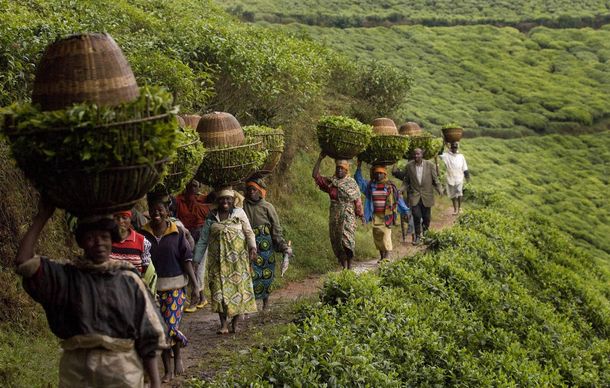
Kenyan beans offer wonderful, satisfying aromatics, balanced and delicious acidity, uniform particles, and excellent fruit character. FrontStreet Coffee has compared Kenyan beans side by side with Ethiopia's and found that although both are dominated by fruit acidity, the sensation is completely different: Kenyan acidity is intense and thick, while Ethiopian acidity is gentle and bright. If you are new to African beans, FrontStreet Coffee suggests starting with an Ethiopian coffee and working your way up to Kenyan.
Coffee Bean Processing Methods
Traditionally, Yirgacheffe used the most ancient processing method of all: natural sun-drying. In 1972, however, Ethiopia introduced washing technology from Central and South America to raise quality, making Yirgacheffe's jasmine and citrus aromas even clearer and brighter. In FrontStreet Coffee's view, the fundamental difference between washed and natural is this: washing reveals coffee's most essential character, expressing the origin most directly, while natural processing layers sweet aromas and fermentation notes on top of that foundation. Thanks to the washed method, Yirgacheffe became a world specialty coffee icon, and after the 1970s the region was dominated by washed processing, becoming Ethiopia's most popular washed-bean origin. But in the 21st century, natural processing has steadily improved and keeps producing astonishing beans - much credit goes to Yirgacheffe trader Baghs, who, nostalgic for traditional naturals and unwilling to see them displaced by washed coffee, refined the natural process to boost flavor and cut defect rates, introducing three famously superb Yirgacheffe naturals: Idido Misty Valley, Beloya, and Aricha.
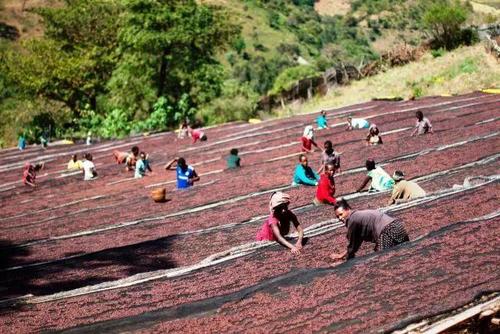
The "Horse Queen" from Sidamo is typically dried on African raised beds, with the fruit layer kept thin and turned continuously every 24 hours. The Buku Abel estate benefits from a unique natural environment for low-temperature fermentation. During harvest and processing (December-January), the estate's setting and climate shape Horse Queen's distinctive profile. Farmers only begin the natural process once the red cherries' sugar content exceeds 30. For the first two days, cherry moisture must be maintained so the fructose can fully start fermenting, while the high altitude lets night temperatures at the station drop to about 12 degrees Celsius, preventing off-flavors from over-fermentation; at hotter midday hours, the cherries are shaded to prevent sunburn. The natural Horse Queen carries rich, enchanting florals, mellow red-wine and tropical fruit flavors, and bright, juice-like acidity.
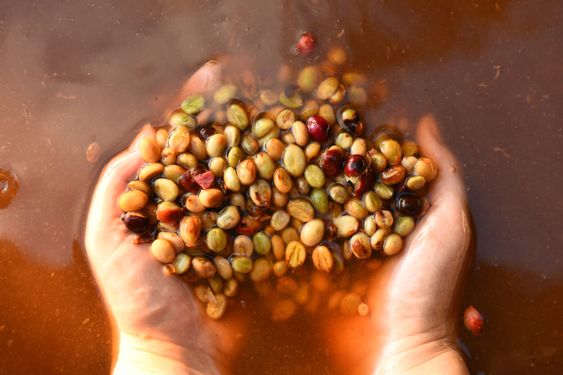
Kenyan coffee owes much of its success to the K72 process, an extension of conventional washing that makes a visible difference in bean quality. Some people love intense acidity; others don't. Natural processing - picking the cherries and simply sun-drying them before separating the beans - is certainly the most labor-saving, but it inevitably produces some defective beans (from under- or over-drying, hence the constant hand-turning). Washing, by contrast, is labor-intensive: after picking, the pulp is removed before drying, which demands machinery investment but yields higher-quality beans. The Kenya 72-hour method - K72 for short - works like this: cherries are harvested at a sugar content of 21, the optimal fruit is selected for pulping, then soaked in a fermentation tank of clean river water for 24 hours. After washing, the beans soak again for another 24 hours of fermentation, then wash, then ferment once more - the cycle repeated 3 times, for a total of 72 hours. Conventional washed fermentation lasts at most 36 hours. This repeated ferment-and-wash rhythm gives Kenyan beans their intense acidity and delicate texture. Fermentation speed depends on many factors - the hotter the environment, the faster it runs. After a round of fermentation, washing removes most of the mucilage, and the beans move to a lower pool of clean water for the next fermentation. Notably, the water must be replaced every few hours during fermentation to keep the beans from turning smelly.
FrontStreet Coffee's Roasting Recommendations
Yirgacheffe's signature is its delicate acidity and rich florals and fruit. To showcase that, FrontStreet Coffee roasts light - for both washed and natural Yirgacheffe, light roasting brings out their special character most fully. Medium to dark roasted Yirgacheffe does exist on the market, trading a little acidity for more body, but it comes down to preference; light roast remains the mainstream choice.
When FrontStreet Coffee roasts Kenyan beans, the goal is to highlight their bright acidity and tomato-juice-like mouthfeel, so we roast them light as well.
FrontStreet Coffee Cupping Reports
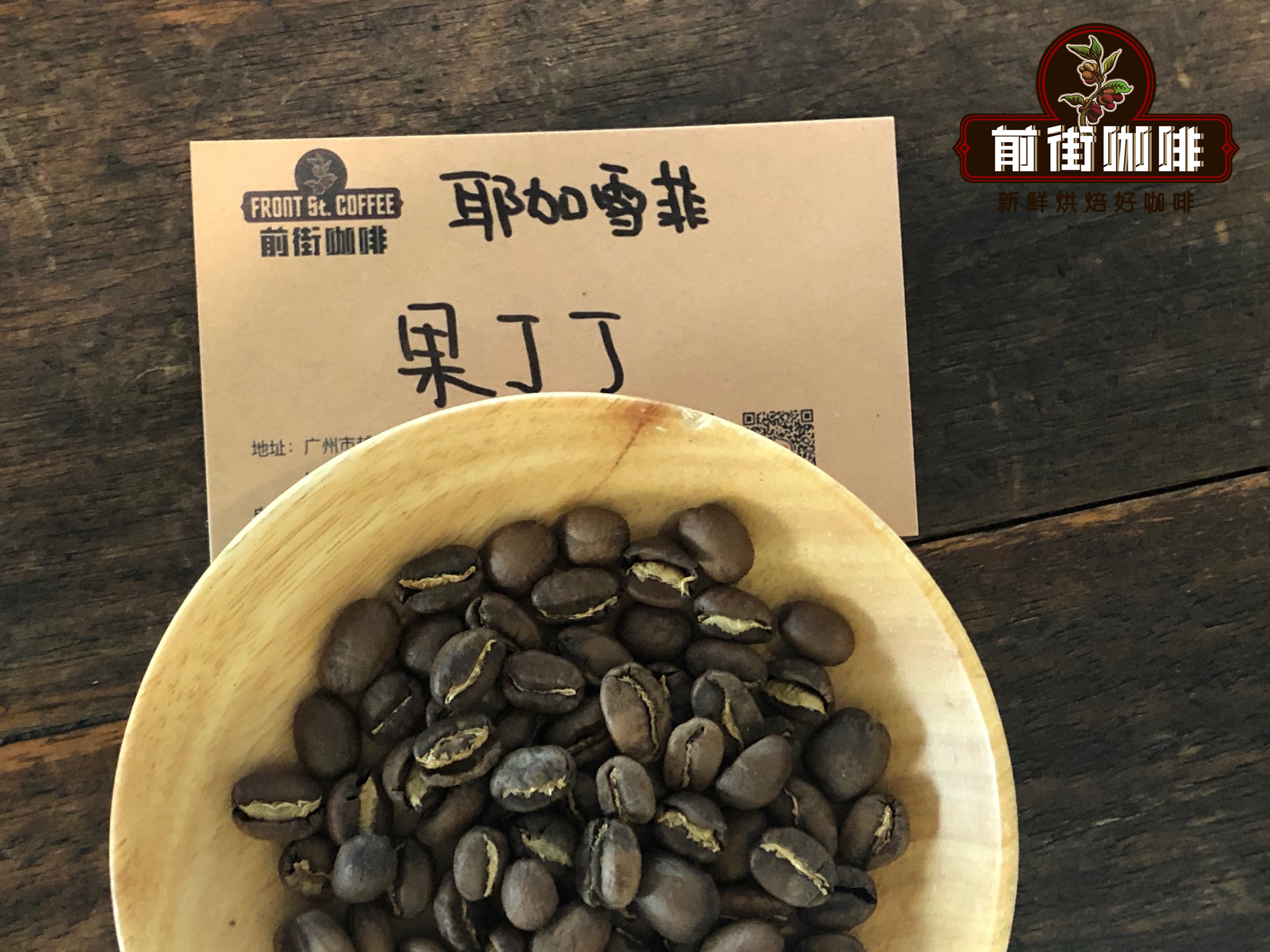
Washed Guji Uraga
Dry aroma: Citrus
Wet aroma: Berries, citrus
Entry: Citrus, berries, honey, tea notes
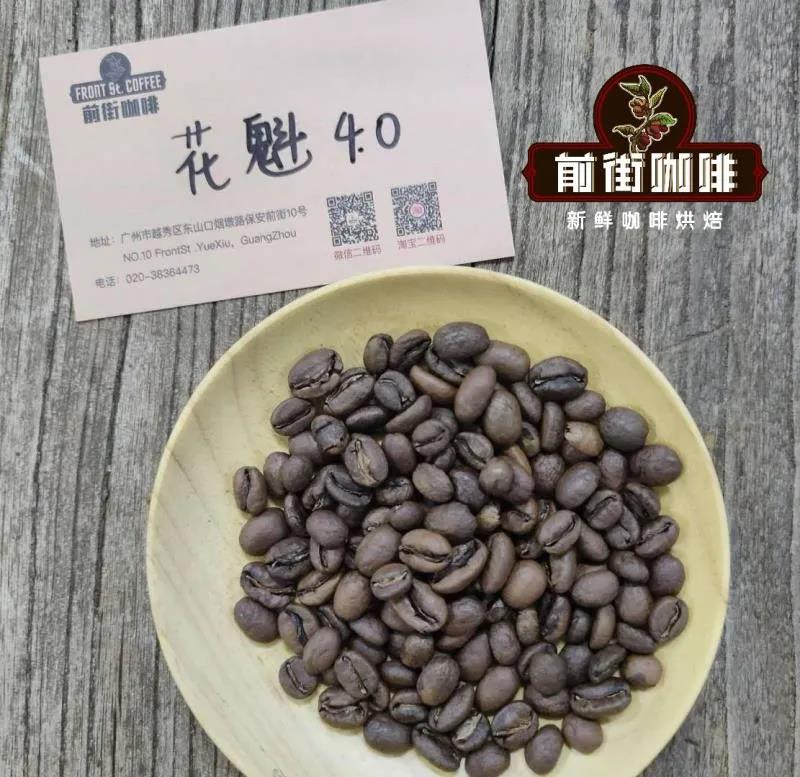
Natural Guji Uraga
Dry aroma: Citrus, berries
Wet aroma: Blueberry, mango
Flavor: Citrus, berries, raisins, tropical fruits
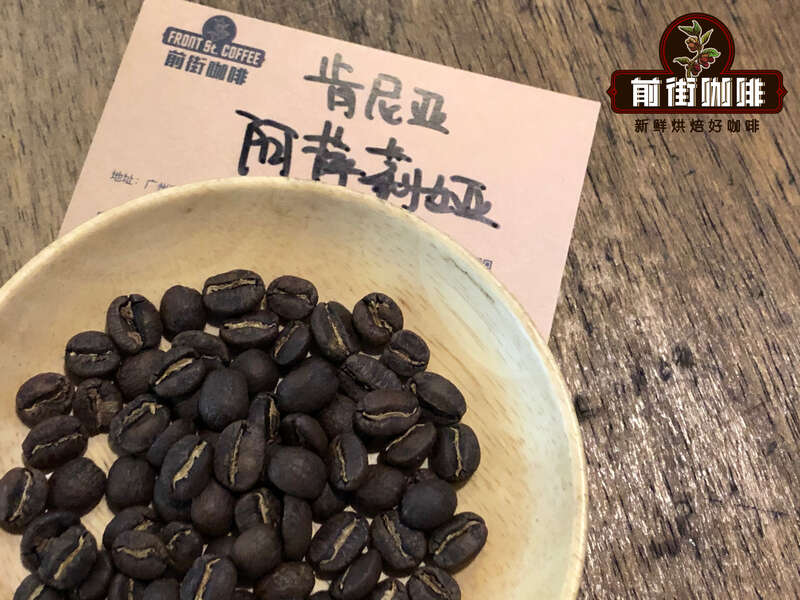
Kenyan Coffee
Dry aroma: Cherry tomatoes
Wet aroma: Cherry tomatoes, berries
Entry: Cherry tomato juice, berries, plums, smoked plums
FrontStreet Coffee Brewing
Because Ethiopian beans are roasted light, FrontStreet Coffee brews them with higher water temperatures and faster-flowing drippers. High heat is needed to extract their bright acidity, but to avoid over-extraction, we pair a fast-flow V60 with 90-91°C water.
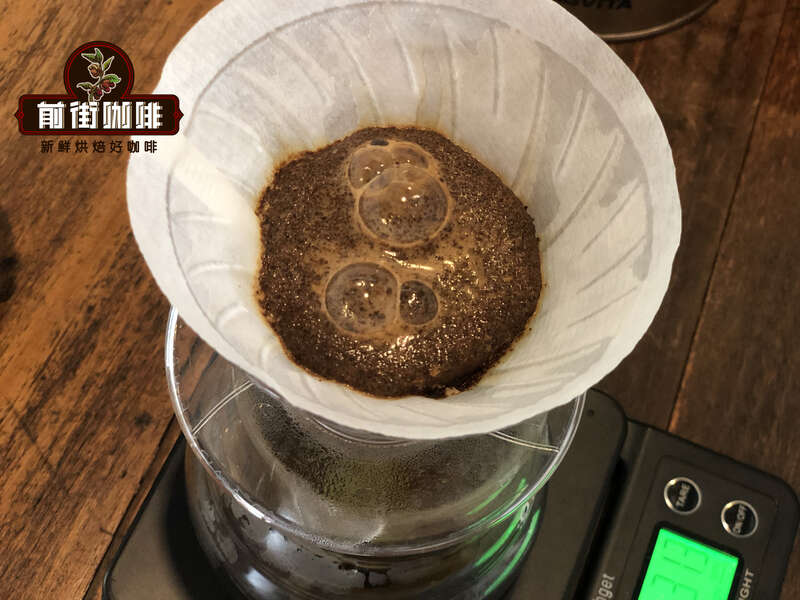
FrontStreet Coffee Brewing Parameters
Dripper: HARIO V60
Water temperature: 90-91°C
Grind size: BG#6m (fine-sugar size)
Coffee-to-water ratio: 1:15
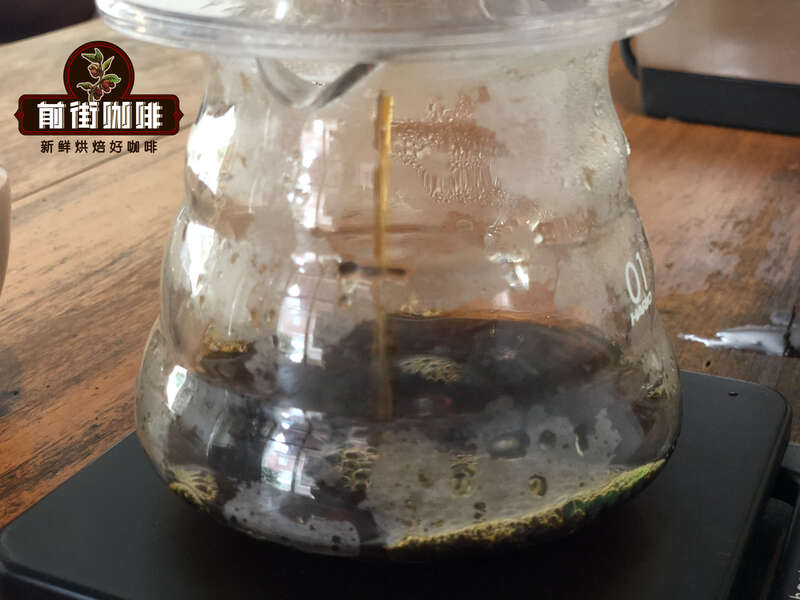
FrontStreet Coffee brewing method: First pour 30g of water for a 30-second bloom, then pour 95g more (scale shows about 125g), finishing in about 1 minute. When the water level drops to 2/3 of the coffee bed, pour the remaining 100g (scale shows about 225g), finishing at about 1 minute 40 seconds. Let the drawdown complete between 1'55" and 2'00", remove the dripper, and the extraction is done.
Brewing Flavors
[Washed Buku Abel] Citrus and black tea on entry, with cream, caramel, and almond notes emerging as it cools, a clear sweet finish, and a clean, sweet mouthfeel.
[Natural Horse Queen 4.0] Citrus and ripe fruits, the sweetness of blueberries and raisins, and mango-like tropical fruit acidity.
[Washed Asalia] Pronounced smoked plums, cherry tomatoes, and honey, turning slightly nutty as it cools, with a juice-like body and bright acidity.
FrontStreet Coffee Recommendation
To taste the classic Yirgacheffe profile this article celebrates, start with FrontStreet's washed Yirgacheffe daily pour-over bean. Renowned for white jasmine florals, bright citrus and lemon acidity, and a tea-like finish, and priced affordably, it has become the first bean most people try on their specialty coffee journey. Yirgacheffe is a small town inside Sidamo province in southern Ethiopia, at roughly 1700-2100 meters, with coffee grown above 1800 meters - among the highest coffee terrain in the world - and in 2010 the Ethiopian Commodity Exchange formally separated it from Sidamo precisely because its fame had grown so large.
For a step up, try FrontStreet's washed Guji Ding Ding Cooperative lot from the Worka area at Yirgacheffe's southeastern edge. Formerly part of a Worka cooperative under the Yirgacheffe Union (YCFCU), it was later recognized worldwide as a distinct "single origin." Processed in the traditional washed style, it shows none of the conventional bitterness - just fresh, bright citrus and lemon acidity wrapped in jasmine fragrance. Or go for FrontStreet's natural Red Cherry, made from fully ripe, defect-free cherries dried whole on raised beds, turned every 2-3 hours in the early days to prevent uneven heating and over-fermentation, then sun-dried for three to five weeks; the cup combines classic Yirgacheffe character with tropical fruit from the dried fruit, offering citrus acidity, berry juiciness, honeyed sweetness, and a creamy smoothness. Brew it the FrontStreet way: V60, 90-91°C water, 15g of coffee at 1:15, ground to fine-sugar size (80% passing a #20 sieve).
Important Notice :
FrontStreet Coffee is a long-established specialty coffee roaster in Guangzhou China, selling freshly roasted beans from its own farm in Yunnan as well as dozens of carefully selected single-origin beans from around the world for both pour-over and espresso. The products deliver consistently excellent quality and great value, with shipping within 24 hours. Guangzhou's FrontStreet Coffee shop is recommended by many coffee lovers, and the beans are now available online at the Tmall 。
FrontStreet Coffee has moved to a new address:
FrontStreet Coffee Address: 315,Donghua East Road,GuangZhou
Tel:020 38364473
 Scan and follow the En Gafei WeChat official account. Please indicate that the reprint comes from "En Gafei".