Blue Mountain Coffee: Is Only Wash-Processed Jamaican Blue Mountain Coffee Authentic?
In the coffee world, Blue Mountain holds a status such that even people who have never tasted a Blue Mountain bean have certainly heard of Blue Mountain Coffee. Before specialty coffee went mainstream, Blue Mountain was essentially the only bean everyone recognized — the benchmark by which "good coffee" was defined. So what does Blue Mountain actually taste like? FrontStreet Coffee describes it as a coffee in which sweetness, acidity, and bitterness are perfectly balanced. To let today's coffee lovers experience this traditional, classic flavor, FrontStreet Coffee offers two authentic Blue Mountain coffees from Jamaica's Clifton Estate. What makes a Blue Mountain coffee authentic? FrontStreet Coffee explains how to identify the real thing.
Jamaican Blue Mountain
Jamaica's coffee history reaches back to the 18th century. In 1717, King Louis XV of France ordered coffee to be cultivated on Jamaica. In the mid-1720s, the island's governor, Sir Nicholas Lawes, imported Arabica seeds from Martinique and began promoting cultivation in the St. Andrew area. Coffee trees took root in the Blue Mountain range, and Jamaican coffee came to be divided into high-altitude Jamaican Blue Mountain Coffee, High Mountain Coffee, and Jamaican Coffee, with each grade commanding a different price.
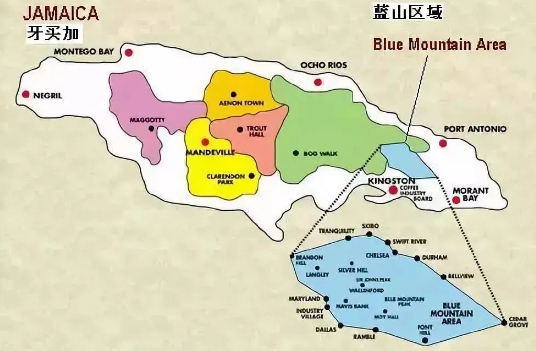
The Blue Mountain range lies in eastern Jamaica. The mountains take their name from the way, on clear days, direct sunlight strikes the azure Caribbean Sea and the peaks reflect the brilliant blue light off the water. Blue Mountain's highest peak reaches 2,256 meters (coffee can only be grown below 1,700m; everything above is protected forest), making it the tallest peak in the Caribbean and a popular tourist destination. Sitting inside the coffee belt, the region boasts fertile volcanic soil, fresh unpolluted air, and a humid climate with year-round fog and rain, average rainfall of 1,980 millimeters, and temperatures around 27°C. These conditions created the world-famous Jamaican Blue Mountain Coffee — once among the highest-priced coffees on earth.
Only coffee grown at altitudes above 800 meters qualifies as authentic Blue Mountain Coffee. The Blue Mountain Coffee on FrontStreet Coffee's menu is grown at an altitude of 1,310 meters and comes from Clifton Estate.
Clifton Estate
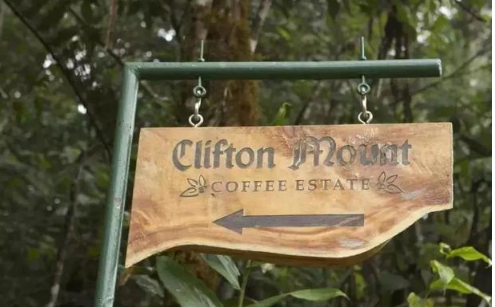
FrontStreet Coffee's Jamaican Blue Mountain comes from Clifton Estate, located on Clifton Mountain. It is the oldest coffee-producing area in Jamaica still operating today, and Clifton Farm is the only Jamaican farm holding "Rainforest Alliance" certification. As early as the mid-18th century (around 1750), Clifton Farm was already growing and producing coffee. Today it is the largest estate in the region — which, by international standards, would still count as small-scale, since many estate owners are small landholders. The Sharp family has worked this land for two centuries. With sufficient altitude, gentle afternoon clouds wrapping the forested slopes in shade, ample sunlight, and mineral-rich soil, the area gives coffee trees excellent growing conditions and stretches out the ripening period of the cherries.
Blue Mountain Coffee Bean Processing Method
Before 2019, Clifton Farm's Blue Mountain Coffee was consistently processed using the washed method. In this process, the skin and pulp are removed first, and the beans then ferment for 12-18 hours. The fermented beans are moved back and forth in channels, where friction between the beans and the flow of water washes them until smooth and clean. After washing, the beans are still enclosed in their parchment, with a moisture content of 50%. They must be sun-dried to bring moisture down to 12-14%, or they would keep fermenting and turn moldy. The beans are then sorted and stored in dedicated warehouses. Washed processing gives Blue Mountain Coffee its rich aroma and balanced taste, preserving its essential character with no single flavor dominating or missing. In 2019, Clifton Farm broke with tradition and produced a natural process lot for the first time. To FrontStreet Coffee, this natural-processed Blue Mountain represents a shift in the flavor structure inherent to Blue Mountain, brought about by the change in processing. When FrontStreet Coffee introduces beans from a given region to customers, it usually recommends washed lots first, because washed processing best expresses a region's flavor profile. Blue Mountain's move into natural processing, however, chiefly follows the trend of market development.
How to Identify Genuine Blue Mountain Coffee?
The CIB stipulates that only coffee beans produced at elevations above 2,200 feet in Jamaica's Blue Mountains may be called Jamaican Blue Mountain. Grades are classified by bean size into NO.1, NO.2, NO.3, and hand-selected PB. The baseline standards for NO.1 Blue Mountain green beans include beans larger than 17 mesh, a defect rate below 3%, and moisture content around 13%. To date, Blue Mountain green beans have been exported in only one processing style — washed — with no natural or other process variants.
Today, the Jamaica Coffee Industry Board can issue certificates for all Blue Mountain Coffee on the export market.
There are three types of certificate:
(1) A quality certification issued by the Jamaica Coffee Industry Board
(2) An authorized sales certificate issued by Blue Mountain Coffee manufacturers.
(Blue Mountain Coffee is distributed by 4 Jamaican government-licensed processors and exported by 16 licensed exporters)
(3) A certificate of origin for Jamaican Blue Mountain Coffee
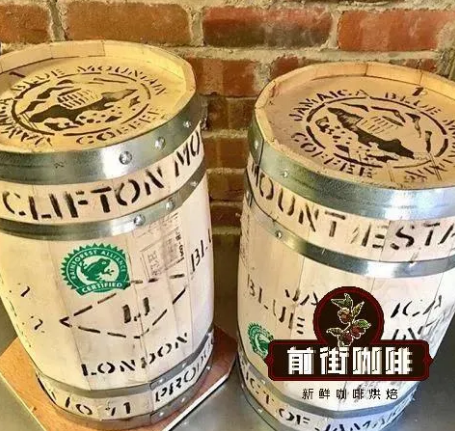
FrontStreet Coffee's Blue Mountain consists of beans exported through companies designated by the National Coffee Board, packed in wooden barrels, and certified by the Rainforest Alliance.
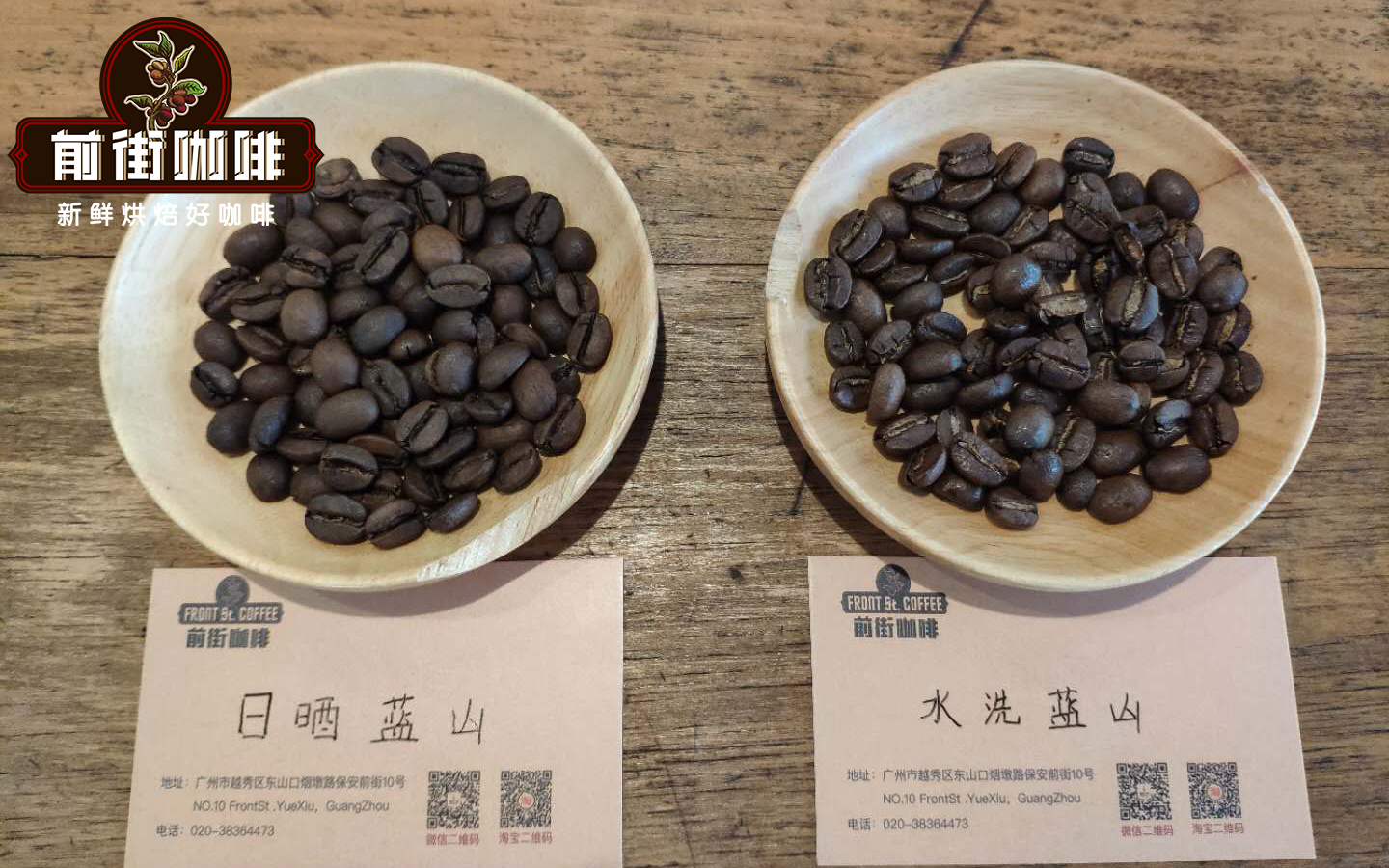
How FrontStreet Coffee Roasts Washed and Natural Blue Mountain Coffee
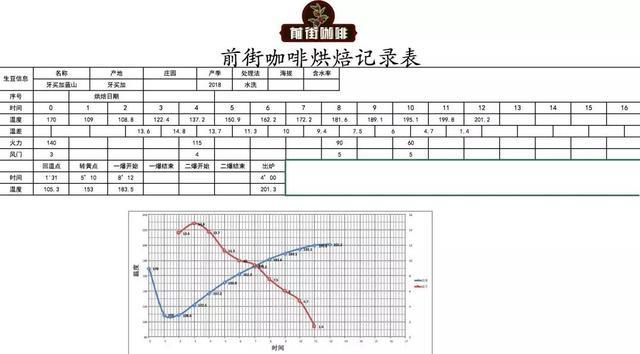
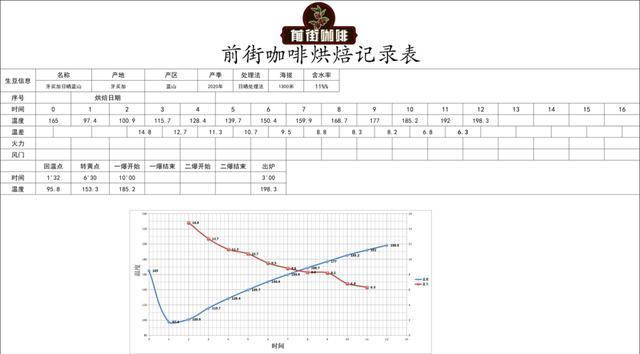
To highlight Blue Mountain Coffee's balanced sweet, sour, and bitter notes and its smooth mouthfeel, FrontStreet Coffee uses a medium-dark roast level to deepen the richness of both varieties.
How FrontStreet Coffee Brews Both Blue Mountain Coffee Varieties
FrontStreet Coffee brews both Blue Mountain varieties with a Kono dripper. The Kono's ribs stop short of half the dripper's height — a design meant to make the wetted filter paper cling tightly to the wall, restricting airflow. This extends the contact time of the water with the coffee particles, yielding a more even extraction and a fuller body. The concave framework at the bottom of the Kono dripper is another key design feature, creating a siphon effect as the brew proceeds.
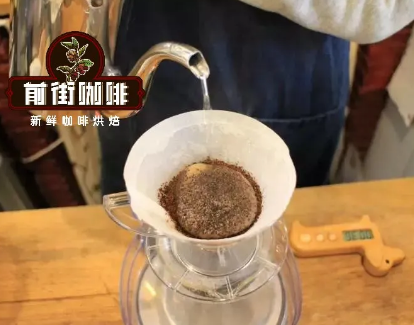
Recommended water temperature: 88-89°C
Grind size: Fujiyama Fuji 4.5 (coarse sugar size)
Coffee-to-water ratio: 1:15
FrontStreet Coffee brewing method: Pour 30g of water for a 30-second bloom, then pour in small circles up to 125g and pause. Once the water level drops and the coffee bed is about to be exposed, continue pouring to 225g and stop. When the level again drops and the bed is about to show, remove the dripper (timing starts from the bloom). Total extraction time is 2'00".
[Washed Blue Mountain Brewing Flavor]: Very clean and complex, extremely mild, with chocolate sweetness and a very strong body. The flavor is rich and mellow, with a perfect balance of sweetness, acidity, and bitterness — no harsh bitterness at all, only moderate, well-judged acidity, and a persistent fruity finish.
[Natural Blue Mountain Brewing Flavor]: A slight berry acidity reminiscent of dark plum and mulberry, overall balanced, with dark chocolate and nut flavors plus a touch of fermentation and smokiness.
FrontStreet Coffee Recommendation
For a true taste of the classic, FrontStreet Coffee's Jamaica Blue Mountain No.1 is the pick. Blue Mountain No.1 is among the highest grades of Jamaican Blue Mountain, with strict standards for bean size, defect rate, and overall quality. The beans come from the historic Clifton Estate, cultivated at roughly 4,300 feet (about 1,310 meters), where ample altitude, afternoon cloud cover, abundant sunshine, and mineral-rich soil extend the ripening of the cherries. Roasted medium-dark, it unfolds the classic balance of the Blue Mountain tradition: nuts, dark chocolate, cream and caramel, and a gentle sweetness in which acidity, sweetness, bitterness, and aroma all stay in harmony.
Authenticity is easy to trace: every shipment of genuine Blue Mountain green coffee travels in traditional wooden barrels of 15, 45, or 70 kilograms, each barrel itself a hallmark of the real thing, backed by complete certification and origin documents. For brewing at home, a ratio of 1:15 to 1:16 with water at 85-88°C and a medium-coarse grind brings out the cream, caramel, and nut flavors while preserving the coffee's soft, bright sweetness — and the beans are best rested 4 to 7 days from the roast date before brewing.
Important Notice :
FrontStreet Coffee is a long-established specialty coffee roaster in Guangzhou China, selling freshly roasted beans from its own farm in Yunnan as well as dozens of carefully selected single-origin beans from around the world for both pour-over and espresso. The products deliver consistently excellent quality and great value, with shipping within 24 hours. Guangzhou's FrontStreet Coffee shop is recommended by many coffee lovers, and the beans are now available online at the Tmall 。
FrontStreet Coffee has moved to a new address:
FrontStreet Coffee Address: 315,Donghua East Road,GuangZhou
Tel:020 38364473
 Scan and follow the En Gafei WeChat official account. Please indicate that the reprint comes from "En Gafei".