Coffee Brewing Methods: V60 Dripper Features & Brewing Ethiopian Coffee Flavor and Mouthfeel

When friends visit FrontStreet Coffee, one question comes up more than any other: "I use a V60 too — why doesn't my coffee taste like anything?" The baristas usually walk them through the key variables: bean freshness, grind size, coffee-to-water ratio, water temperature, pouring technique, and total brew time. This time, FrontStreet Coffee has gathered its V60 brewing know-how into one guide.
The V60 Dripper
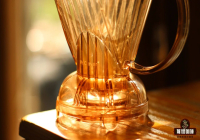
Designed by the Japanese company Hario, the V60 is arguably an essential tool for every pour-over beginner. The name comes from its 60-degree cone angle — appropriately literal. Hario settled on 60 degrees after extensive testing: the angle concentrates the coffee grounds toward the center, so when you pour, the water converges on the middle of the bed, ensuring sufficient contact time between water and grounds and, in turn, balanced extraction.

How the V60 Works
The V60's other signature feature is its interior ribs. The spiral ridges run from bottom to top, guiding the water flow and holding the filter paper slightly away from the wall of the dripper, which keeps the flow unobstructed and fast — making the V60 one of the quickest-draining drippers around. The ribs spiral clockwise, so pouring clockwise follows the ribs and keeps the flow smooth, while pouring counterclockwise works against them and slows drainage. The large single hole at the bottom serves the same purpose: promoting a steady, rapid flow.

With the dripper's design understood, let's work through those variables one by one: freshness, grind size, ratio, water temperature, technique, and time.
Coffee Bean Freshness
Freshness is fundamental to cup quality. Beans left too long after roasting lose flavor and aroma. FrontStreet Coffee considers the peak drinking window for freshly roasted beans to be about 30 days; after that, aromatic compounds steadily diminish as the beans degas. Beans more than two months past their roast date often brew up dull and flat.

Grind Size
The finer you grind, the more the coffee compacts at the bottom of the filter: flow resistance increases, the drawdown slows, contact time lengthens, and extraction runs higher — producing a brew that is overly strong or carries woody, muddled flavors.
Grind coarser, and the gaps between particles grow larger while less surface area meets the hot water. Resistance drops, the coffee drips faster, extraction falls, and the cup tastes correspondingly thin.
FrontStreet Coffee recommends a fine-sugar-like grind for light to medium roasts (EK43s setting 9–10) and a coarse-sugar-like grind for medium-dark to dark roasts (EK43s setting 10–11).

Coffee-to-Water Ratio
Based on SCA Golden Cup extraction theory, pour-over ratios can be tuned to taste as follows:
Strong: 1:10–1:11 (roughly Golden Cup 1:12.5–1:13.5)
Moderate: 1:12–1:13 (roughly Golden Cup 1:14.5–1:15.5)
Light: 1:14–1:16 (roughly Golden Cup 1:16.5–1:18.5)
A dose-to-water ratio of 1:14.5–1:15.5 most readily lands in the Golden Cup range of 18–22% extraction yield and 1.15–1.35% concentration — which is why FrontStreet Coffee has always recommended brewing at 1:15.

Brewing Water Temperature
FrontStreet Coffee suggests 90–91°C for light to medium roasts and 88–89°C for medium-dark to dark roasts.
At a fixed grind size, if the cup tastes bitter, scorched, or astringent, lower the water temperature to pull extraction back; if it tastes thin or hollow, plenty of flavor is still locked in the grounds, so raise the temperature instead.
Well-judged temperature and extraction yield positive, pleasant aromatics: acidity that is lush and sweet-tart like plums or stone fruit, a cup so clean and transparent you can pick out each flavor clearly, acidity so delicate and layered it recalls fruit — even wine — and a finish that lingers pleasantly.

Pouring Technique
With the V60, FrontStreet Coffee generally uses a three-stage pour, demonstrated here with its Kenya "Little Tomato" (Cherry).
The first stage is the bloom: pour twice the coffee's weight in water — 30g of water for a 15g dose — and wait 30 seconds. Blooming is the moment the grounds first absorb water and begin releasing trapped gases. Let the carbon dioxide escape fully and the bed settle before continuing, and extraction will be far more even.

The second and third pours are where the soluble compounds dissolve into the water. A coffee bean is roughly 70% insoluble cellulose; the remaining 30% is soluble material that dissolves in sequence, smallest molecules first. First come the acids and aromatics — florals, citrus acidity — then the medium-weight sugars: juice-like sweetness, honey, brown sugar. Last come the heavy, bitter, roast-derived compounds. This sequencing is exactly where coffee's layered flavors come from.

Brew Time
In extraction, flavor and concentration are strongest early on and taper as the brew progresses. The volume you pour also shapes total time: a heavy pour races straight through the bed and shortens the extraction. FrontStreet Coffee's standard is 15 grams of coffee per cup at a 1:15 ratio, with a total brew time of 2 to 2.5 minutes — a window that rarely tips into over- or under-extraction.
Now let's brew an Ethiopian Yirgacheffe — Guodingding (Worka Chelbesa) — and see what the V60 delivers.
Origin: Yirgacheffe, Gedeo Zone
Altitude: 1,900–2,300m
Variety: Heirloom
Process: Washed
Grade: G1

FrontStreet Coffee Brewing Parameters
Water Temperature: 90–91°C
Grind Size: EK43s setting 10 (fine-sugar texture)
Coffee-to-Water Ratio: 1:15

Technique: Pour 30g of water for a 30-second bloom, then pour 95g more (scale reads about 125g), finishing the pour within about a minute. When the water level drops to two-thirds of the coffee bed, pour the remaining 100g (scale reads about 225g), finishing around 1'40". Drainage completes at 1'55"–2'00"; remove the dripper and the brew is done.
In the cup: bright citrus acidity on entry, a full-bodied berry-juice juiciness, and a distinct oolong-tea finish.
FrontStreet Coffee Recommendation
If the Guodingding impressed you, FrontStreet Coffee's Natural "Hua Kui" (Adado) from the Hambella district of Guji, Sidama, shows the wilder side of Ethiopian naturals. Ripe cherries are dried on raised beds for 21 days, turned constantly for even drying, with defective beans hand-sorted every three to five days before the hardened fruit is hulled off.
Roasted medium-light, it pours out a gently fermented winey aroma with florals, citrus, and mango — noticeably richer and more complex than a washed cup — with honeyed sweetness, a cocoa-and-spice undertone, a thick body, and a long finish.
Important Notice :
FrontStreet Coffee is a long-established specialty coffee roaster in Guangzhou China, selling freshly roasted beans from its own farm in Yunnan as well as dozens of carefully selected single-origin beans from around the world for both pour-over and espresso. The products deliver consistently excellent quality and great value, with shipping within 24 hours. Guangzhou's FrontStreet Coffee shop is recommended by many coffee lovers, and the beans are now available online at the Tmall 。
FrontStreet Coffee has moved to a new address:
FrontStreet Coffee Address: 315,Donghua East Road,GuangZhou
Tel:020 38364473
 Scan and follow the En Gafei WeChat official account. Please indicate that the reprint comes from "En Gafei".