Pour-Over Coffee Brewing Principles: How Bean Freshness, Grind Size, Water Temperature, and Extraction Time Affect Your Brew
The Principles of Pour-Over Coffee Brewing
Beginners exploring pour-over coffee are often intimidated by the wide array of equipment and choices. With so many kettles and drippers available, it is easy to feel overwhelmed about where to start. In reality, no matter what gear you use, coffee extraction revolves around three fundamental processes: wetting, dissolution, and release. Today, FrontStreet Coffee explains the principles behind pour-over brewing.
Wetting
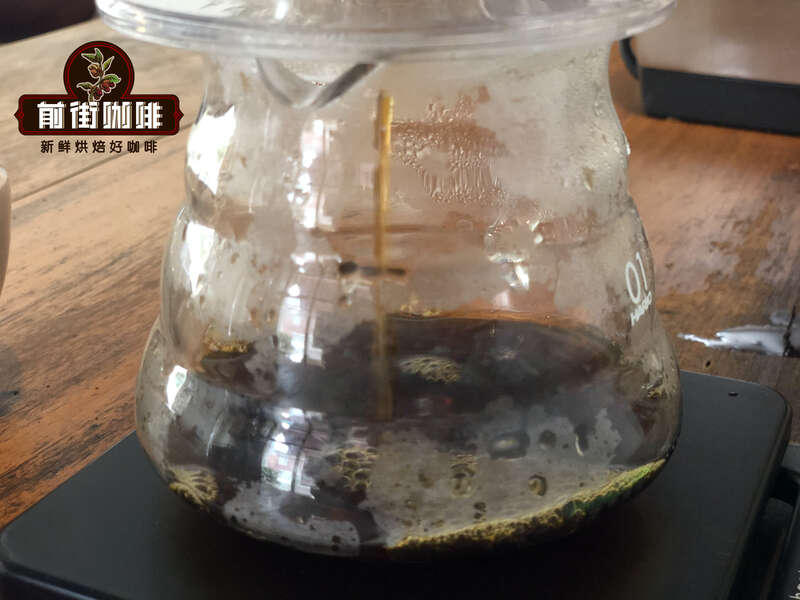
As the name suggests, wetting is the process of the grounds becoming saturated on contact with water. It marks the beginning of coffee cells releasing their molecular compounds, and it is what FrontStreet Coffee usually calls the blooming process.
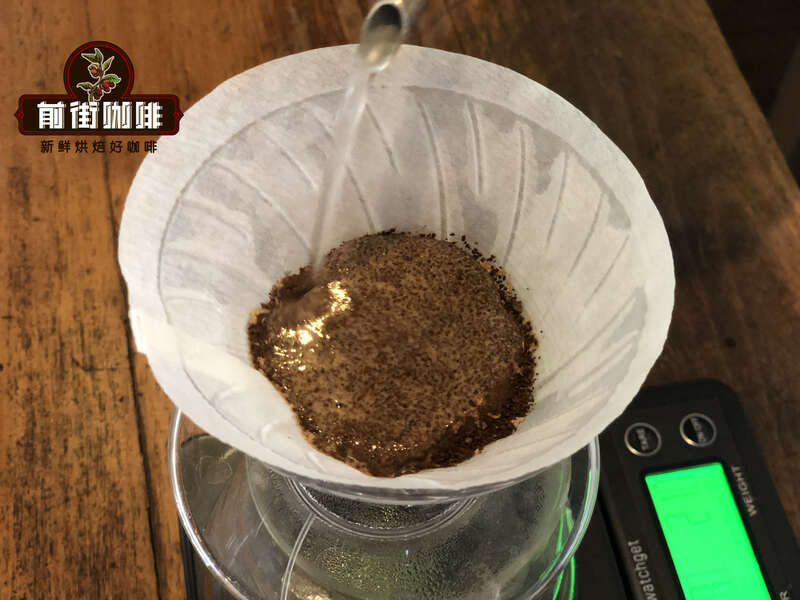
Roasted coffee beans contain carbon dioxide, and fresher beans hold more of it. When hot water meets the grounds, the carbon dioxide escapes first, forming a layer of bubbles on the surface. During pour-over brewing you will see the grounds in the filter begin to expand. That is why, after wetting the grounds, we pause the pour to let the CO2 release fully. Only after the bed stops expanding should we continue adding water for the best extraction.
Dissolution
Dissolution is the process of soluble molecules from the coffee cells dissolving into the hot water. This is the most crucial step in shaping the flavor of the cup - what FrontStreet Coffee often calls the extraction process.
A coffee bean is about 70% insoluble cellulose; the remaining 30% is soluble aromatic molecules that are released in order of molecular size when they meet water. The first substances to dissolve are small molecules, including acids and aromatics like floral notes and citrus acidity. Next come medium-sized molecules that bring sweetness, such as fruit-juice sweetness, honey, or brown sugar. Finally, larger molecules contribute bitter and roasted flavors. This sequence creates the different layers of flavor in coffee. So if you prefer a sweeter taste, keep the extraction time shorter, because the longer hot water stays in contact with the grounds, the more bitter compounds dissolve.
As FrontStreet Coffee noted earlier, a coffee bean has a maximum soluble content of about 30%, meaning 70% is woody material that cannot be extracted. That means 10g of grounds can yield at most about 3g of extracted coffee solids. For a delicious cup, the optimal extraction is 60-70% of that 30% maximum. Below 60% (under 18% total extraction) the coffee is under-extracted and tastes incomplete. Above 70% (over 22% total extraction) it is over-extracted, harsh, spicy, and unpleasant. The optimal range, then, is 18-22%. To hit it consistently, FrontStreet Coffee usually recommends brewing at a 1:15 ratio.
Diffusion
Once the aromatic molecules dissolve, they leave the coffee cells by osmosis in a process called diffusion. These molecules diffuse into the hot water to form the final coffee liquid. As FrontStreet Coffee said above, extraction happens in sequence: first acids, then sweetness, and finally bitterness. That is why a well-extracted coffee should be swirled several times before serving, so the liquid integrates evenly. Only then do you taste the most complete flavor profile.
Factors Affecting Coffee Flavor
Understanding these principles should help you see how different pour-over conditions affect flavor. Every variable ultimately revolves around four core factors: freshness, grind size, water temperature, and extraction time.
Freshness
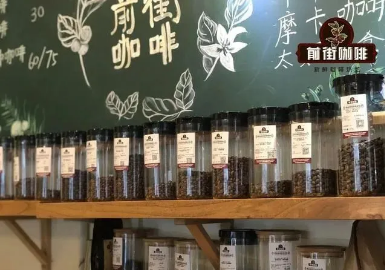
Freshness is crucial to coffee quality. Leave beans too long after roasting and they lose flavor and aroma. FrontStreet Coffee's beans have an optimal flavor window of 30 days. After that, aromatic molecules decrease along with the release of carbon dioxide, so coffee brewed beyond the window can taste bland and unremarkable.
Grind Size
Ground finer, the coffee tends to pile up at the bottom of the filter paper, creating more resistance. The flow slows, extraction time lengthens, and the extraction rate of coffee compounds rises, producing a more intense brew that may turn woody or otherwise unpleasant.
Ground coarser, there are larger gaps between particles and less surface area in contact with the water. Resistance drops, the coffee drips faster, and the extraction rate falls, giving a milder flavor.
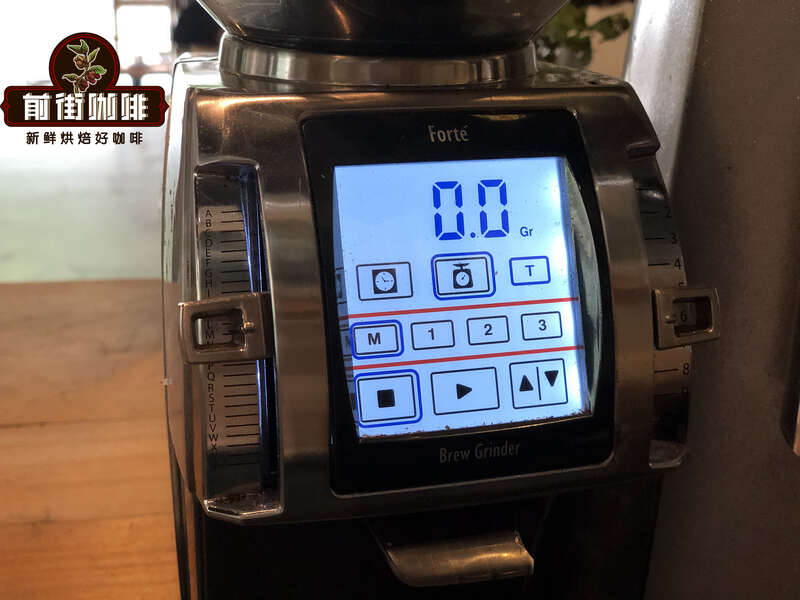
FrontStreet Coffee therefore recommends a Fuji Royal grinder set to 3.5 for a medium grind, roughly fine sugar, when brewing light to medium roast beans. For medium to dark roast beans, set it to 4 for a medium-coarse grind, roughly coarse sugar.
Water Temperature
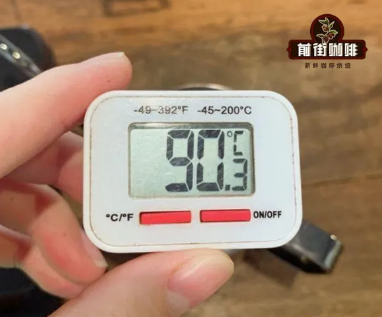
FrontStreet Coffee recommends 90-91°C (194-196°F) for light to medium roast beans and 88-89°C (190-192°F) for medium to dark roast beans.
With the same grind size, if the brewed coffee tastes bitter, burnt, or astringent, lower the water temperature. If it tastes weak or thin, more flavor compounds are still locked in the grounds, so raise the temperature.
Proper temperature in an optimal extraction yields pleasant, positive aromas and flavors. The acidity will be rich, like the sweet-tart profile of plums or stone fruit. The clarity and cleanliness will let you pick out specific flavors clearly. The coffee will show a delicate, rich, distinct acidity that may remind you of certain fruits or even wine, and the aftertaste will linger long in the mouth.
Brewing Time
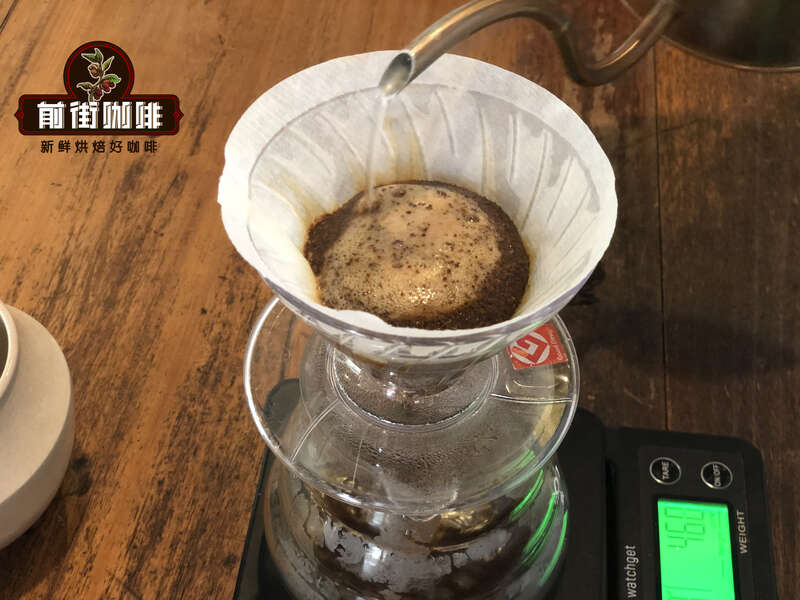
During extraction, the initial aromas and flavors are concentrated and intense. As extraction continues, they gradually diminish. How much water you pour also affects extraction time: if you pour a large amount quickly, it flows through fast and naturally shortens the time. FrontStreet Coffee typically uses 15g of grounds and, depending on the bean, a 1:15 ratio, for a brewing time of 2-2.5 minutes. That approach helps avoid both over-extraction and under-extraction.
FrontStreet Coffee Recommendation
For a V60, FrontStreet Coffee generally favors floral, fruit-forward coffees, because the dripper's fast flow and 60° cone let bright aromatics and lively acidity come through. A great first choice is FrontStreet's Gedingding Yirgacheffe: grown in the Worka area at the southeastern edge of Yirgacheffe, it has the citrus, berry, and floral notes the region is known for, with a green-tea-like finish, and its acidity is soft and bright rather than sharp - easy to accept for anyone starting out with pour-over.
If you want tropical fruit, FrontStreet's Ethiopian Flower Queen is one of the standout specialty coffees of recent years, with vivid strawberry, passion fruit, jackfruit, and even lychee aromas, obvious sweetness, very low bitterness, and a smooth, juicy body. And if you want the variety at its most elegant, FrontStreet's Esmeralda Red Label Geisha brings exceptionally graceful jasmine, fine citrus, bergamot, and black-tea notes, a clean, transparent body, and a long, layered finish.
To brew these, FrontStreet uses a Hario V60 at 90-91°C with 15g of coffee at a 1:15 ratio and a medium-fine grind size. Note that V60's single large hole lets the flow depend almost entirely on your pouring control, so keep the stream steady and the circles small; grind a little finer for light roasts and slightly coarser for medium to dark beans, and adjust the temperature down if the cup turns bitter and up if it tastes thin.
Important Notice :
FrontStreet Coffee is a long-established specialty coffee roaster in Guangzhou China, selling freshly roasted beans from its own farm in Yunnan as well as dozens of carefully selected single-origin beans from around the world for both pour-over and espresso. The products deliver consistently excellent quality and great value, with shipping within 24 hours. Guangzhou's FrontStreet Coffee shop is recommended by many coffee lovers, and the beans are now available online at the Tmall 。
FrontStreet Coffee has moved to a new address:
FrontStreet Coffee Address: 315,Donghua East Road,GuangZhou
Tel:020 38364473
 Scan and follow the En Gafei WeChat official account. Please indicate that the reprint comes from "En Gafei".