Iced Americano, Iced Pour-Over, Cold Brew: Flavor Profiles and Which Coffee Beans Are Best for Iced Coffee

When you order an iced black coffee at a specialty coffee shop, you may be asked, "Would you like cold drip, cold brew, or an iced Americano?" If that leaves you momentarily stumped, don't worry. In this article, FrontStreet Coffee breaks down what each of these drinks actually is and what makes them different.
Cold Brew vs. Cold Drip Coffee
Think of these two as twin brothers. Technically, both belong to the family of iced coffee, but because they differ in extraction temperature and time, the results are quite distinct. Cold brew coffee is made by steeping coffee grounds directly in ice water for more than 12 hours — what FrontStreet Coffee classifies as immersion extraction.

Cold drip coffee, on the other hand, uses ice water that drips through the grounds at a rate of 7 drops every 10 seconds — a drip method. Because both methods take so long to produce, many coffee shops offer cold brew and cold drip only in limited quantities.
Cold Brew vs. Iced Americano
The real difference between these two is temperature. Cold brew is steeped in ice water, and the low water temperature makes the process slow — usually more than 12 hours. An iced Americano, however, starts with espresso: hot water at roughly 93°C, forced through the coffee at 9 bars of pressure in an espresso machine. That espresso is then poured over a 1:1 mixture of ice and water. The whole drink takes only a few minutes, which makes the iced Americano the quick-and-easy option.

Cold Drip Coffee Flavor Profile
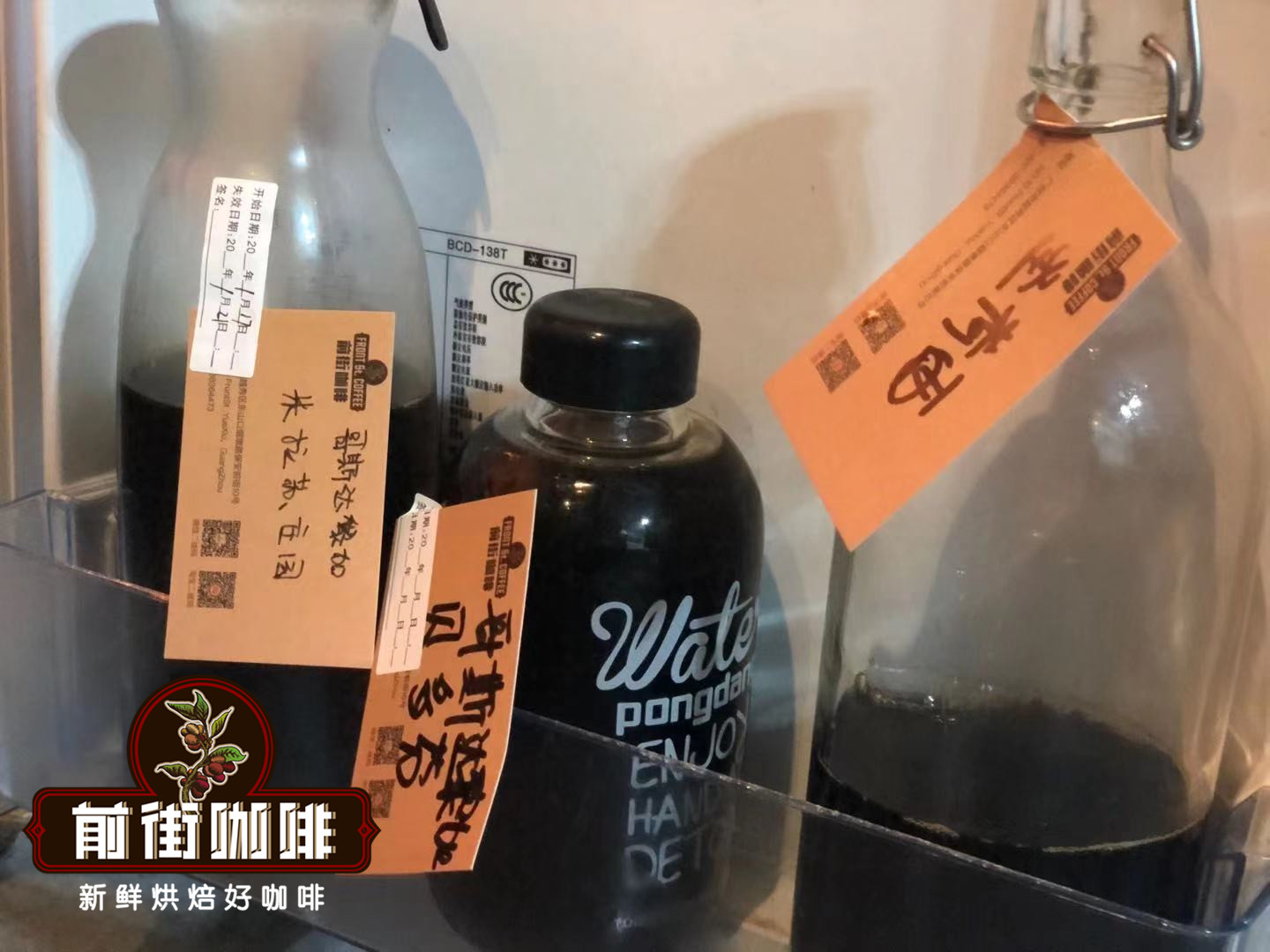
Cold drip coffee offers a rich body while keeping exceptional clarity. As the ice water slowly drips through the grounds over an extended period, the low temperature maximizes the retention of the coffee's rich flavor molecules. That said, freshly extracted cold drip carries carbon dioxide from the grounds and tastes underwhelming at first. It should rest in a clean, oil-free, pre-chilled sealed container in the refrigerator for at least 8 hours; the CO2 released into the bottle builds internal pressure that helps the flavor molecules open up.

Cold Brew Coffee Flavor Profile
Cold brew also has a rich body, though without quite the clarity of cold drip. Its big advantage is how easy it is to make at home: find a clean container with a lid, add coffee grounds and ice water, and refrigerate for more than 12 hours but less than 24. Once extraction is complete, simply filter out the grounds and enjoy.

How Long Can You Store Cold Brew and Cold Drip?
Even in sterilized containers, FrontStreet Coffee does not recommend refrigerating the coffee for more than 72 hours. Low temperatures only slow bacterial growth; they cannot stop bacterial reproduction entirely.
Iced Americano Flavor Profile
The iced Americano is not as clean-tasting as the other two. Espresso extracted at high temperature carries some acidity and bitterness, and because it is diluted with ice water — with machines and espresso blends varying from shop to shop — the concentration is never exactly the same twice. Still, it is the perfect choice when you need your iced coffee fix fast; after all, slow work yields fine results!

Does Cold Brew Really Have Less Acidity?
Rabia A. De Latour, a gastroenterologist and assistant professor of medicine at NYU Langone Health, says this is a common sentiment, and people who are "very sensitive" to caffeinated or acidic foods could switch to cold brew.
Cold brew fans say it tastes smoother than regular iced coffee, and those who dislike acidity find it gentler than hot-brewed coffee that has simply been chilled. Some reports even claim cold brew has 67% less titratable acidity than hot-extracted coffee that has been cooled. Coffee contains tannic acid, which breaks down into pyrogallic acid when boiled; during cooling, pyrogallic acid changes easily, turning the taste sour and bitter. In cold brew, only ice water and grounds take part in the extraction, so mostly small flavor molecules — florals and fruit — come through, while larger molecules such as smoky and roasted notes are barely extracted and acidity is significantly reduced. Of course, if your stomach is sensitive, FrontStreet Coffee still recommends drinking less coffee overall!

Which Has More Caffeine: Cold Brew, Cold Drip, or Iced Americano?
What determines caffeine content? The variety of the bean. Arabica coffee contains roughly 0.8%-1.5% caffeine, while Robusta contains 1.7%-3%.
Does roast level change caffeine content? When FrontStreet Coffee reviewed the research, we found that coffee professionals ran experiments over a decade ago roasting the same bean for different durations from 5 to 25 minutes — very light (JQ), light (Q), light-medium (QZ), medium (Z), medium-dark (ZS), dark (S), very dark (JS), and French roast (FZ). Despite all the chemical changes along the way, caffeine content barely moved, staying around 1.4% whether light or dark.

Caffeine Content in Espresso
Many people assume a cup of espresso has more caffeine than a cup of hot drip coffee. This is actually incorrect. Every 30ml of espresso contains 64-75mg of caffeine, so a single shot has less caffeine than a full cup of drip coffee. Since espresso is usually diluted into a larger drink, a hot drip coffee of the same final size contains almost twice as much caffeine.

Caffeine Content in Cold Brew and Cold Drip
Caffeine is extracted most fully at high temperatures, so low-temperature methods like cold drip and cold brew cannot pull out all of it. In practice, the caffeine content of an iced Americano, cold drip, and cold brew ends up quite similar.

FrontStreet Coffee Recommendation
Cold brewing amplifies floral and fruit notes while muting woody and roasted flavors, so lightly to medium-roasted beans show best. For iced coffee with striking florals, we recommend our Strawberry Candy Geisha Blend: it pairs the classic Panama Geisha variety with a Costa Rica honey-processed coffee, the former bringing delicate rose and orange, the latter grape, dried blueberry, and strawberry-gummy sweetness. Cold brewed, it is bright, sweet-tart, and lively — and if you let it ferment and settle briefly, it takes on an almost fruit-wine character.
If you want a cold brew bursting with juice-like acidity, go for our Kenya Little Tomato from the Thika growing region: SL28 and SL34 varieties grown at 1550-1750 meters and processed with the local K72 double-washed fermentation, then roasted light-medium. Low in bitterness with plump, bright acidity, it delivers cherry tomato, pear, black plum, and dark plum notes that shine over ice. For an everyday option, our washed Yirgacheffe Guodingding is an affordable, versatile bean that brews beautifully as cold drip or cold brew, showing sweet berries, layered fruit, and honey.
Important Notice :
FrontStreet Coffee is a long-established specialty coffee roaster in Guangzhou China, selling freshly roasted beans from its own farm in Yunnan as well as dozens of carefully selected single-origin beans from around the world for both pour-over and espresso. The products deliver consistently excellent quality and great value, with shipping within 24 hours. Guangzhou's FrontStreet Coffee shop is recommended by many coffee lovers, and the beans are now available online at the Tmall 。
FrontStreet Coffee has moved to a new address:
FrontStreet Coffee Address: 315,Donghua East Road,GuangZhou
Tel:020 38364473
 Scan and follow the En Gafei WeChat official account. Please indicate that the reprint comes from "En Gafei".