Introduction to the Characteristics of Typica Coffee Beans | Flavor and Taste Profile Description of Typica Coffee Varieties
Typica: The Ancient Coffee Variety
Typica is the oldest indigenous variety in Ethiopia, and today most common Arabica varieties descend from it. The industry recognizes Typica as a high-quality variety with a pure aroma. Well-known coffees such as FrontStreet Coffee's Mandheling, FrontStreet Coffee's Blue Mountain, Kona, and FrontStreet Coffee's Yunnan small bean are all prized for the elegant flavors of Typica.
Characteristics of Typica Coffee Beans
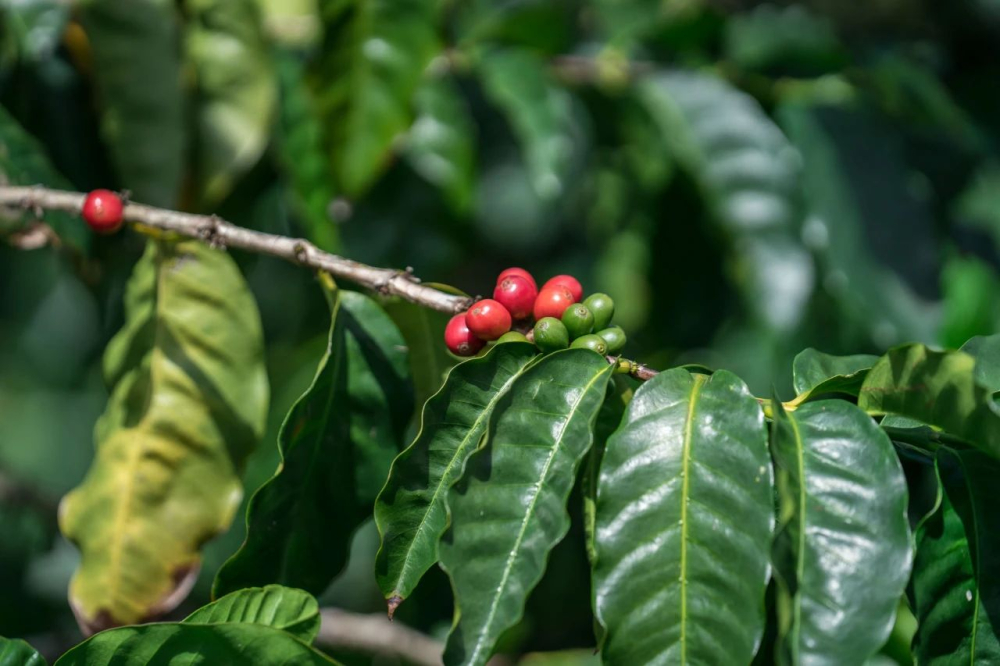
The most distinctive trait of the Typica variety is that the top leaves take on a reddish-bronze color, which is why it is also called "red-topped coffee." The beans are relatively large and long, with pointed ends that curl slightly upward, somewhat resembling an egg. Typica beans often carry citrus acidity with a sweet aftertaste, praised by many as elegant, clear coffee. The ancient Typica plant is quite tall, about 5 meters/16.5 feet, which makes manual harvesting difficult. Typica trees have a conical shape with slightly inclined branches, where lateral branches form a 50-70° angle with the vertical stem. The trunk is slender and the branches are very thin. Because of its height and long branches, Typica needs sufficient spacing between plants when planted.
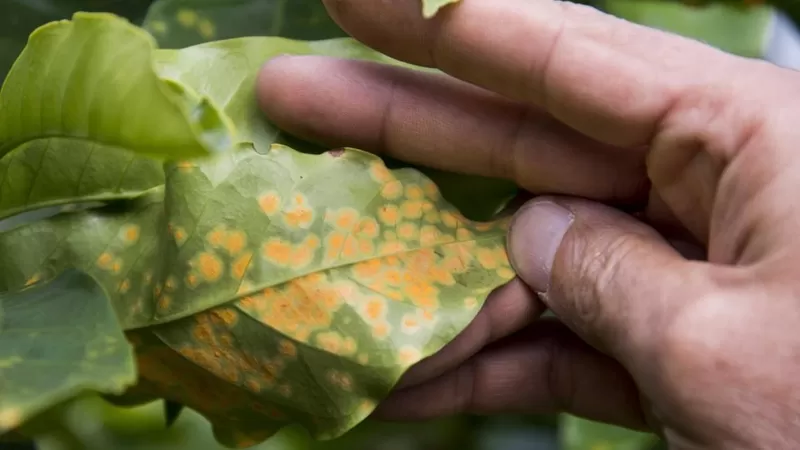
Typica, however, has very poor disease resistance, making it hard to fend off common problems such as leaf rust and berry rot, and its yield is scarce. Leaf rust is the most serious disease, first appearing in the coffee areas around Lake Victoria in East Africa in 1861. In 1970 leaf rust broke out in Bahia, Brazil, and since then coffee regions worldwide have gradually reported it. A coffee tree infected with leaf rust is effectively incurable, eventually withering and even dying. As an economic crop, Typica's low yield and weak disease resistance make it hard to turn a profit, so many growers abandon it for varieties with better disease resistance.
As a high-quality variety with a mellow aroma, Typica is still grown worldwide today, the most famous being Jamaican Blue Mountain. Growing Typica with elegant, pure flavors is not simple. Every step — from the natural terroir and plant management to fruit harvesting and post-processing — must be fully assured for the beans to develop positive flavors and mouthfeel. That also means producing high-quality Typica takes more labor and research, which is why FrontStreet Coffee's Blue Mountain and FrontStreet Coffee's Kona are so precious.
Why is Blue Mountain's Typica Variety More Famous?
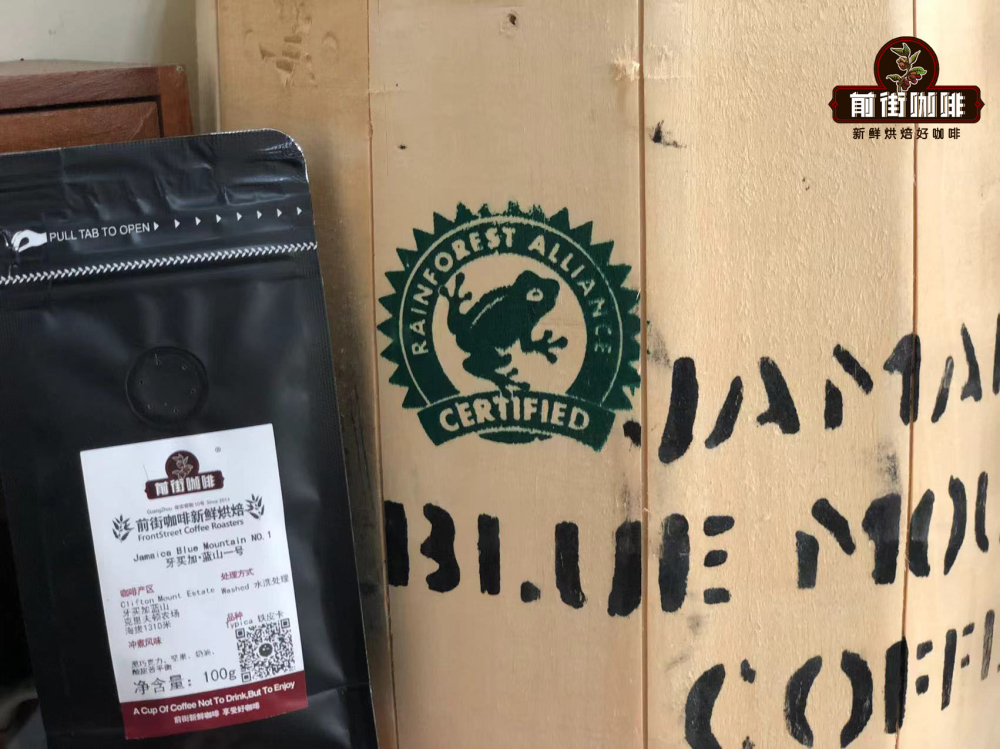
For many years Jamaica has insisted on planting only Arabica varieties, which has kept the local Typica pure and free of hybrid variation — its bloodline intact. Unlike many other coffee regions, Jamaica is a relatively closed island nation with naturally superior microclimate conditions. After more than two hundred years of domestication and adaptation, Blue Mountain Typica has developed better disease resistance, especially better resistance to coffee berry disease than typical Typica, with more stable yields and quality.
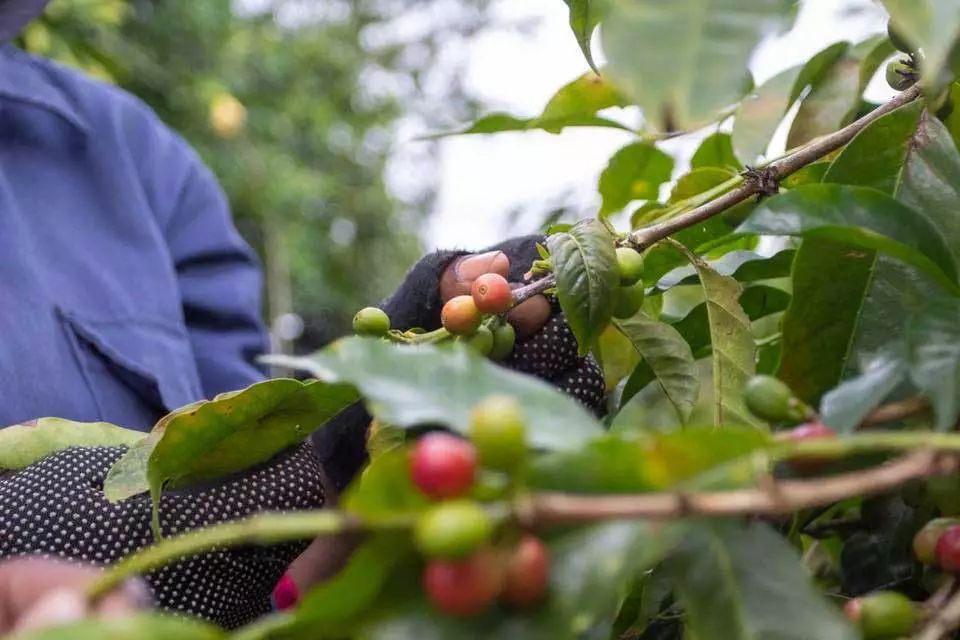
The Jamaican Blue Mountain range is the highest terrain in the Caribbean, with a tropical rainforest climate. During the rainy season each year, precipitation reaches as high as 1800-2000 mm. The steep slopes between the mountains drain well, giving the local vegetation adequate irrigation. Locals plant coffee trees alongside banana and avocado trees. The Blue Mountain area has beautiful scenery and clean air. Fertile volcanic soil encourages the coffee to bear full-flavored fruit. The high-altitude Blue Mountains are shrouded in clouds and mist, providing natural shade for the coffee trees and helping Typica develop a more stable flavor profile.
According to the region defined by the Coffee Industry Board (CIB) of Jamaica, the forest area where Blue Mountain coffee is grown sits at an altitude of about 910-1700 meters. The high-altitude Blue Mountains create a unique terroir, but the rugged terrain makes management and harvesting quite difficult. Each harvest season, locals arrange for skilled women familiar with the terrain to go up the mountains and hand-pick coffee cherries at optimal ripeness. In recent years, the Blue Mountain coffee produced accounts for less than 15%, making it extremely rare.
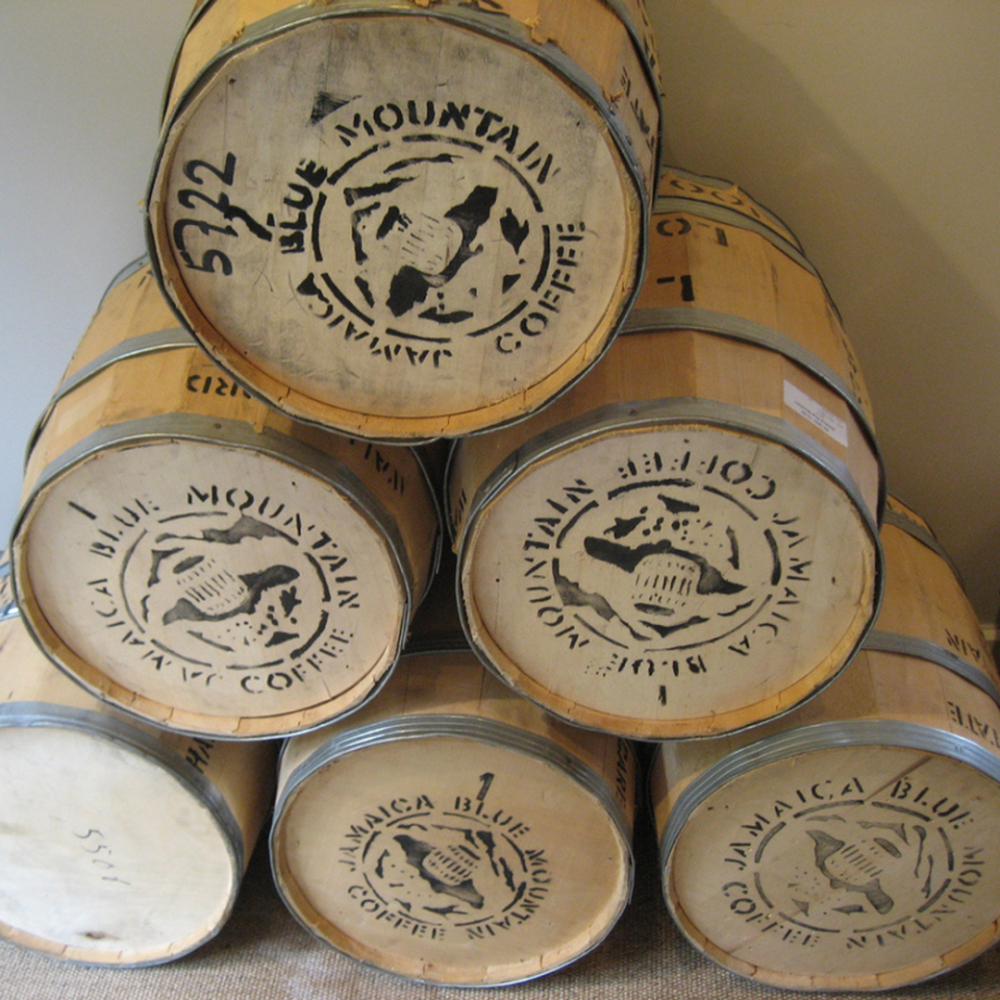
On raw-bean quality control, the CIB has standardized the planting, production, and sales of Jamaican Blue Mountain coffee, improving quality and standardizing processing while coordinating market sales. The CIB was one of the earliest institutions to evaluate coffee grades scientifically, combining bean size, color, uniformity, defect rate, moisture content, and cupping performance.
Before export, Blue Mountain raw beans are packaged and sent for quality testing, then graded by size specification and defect rate: Blue Mountain No. 1, Blue Mountain No. 2, Blue Mountain No. 3, and Blue Mountain Peaberry. Top-grade FrontStreet Coffee's Blue Mountain No. 1 raw beans must meet specifications of over 17 mesh, a defect rate below 3%, and moisture content around 13%, and must show a rich coffee aroma in cupping, with a smooth, balanced taste, low acidity, and a persistent aftertaste — suited to enthusiasts who pursue the original flavors of coffee.
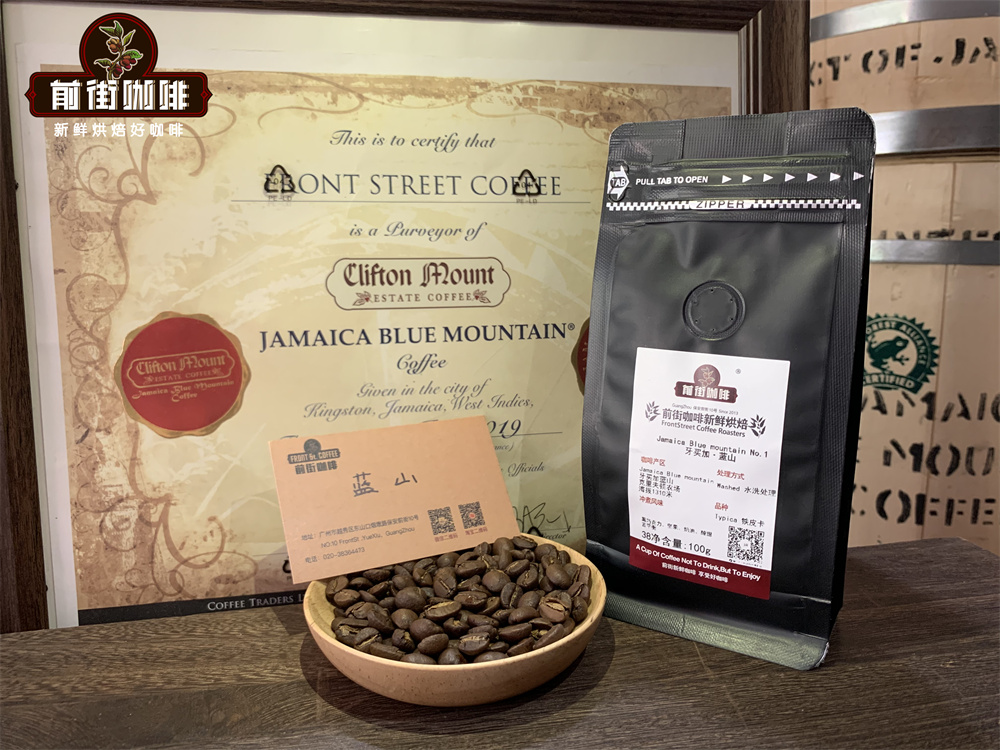
Brewing Recommendations for FrontStreet Coffee's Blue Mountain No. 1 Coffee
FrontStreet Coffee wants to highlight the mellow, round taste of its Blue Mountain No. 1, so it uses a KONO coffee dripper for extraction. The KONO's ribs are less than half the height of the dripper. This design ensures that after wetting, the filter paper clings closely to the dripper wall, limiting airflow and increasing the time the coffee particles absorb water, giving a more even extraction — well suited to brewing mellow-flavored Blue Mountain coffee.
Brewing parameters: 15 grams of coffee powder, powder-to-water ratio 1:15, grind size: EK43s setting 10.5 (75% pass rate on China No. 20 standard sieve), water temperature 87-88°C, brewing method: segmented extraction.
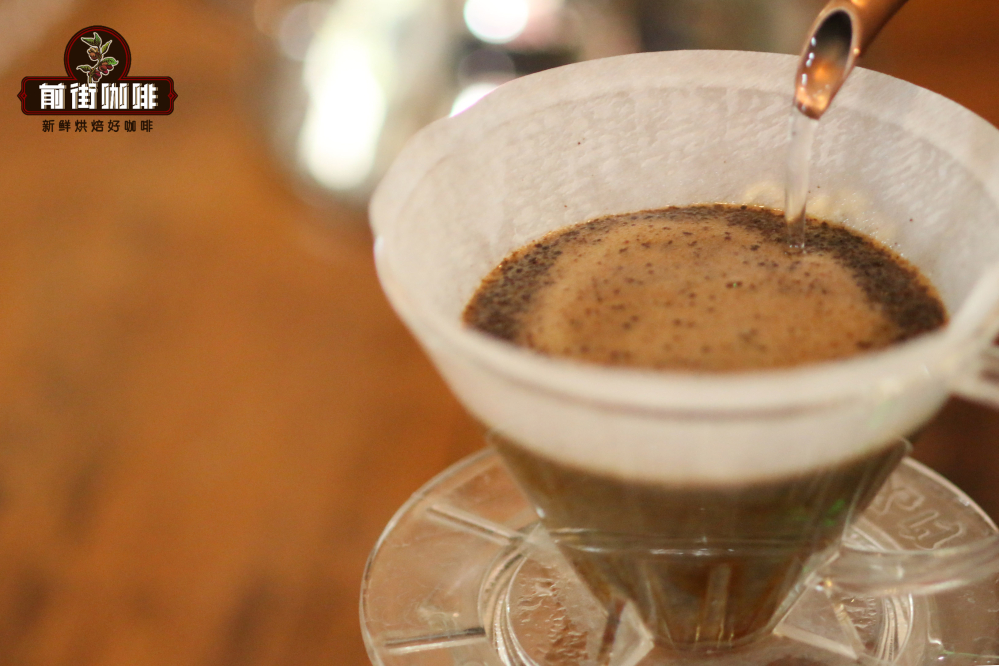
Place the filter paper in the KONO dripper and pour water to wet it while seating it better. Add the coffee powder and tap gently to level the bed. For the first segment, gently inject 30 grams of water to bloom, with a bloom time of 30 seconds. For the second segment, pour to about 125 grams, circling evenly and steadily outward. Wait for the coffee liquid to drop, and when it drops to half, inject the final segment to 225 grams. Wait for all the coffee to finish dripping, with a total extraction time of generally around 2 minutes.
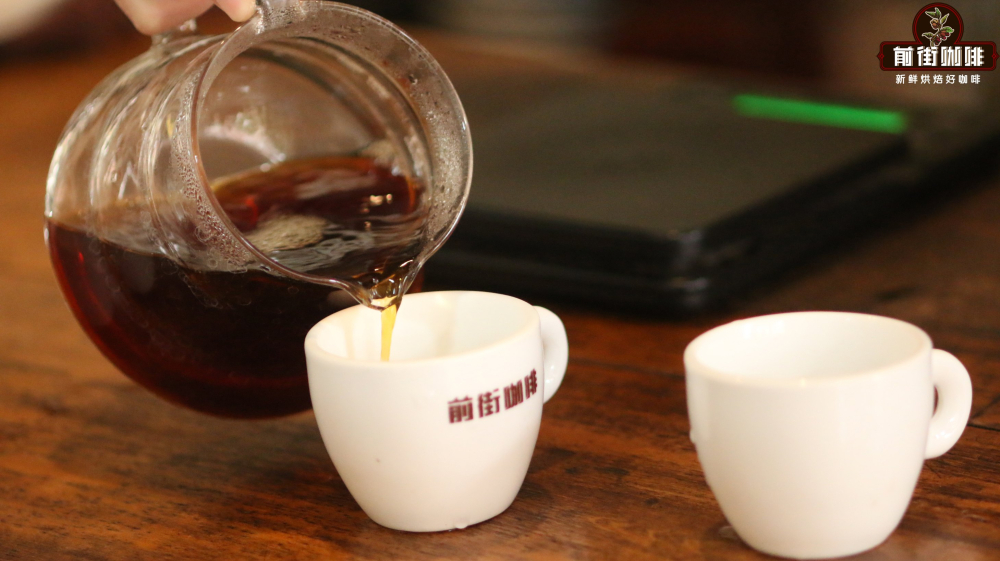
Hand-poured Blue Mountain No. 1 is dark chocolate and nuts, very mellow, with a distinct almond aftertaste. As the temperature drops, it reveals roasted hazelnut and a creamy sweetness with a silky smoothness, a hint of soft acidity and caramel sweetness, and an aroma that lingers persistently in the mouth.
FrontStreet Coffee Recommendation
If the mellow, low-acidity side of Typica is what draws you in, FrontStreet's PWN Golden Mandheling is a natural companion. Coming from Indonesia's PWN company, it is built on beans of 18 screen size or larger with fewer than 3 defect beans per 300-gram green sample, meeting the top G1 standard and hand-sorted three times to remove remaining defects. Medium-dark roasted, it cups clean and full-bodied, with dark chocolate and caramel, and a wild herbal character that fans of rich, non-acidic coffee love.
For an everyday cup, FrontStreet's Lindong Mandheling, from the Lindong region of North Sumatra, is a great-value single origin. Also medium-dark roasted, it shows dark chocolate, caramel, and Mandheling's distinctive herbal, spicy, sandalwood-tinged aroma, with low acidity and a thick, lasting bittersweetness. Brew it by hand with 15 grams of coffee, a 1:15 ratio, and 87-88°C water in three stages — a 30ml bloom, then 100ml, then a gentle 95ml centered pour to 225ml — to bring out the body, caramel sweetness, and chocolate-nut notes.
Important Notice :
FrontStreet Coffee is a long-established specialty coffee roaster in Guangzhou China, selling freshly roasted beans from its own farm in Yunnan as well as dozens of carefully selected single-origin beans from around the world for both pour-over and espresso. The products deliver consistently excellent quality and great value, with shipping within 24 hours. Guangzhou's FrontStreet Coffee shop is recommended by many coffee lovers, and the beans are now available online at the Tmall 。
FrontStreet Coffee has moved to a new address:
FrontStreet Coffee Address: 315,Donghua East Road,GuangZhou
Tel:020 38364473
 Scan and follow the En Gafei WeChat official account. Please indicate that the reprint comes from "En Gafei".