
The Origin Story of Brazil Yellow Bourbon Coffee Beans Flavor Profile Description of Rainha Estate Yellow Bourbon
 Most coffee varieties ripen to red, but Yellow Bourbon is prized for the golden-yellow cherries it produces when ripe, and in Brazil it is treated as something of a treasure.
The variety has drawn serious attention from buyers and roasters in recent years, largely because of its distinctive, high-quality flavor and its unmistakable appearance. Yellow Bourbon is not a new discovery - it has a long cultivation history - but it was in the Brazilian market that it was developed and popularized.
Origin of Brazilian Yellow Bourbon
 Yellow Bourbon has been cultivated for close to 90 years, and its story really begins with the varieties it came from.
In the 1850s Brazil became the world's leading coffee producer, leaning heavily on Typica, which had been planted there since the 1720s. Typica's modest yields eventually dragged exports down, so a Brazilian traveled to Réunion Island, in the Indian Ocean east of Madagascar, to obtain seeds of Red Bourbon. By the 1870s Red Bourbon had become the most common variety on Brazil's many coffee farms.
 Then, in 1871, something odd turned up: a variant appeared in the city of Botucatu that bore yellow cherries, a sight never recorded in Brazil before. This yellow Typica variant was called "Yellow Botucatu," and although its yield was low, plenty of farmers planted it out of curiosity. Some researchers believe Yellow Bourbon instead arose as a natural mutation of Red Bourbon.
The Yellow Bourbon we know today is thought to have first appeared in 1930 on a farm growing Red Bourbon near Pederneiras (SP). Many consider it the result of natural cross-pollination between Red Bourbon and Yellow Botucatu. Apart from the yellow cherries, it resembled Red Bourbon in every respect, but it was more productive.
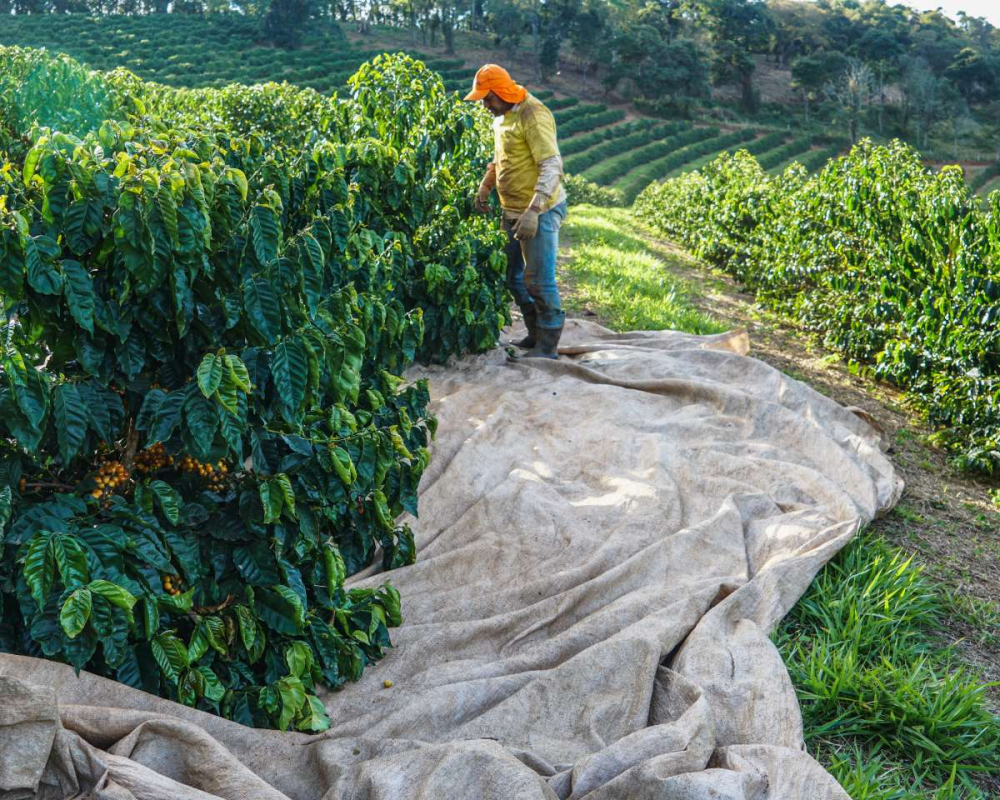 Its appearance caught the attention of researchers at the Campinas Agronomic Institute (IAC), among them Carlos Arnaldo Krug, who carried out the first formal study of Yellow Bourbon in 1942. Over the next three years, 30 varieties were planted and studied in the IAC's research fields at Jaú (SP).
In the 1950s the most promising Yellow Bourbon line was assigned the code "IAC J" and the results were passed on to farmers. In 1951 Professor Mendes, from the same institute, compared the yields of the varieties then under cultivation: Typica, Yellow Botucatu, Sumatra, Red Bourbon, Yellow Bourbon and Maragogipe. Yellow Bourbon proved the most productive of the group.
 Even so, Yellow Bourbon never became a dominant variety in Brazil in the decades that followed. It remained in commercial cultivation but was not widely adopted; because of its unusual yellow cherries it was usually treated as a novelty.
In the era Krug and Mendes were working in, flavor quality was not a central concern of plant research. Productivity, plant health and resistance to pests and diseases were what mattered. Around the same time Yellow Bourbon emerged in Brazil, other popular varieties appeared as well: Caturra (1937), Mundo Novo (1943) and Catuai (1949).
In the specialty coffee and third-wave movement, however, Yellow Bourbon still offers a refreshing experience.
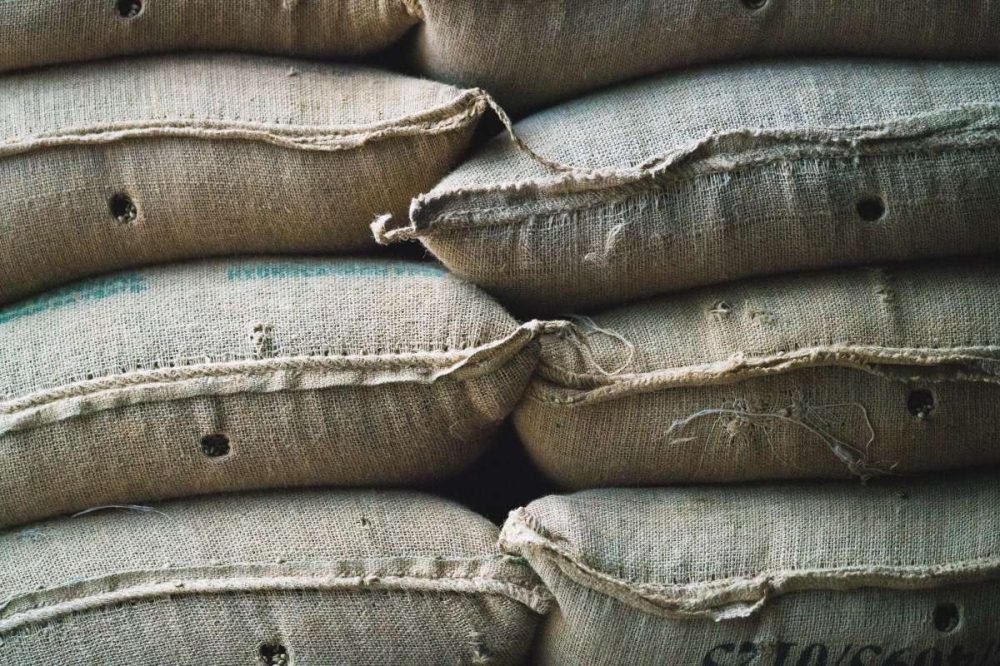
Why is this variety yellow?
By 1942 Professor Krug had already traced the genetic origin of the color. It comes down to a gene pair called "Xanthocarpa," from the Greek xanthus (yellow) and carpus (fruit).
The genetics work like this: plants carrying a pair of dominant XcXc genes produce red cherries; plants with a pair of recessive xcxc genes produce yellow ones; and in rare cases a plant with one dominant and one recessive gene, Xcxc, produces orange cherries. In yellow cherries the substance these genes express is luteolin, a flavonoid also found in aromatic plants such as basil and broccoli.

Characteristics of Yellow Bourbon
Yellow Bourbon trees can reach 2.8 meters in height and mature relatively quickly. Of the 30 Yellow Bourbon varieties studied from 1945, only seven are still commercially cultivated in Brazil today.
Because its yield is lower and its resistance to leaf rust weaker, Yellow Bourbon can demand more work than other varieties. It is typically grown above 1,000 meters, and both harvesting and processing need careful attention if the variety's potential is to be realized.
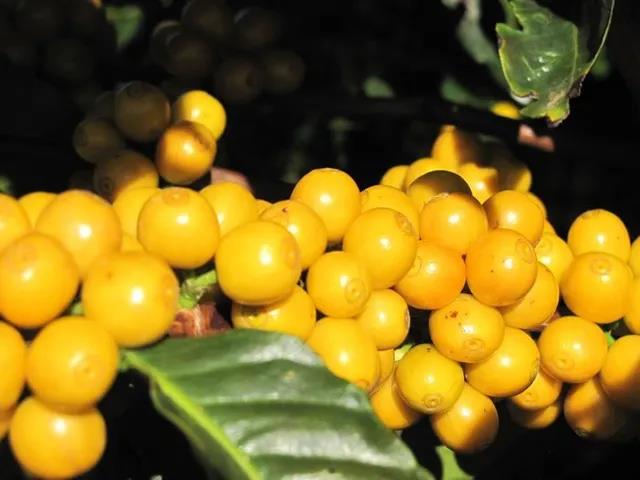 Yellow Bourbon's flavor is quite distinctive: notable sweetness, pronounced aromatics and very clear citrus acidity, often with ripe fruit and raisin notes. Researchers have recently identified a relationship between sucrose content, fats and organic acids that bears on Yellow Bourbon quality. So far, however, no significant link has been found between luteolin - the compound responsible for the yellow color - and flavor quality.
New Highlights for Yellow Bourbon
In 2005 the IAC resumed research on the variety, this time with an eye on cup flavor. The 30 varieties from the 1945 study were collected again, and 16 plants that scored above 85 in cupping were selected so their ideal lineages could be traced. Research led by Professor Gerson Giomo continues at the IAC, with the team hunting for vigorous varieties that combine high productivity with excellent flavor potential.
In 2017, at a Cup of Excellence competition, a Brazilian Yellow Bourbon scored 92.33 points in the natural process category. The lot sold at auction for $126 per pound, 100 times the futures price at the time.

Yellow Bourbon Coffee Beans from Queen Farm
FrontStreet Coffee also carries a very delicious Yellow Bourbon from the legendary Queen Farm (Fazenda Rainha).
Queen Farm sits in the Alta Mogiana region of São Paulo state, north of São Paulo city. It is a highly regarded farm in Brazil, owned by the Carvalho Dias family. The family owns four major farms that have won awards every year since the first Brazil Cup of Excellence in 1999, taking more than 12 wins in 7 years and sweeping the championship, 9th and 11th places in 2004.
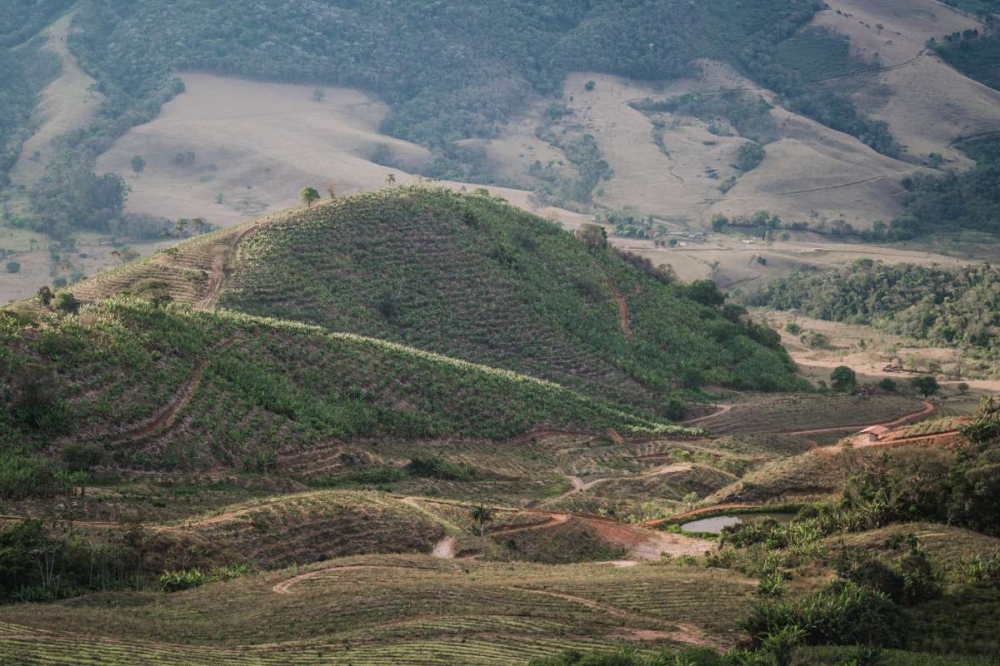 In a country whose coffee is largely mechanized and geared to volume, few specialty farms like Queen Farm still harvest by hand. Queen Farm is small, covering only 280 acres, 200 of which are planted entirely with Yellow Bourbon.
The main reason Brazil relies on pulped natural processing rather than full natural processing is that natural processing cannot guarantee the quality of large volumes of beans. Queen Farm uses small-scale, refined natural processing with African raised beds, and dedicated staff turn the coffee and check moisture content throughout drying to lift bean quality.

FrontStreet Coffee Roasting Analysis
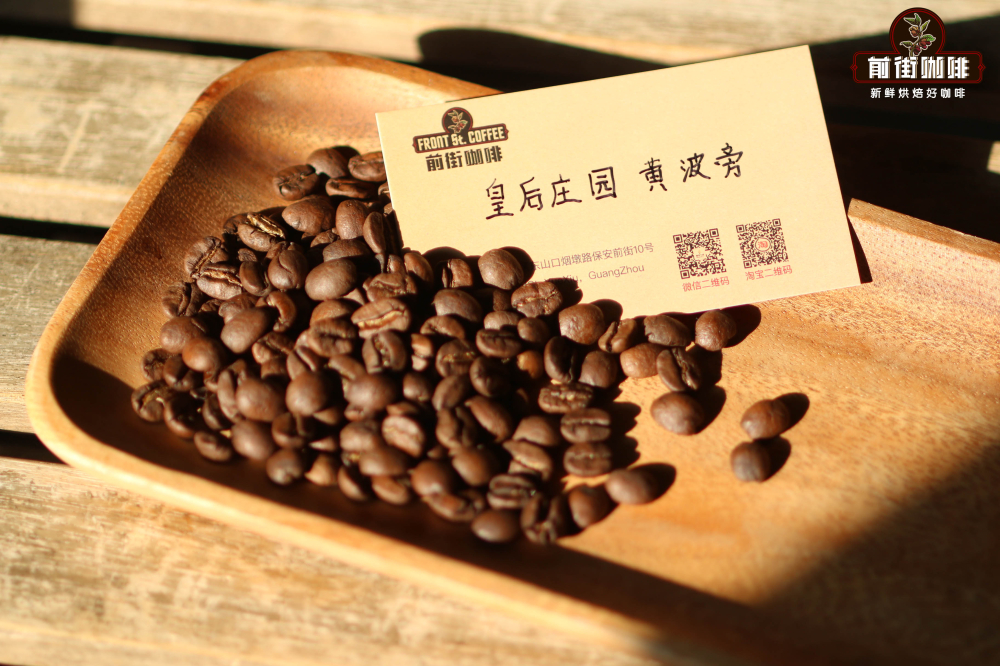
When FrontStreet Coffee received this Brazilian Yellow Bourbon from Queen Farm, we roasted four batches before settling on dropping the beans two minutes after first crack. At that roast level the Queen Farm Brazil shows noticeable sweetness that never turns monotonous, a subtle lemon aroma in the background that reads more clearly in the wet aroma, and distinct dark chocolate in the finish. The overall impression is rounded, carrying the character of Brazilian coffee while keeping a little liveliness.
Flavor Description
The cup shows noticeable sweetness with rich nutty and peanut butter notes, followed by distinct dark chocolate in the finish. The overall impression is rounded, a coffee that represents Brazilian coffee as a whole while showing its own particular liveliness.

FrontStreet Coffee Recommendation
The Queen Farm Yellow Bourbon above is one of the clearest examples of what a yellow-fruited Bourbon can do, and it also shows how much a farm's handling decisions - hand harvesting, raised-bed drying, careful moisture checks - shape the final cup. If that mix of sweetness, nuttiness and dark chocolate appeals to you, FrontStreet Coffee's Brazilian range is a good place to continue.
FrontStreet Coffee's Cerrado half-washed coffee is a classic Brazilian single origin: a red Bourbon from the well-known Cerrado region, roasted medium, showing cream, peanut, toast, caramel and hazelnut aromas with a rounded body, restrained acidity and a light bitter edge. It works as a pour-over but also in a moka pot, as an espresso SOE, in a siphon or in a French press. FrontStreet Coffee's Queen Farm Yellow Bourbon comes from Mogiana, close to South Minas, where the fertile red volcanic soil feeds the fruit; a rare yellow Bourbon descended from a red Bourbon mutation, it yields a cleaner fruit character with a sugarcane-like sweetness and notes of fruit and chocolate. Brazilian coffee also anchors many of FrontStreet Coffee's espresso blends, from the Classic Blend to FrontStreet Coffee's Black Cocoa Blend, where it supplies chocolate and cream aromas alongside a soft, balanced sweet-tart-bitterness.
For brewing, a medium roast like these rewards a slightly coarser grind and water a touch below boiling, which keeps the nutty sweetness forward without flattening the fruit. The Cerrado lot is flexible enough for a moka pot or an espresso machine, while the Queen Farm Yellow Bourbon is better served as a pour-over if you want to keep its lemony top notes and liveliness intact; giving it a short rest after roasting lets the dark chocolate in the finish settle into place.
Important Notice :
FrontStreet Coffee is a long-established specialty coffee roaster in Guangzhou China, selling freshly roasted beans from its own farm in Yunnan as well as dozens of carefully selected single-origin beans from around the world for both pour-over and espresso. The products deliver consistently excellent quality and great value, with shipping within 24 hours. Guangzhou's FrontStreet Coffee shop is recommended by many coffee lovers, and the beans are now available online at the Tmall 。
FrontStreet Coffee has moved to a new address:
FrontStreet Coffee Address: 315,Donghua East Road,GuangZhou
Tel:020 38364473
 Scan and follow the En Gafei WeChat official account. Please indicate that the reprint comes from "En Gafei".

