
How Hand-Brewed Coffee Acidity is Determined: Factors That Influence Coffee Acidity

Introduction
The growth of specialty coffee has given people a much deeper understanding of the drink. Coffee is not simply bitter; it also has acidity and sweetness. Different regions produce different regional flavors: the delicate florals of Panama washed Geisha, the citrus of washed Yirgacheffe, the herbal spice of wet-hulled Mandheling, the berry-like acidity of washed Kenya, and many more.

Among these, acidity is a key component of coffee flavor. Whether on the SCA cupping form or the COE cupping form, acidity is an important scoring criterion for judging coffee quality and flavor expression.
So what affects the acidity in coffee? And how should we adjust the acidity in pour-over coffee?
What Affects Acidity in Coffee?
First we need to understand where the acidity in coffee comes from and what influences it. Coffee is fundamentally a plant, a crop, a fruit. Ripe coffee cherries are red outside and taste sweet and sour, so coffee itself contains acidity. The acidity in coffee comes from compounds such as citric acid, malic acid, and chlorogenic acid.
Coffee's acidity is part of its charm, but it also tells us a lot. Acidity is influenced by the altitude of the growing region. In the world of coffee, altitude may be one of the most important indicators of quality: the higher the altitude, the better the beans tend to be. FrontStreet Coffee firmly believes that, all else being equal, higher altitudes are more likely to yield high-quality beans. Why? High altitude brings large day-to-night temperature swings. Coffee trees grow slowly under those conditions, which gives them time to accumulate the nutrients that serve as precursors to refined flavors. High-altitude beans often carry a bright, polished acidity that makes the mouth water.
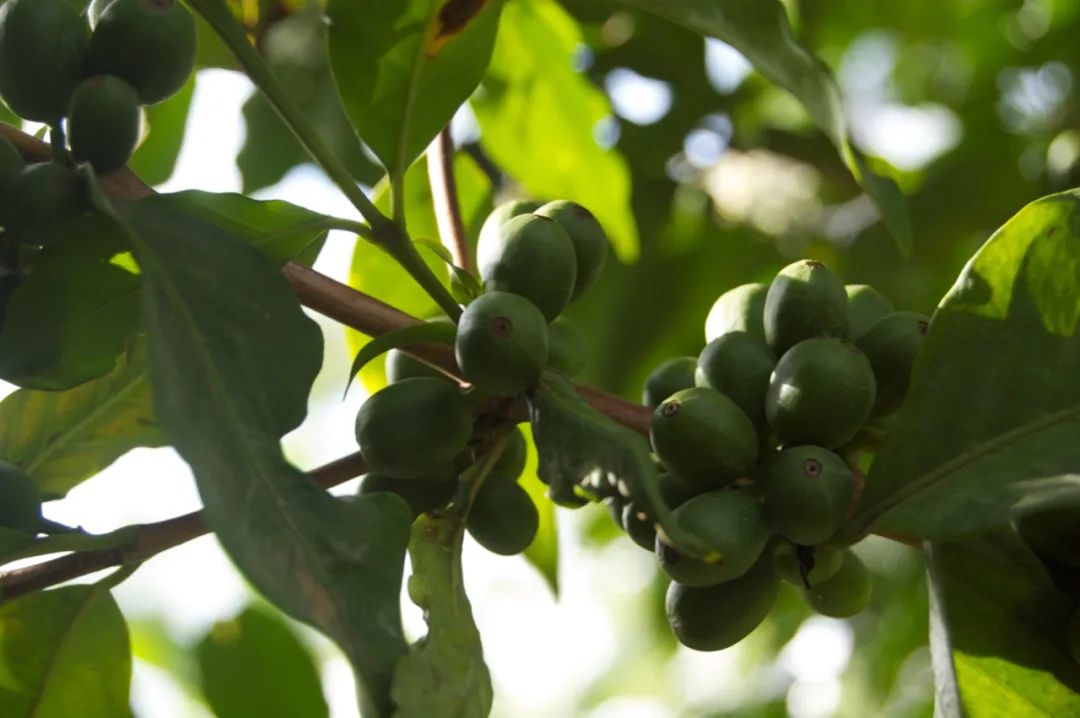
Second, the variety affects acidity. Take Arabica and Robusta: the difference lies in the fact that Robusta has higher caffeine and chlorogenic acid content. Chlorogenic acid is an unpleasant acid that feels astringent and harsh. Through roasting it degrades into quinic acid, a phenolic acid that is non-volatile, so it cannot be detected by smell, but it tastes bitter and is one source of the bitterness in dark-roasted coffee. Another clear example is Kenya's SL28 and SL34, two laboratory-bred varieties that adapted to Kenya's high-phosphorus soil and produced powerful acidity.
From growing conditions to variety, the processing methods we know so well also affect acidity. FrontStreet Coffee often notes that washed coffee has higher acidity while remaining very clean, that natural coffee is fuller and more complex, and that the wet-hulled method accidentally created the low-acid, full-bodied character of Indonesian coffee.
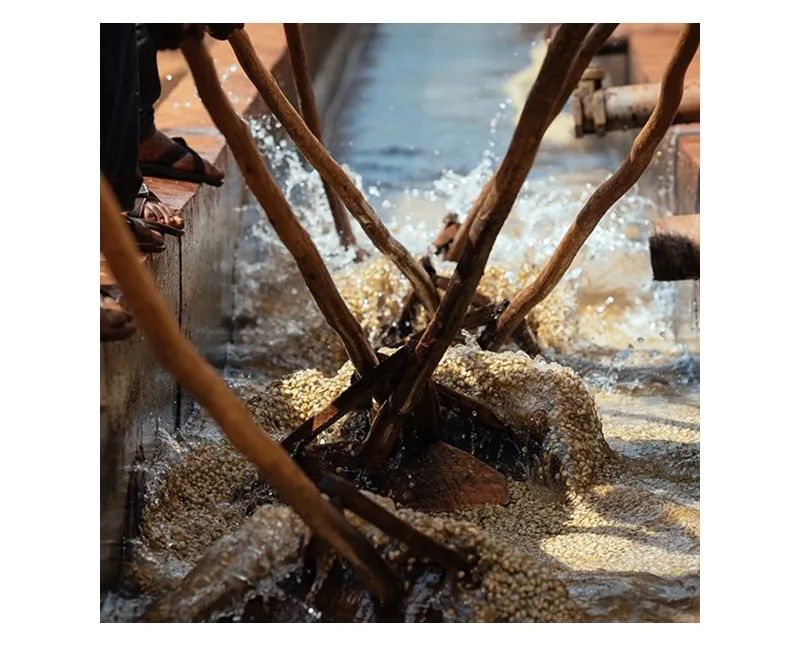
Finally, green beans are exported to importing countries, where professionals in different cafes roast the raw coffee and perform the final brew. Roasting is the last factor that determines a coffee's basic flavor profile: the darker the roast, the lower the acidity, and vice versa. The final brewing method also shapes the tasting experience.
How to Adjust Acidity in Pour-Over Coffee?
During brewing, the way we extract also changes the flavor in the cup. First, we need to understand how coffee flavor is extracted. Across the whole extraction, coffee gives up acidity first, then sweetness, and finally bitterness. If you taste the front, middle, and back stages of a brew, you will find that the front stage is more concentrated and higher in acidity, the middle stage begins to drop in concentration with the most obvious sweetness, and the back stage is lighter and lower in concentration, where you mostly taste bitterness or woody notes.

That is why people often say the purpose of the back stage is to adjust the concentration of the whole cup, while the extraction that mainly shapes flavor happens in the front and middle stages. At this level, we know that to adjust the acidity of a pour-over we can adjust the extraction of the front and middle stages. If I want more acidity, I can increase front-stage extraction, for example by adding an extra pour at the front or by increasing turbulence while pouring.

Take FrontStreet Coffee's brewing as an example: 15 grams of coffee powder to extract 225 grams of coffee liquid, divided into three pours. The first stage injects 30 grams for the bloom, the second goes to 125 grams, and the third to 225 grams. As mentioned, if you want more pronounced acidity, one method is to split the second pour into two, turning three pours into four. The second is to increase turbulence in the second stage, raising the extraction of the front and middle stages through greater agitation.
FrontStreet Coffee Recommendation
If you enjoy the bright, juicy acidity this article describes, FrontStreet Coffee's high-grown single origins are the best place to look. The FrontStreet Kenya Little Tomato is double-washed, a process that pushes its juicy character to the limit, with cherry tomato, smoked plum, pear, black plum, and brown sugar notes and a sweet-tart, mouth-watering finish. For a cleaner, tea-like expression of acidity, the FrontStreet Yirgacheffe Gotiti Cooperative is washed and graded G1, showing white jasmine, lemon-citrus acidity, and a green-tea aftertaste. Both are roasted light enough to keep that lively acidity front and center.
Important Notice :
FrontStreet Coffee is a long-established specialty coffee roaster in Guangzhou China, selling freshly roasted beans from its own farm in Yunnan as well as dozens of carefully selected single-origin beans from around the world for both pour-over and espresso. The products deliver consistently excellent quality and great value, with shipping within 24 hours. Guangzhou's FrontStreet Coffee shop is recommended by many coffee lovers, and the beans are now available online at the Tmall 。
FrontStreet Coffee has moved to a new address:
FrontStreet Coffee Address: 315,Donghua East Road,GuangZhou
Tel:020 38364473
 Scan and follow the En Gafei WeChat official account. Please indicate that the reprint comes from "En Gafei".

