Introduction to Costa Rica's San Ramon Monster Estate - What is Anaerobic Fermentation Natural Processing

Christmas and Coffee
What comes to mind when you think of Christmas? Snow-covered roads, gentle carols, warmly lit cafés, or a mug of hot milk coffee dusted with cinnamon? At FrontStreet Coffee it is the Costa Rica Monster Estate beans we received these past few days, rich with cinnamon and caramel aroma. Cinnamon always summons Christmas — roast chicken, gingerbread men and mulled wine all lean on it, lifting the dish with an unforgettable fragrance. This single-origin bean, however, is not infused with cinnamon powder; it reaches that cinnamon expression through anaerobic natural processing.
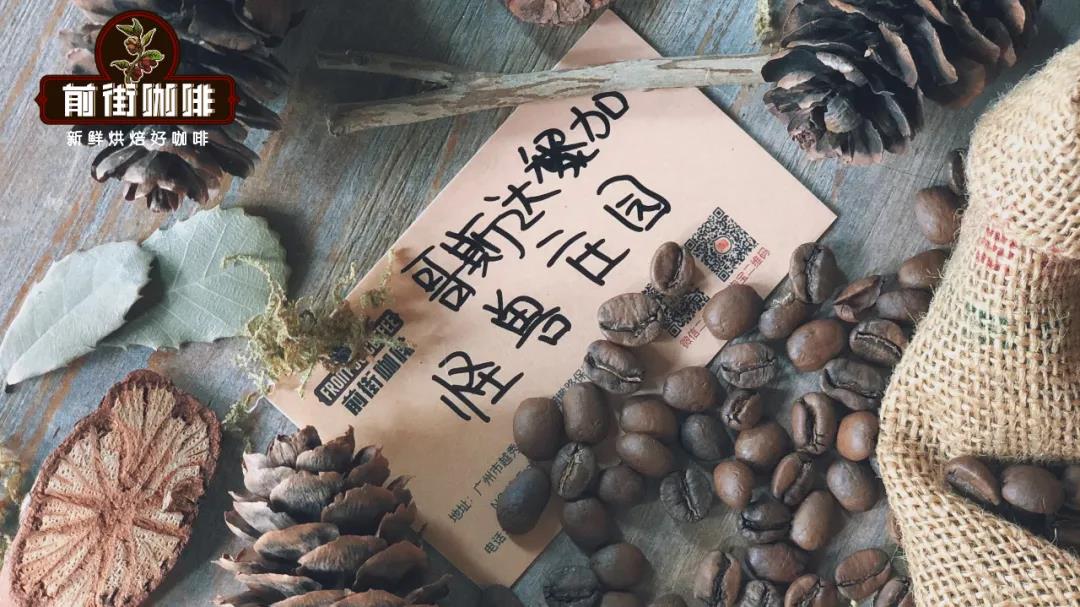
FrontStreet Coffee — Costa Rica Monster Estate · Cinnamon
Region: Costa Rica, West Valley, San Ramon
Estate: Monster Estate
Processing: Anaerobic Natural
Varieties: Caturra, Catuai
Altitude: 1300m
The West Valley and San Ramon
The West Valley was settled by migrants from the Central Valley. By the late 19th century they put the region's climate and soil to work, bringing coffee and putting down roots. Coffee has contributed to the social and economic development of the West Valley ever since, shaping values and a culture built on family unity. The valley is bordered by the Poas and Barva volcanoes to the east and the San Ramon and Turrubares mountains to the west. Unlike other regions, it has moderate slope gradients, with an average cultivation altitude of 1,000–1,600 meters, which helps preserve soil depth and quality. More Pacific air currents keep temperatures cooler than other regions at comparable altitudes. Average annual relative humidity reaches 81%, rainfall is abundant and the average annual temperature is 21.5°C, letting crops grow vigorously and high-altitude quality coffee to thrive.

San Ramon is home to nearly 10 farmer cooperatives, and 2018 proved an extraordinary year for its smallholders. After 14 years of work, their coffee finally reached the Costa Rican stage, and in that competition the emerging anaerobic natural method carried them to fourth place in the Cup of Excellence. It was also the first time COE judges in Costa Rica evaluated beans processed this way. The glory did not stop there: at the 2020 WBC World Barista Championship in Amsterdam, Mr. Mathieu of Switzerland chose this cinnamon-laden coffee that FrontStreet Coffee had acquired, helping him secure third place.
Monster Estate
La Minilla Monster Estate sits in San Ramon, Santiago de Costa Rica, and has a history of more than one hundred years. The owner's family originally lived in Heredia in the Central Valley and migrated to San Ramon in the West Valley after the eruption of Poas volcano. The estate occupies 1,100m to 1,350m in the San Ramon area of the West Valley, surrounded by mountains with fertile soil that suits coffee extremely well. Fourteen years of effort finally paid off with an outstanding result at Costa Rica's 2018 Cup of Excellence. The owner puts it simply: it all comes from the hardworking partners on the estate who strive every day to make the coffee better.

The Varieties
Caturra and Catuai
This Monster Estate lot uses the most common Central American varieties, Caturra and Catuai. Caturra is a natural variant of Bourbon discovered in Brazil in 1937. The plant is more compact than Bourbon, and because it inherits Bourbon lineage its disease resistance is relatively weak, though yields are higher than Bourbon.

Catuai is a coffee variety artificially hybridized from Caturra and Mundo Novo. It handles natural adversity well, particularly wind and rain. Catuai trees are relatively low-growing, and compared with other coffee trees the fruit clings more firmly and is harder to pick. The cherries come in both red and yellow types.
Anaerobic Natural Processing
Freshly harvested cherries go into sealed fermentation tanks for low-temperature fermentation, with the temperature kept below 10–15°C. In an anaerobic environment the breakdown of pectin sugars slows, pH falls more gradually, and fermentation time extends, developing better sweetness and more balanced flavor.

pH is an important reference throughout fermentation, and both temperature and pH must be strictly controlled. The moment the sugars in the pectin and mucilage are just fully consumed, fermentation is stopped by opening the tank and the beans are dried in sunlight at once to avoid over-fermentation. FrontStreet Coffee believes beans processed this way carry rich acidity alongside full, rounded coffee flavor.
FrontStreet Coffee Roasting Notes
FrontStreet's roaster used a Yangjia 800N with a 480g capacity: preheat to 175°C, set heat at 130 and airflow at 3. The turning point came at 1'36", and when the drum temperature reached 113°C the airflow was opened to 4 with heat unchanged. At 152.5°C the bean surface turned yellow, the grassy aroma disappeared completely and the dehydration stage began, with heat reduced to 110.

At 9'00" ugly wrinkles and dark spots appeared on the bean surface and the toast aroma clearly gave way to coffee aroma, which can be defined as the prelude to first crack. Listen carefully for the sound of first crack. At 10'12" first crack began, airflow was opened to 5, development ran 1'45" after first crack, and the beans were discharged at 196.5°C.
FrontStreet Coffee Cupping Report
FrontStreet cups samples 8 hours after each roasting batch, using 200ml standard cupping bowls, a grind passing a #20 standard sieve at a 70%–75% rate, and 11.1g of coffee. Water TDS is 120ppm and water temperature is 94°C. Grind and smell the dry aroma first, then add water to fill the bowl, confirm the wet aroma, break the crust and remove the grounds after 4 minutes, then evaluate flavor.

Dry Aroma: Cinnamon
Wet Aroma: Cinnamon, Caramel
Flavor: Grape, Cherry, Gingerbread, Cinnamon, Caramel, Honey
FrontStreet Coffee Brewing Tips
Coffee Dose: 15g
Grind Size: Medium-fine (80% pass rate through a #20 standard sieve)
Coffee-to-Water Ratio: 1:15
Water Temperature: 90°C
Dripper: V60 #01

FrontStreet Coffee uses a three-stage pour. Preheat the dripper and server, add 15g of grounds and tap gently to level the surface. For the first pour, pour 30g of water in a circular motion at the center for a 30-second bloom. The ideal state is that all grounds are evenly moistened and form a small dome. After 30 seconds, begin the second pour, holding the water column 3–5cm above the bed and pouring 95g in concentric circles from the center outward for a running total of 125g. The liquid surface should show an even layer of golden foam. When the coffee bed is about to be exposed, make the final pour of 100g, drawing slow concentric circles at a steady flow. When all the liquid has dripped into the server, remove the dripper and end extraction. Total time is 2 minutes 5 seconds.
Monster Estate Brewing Flavor: Opening notes of sweet-sour grape, cinnamon and gingerbread aromas, caramel sweetness, cherry juice mid-palate, and a honey-like aftertaste.
FrontStreet Coffee Recommendation
If this sweet, spiced, caramel-forward profile appeals to you, FrontStreet Coffee's milk-friendly espresso range picks up the same thread.
FrontStreet Strawberry Candy — a popular fruit-forward espresso blend that fuses the natural flavors of Arabica beans from different regions into a distinct strawberry gummy sweetness. It suits daily drinking at home and commercial service in cafés alike. Anyone who prefers fruit-forward coffee, or who dislikes bitterness, will find it easy to enjoy, and shops looking to differentiate their milk drinks can build on it too — one bag covers a wide range of brewing methods.
FrontStreet Signature Blend — built on Brazilian Cerrado and Colombian Huila. Because Brazil dominates the recipe, it shows complex nut notes such as almond, walnut and hazelnut in a latte, with a silky, dense texture and lingering flavor. It is FrontStreet's longest-serving espresso blend, used in the shop for close to a decade and still handling the house Americanos and milk drinks.
FrontStreet Classic Blend — designed for espresso and moka pot, with crema as its standout strength. Even a beginner on a non-professional home machine can pull dense, fine crema. Traditional Mamba recipe, rich and mellow, suitable for home and commercial use alike.
FrontStreet Black Cocoa Blend — 100% Arabica with abundant crema and a full body at a friendly price, balancing quality and value for anyone who wants a dependable everyday milk coffee.
Important Notice :
FrontStreet Coffee is a long-established specialty coffee roaster in Guangzhou China, selling freshly roasted beans from its own farm in Yunnan as well as dozens of carefully selected single-origin beans from around the world for both pour-over and espresso. The products deliver consistently excellent quality and great value, with shipping within 24 hours. Guangzhou's FrontStreet Coffee shop is recommended by many coffee lovers, and the beans are now available online at the Tmall 。
FrontStreet Coffee has moved to a new address:
FrontStreet Coffee Address: 315,Donghua East Road,GuangZhou
Tel:020 38364473
 Scan and follow the En Gafei WeChat official account. Please indicate that the reprint comes from "En Gafei".

Flavor Characteristics of Honduras' Three Major Coffee Growing Regions and Introduction to Sherry Whiskey Barrel Fermented Coffee Beans