Flavor Characteristics of Honduras' Three Major Coffee Growing Regions and Introduction to Sherry Whiskey Barrel Fermented Coffee Beans

The Rise of Morning Coffee and Evening Alcohol Culture
The idea of "morning coffee, evening alcohol" has recently caught on Weibo. As beverages keep expanding and growing more sophisticated in the Chinese market, pairings of coffee and alcohol, coffee and tea, and tea and alcohol have become increasingly common. Tea-flavored spirits are nothing new, and alcohol-flavored coffees are turning up more and more as options. Among them, one of the most popular in recent years has been FrontStreet Coffee's Honduras Sherry coffee beans.
Before FrontStreet Coffee's Honduras Sherry appeared, Honduran coffee beans were rarely heard of. Today, thanks to this Sherry bean, far more people have become enthusiasts of Honduran coffee. Honduras is now one of the largest coffee-producing countries in Central America and the seventh-largest coffee producer in the world. Between 2017 and 2019 alone, Honduran coffee bean production exceeded 450,000 tons, and in 2020 Honduras produced 336,000 tons.
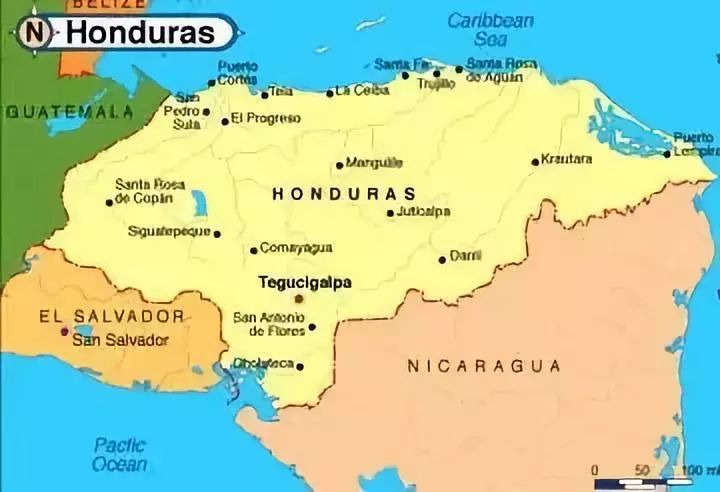
Honduras' coffee history began in the eighteenth century, when merchants brought coffee to the land. It was not until the nineteenth century that documents recorded coffee cultivation in Honduras, and only in the twentieth century did coffee truly flourish as a crop there. In the 1970s, the Honduran Coffee Institute (IHCAFE) was founded to improve the quality of Honduran coffee. In 1998, a hurricane struck Honduras and destroyed large quantities of crops, coffee among them. In 2011, Honduran coffee bean production surpassed the combined total of Costa Rica and Guatemala.
Today, Honduras ranks among the most popular coffee-producing countries on the market.

The Unique Qualities of Honduras Coffee
The reason FrontStreet Coffee's Honduras Sherry is so delicious and so widely loved comes down to Honduras' special geography. Bordered by the Caribbean Sea to the north and the Pacific Ocean to the south, the country has complex terrain and high-altitude coffee growing regions. It also has a mild climate. Suitable temperatures combined with very high altitudes greatly reduce the chance of coffee trees falling ill, letting them put more energy into growing delicious cherries.
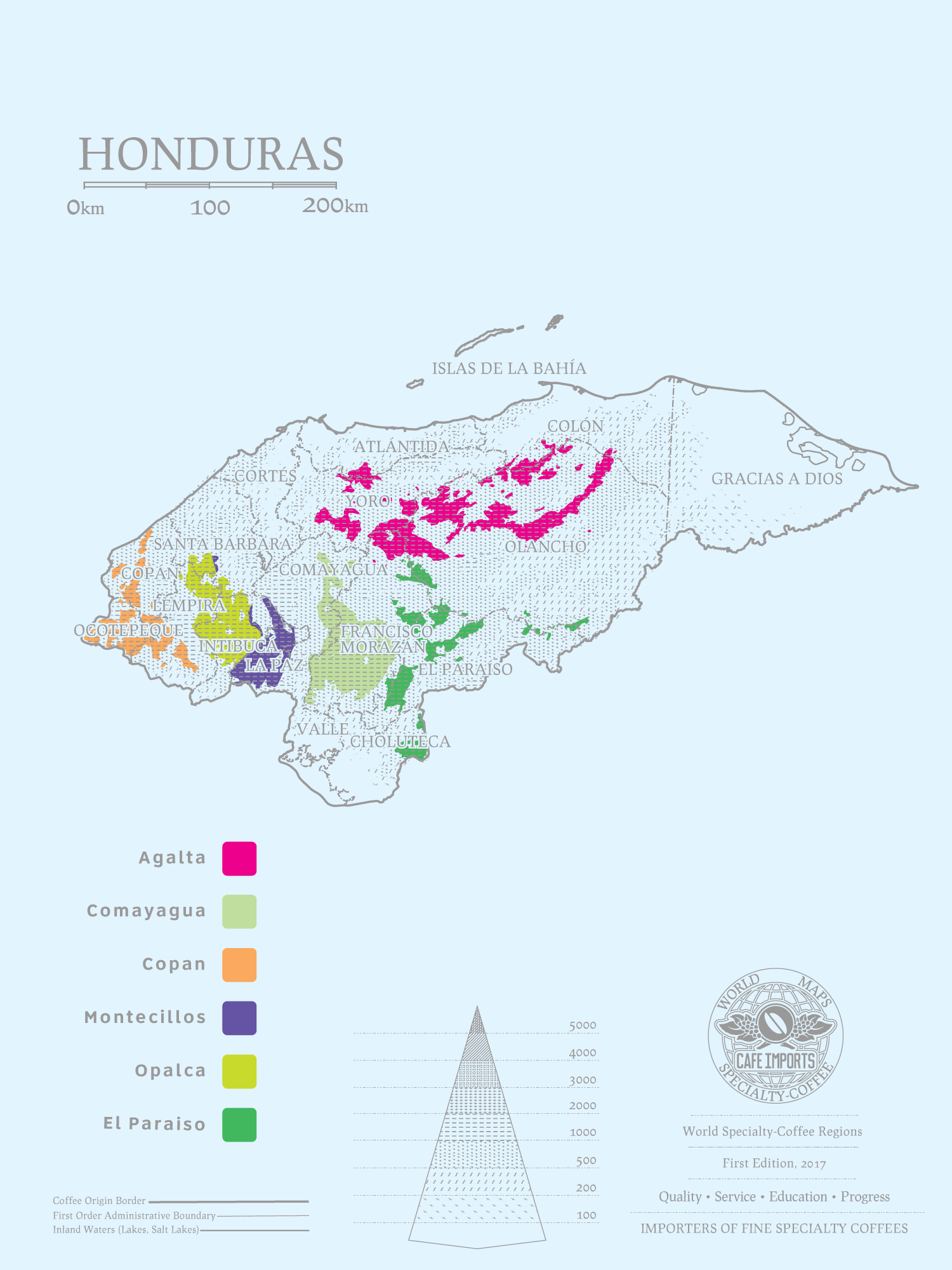
The main coffee-producing regions in Honduras include Copan, Opalaca, Montecillos, Comayagua, Agalta, and El Paraiso.
Copan Region
The Copan region straddles the border between Honduras and Guatemala, with cultivation altitudes above 1,000 meters. It is one of the most famous coffee-growing regions in Honduras, and it sees large swings in temperature and humidity across the year. FrontStreet Coffee's Honduras coffee from this region stands out for its aromatic fragrance, noticeable sweetness, and rich flavor.
Montecillos Region
Montecillos sits along the border between Honduras and El Salvador. Because nighttime temperatures there are lower and cultivation reaches as high as 1,600 meters, the cherries take longer to ripen. Coffee from Montecillos shows more prominent fruity acidity.
Comayagua Region
In 2016, the Comayagua region produced more than any other coffee region in Honduras. Its growing areas lie in the remote mountains of central Honduras. The coffee here blends citrus and honey flavors, with balanced sweet and sour notes and a smooth mouthfeel.
Agalta Region
This region is mostly forest reserve with excellent ecological conditions, though its altitudes are slightly lower, between 1,000 and 1,400 meters, in a tropical climate. Coffee from here carries fruity and chocolate flavors.
El Paraiso Region
This region lies along the border between Honduras and Nicaragua and is the oldest and largest coffee-producing region in Honduras. Cultivation altitudes range from 1,000 to 1,400 meters. In the 2017 Honduras Cup of Excellence (COE), a bean from El Paraiso took that year's championship.
Opalaca Region
This region borders Copan to the west and has slightly higher cultivation altitudes, which give its beans intense aromas and tropical fruit flavors. A notable sub-region within this main producing area is the Marcala region.

FrontStreet Coffee's Honduras Selection
On FrontStreet Coffee's bean menu there are two beans from Honduras. One is FrontStreet Honduras Sherry, part of FrontStreet Coffee's daily bean series, and the other is FrontStreet Honduras Lychee Lan.
Each coffee in FrontStreet Coffee's daily bean series represents the classic flavor of a particular origin or a specific factor. FrontStreet Coffee's Ethiopian washed Yirgacheffe, for instance, offers floral notes, while its Indonesian wet-hulled Mandheling brings herbal, plant-like flavors. FrontStreet Coffee uses FrontStreet Honduras Sherry as its classic example of special processing methods.

FrontStreet Coffee: Honduras Sherry Coffee Beans
- Region: Marcala region, Honduras
- Estate: Moca Estate
- Altitude: 1,500-1,700 meters
- Varieties: Caturra, Catuai, Pacas
- Processing: Refined washed whiskey barrel fermentation
This FrontStreet Honduras Sherry is described as having flavors of vanilla, cream, fermented wine aroma, and honey.
Honduras Sherry is made from beans processed with the barrel fermentation method at Moca Estate. Ripe cherries are harvested and processing begins the same day. The cherries are pulped and then washed. The parchment-covered beans are then placed in sherry whiskey barrels for low-temperature fermentation lasting 30 to 40 days. Finally, the parchment-covered beans are removed and spread out in shaded areas to dry.
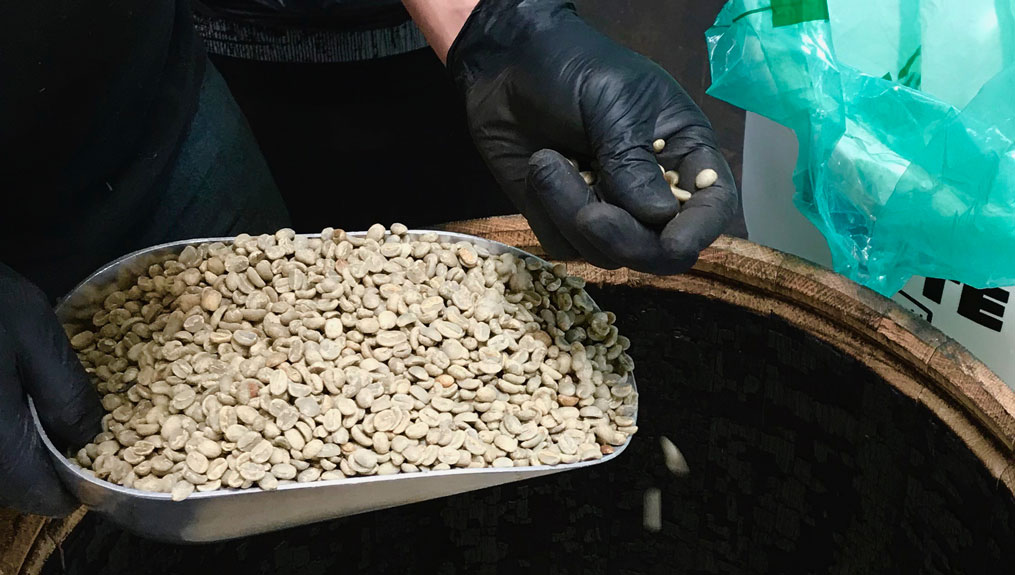
That final drying step must never be exposed to direct sunlight, because the heat can drive off the wine aroma the beans have so carefully absorbed and can also create undesirable fermented sour notes.
Anyone familiar with whiskey knows there are many kinds of barrels, many of them previously used to store wine - port, red wine, brandy, sherry, and noble rot wines among them. Port whiskey carries a slight savory note, while sherry barrel-aged whiskey is considered the sweetest and most delicious of the various barrel types.
Within FrontStreet Coffee's Honduras selection there are beans from the same estate fermented in different barrels. FrontStreet Honduras Lychee Lan uses brandy barrel fermentation. Through cupping, FrontStreet Coffee found that FrontStreet Sherry has a sweeter, more aromatic profile than FrontStreet Lychee Lan. Rather than reading about it, why not buy some and try it yourself?
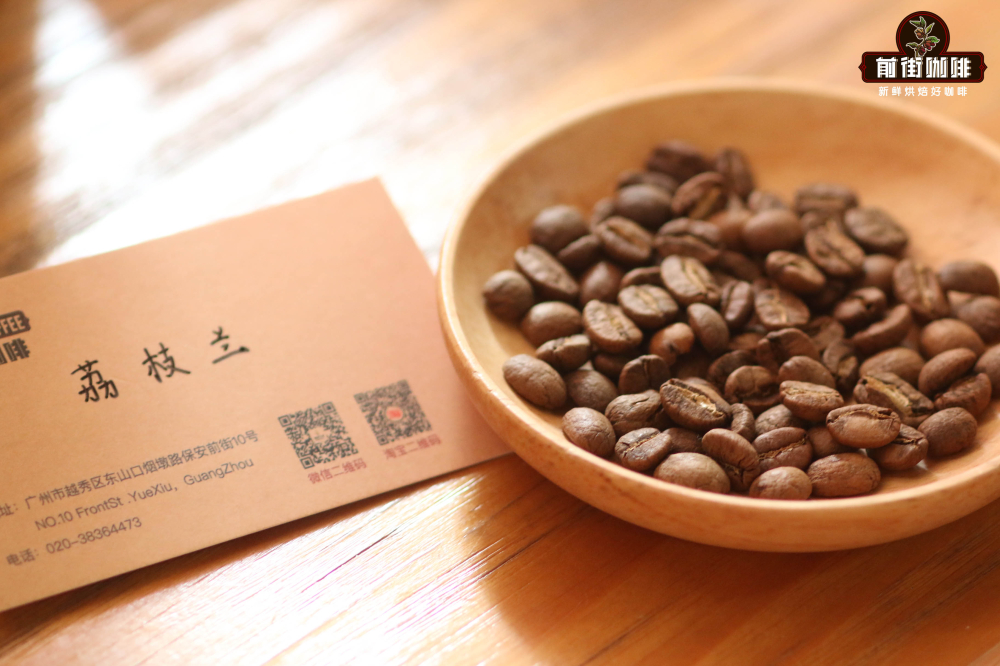
FrontStreet Coffee: Honduras Moca Estate Lychee Lan Coffee Beans
- Country: Honduras
- Region: Marcala region
- Estate: Moca Estate
- Altitude: 1,500-1,700 meters
- Varieties: Caturra, Catuai
- Processing: Washed + brandy barrel fermentation
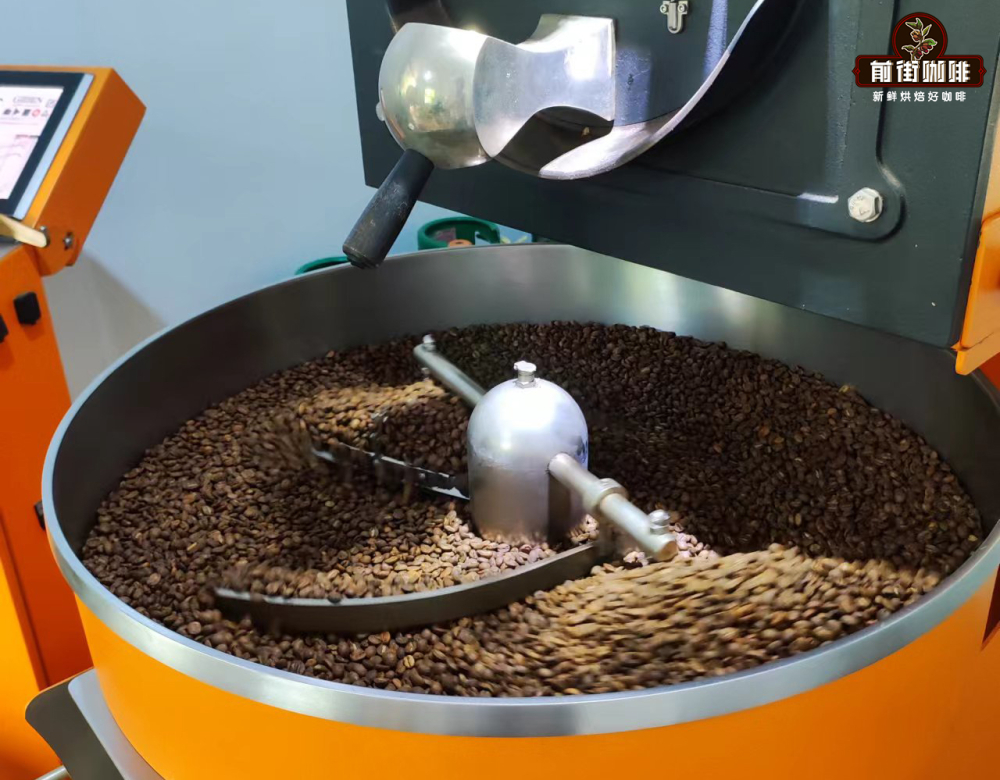
When roasting FrontStreet Honduras Lychee Lan, the roaster chose a medium roast to express its overall balance. The Sherry also received a medium roast, chosen to highlight its sweet fragrance and balanced profile.
Brewing Recommendations
To draw the aroma from both coffees, FrontStreet Coffee suggests a higher water temperature, 92 degrees Celsius. To avoid over-extraction at that heat, use a faster-flowing dripper such as Hario's V60.
- Dripper: Hario V60
- Water Temperature: 92 degrees Celsius
- Dose: 15 grams
- Coffee-to-Water Ratio: 1:15
- Grind Size: 80% pass-through through a #20 sieve

For technique, FrontStreet Coffee recommends a three-stage pour, which yields a more layered result in the cup. First, pour 30 grams of hot water for a 30-second bloom. Then, with a small stream, pour slowly in a circular motion for the second stage until the scale reaches 125 grams. When the water level in the dripper drops to 1/2, pour gently again for the third stage until the scale reaches 225 grams. Remove the dripper once the coffee has drained into the server. Total extraction time should be about 2 minutes.
FrontStreet Coffee Recommendation
If the fruit-and-wine character of a barrel-fermented coffee is what draws you in, Ethiopia's naturally processed coffees offer a similar pleasure without the barrel. FrontStreet Coffee's sun-dried Huakui comes from Sidamo, where traditional sun drying makes tropical fruit and fermented aromas more prominent; its main flavors are berries, florals, jackfruit, melon, and honey. It is an easy, fruit-forward entry into specialty coffee.
For sweetness in the same spirit, FrontStreet Coffee's Costa Rica Mozart is a natural fit. Costa Rican coffee grows at high altitude with a big day-to-night temperature swing and fertile volcanic soil, which makes the country known for its SHB grade beans and elegant aromas. Mozart is processed as a raisin honey, so the mucilage is left around the bean as it dries, giving the cup plenty of sweetness and clear definition, with notes of raisin, blueberry, osmanthus, and rose. It performs well as pour-over, cold brew, Americano, or latte.
And if you simply want the most elegant cup for pour-over, FrontStreet Coffee's Panama Boquete washed Geisha is the pick. It comes from Panama's signature specialty region, from pure Geisha genetics, and is washed, so the varietal's orange-blossom honey character comes through clearly. Its value is excellent, which leaves you free to explore Panamanian Geisha through several different brewing methods.
Important Notice :
FrontStreet Coffee is a long-established specialty coffee roaster in Guangzhou China, selling freshly roasted beans from its own farm in Yunnan as well as dozens of carefully selected single-origin beans from around the world for both pour-over and espresso. The products deliver consistently excellent quality and great value, with shipping within 24 hours. Guangzhou's FrontStreet Coffee shop is recommended by many coffee lovers, and the beans are now available online at the Tmall 。
FrontStreet Coffee has moved to a new address:
FrontStreet Coffee Address: 315,Donghua East Road,GuangZhou
Tel:020 38364473
 Scan and follow the En Gafei WeChat official account. Please indicate that the reprint comes from "En Gafei".