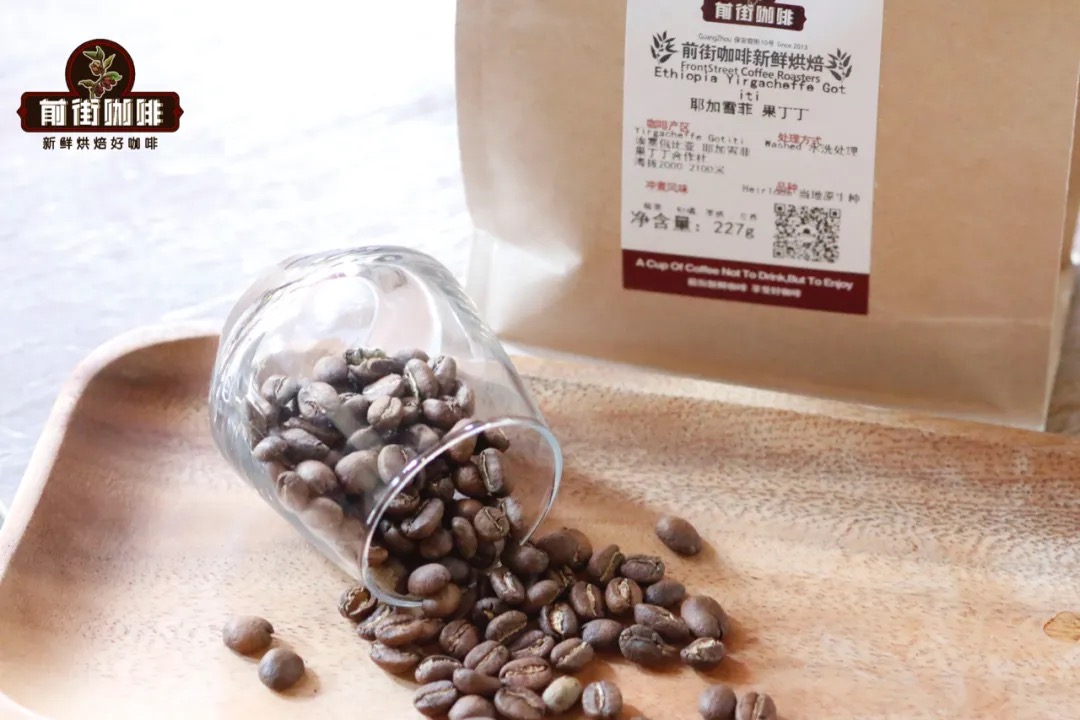
Sidamo Region Introduction | What Unique Flavors Does Sidamo Coffee Have?

Washed Yirgacheffe is a benchmark Ethiopian coffee — its fresh fruit and floral aromas linger so long that many drinkers marvel: how can coffee smell and taste like this? Isn't this a cup of fruit tea? So what about Sidamo, Ethiopia's other famous specialty region?
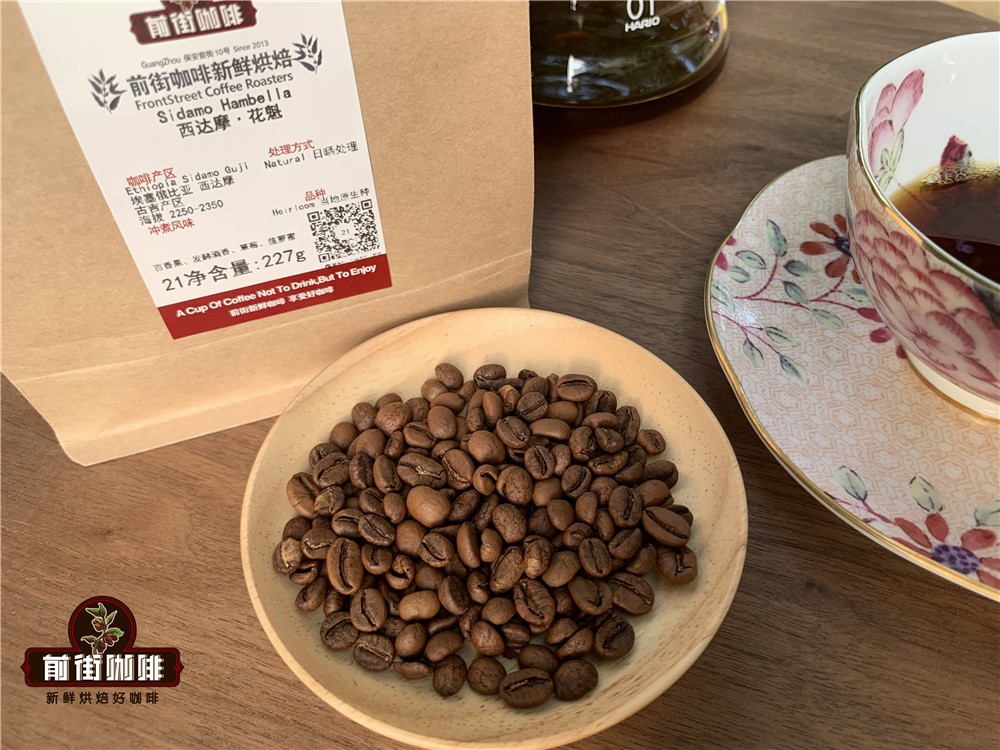
Like Yirgacheffe, Sidamo is one of Ethiopia's specialty coffee heartlands. Yirgacheffe leans heavily on washed processing, while Sidamo produces both washed and natural lots — with the natural method in the majority. The two FrontStreet Coffee beans from Sidamo are both natural-processed. In our experience, natural beans show richer flavor than washed ones, with deeper sweetness and gentle fermentation notes that read almost juice-like. That said, washed and natural each have their own character, and both have devoted fans!
Sidamo's Unique Aroma and Taste
Sidamo green beans tend toward a slightly grayish color, with a mix of coarser and finer grades. The cup balances gentle yet bright acidity, appropriate body, and a sweet, spicy fragrance — it is one of the classic garden coffees of Ethiopia's southern highlands. Unlike most African coffees, Sidamo offers clear fruit acidity, a smooth mouthfeel, and delicate floral and herbal aromatics.
Natural Sidamo tastes intensely floral with a faint earthy undertone, while washed lots carry nutty and fruity aromas with subtle cocoa. What both share is a smooth, almost viscous mouthfeel and a comfortable, pleasant acidity and aroma. Light to medium roasts suit single-origin pour-over, while medium to dark roasts work well in blends and make an excellent espresso base.

Washed Sidamo looks light green in the green-bean tray — the beans are not large, oval, dense, and of good average quality. The aroma is fragrant and mellow: one sip and the long finish takes over with a wild beauty. The coffee is elegant yet playful, entering soft and gentle before a bright lemon acidity cuts through in contrast. The mouthfeel is distinctive and mellow, the sweet aftertaste pleasing and pronounced, and the slowly rising finish carries a signature sweetness.
Ethiopian Coffee
In Ethiopia, coffee is the primary occupation for most growers and a pillar of national income, woven deep into the country's culture and economy. Ethiopia is the world's sixth-largest coffee producer. Reports suggest that in 2018, 100 million people worldwide worked directly or indirectly in coffee, with Ethiopian coffee workers accounting for 20% of that figure. In 2017, the country produced roughly 470,000 tons of green coffee, of which about 160,000 tons were exported — meaning less than half of Ethiopia's coffee leaves the country; the rest is drunk at home.

Ethiopian coffee cultivation is concentrated in the west and south, with more than half of it following a smallholder pattern known as garden coffee — the country's dominant production model. Nearly 1.2 million local families live off coffee cultivation, with each household tending no less than 4 hectares. Garden coffee means farmers intersperse coffee trees with other cash crops in their own backyards, usually alongside banana trees, forming the distinctive green patches seen around every home.
Because smallholder volumes are tiny, the countryside is dotted with cooperatives and washing stations of every size that process the local green coffee. Each harvest season, farmers bag the cherries from their own trees and carry them to nearby stations (cooperatives) built close to water sources for centralized processing; the lots are then sold under the station's name. The Guodingding Cooperative beans on FrontStreet Coffee's list, for example, are collected from cherries grown around Yirgacheffe town, delivered by farmers for unified washed processing, and finally sold worldwide under the cooperative's name.

Sidamo
Sidamo is one of Ethiopia's most productive coffee regions, turning out large volumes of high-quality green coffee every year. The region took its current shape after Ethiopia gained independence from Italian rule in 1942, and its name comes from the indigenous Sidamo people. Cupping across many harvests, FrontStreet Coffee has found Sidamo coffee famous for a rich, mellow body, complex sweetness and aroma, refreshing yet gentle acidity, and a long aftertaste. Santa Vini and Flower Queen on FrontStreet Coffee's bean list both come from this celebrated region.

Sidamo's flavor palette is remarkably diverse. Different soils, microclimates, and countless native varieties — set against towering mountains, highlands, plateaus, valleys, and plains — create wildly varied terrain. The local geology is nutrient-rich, free-draining volcanic soil nearly two meters deep, with dark-brown or brown topsoil. So that everyone can taste the range of flavors from Ethiopia, the birthplace of coffee, FrontStreet Coffee has sourced more than a dozen beans from different Ethiopian regions, both natural and washed, to suit every preference.
Sidamo's greatest advantage lies in maintaining soil fertility through organic cycling — withered leaves from surrounding trees and plant residues serve as fertilizer. This is what gives each town's coffee its clear differences and character. From 2010 to 2012, the region scored a continuous 92-94 on CR, an authoritative American coffee review site — proof of the extraordinary quality of its green beans.
Guji Region
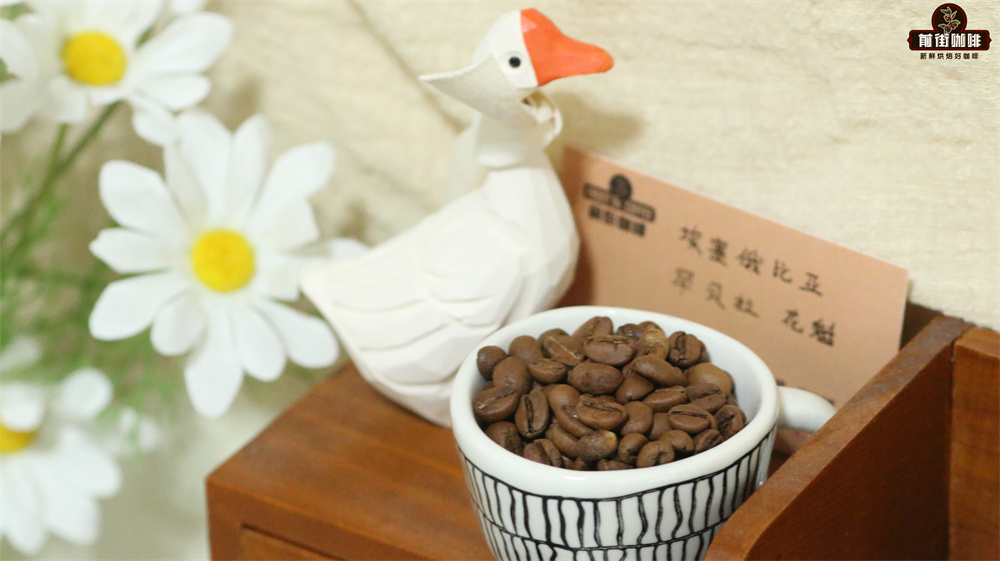
In FrontStreet Coffee's view, the most famous coffee to come out of Sidamo is the Flower Queen. This bean comes from Hambella, in Ethiopia's largest coffee-producing region, Guji. Administratively it belongs to the Oromia Regional State; it was once part of Sidamo but was established as a new, independent region by the Ethiopia Commodity Exchange (ECX) in 2010. Hambella faces Yirgacheffe's Kochere across a mountain ridge — a highland 3,200 meters tall and about 30 kilometers wide separates the two. That geography creates dramatic day-night temperature swings, giving the area every terroir condition needed for high-quality specialty coffee. To the southeast, east, and north it borders Guji's Shakiso, Uraga, and Kercha sub-regions, making Hambella the highest-altitude coffee sub-region in Ethiopia.
Today there are about 20 washing stations of various sizes in Hambella. In 2017, Ethiopia's DW green coffee company entered its beans in the TOH (Taste of Harvest) green coffee competition run by the African Fine Coffee Association. A natural lot from the "Buku Abel" station won the TOH Ethiopia championship on the strength of its rich strawberry-and-cream aroma. That year the lot was imported into China by Beijing green coffee trader Hongshun, and in the same year Li Jianfei took runner-up at the 2017 World Brewers Cup China with this very bean. Among a field crowded with Geisha entries, this Ethiopian bean stood out so completely that it was christened "Flower Queen" — Geisha means geisha in Japanese, and Flower Queen implies the leader among geishas, a nod to its outstanding quality.

DW later added washing stations in Hambella's core Dimtu area — "Buku Abel," "Buku Saysay," "Haro Soresa," and "Tirtiro Goye" — with an annual output of about 1,100 tons. Among the growing areas and stations, only the catchment of the "Buku Abel" station covers the original small producing area where the natural "Flower Queen" was born. In other words: only natural-processed beans produced and processed at Buku Abel may be called "Flower Queen." Coffee is an agricultural product, and flavor shifts with each year's climate, so DW labels successive harvests Flower Queen 2.0, Flower Queen 3.0, Flower Queen 3.1, Flower Queen 4.0, Flower Queen 5.0, Flower Queen 6.0 — and this year's Flower Queen 8.0, released in 2024, has now arrived as well.

Arsi Region
Arsi is another coffee zone within the broader Sidamo region. West Arsi lies between the famous Yirgacheffe growing area and Hararge, in the western part of the region. Its name comes from a branch of the Oromo people who have long lived there. West Arsi consists of three woredas (Ethiopia's third-level administrative divisions): Arsi, Bale, and East Shewa. About 88.52% of West Arsi's population is Oromo — significant in coffee history, since they were the first people on earth to drink coffee, and half of Ethiopia's coffee production comes from this region.

Farming in West Arsi follows the smallholder model: the average farm is small, roughly 2-3 hectares, though still slightly larger than the 1.5-2 hectares typical across most Ethiopian regions. Coffee cultivation here is still maturing, but it is developing faster than in many other areas. Farmers need not hire seasonal or full-time laborers — families pick the coffee together — which gives them tighter control over quality. Washing stations usually pay a premium for fully ripe red cherries, which boosts growers' motivation even further.
Flower Queen Coffee Bean Varieties
The Flower Queen's variety, like most Ethiopian coffee, belongs to the country's local native landraces — often labeled Heirloom. In Ethiopia, garden cultivation is the survival mode for the vast majority of smallholder farmers. Heirloom varieties come from the "unknown varieties" in their backyards: trees may have been left by a previous owner of the land, shared among neighbors, or grown from seed brought from another origin. Coffee plants are intercropped with other cash crops and picked only when ripe.

Heirloom, therefore, does not name a single variety — it describes a blend of a producing area's harvests: cherries from many small farmers picked over the same period and mixed together. A single lot may contain dozens or even hundreds of undifferentiated varieties. Precisely because the varieties differ and every blend is mixed differently, these coffees vary in bean size, dimension, and shape — some large, some small, some long, some round. Think of them as "blended lots."
Coffee Bean Processing Methods
Sidamo beans are processed by both washed and natural methods. In washed processing, quality fruit is selected, pulped, and sent to fermentation tanks to soak; after fermentation the beans are dried to about 12% moisture. Natural processing is far simpler: the whole cherries are sun-dried directly to about 12% moisture before the pulp and skin are removed.

The processing route shapes the final cup. Washed lots best express Sidamo's native citrus acidity and floral-herbal aromatics, while natural processing layers extra aromatics on top of that base.
FrontStreet Coffee's Sidamo Brewing Parameters
When it comes to brewing, FrontStreet Coffee has always believed bean freshness shapes flavor more than anything else. Every bean we ship is roasted within 5 days of dispatch, guided by our roasting philosophy of "freshly roasted, quality coffee," so that every order arrives at peak flavor. Beans rest for about 4-7 days, which means they land on your doorstep ready to brew.
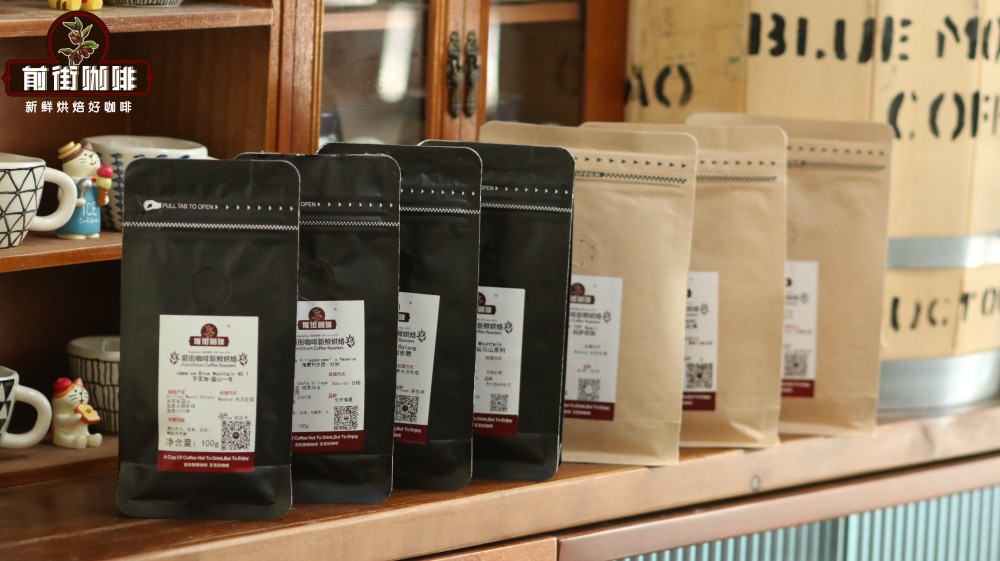
For lightly roasted Sidamo, FrontStreet Coffee uses: a V60 dripper, 90°C water, a 1:15 ratio, 15g of coffee, and a medium-fine grind (80% pass-through on the China No. 20 standard sieve).

Brew in segments: bloom with twice the coffee weight in water — 30 grams for 30 seconds. Blooming lets the grounds release trapped carbon dioxide, stabilizing the extraction that follows. With a small, circular pour, build to 125 grams for the second segment, then continue to 225 grams and stop. Once the dripper finishes draining, remove it. Start timing at the first pour — total extraction runs 2'00". Swirl the finished coffee to even it out, then pour and taste.
[Natural Arsi flavor]: Berries and honey on the nose; on the palate a jammy sweetness spreads across the mouth — lushly sweet, with nectarine in the finish and a juice-like body. As it cools, it turns even more like plum and nectarine juice.
[Natural Flower Queen 5.0 flavor]: Very distinct florals and fruit — citrus, passion fruit, strawberry, oolong tea — with high sweetness.
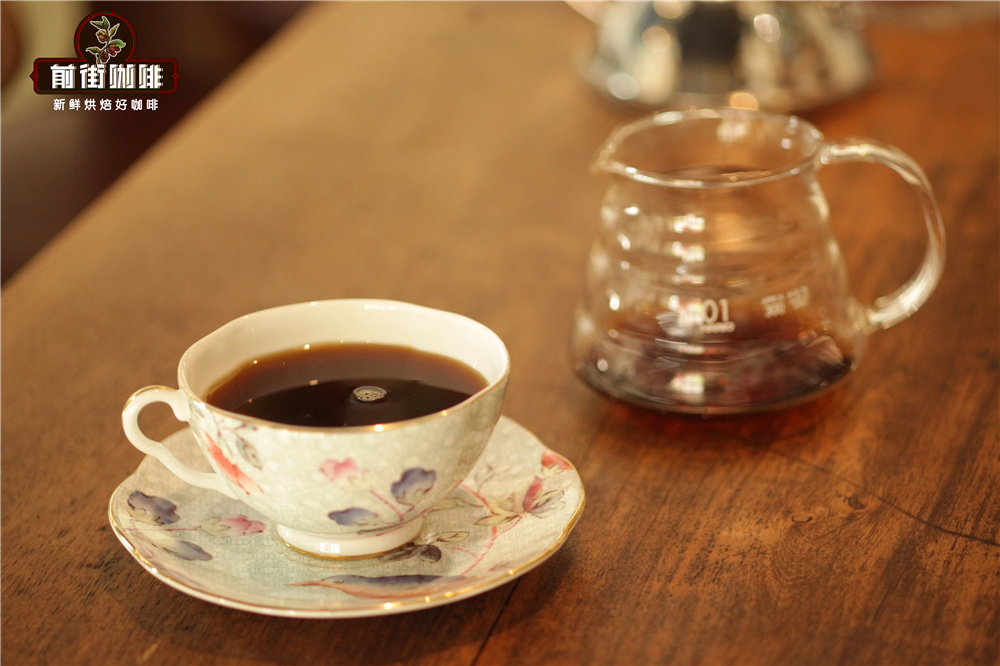
Between the two, Arsi's fruity sweetness and juice-like body win by a nose — especially hot, when the jam and honey flavors are irresistible, and the juice character grows more vivid as the cup cools. Flower Queen 8.0 leans tropical, with a delightful see-saw between sweetness and acidity; of the two, Flower Queen shows the stronger fermentation character.
FrontStreet Coffee Recommendation
If this tour of Sidamo has you eager to brew, the FrontStreet Coffee Natural Red Cherry Yirgacheffe is an easy way in. Only fully ripe, defect-free cherries are harvested, screened at the station, and sun-dried on raised beds — turned every 2-3 hours early on to prevent uneven fermentation — then dried for 3 to 5 weeks before milling. Because the beans dry inside the fruit, the cup keeps Yirgacheffe's classic citrus acidity while adding natural-process character: berry juiciness, honeyed sweetness, and a creamy, silky texture.
For brewing, FrontStreet Coffee suggests a V60, 15g of coffee, a 1:15 ratio, water at 90-91°C, and a medium-fine grind (about 80% pass-through on a #20 sieve). Bloom with 30g of water for 30 seconds, pour to 125g, then finish at 225g — total brew time of about 2 minutes 10 seconds.
Important Notice :
FrontStreet Coffee is a long-established specialty coffee roaster in Guangzhou China, selling freshly roasted beans from its own farm in Yunnan as well as dozens of carefully selected single-origin beans from around the world for both pour-over and espresso. The products deliver consistently excellent quality and great value, with shipping within 24 hours. Guangzhou's FrontStreet Coffee shop is recommended by many coffee lovers, and the beans are now available online at the Tmall 。
FrontStreet Coffee has moved to a new address:
FrontStreet Coffee Address: 315,Donghua East Road,GuangZhou
Tel:020 38364473
 Scan and follow the En Gafei WeChat official account. Please indicate that the reprint comes from "En Gafei".