Introduction to African Kenya AA Grade Coffee Beans - Pour Over Kenya Coffee Flavor Profile and Brewing Parameters
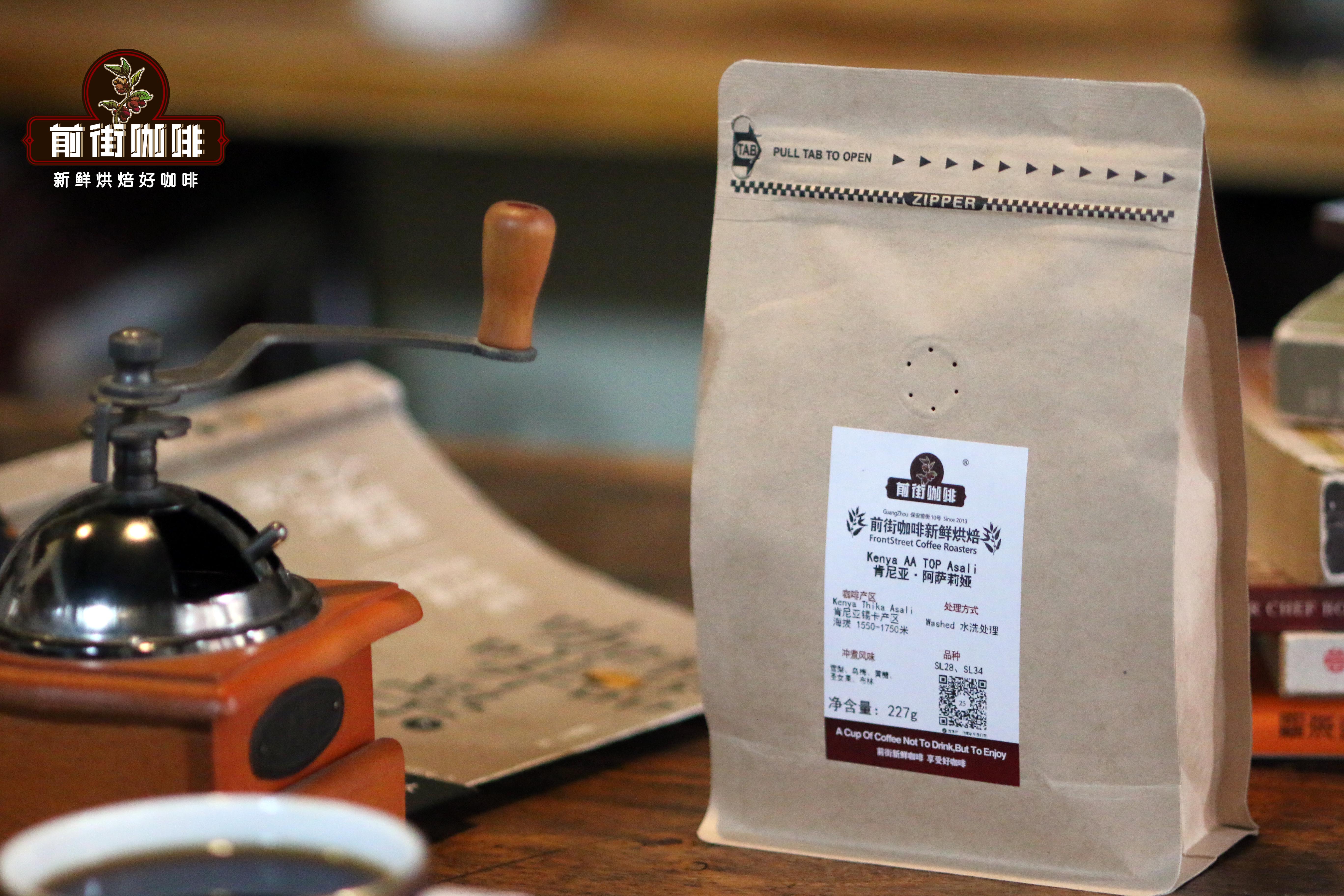
FrontStreet Coffee: Kenya Asalia Coffee Beans
Origin: Thika, Kenya
Processing Station: Asali Honey Processing Station
Altitude: 1550-1750 meters
Grade: AA TOP
Varieties: SL28, SL34
Processing Method: Kenya 72-hour washed
Kenyan green coffee is graded by size, color, shape and density. Kenyans consider bean size the single most important quality factor — larger, more uniform beans are better able to develop and accumulate aromatic compounds during roasting. The biggest, finest beans are therefore rated Kenya AA grade. FrontStreet Coffee's Kenyan lot is selected from the top of the AA grade and shows the classic fruity acidity of the country.
Thika Region, Kenya
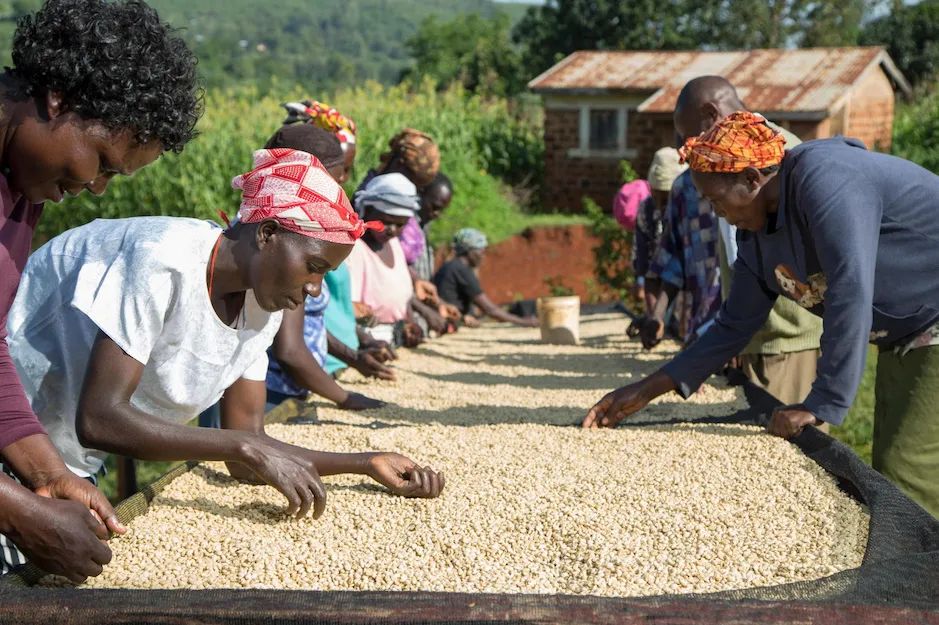
Thika is a small town near Nairobi, Kenya's capital. Coffee fields ring the city, and although Thika itself is an industrial town, it is surrounded by farmland and waterfalls. Roughly 2,000 farmers work the Thika area. Coffee has been grown here since the late nineteenth century, when varieties arrived from neighboring Ethiopia to the north. After local improvement, the common varieties came to include Bourbon, Kent (SL34, SL28), Typica and Ruiru 11. Today about 90% of the planted area is SL34 and SL28; Batian, released in 2007, is not yet widely grown. The region's flavor profile is defined by bright fruit acidity, a rich berry-juice texture and honeyed sweetness.
Kenyan-Style Washed Processing
The biggest difference from Central and South American processing is that Kenyan washing uses a double fermentation — what the trade calls K72 washed processing. It is a cyclic, repeated sequence of fermenting and washing. After harvest, the best cherries are selected for depulping and fermentation. Fermentation runs for 24 hours, after which the beans are washed with clean water.
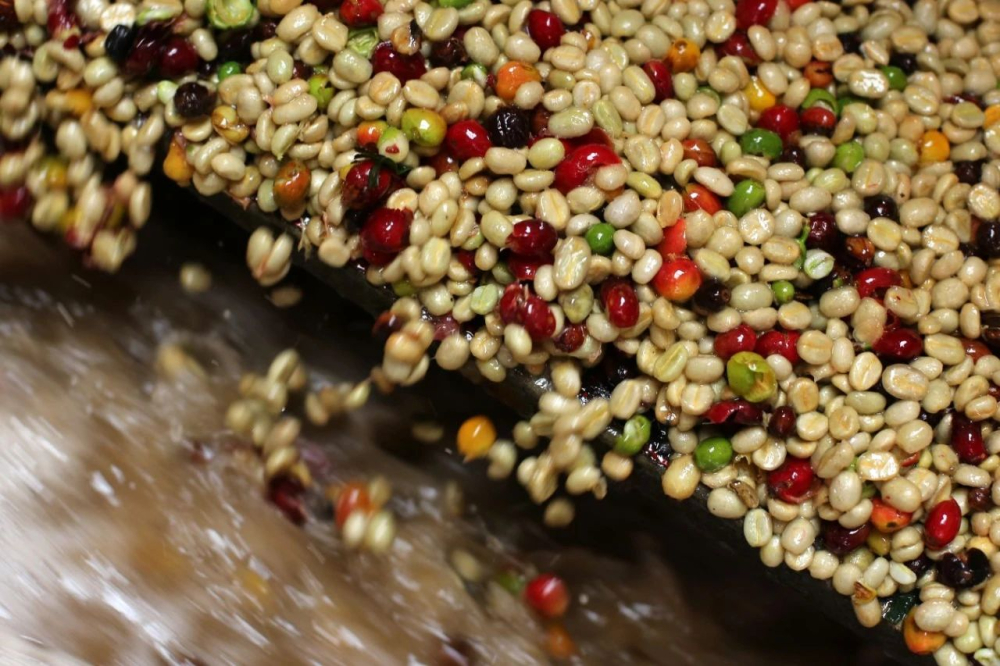
They are then fermented again in clean water for another 24 hours and washed once more. Repeating this cycle three times brings the total to 72 hours, which is why it is called the Kenyan-style 72-hour fermentation washed process, or K72 for short. FrontStreet Coffee finds that, compared with conventional washing, K72 heightens both the acidity and the cleanliness of the beans.
SL28 and SL34 Coffee Varieties
Kenya's main varieties are SL28, SL34, K7, Ruiru 11 and Batian, with SL28 and SL34 accounting for 90% of the country's high-quality production. SL stands for Scott Laboratories, Kenya's research body. In the 1930s a large outbreak of coffee berry disease hit Kenyan trees, and the government commissioned Scott Laboratories to breed resistant varieties. Among the results, selections No. 28 and No. 34 showed strong disease resistance and outstanding flavor, and farmers soon planted them widely. The SL line belongs to the Bourbon family of the coffee tree and delivers excellent acidity in Kenya's growing conditions. Through cupping, FrontStreet Coffee has found that SL28 and SL34 offer fine sweetness, balance and complex, shifting flavors, along with pronounced citrus and dark plum notes.

Brewing FrontStreet Kenya AA Coffee Beans
This Kenyan lot, sourced by FrontStreet Coffee, carries flavors of blackberry and stone fruit. To preserve more fruit aroma, FrontStreet's roaster chose a light roast. In cupping comparisons, FrontStreet Coffee found the dry aroma to be of cherry tomato, dark plum and caramel, while on the palate there are dark stone fruits such as plum, plum and apricot with a saturated acidity. The brewing approach therefore also aims to protect the fruity charm of FrontStreet Kenya AA.

Light-roasted beans let high-altitude coffee retain more floral and fruity aromatics. Compared with medium-dark roasts, the internal structure of a light roast is denser, so it needs hotter water and a finer grind to draw out the flavor compounds. Here FrontStreet Coffee uses hot water at 92-93°C for extraction, and for grind fineness targets 80% passing a No. 20 standard sieve.
FrontStreet Coffee's flavor descriptions are based on freshly roasted beans. Once beans have been stored for more than a month, some aroma has been lost and is hard to recover during brewing. FrontStreet Coffee understands the importance of freshness, so it ships only beans roasted within 5 days, letting every customer enjoy the fullest flavor window on arrival.

For the dripper, FrontStreet Coffee's baristas favor a resin V60 for light to medium roasts. The V60 has flow ribs connecting top and bottom and a large round hole in the center, which speeds the flow of water. Its spiral exhaust grooves lengthen the water path and increase contact time between grounds and hot water. Each stream converges along the grooves toward the center of the dripper, concentrating pressure on the coffee bed and producing a more layered extraction.
Hand Brewing Parameters:
Dripper: V60
Water Temperature: 92 degrees Celsius
Dose: 15g
Coffee-to-Water Ratio: 1:15
Grind Size: Fine sugar size (80% passes through a No. 20 sieve)
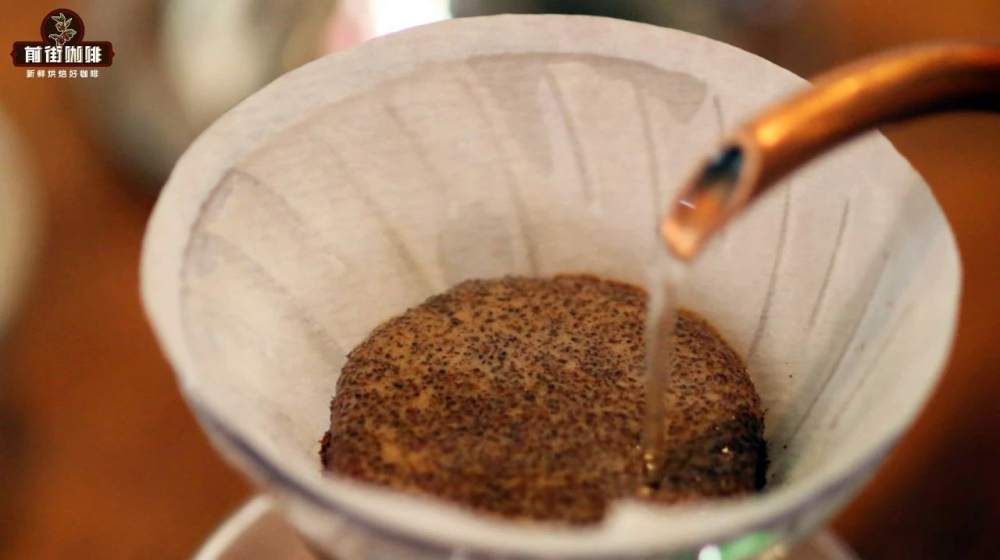
Three-stage extraction: First, put 15 grams of ground coffee into the dripper and zero the scale. In the first stage, pour 30g of water for a 30-second bloom while starting the timer. Throughout, use a small stream, starting at the center and circling outward so the entire bed is moistened. In the second stage, use a slightly larger stream to add 120g of water, aiming to lift the whole bed; pour the column vertically and evenly. The scale will read 150g, and this stage should finish in about 55 seconds. When the water level drops halfway, start a small stream in tight circles to add the third stage of 90 grams, keeping the flow gentle so it does not scatter the bed and leave the coffee under-extracted. The total pour is 240 grams, with the drawdown finishing at about 2 minutes 10 seconds. Remove the dripper, swirl the coffee in the server to even it out, and taste.
This FrontStreet Kenya Asalia tastes of black plum and other dark fruit acidity. At medium temperature it shows the thick sweet-and-sour character of apricot and stone fruit, with a round black tea aftertaste.
For professional coffee knowledge exchange and more coffee bean information, follow Coffee Workshop on WeChat (public account: cafe_style).
For more specialty coffee beans, add FrontStreet Coffee's personal WeChat: qjcoffeex.
FrontStreet Coffee Recommendation
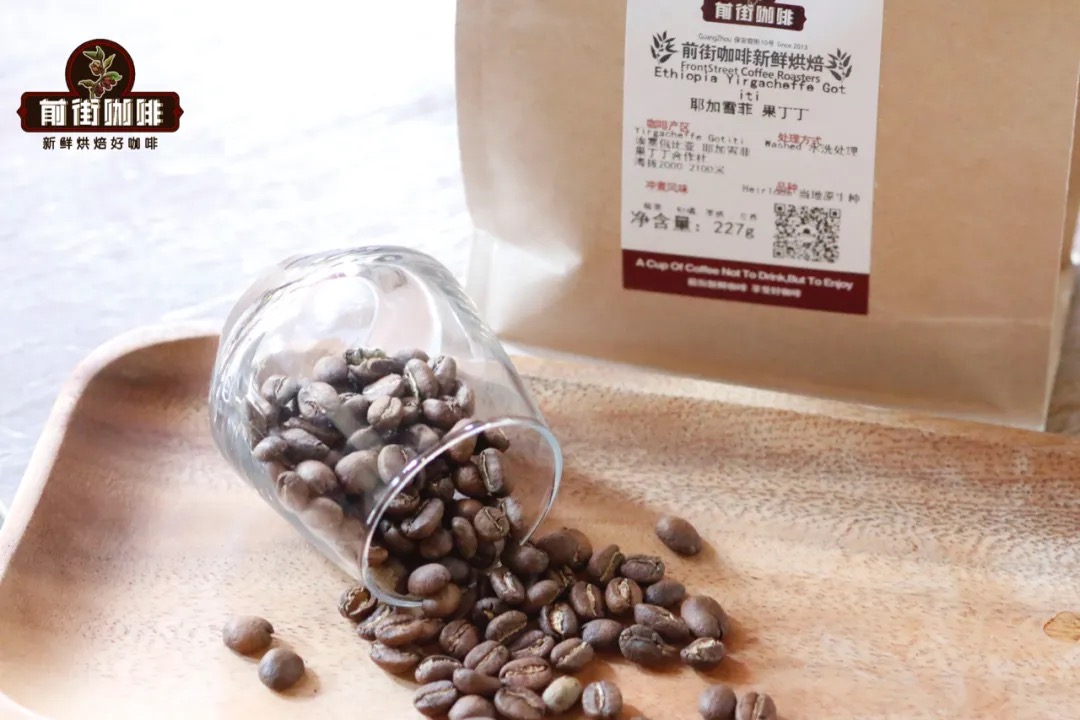
If the K72 process and the SL28/SL34 varieties above have made you curious about bright East African washed coffee, FrontStreet Coffee's Washed Yirgacheffe is the classic next stop. It delivers the jasmine and bright citrus-lemon acidity that have made Yirgacheffe famous, with a light, elegant body and a tea-like finish — crisp and clean, much like a well-made lemon tea, and a gentle first step into the style.
For a little more depth without losing that clarity, FrontStreet Coffee's Gotingding Cooperative lot comes from the same Yirgacheffe family, near the Woka area. Because the fruit is removed before drying, the coffee keeps its own aroma especially clear, showing citrus and lemon alongside elegant white florals and a bright, refined overall cup. Brew either one as the V60 recipe above, or serve both side by side against the Kenya Asalia for a focused tasting of East African washed acidity.
Important Notice :
FrontStreet Coffee is a long-established specialty coffee roaster in Guangzhou China, selling freshly roasted beans from its own farm in Yunnan as well as dozens of carefully selected single-origin beans from around the world for both pour-over and espresso. The products deliver consistently excellent quality and great value, with shipping within 24 hours. Guangzhou's FrontStreet Coffee shop is recommended by many coffee lovers, and the beans are now available online at the Tmall 。
FrontStreet Coffee has moved to a new address:
FrontStreet Coffee Address: 315,Donghua East Road,GuangZhou
Tel:020 38364473
 Scan and follow the En Gafei WeChat official account. Please indicate that the reprint comes from "En Gafei".