Blue Mountain Coffee Brand Rankings and Prices: Jamaica Blue Mountain Coffee Characteristics, Varieties, Grades, and Flavor Profiles
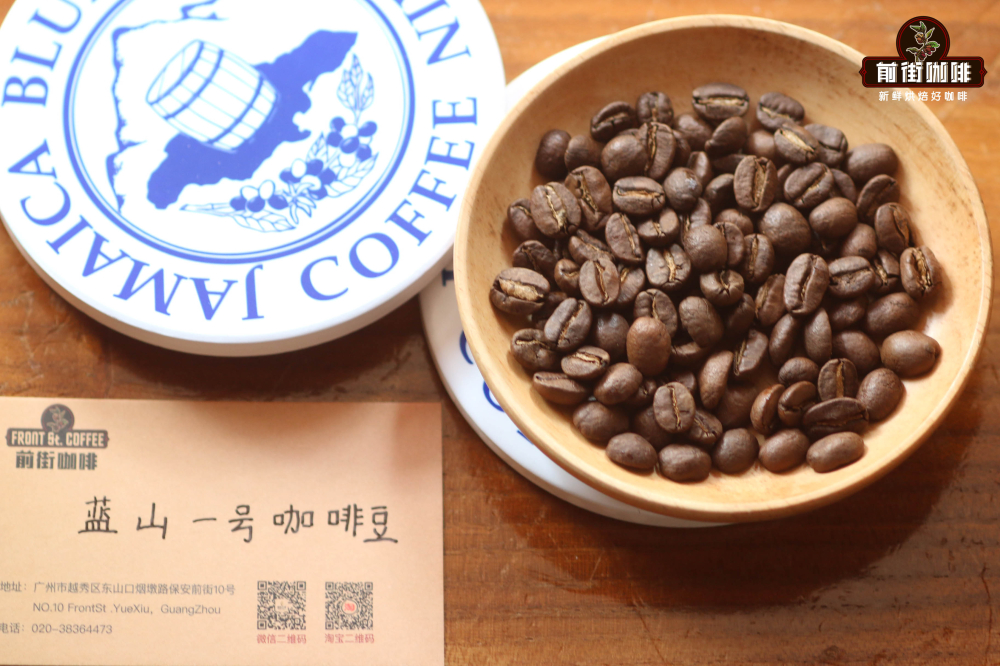
When FrontStreet Coffee chats with older relatives who don't drink coffee often, Blue Mountain is usually the first name that comes to mind. It was the epitome of "good coffee" in its era, and even people who have never tried it have heard about its flavor. Today, FrontStreet Coffee looks at the flavor characteristics of this world-famous Jamaican Blue Mountain Coffee.
What Does Blue Mountain Flavor Taste Like?
Search "Blue Mountain flavor" on any popular shopping platform and you'll find countless blends and instant coffees trading on the name, with marketing copy that leans on "rich, aromatic and sweet." Real Blue Mountain Coffee is defined by a graceful fusion of acidity, sweetness, bitterness and a pleasant aftertaste in a single cup, with an intense, captivating aroma that coffee lovers around the world chase after.
That unique flavor is shaped by stages that can't be overlooked — from cultivation, harvesting and transport to roasting. Let's look at how this exquisitely flavored Blue Mountain bean is formed.
Jamaican Blue Mountain Coffee Cultivation
Blue Mountain is the longest mountain range in Jamaica, located in the east of the island, and it holds the highest peaks in the Caribbean. On clear days the mountainside takes on a blue cast from light refracted off the sea, which is how it got the name "Blue Mountain." A famous scenic area, its highest peak reaches 2,256 meters and draws many visitors. To protect the local vegetation and landscape, the government has designated areas above 1,700 meters as conservation zones, so coffee trees may only be cultivated below 1,700 meters.
FrontStreet Coffee often notes that coffee is a very "picky" plant. It can survive in many places, but drawing out its exceptional flavor requires satisfying a range of growing conditions — and Blue Mountain is one such place. It sits in a volcanic and seismic zone, which means abundant, fertile volcanic soil. Add high altitude, big day-night temperature swings, frequent forest mist and ample year-round rainfall, and the coffee fruit absorbs plenty of nutrients in this environment.
The variety grown in Blue Mountain is Typica, prized for its elegant sweet-and-sour flavors. It's physically weak with poor disease resistance, though, so yields are low and farmers chasing mass production often abandon it. Typica was introduced to Blue Mountain in the 18th century. After two hundred years of adaptation, Blue Mountain's Typica has developed into an Arabica variety with better disease resistance that suits local cultivation, forming an exquisite flavor that can't easily be replicated elsewhere.
Finely Processed Blue Mountain Coffee Beans
Although the wider Blue Mountain cultivation area is extensive, the true "treasure land" spans only 910-1,700 meters, across four regions: St. Andrew, St. Mary, St. Thomas and Portland. The total cultivation area is 6,000 hectares. Under regulations from the Jamaica Coffee Industry Board, only coffee from this specific region may be called Jamaican Blue Mountain Coffee.

Coffee grown at 460-910 meters is called "Jamaica High Mountain Coffee," while coffee grown below 460 meters can only be called "Jamaica Supreme Coffee." The lower the altitude, the lower the grade.
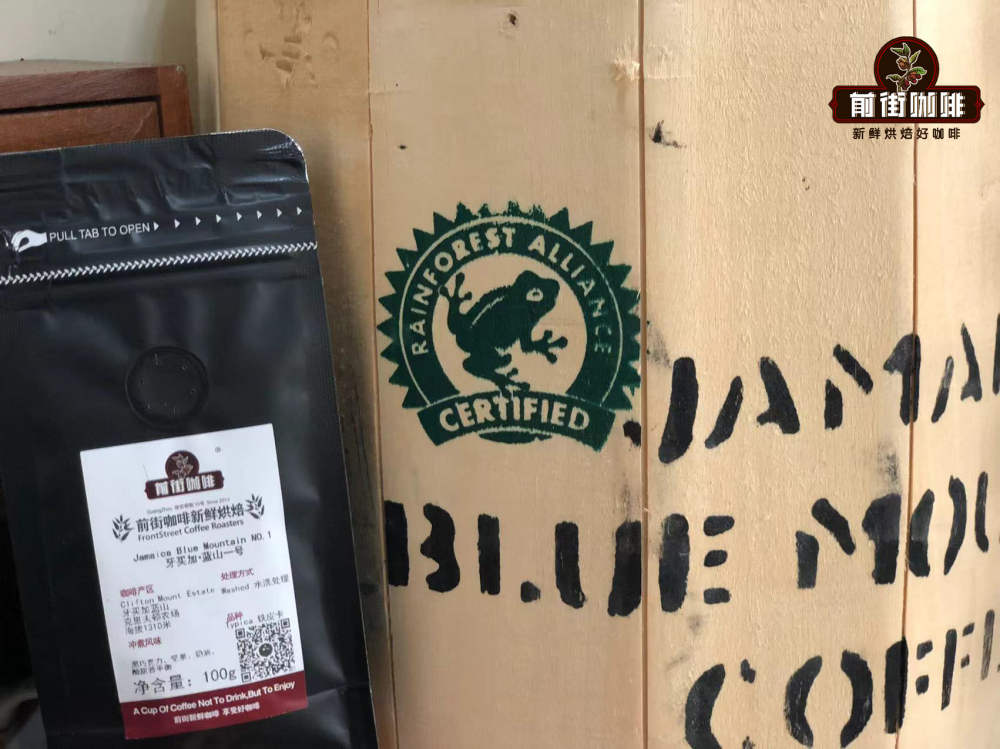
The Jamaican Blue Mountain No. 1 beans on FrontStreet Coffee's menu come from Clifton Mountain Estate, Jamaica's largest local estate, cultivated at an altitude of 1,310 meters.
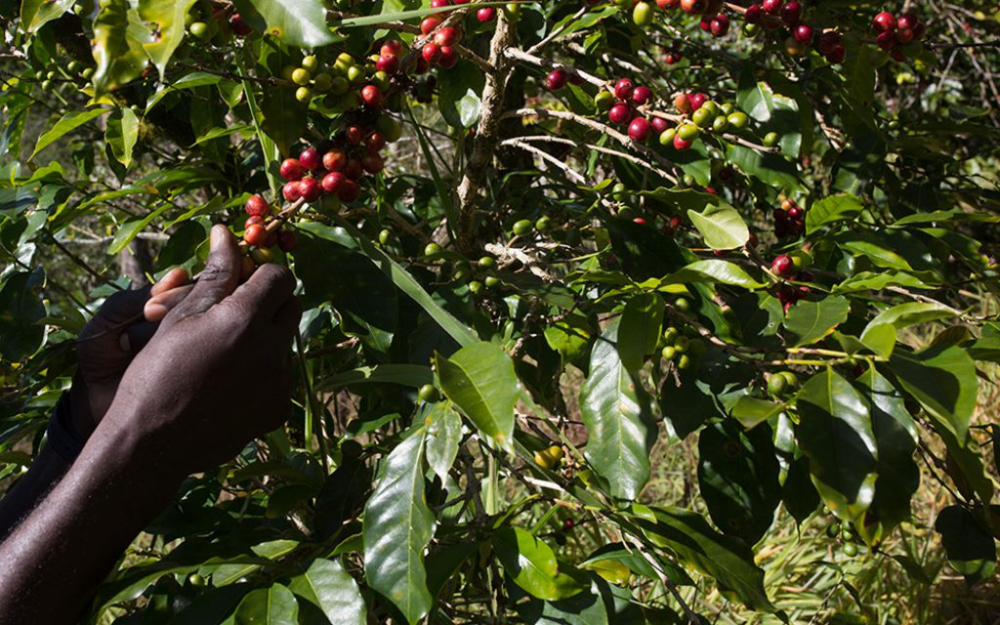
Because the coffee trees grow on relatively steep slopes, harvesting is a real challenge. Clifton Estate arranges for local women who know the terrain well to pick appropriately ripe cherries at high altitude. After picking, the cherries undergo traditional washed processing.
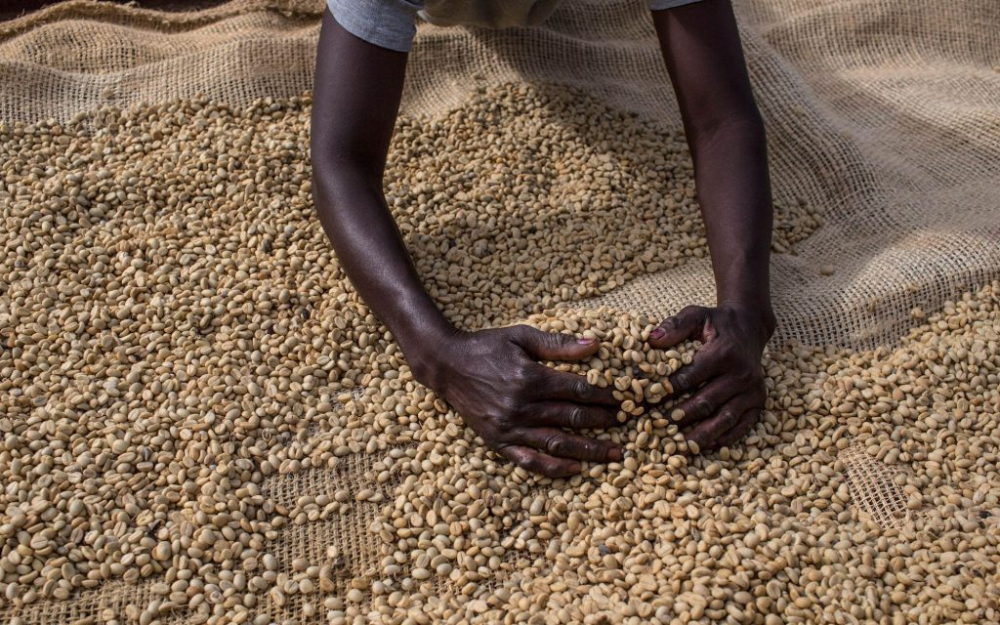
Clifton Estate first hand-sorts defective beans out of the harvested cherries, uses machines to remove the outer skin, then pours the fruit into water tanks to ferment for 12-18 hours to break down the mucilage layer. Next the beans move to clean water tanks for several rinses and a second screening of defectives. The clean parchment beans are drained and spread on cement floors or netted beds to dry until moisture content reaches 10-12%. Finally, they're stored in wooden barrels in temperature- and humidity-controlled warehouses, then hulled and inspected before orders ship.
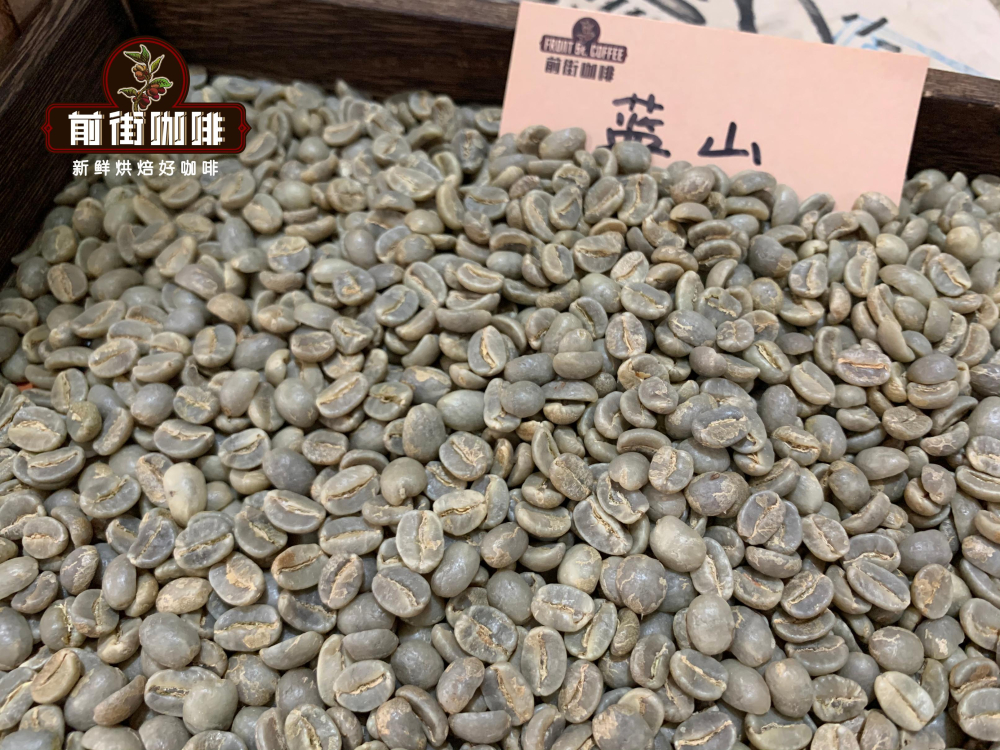
Jamaican Blue Mountain green beans also follow a strict grading system. Based on bean size and defect percentage, they're classified into four grades: NO.1, NO.2, NO.3 and Peaberry. The highest is NO.1, also known as Blue Mountain No.1, where beans are sized 17-18 screen with a defect rate not exceeding 2% and an overall uniform, plump particle. After careful selection, the quantity that qualifies as Blue Mountain No.1 is extremely small, which makes the higher price reasonable.
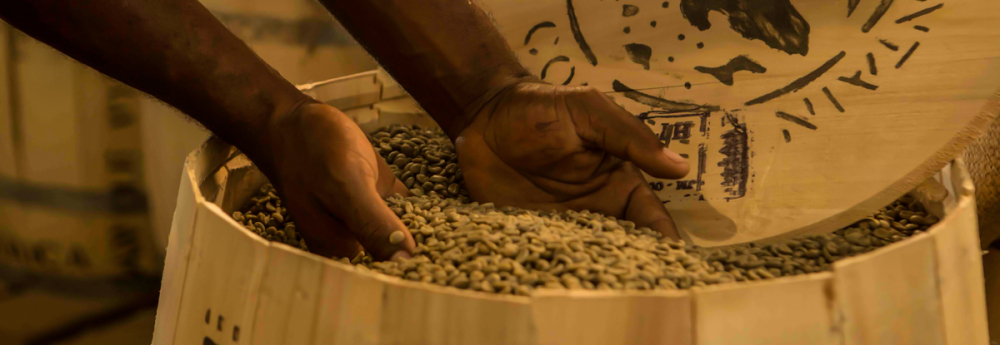
Unlike most countries, which ship green coffee in jute bags, Jamaica packages high-quality Blue Mountain No.1 in round wooden barrels. This is also one way buyers can tell genuine Blue Mountain from counterfeit. The barrels help isolate the beans from outside influences during transport and protect them from airborne moisture, ensuring the green beans keep their 11.5% moisture content before roasting.
How to Identify Genuine Blue Mountain Coffee Beans
Many friends ask FrontStreet Coffee whether Blue Mountain beans are so expensive that they risk spending a lot on a fake. How can you identify the authenticity of Blue Mountain beans? Which brands are trustworthy? On that question, FrontStreet Coffee would like to share several identifying features.
(1) Blue Mountain No.1 beans are all exported in whole wooden barrels, so when buying, check whether the seller has whole Blue Mountain barrels on hand. That helps avoid sellers substituting other beans for Blue Mountain.
(2) Buyers of Blue Mountain beans (first-hand green bean buyers) can apply for Blue Mountain certification from Jamaica's CIB or from the estate, which can prove authenticity.
(3) You can also observe the roasted beans — Blue Mountain No.1 should be uniform in size, plump and consistent.

As for the brand, it actually matters little: any brand selling genuine Blue Mountain beans ultimately sources from the same places — the four major processing plants authorized by Jamaica's CIB plus several independent farms. So there's no question of one brand getting better Blue Mountain than another. What counts is that it's genuine, and you can choose based on value for money.
How to Brew Blue Mountain No.1 Coffee Flavor
FrontStreet Coffee believes that beyond variety, growing environment and green bean processing, flavor is largely tied to roast level. Blue Mountain has a balanced acidity and bitterness with nutty notes. To restore the more classic Blue Mountain profile, FrontStreet Coffee selected several medium-to-dark roast profiles, and cupping comparisons showed that a medium-dark roast best highlights its chocolate sweetness.
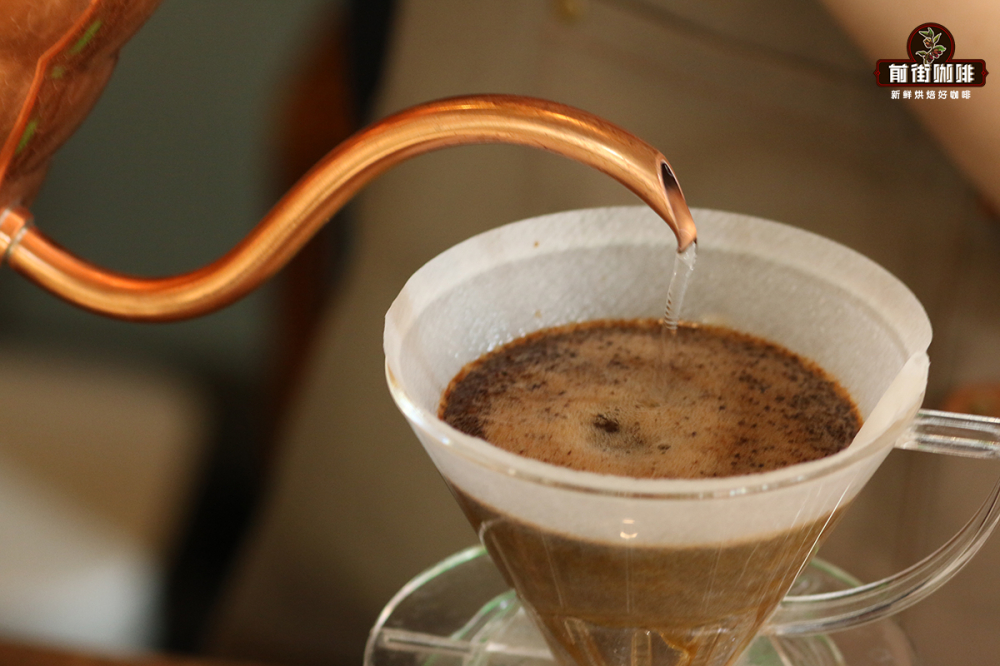
For premium beans like Blue Mountain No.1, FrontStreet Coffee believes drip-brewed black coffee is the best way to enjoy its unique aroma. Blue Mountain is a relatively dark roast that leans rich and mellow. FrontStreet Coffee's baristas use KONO drippers, using the tight fit between filter paper and dripper to create an immersion-style extraction during the pour, which yields a higher coffee concentration. And to keep over-extraction from turning the cup bitter and harsh, FrontStreet Coffee uses slightly cooler water and a coarser grind.
FrontStreet Coffee's brewing approach for all its beans assumes freshly roasted coffee. Coffee hits its optimal flavor window 4-7 days after roasting, and the aroma gradually fades over time. FrontStreet Coffee understands how much fresh beans matter, so it ships beans roasted within 5 days, hoping everyone can brew them at their peak when they arrive.
Blue Mountain pour-over parameters: 88°C water, a 1:15 coffee-to-water ratio, 15g of grounds, a grind size of 75% pass-through on a 20-mesh standard sieve, and a three-stage extraction.
First, pour 30g of hot water to bloom for 30 seconds. Then, starting from the center, pour in a fine stream while slowly circling to 125g. When the water level in the dripper is about to expose the coffee bed, keep circling and pouring to 225g. Total extraction time is approximately 2 minutes. Finally, give the brewed coffee a good swirl before tasting.
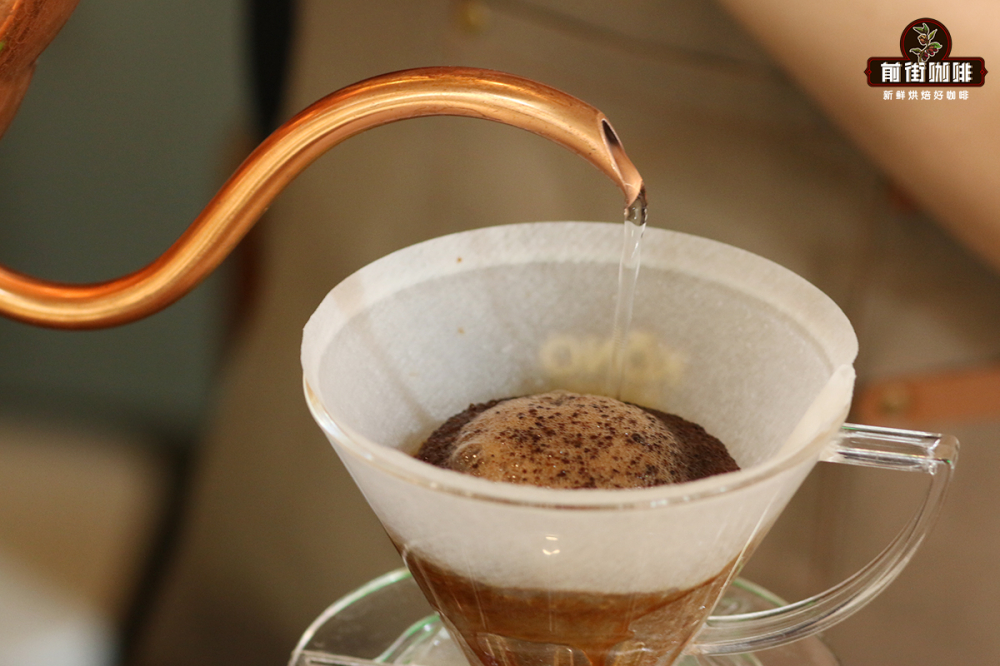
Brewing Blue Mountain No.1, FrontStreet Coffee detected a caramel aroma during the bloom. In the cup, it reveals rich nutty and dark chocolate flavors, with a full body and a sweet, clean aftertaste.
FrontStreet Coffee Recommendation
Because Blue Mountain's reputation invites fakes, the first thing to verify is authenticity. FrontStreet's Jamaica Blue Mountain No.1 is the highest grade of the lot, grown on the historic Clifton estate — the largest in Jamaica, dating back to around 1750 and sitting at an average 4,300 feet (1,310.64 meters). Check for full origin certification and the traditional 15, 45 and 70 kilogram wooden barrels the beans travel in; those whole barrels and uniform, plump beans are the clearest signs of the real thing.
For brewing, FrontStreet favors a Kono dripper, which plays up Blue Mountain's full body. Use 15g of coffee rested 4-7 days from the roast date, a grind coarser than you'd use for a light roast (roughly white-sugar consistency), and 87-88°C water at a 1:15 ratio. Pour in three stages: a 30g bloom for 30 seconds, then water to 120g with a slow vertical circling pour, then to 225g with a slightly faster stream. If you'd rather have something richer, a moka pot works beautifully too — use a slightly finer grind, start with hot water in the base, heat over medium-low, and pull it off the flame just as the coffee finishes flowing. It also makes an excellent latte or flat white, where its cream caramel and nut notes shine through the milk.
In the cup, the best Blue Mountain is all about balance: cream, caramel, chocolate, nuts, honey and a faint fruit note, with a smooth entry, a sweet mid-palate and a clean, long finish. It's the rare coffee that seems to have no weak spot — which is exactly why so many baristas call it the easiest great coffee to love.
Important Notice :
FrontStreet Coffee is a long-established specialty coffee roaster in Guangzhou China, selling freshly roasted beans from its own farm in Yunnan as well as dozens of carefully selected single-origin beans from around the world for both pour-over and espresso. The products deliver consistently excellent quality and great value, with shipping within 24 hours. Guangzhou's FrontStreet Coffee shop is recommended by many coffee lovers, and the beans are now available online at the Tmall 。
FrontStreet Coffee has moved to a new address:
FrontStreet Coffee Address: 315,Donghua East Road,GuangZhou
Tel:020 38364473
 Scan and follow the En Gafei WeChat official account. Please indicate that the reprint comes from "En Gafei".