Yirgacheffe Coffee Grade Classification and Variety Introduction - Premium Yirgacheffe Coffee Bean Flavor Characteristics and Taste Description

For those who love acidic flavors, FrontStreet Coffee's Yirgacheffe is the top choice — bright lemon acidity and jasmine fragrance you simply don't forget. Yirgacheffe is one of the most distinctive coffees in the world, an outstanding representative of African washed coffee, and has long enjoyed prestige among connoisseurs. That is why FrontStreet Coffee's staple washed Yirgacheffe is such a favorite.
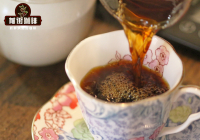
FrontStreet Coffee's Yirgacheffe releases an enormously complex aroma and an almost indescribable taste. The dry fragrance bursts with fruit — rich dried-fruit notes of strawberry, mango, and apricot jam — while the wet aroma is like sweet syrup, like thick apricot pulp wrapped in rustic honey or chocolate. On the palate it is not forceful: medium body, acidity not loud but lively and bright, like fruit black tea.
FrontStreet Coffee believes "coffee enters the mouth, a hundred flowers bloom" is the most fitting description — that comfortable sensation of flowers stimulating the taste buds and olfactory cells at once. Beyond the florals, the delicate body feels like silk massaging the mouth. Coffee chemists have even begun studying Yirgacheffe's microclimate and soils to formulate the cultivation equations for specialty coffee.

Most Ethiopian coffees are named for their growing areas. Yirgacheffe is a representative specialty region, with an altitude of around 1800-2000 meters — among the highest in Ethiopia. FrontStreet Coffee believes its unique citrus and floral flavors are closely tied to that special geography. As coffee's birthplace, Ethiopia holds countless varieties, and each region's slightly different microclimate yields slightly different cups — which is why FrontStreet Coffee stocks more than a dozen single-origin beans from Ethiopia alone.
The Yirgacheffe Coffee Production Area
Yirgacheffe has always been one of Ethiopia's most important specialty regions. Formerly subordinate to the Sidamo area, it became an independent producing region because its coffee tastes so distinctive — Yirgacheffe is not just a place name but a noun for a specific flavor. The area sits high, at around 2000 meters, and holds more than 40 cooperatives managing cultivation mainly through family farms. The production methods and flavors here are so outstanding that Ethiopian farmers compete to boast their coffee "tastes of Yirgacheffe" — hence the split from Sidamo, its own style, and its rank as Africa's most renowned region.

FrontStreet Coffee notes that each Yirgacheffe has its own personality — the Red Cherry, for example, is all berry notes.
Yirgacheffe Coffee Bean Varieties
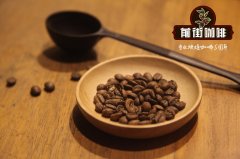
As the gene bank of coffee, Ethiopia harbors varieties too numerous to identify and classify, and the government, protecting its natural coffee heritage, declines to publish the details. So exported Ethiopian beans are usually labeled collectively as "Heirloom" native varieties — Yirgacheffe's included. Bean shape: small-grained, fairly rounded, very small — mostly 14-15 mesh.

Yirgacheffe Coffee Bean Grading
FrontStreet Coffee has explained before that grading systems vary by country — by altitude, by bean size, by defect count, and so on. So how is Yirgacheffe graded? Perhaps you've noticed beans labeled Yirgacheffe G1. Yes, G1 is the grade. Here is how the system works.

The ECX (Ethiopian Commodity Exchange) grades Ethiopian coffee along two dimensions.
First: defect rate. Export-grade green coffee with no more than 3 defective beans per 300g — washed or natural alike — is graded G1, while 4-12 defects per 300g earns G2. Yirgacheffe runs G1, G2, G3, G4, and so on by defects; the higher the grade, the better the quality.

Second: flavor evaluation. Since the ECX introduced flavor-based grading in 2009, G1 and G2 lots are cupped using the SCA (Specialty Coffee Association) method: beans scoring above 85 points are rated Q1, those from 80-84.75 points are rated Q2.

Yirgacheffe Coffee Processing Methods
Washed Yirgacheffe — you might assume everything from this region is washed, but Ethiopia traditionally used ancient natural processing. After washed technology was introduced in 1972, decades of adoption left washed far more common than natural. FrontStreet Coffee finds washed beans show lower defect levels and cleaner, brighter flavors.

Natural processing is the oldest, most traditional method: cherries are sun-dried immediately after harvest, common where sunlight is abundant or water is scarce. Nearly 70% of Ethiopia's cherries are still processed this way. Compared with washed, FrontStreet Coffee finds naturals show lower acidity, higher sweetness, and clearer texture, though slightly lower cleanliness — and they produce more berry-like, complex flavors.

FrontStreet Coffee's Brewing Recommendations
How do you brew such excellent beans deliciously? FrontStreet Coffee believes freshness is fundamental — fresh beans let you taste the widest range of flavors. Every bean shipped is roasted within 5 days, because freshness matters that much. The roasting philosophy is "freshly roasted good coffee," and with a degassing period of about 4-7 days, your coffee arrives right at its peak.

Customers who need pre-ground coffee are welcome, but one reminder: ground coffee needs no degassing — during transport, the pressure of carbon dioxide inside the package actually mellows the flavor, so you can brew the moment it arrives. Do brew it promptly, though: grounds oxidize quickly in air, flavor dissipates fast, and the cup won't taste as good. FrontStreet Coffee therefore recommends whole beans, ground fresh before brewing.
FrontStreet Coffee's Yirgacheffe Brewing Parameters:
V60 dripper, water temperature 90°C, coffee-to-water ratio 1:15, dose 15g, grind size (80% pass-through on the China #20 standard sieve)

Segmented extraction: bloom with twice the coffee weight in water — 30g — for 30 seconds, letting the grounds release their carbon dioxide so the following extraction runs stable. Pour in small circles to 125g, continue to 225g, and stop. Let the dripper drain fully, then remove it. Timed from the first pour, extraction takes 2'00". Swirl the finished coffee evenly and pour into the tasting cup.
FrontStreet Coffee's Washed Kochere flavor: Citrus, berries, tea-like, cream, slight nuts
FrontStreet Coffee's Natural Red Cherry flavor: Berries, lemon, strawberry, fermented wine aroma
For professional coffee knowledge exchange and more coffee bean information, please follow Coffee Workshop (WeChat public account: cafe_style)
For more specialty coffee beans, please add FrontStreet Coffee's (FrontStreet Coffee) personal WeChat: qjcoffeex
FrontStreet Coffee Recommendation: Which Grade Should You Drink?
Now that you know G1 and Q1 from G2 and Q2, choose by flavor, not just paperwork. FrontStreet Coffee's washed Yirgacheffe daily bean is the value classic — jasmine, bright citrus and lemon acidity, and a tea-like finish. For cleaner, brighter cups, the washed Kochere lot adds berries, cream, and a whisper of nut to the citrus-tea core. And if the natural process intrigues you, the Red Cherry delivers berries, lemon, strawberry, and a gentle fermented wine aroma — sun-dried from fully ripe cherries for three to five weeks. Either way, brew it FrontStreet style: V60, 15g, 90°C, 1:15, a granulated-sugar grind with 80% pass-through on a #20 sieve, and a 30-125-225g three-stage pour.
Important Notice :
FrontStreet Coffee is a long-established specialty coffee roaster in Guangzhou China, selling freshly roasted beans from its own farm in Yunnan as well as dozens of carefully selected single-origin beans from around the world for both pour-over and espresso. The products deliver consistently excellent quality and great value, with shipping within 24 hours. Guangzhou's FrontStreet Coffee shop is recommended by many coffee lovers, and the beans are now available online at the Tmall 。
FrontStreet Coffee has moved to a new address:
FrontStreet Coffee Address: 315,Donghua East Road,GuangZhou
Tel:020 38364473
 Scan and follow the En Gafei WeChat official account. Please indicate that the reprint comes from "En Gafei".