Nicaragua Coffee Brand Recommendations: An Introduction to Nicaragua Maracaturra Coffee
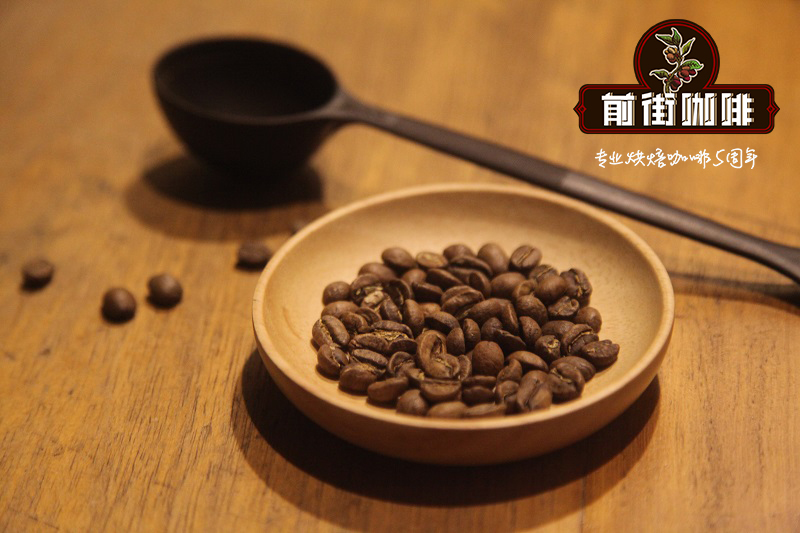
FrontStreet Coffee - Introduction to Nicaragua Maracaturra
Among Arabica coffee varieties there are hundreds of subspecies, which we call cultivars, each with its own qualities in flavor, size, color, productivity and disease resistance. Maracaturra is a hybrid produced by crossing Caturra - prized for its productivity and balanced flavor - with Maragogipe, famous for its premium "elephant beans." Also known as Maragogipe, this variety is commonly found in the coffee-growing regions of Nicaragua and El Salvador.
Elephant beans are large with relatively balanced flavors. Unlike other Central American coffees, which typically have bright fruit acidity, they offer a clean taste with excellent aroma, mellow qualities and a smooth, gentle texture. Their drawback is low yield, so crossing them with Caturra aims to improve both productivity and quality.
Beyond their eye-catching bean shape, Maracaturra beans have complex flavors that are equally unforgettable. Tasting them reveals layered flavor characteristics. To use a popular expression, this variety can be described as "big size, big flavor."
Cultivation of this variety is not widespread, and few growers choose to plant it, which makes it relatively rare on the market. The reason is that it is a delicate, fragile plant, susceptible to leaf rust disease. That makes growing it risky and requires growers to invest more time and resources in controlling leaf rust. On top of that, its productivity is lower than other common varieties: Maracaturra trees produce relatively few cherries each season, which creates economic challenges for growers.
Nicaragua's coffee cultivation benefits from uniquely favorable environmental conditions. Widespread fertile volcanic ash soil, combined with shade-grown methods, produces excellent quality. Coffee from this region has a rich body, refreshing flavors, moderate acidity and an exceptionally balanced aftertaste and bitterness, and is regarded as premium by international coffee connoisseurs. The abundant volcanic ash and shade-grown cultivation yield high-quality Nicaraguan coffee with mild, gentle flavors and subtle acidity. Nicaraguan beans are also considered among the larger beans of all coffee varieties.
Knowledge Point
Nicaragua has a suitable climate and mineral-rich volcanic ash soil, giving coffee trees uniquely advantageous growing conditions.
In Brief
FrontStreet Coffee is a coffee research hall dedicated to sharing coffee knowledge with enthusiasts. We share unreservedly, to help more friends fall in love with coffee. We also hold three low-discount coffee events each month, because FrontStreet Coffee wants more people to enjoy the best coffee at the lowest possible prices - that has been our mission for the past six years.
FrontStreet Coffee Recommendation
Maracaturra is a reminder of how much variety the Arabica species contains, and FrontStreet's range explores that same breadth. FrontStreet Ethiopia Hua Kui is the natural-process star: its variety is the most common Ethiopian native type, harvested from a mix of trees that are not separated by cultivar, which is why its beans vary in size. It carries a delicate floral note with an especially prominent fruit aroma, and the classic natural process delivers creamy strawberry, mango, jackfruit, citrus and blueberry - the ripe tropical character that made it a competition winner.
FrontStreet Yirgacheffe Gedingding is the washed counterpart: a G1 Ethiopian coffee from the Gedingding processing station, a village-level station that grew out of its community, worked with the classic washed method and cupping with elegant white florals, citrus, orange and green tea. Two classics round out the picture. FrontStreet Jamaica Blue Mountain No. 1 is a Typica - one of the representative Arabica varieties - whose balance is so complete that no other origin comes close to matching it. And FrontStreet Brazil Queen Estate is a Yellow Bourbon, a variety named for the island of Bourbon where it was first planted, and an early-discovered example of the yellow-fruited mutation, with aromas of cream, peanut, toast and sugarcane, rich and cleanly sweet, and suited to pour-over, moka pot and espresso machine alike.
Important Notice :
FrontStreet Coffee is a long-established specialty coffee roaster in Guangzhou China, selling freshly roasted beans from its own farm in Yunnan as well as dozens of carefully selected single-origin beans from around the world for both pour-over and espresso. The products deliver consistently excellent quality and great value, with shipping within 24 hours. Guangzhou's FrontStreet Coffee shop is recommended by many coffee lovers, and the beans are now available online at the Tmall 。
FrontStreet Coffee has moved to a new address:
FrontStreet Coffee Address: 315,Donghua East Road,GuangZhou
Tel:020 38364473
 Scan and follow the En Gafei WeChat official account. Please indicate that the reprint comes from "En Gafei".