Single Origin Coffee Bean from Sidamo Region: What are the Characteristics and Taste of Natural Process Guji 8.0 Coffee?

When FrontStreet Coffee recommends Ethiopian beans, we often ask customers: would you prefer one with brighter acidity, or one with more juice-like qualities? If a customer can't decide, our baristas help them choose fast by contrasting the bright, citrusy acidity typical of Yirgacheffe with the rich fruit aroma and juiciness of Sidamo.
Understanding Natural Process Flavor
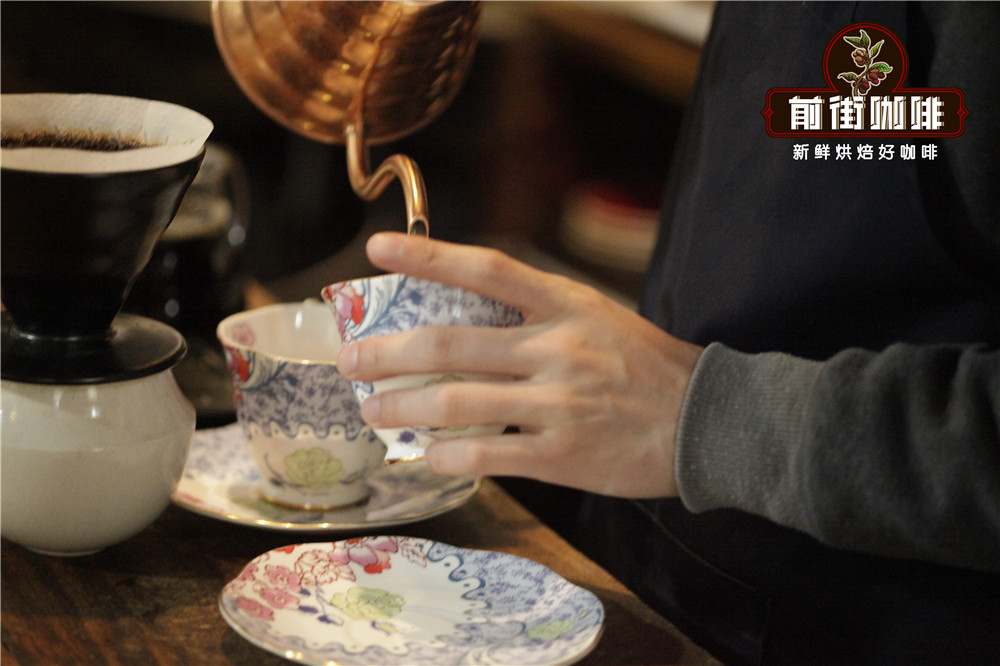
"Natural process flavor" in single-origin coffee is a rather vague concept. To some it is elegant and fragrant; to others, peculiar. Even seasoned coffee professionals can usually identify a naturally processed bean after one sip — but ask them to describe exactly what "natural flavor" tastes like, and many will hesitate.
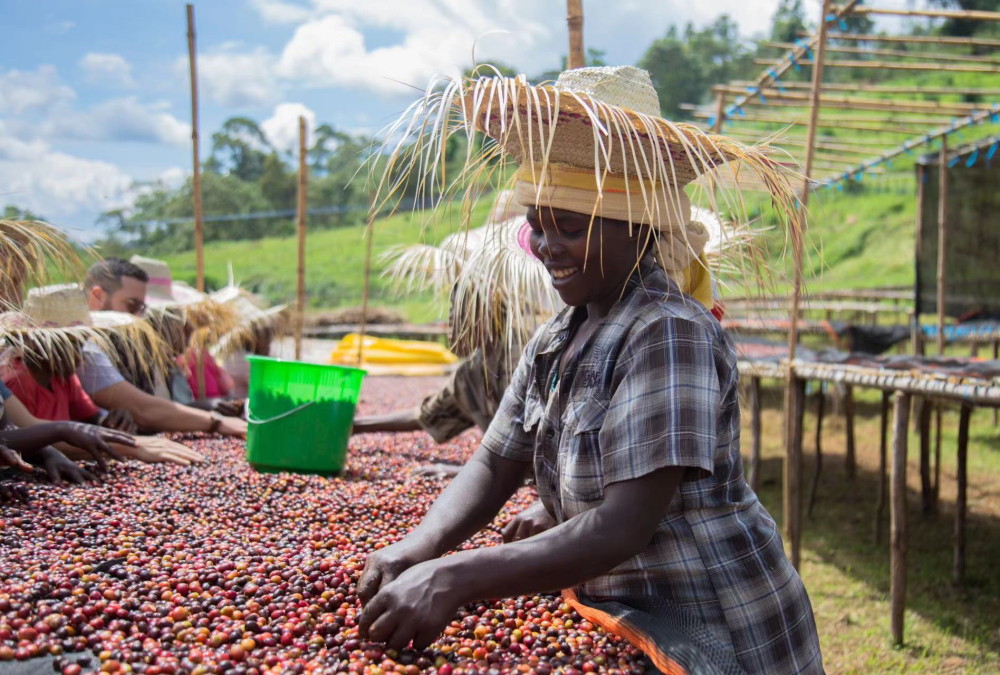
The term simply refers to the taste beans acquire during natural processing. Between cherry and green bean, two methods dominate: washed and natural. Natural processing dries the whole coffee cherry intact, letting the beans absorb sugars from the pulp and mucilage — the result is a subtle fermented aroma and noticeably more sweetness in the cup.
How Coffee Beans Are Naturally Processed
During the harvest, Sidamo farmers pick only mature red cherries, placing them one by one into baskets. The harvested cherries are uniform in size and ripeness, free of debris. In processing, defective beans and unripe or overripe cherries are first sorted out by hand, then the cherries are spread evenly on raised wooden beds and drying racks for sun drying — keeping them off the ground avoids picking up unwanted flavors.
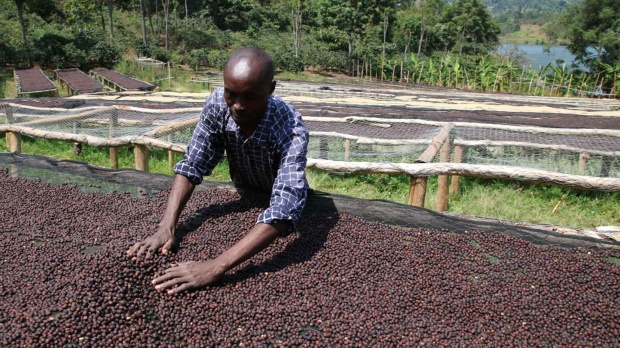
Through drying, workers turn the cherries constantly for even exposure and uniform dehydration, and every three to five days they manually remove defective or moldy beans. Once the skin has dried hard, a hulling machine strips the dry husk, and the green beans get one final hand-sorting in pursuit of a perfect flavor profile.
Are Naturally Processed Sidamo Coffee Beans Delicious?
Ethiopia is one of the world's most important coffee exporters, with major growing regions including Sidamo, Yirgacheffe, Kochere, Harar, and Jimma. Sidamo stands among the great specialty regions, known for beans with excellent fruity character and delicate, elegant flavors.
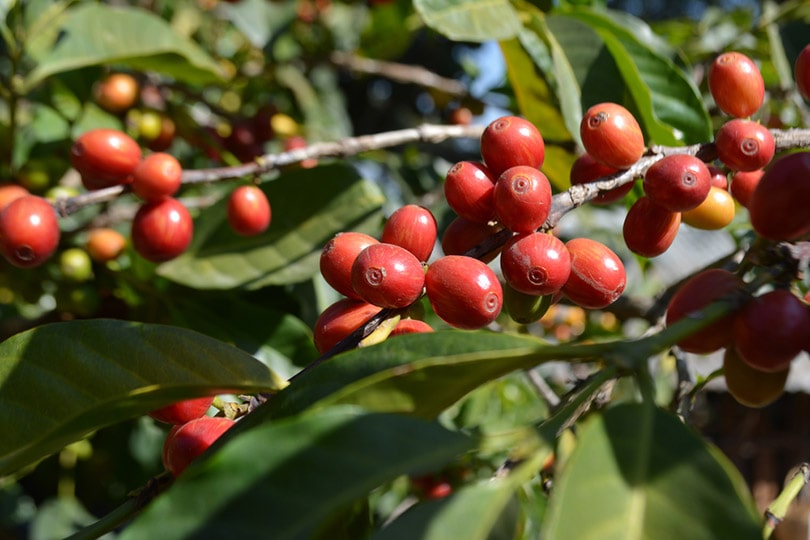
Sidamo lies in southern Ethiopia, extending east to the Arsi and Bale zones and west to Gamogofa. Coffee is cultivated at altitudes of 1400-2000 meters; agriculture dominates the local economy, with the main coffee zones ringing the Great Rift Valley. Sidamo has developed rapidly in recent years into an important export hub, and its flavors are extraordinarily diverse — different soils, microclimates, and countless native varieties give each district its own distinct character.
Thanks to natural processing, the region's beans develop fuller berry aromas and a smooth body, and coffee drinkers worldwide have taken notice.
Representative Natural Process Coffee Beans from the Sidamo Region

FrontStreet Coffee - Sidamo Hua Kui 8.0 Coffee Beans
- Continent: Africa
- Country: Ethiopia
- Origin: Hambela, Sidamo
- Processing Station: Buku Abel Processing Station
- Coffee Variety: Heirloom (Ethiopian native varieties)
- Altitude: 2250-2350m
- Processing Method: Natural Process
What is "Hua Kui Coffee"? Why the name?
Before it was ever called "Hua Kui," this was an award-winning competition-grade Ethiopian bean. In February 2017, Ethiopian DW Coffee Company entered a natural-process coffee from the Buku Abel station in the Hambela region of Sidamo into the Taste of Harvest (TOH) competition organized by the African Fine Coffee Association. With its rich berry aroma and creamy texture, it took the championship in the natural category that year.

Later that year, the championship lot was picked up by a Beijing green bean trader, who christened it "Hua Kui" — "queen of the flowers" — for its champion status. Shortly after, a China-region brewing championship contestant used it in competition and, facing rivals on Geisha varieties, won runner-up. That was Hua Kui's first moment of fame. With the competition spotlight, an affordable price, and pleasant flavors, it quickly became a byword for quality Ethiopian coffee.

What is the "Hua Kui Flavor"?
To distinguish successive releases from the 2017 original, the trading company adopted an X.0 suffix keyed to that birth year: the 2018 batch is Hua Kui 2.0, 2019 brought Hua Kui 3.0 and 3.1, last year's release was Hua Kui 7.0 — and the 2024 batch is naturally Hua Kui 8.0. The suffix tells you at a glance which year your bag came from.
Judging from the name alone, you might expect "abundant floral aromas." In fact, Hua Kui's florals are modest; the fruit is what stands out — creamy strawberry, mango, jackfruit, citrus, and blueberry, with the mature tropical-fruit character typical of Sidamo naturals. It was precisely that rich berry fragrance that won Hua Kui first place at the TOH competition.

Coffee is an agricultural crop, of course — annual yield and quality depend first on climate, rainfall, altitude, soil, fertilization, and weeding, and then processing details (sun hours, temperature, humidity) shape the flavor further. Hua Kui is no exception, so each year's beans always differ a little from the last.
Is Natural Process Hua Kui Suitable for SOE?
Many coffee lovers, once smitten with a bean, refuse to stop at one extraction method — they want to push it through every tool they own. SOE (Single Origin Espresso) is the most popular route. The Hua Kui 8.0 recently introduced by FrontStreet Coffee, with its rich fermented fruit aroma and the mellow sweetness unique to natural process, has become a daily choice for many players — and it makes home espresso-machine owners itch to replicate a Hua Kui SOE latte or americano just like the café's.

Compared with dark-roast blends, floral-fruity SOE tests a barista's skill: it demands attention to roast level and constant tuning of extraction parameters to present the best flavor and texture. Choose the wrong beans without knowing your way around an espresso machine, and you'll easily end up with something bitter or astringent. In FrontStreet Coffee's view, a bean well-suited to SOE not only makes delicious espresso easy — pouring an americano or latte on top becomes twice the reward for half the effort.
Take Hua Kui. Because customers brew it different ways, FrontStreet Coffee's roasters developed two roasting curves: a medium-light roast for cold brew and pour-over, and a medium roast for espresso machines and moka pots. If you prefer cold brew for its simplicity, or the ritual of pour-over, go medium-light; if you want golden crema or plan to pour latte art, take the SOE curve.

Extraction Parameters for Hua Kui SOE Espresso
- Coffee Beans: Ethiopia Hua Kui 8.0
- Coffee Dose: 20g
- Liquid Yield: 40g
- Brew Ratio: 1:2
- Extraction Time: 26-32 seconds
- Grind Setting: Galileo 2.0

FrontStreet Coffee's machine is the commercial single-group Lelit Bianca, which can adjust extraction pressure up to a maximum of 11 bar. A home machine only needs to reach 9 bar to handle extraction and milk frothing, paired with a Galileo espresso grinder.
FrontStreet Coffee uses a double portafilter basket — 20 grams of grounds per shot at a 1:2 ratio, yielding 40 grams of liquid in a reasonable time. Extraction time depends on the puck's flow rate; most shots run 20-35 seconds. Under 20 seconds and the shot tends thin and weak; past 35 seconds risks over-extraction and burnt bitterness. So FrontStreet Coffee keeps the shot within 26-32 seconds.

Before extraction, wipe the portafilter dry, grind a double dose, and weigh it on a scale, adjusting until it reaches 20 grams. Level the grounds with a distributor, then tamp straight down to compact the puck for a stable extraction.

Flip the extraction switch and run water for 1-2 seconds to warm the group head and rinse away any stray grounds. Place a zeroed scale under the cup that will catch the espresso, then set it beneath the group head.

Lock the portafilter gently into the group head and start the shot. Watch the flow: when the scale reads 40 grams of liquid — about 30 seconds — cut the switch. The parameters shift subtly with daily humidity and bean condition, so the dose, grind, and yield may all need small adjustments.

Drink the Hua Kui SOE straight, with a glass of water alongside to cleanse the palate: dense crema, rich tropical-fruit sweetness and acidity, and gentle, delicate florals underneath.

If straight espresso is too intense, add 160g of iced or warm water at a 1:4 ratio for a refreshing SOE Hua Kui americano. Milk-coffee drinkers can add 240g of steamed milk at a 1:6 ratio to soften the texture — the result is an SOE Hua Kui latte that tastes like creamy strawberry cookies.
FrontStreet Coffee Recommendation
Hua Kui 8.0 comes from the same Ethiopian roots FrontStreet loves to pour. For the washed side of Yirgacheffe, the FrontStreet washed Yirgacheffe daily cupper is the classic starting point — white jasmine, bright citrus and lemon acidity, and a tea-like body at a friendly price — while the FrontStreet Guodingding Cooperative lot from the Worka zone adds the charm of a single-village micro-lot processed in the most traditional way. On the natural side, the FrontStreet Red Cherry shows what full-red-cherry sun drying can do: dried whole for three to five weeks on raised beds and turned every few hours at the start, it pairs classic Yirgacheffe citrus acidity with berry-juice fruitiness, honeyed sweetness, and a cream-smooth body. To brew either as pour-over, FrontStreet suggests a V60, 15g of coffee at a fine-sugar grind (80% pass on a #20 sieve), water at 90-91°C, a 1:15 ratio, and staged pours — 30g to bloom for 30 seconds, up to 125g, then to 225g once the bed drops two-thirds, with a total drawdown of about 2:00-2:10.
Important Notice :
FrontStreet Coffee is a long-established specialty coffee roaster in Guangzhou China, selling freshly roasted beans from its own farm in Yunnan as well as dozens of carefully selected single-origin beans from around the world for both pour-over and espresso. The products deliver consistently excellent quality and great value, with shipping within 24 hours. Guangzhou's FrontStreet Coffee shop is recommended by many coffee lovers, and the beans are now available online at the Tmall 。
FrontStreet Coffee has moved to a new address:
FrontStreet Coffee Address: 315,Donghua East Road,GuangZhou
Tel:020 38364473
 Scan and follow the En Gafei WeChat official account. Please indicate that the reprint comes from "En Gafei".