Kenya Coffee Beans Introduction: The Excellent Chemical Reaction Between Kenya Coffee Varieties SL34 and SL28
FrontStreet Coffee's Introduction to Kenyan Coffee
Coffee professionals around the world rank Kenyan coffee among their favorite origins. It delivers a wonderful, satisfying aroma, vibrant and uplifting acidity, uniform beans, and outstanding fruit flavors.
Kenyan coffee is sorted into seven grades by bean size, and then classified into six quality tiers from top to bottom according to cup quality. Kenya's finest grade is Peaberry (PB), followed by AA++, AA+, AA, AB, and so on. Top-quality green beans have a bright luster, a delicious taste, and a faint wine-like aroma. In terms of flavor, "Kenyan AA" is especially well regarded.
Kenyan coffee has a mildly acidic, concentrated aroma, and its green beans are relatively small, ranging from green to gray-green. Kenya's beans are wet-processed Arabica varieties, known as Kenya Arabica. In the UK in particular, Kenyan coffee has overtaken Costa Rican coffee to become one of the most popular coffees.
In Kenya, common varieties include SL28, SL34, French Mission Bourbon, and Ruiru 11.
SL-28 & SL-34
As far back as the 1930s, the Kenyan government commissioned Scott Labs to select varieties suited to the country. After numbering and screening candidates one by one, the program ultimately produced SL-28 and SL-34, both descended from Bourbon. SL-34 can grow in slightly lower-altitude areas.
The SL28 variety has mixed lineage from French Mission, Mocha, and Yemen Typica. The original goal in developing SL28 was to mass-produce beans that combined high quality with resistance to pests and disease.
Although SL28's later yields were not as high as expected, its copper-colored leaves and broad, bean-shaped cherries deliver wonderful sweetness, balance, and complex, shifting flavors, with prominent citrus and dark plum characteristics.
SL34 shares a similar flavor profile with SL28, but with more complex, shifting acidity and a wonderful sweet finish, plus a heavier, richer, and cleaner mouthfeel than SL28. SL34 has more French Mission, Bourbon, and Typica lineage. Its bean appearance resembles SL28, but it adapts better to sudden heavy rains.
It was later proven that the former received quite high ratings, typically showing blackcurrant-like acidity and complex flavor expression, while the latter, though slightly inferior, still delivers impressive fruit flavors. Together these two varieties now account for 90% of Kenya's production, becoming the generally recognized representatives of Kenyan coffee.
French Mission
Around 1892-1893, French missionaries brought Bourbon trees to Kenya for cultivation. This original Bourbon line is called the French Mission varietal, which avoided scientific improvement during cultivation and thus preserved Bourbon's most original flavors.
Ruiru 11
Ruiru 11: a hybrid variety developed in Kenya in 1985 that prioritizes yield over quality. It is an Arabica and Robusta cross and, so far, has not been considered specialty coffee. That is why many suppliers specializing in fresh-roasted specialty coffee do not carry these varieties. However, many even premium imported coffee suppliers sometimes blend this hybrid bean into their lots to reduce costs. For all of these genetic variants, whether natural or the product of research programs, flavor is closely tied to the specific regional conditions where they are grown.
FrontStreet Coffee Recommendation
The story of Kenyan SL28 and SL34 is really a story about Arabica varieties, and that is exactly where exploring single-origin coffee becomes fun. FrontStreet Huakui is a naturally processed Ethiopian heirloom with an elegant floral note and vivid fruit: think cream strawberry, mango, jackfruit, citrus and blueberry, the ripe tropical character that won it first place in that year's TOH green bean competition. If you prefer a cleaner, washed expression of Arabica, FrontStreet Yirgacheffe Gedingding is an Ethiopian G1 washed lot with refined white florals, citrus and orange across a green tea finish. For the classic old-school side of Arabica, FrontStreet Brazil Queen Estate is an early-discovered yellow Bourbon with cream, peanut, toasted bread and sugarcane sweetness, mellow and clean, and works in a pour-over, moka pot or espresso machine alike. FrontStreet Colombia Sidra, roasted medium-light, brings floral, tropical fruit, grape, dried fruit and passion fruit notes with a juicy body.
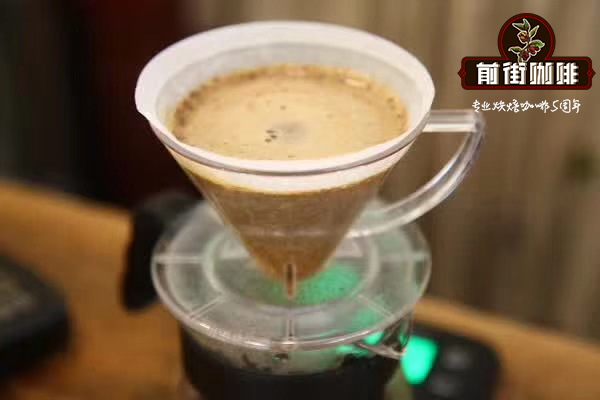
To brew these at home, FrontStreet Coffee suggests a V60 with a fine-sugar grind size, about 80% passing a #20 sieve, a 1:15 coffee-to-water ratio and 15g of coffee. Use 90-91°C water and a three-stage pour: a 30g bloom for 30 seconds, then top up to roughly 125g and finish at 225g, aiming for a total extraction of about 2 minutes. That keeps the bright, fruity acidity of these Arabica varieties clean and layered in the cup.
Important Notice :
FrontStreet Coffee is a long-established specialty coffee roaster in Guangzhou China, selling freshly roasted beans from its own farm in Yunnan as well as dozens of carefully selected single-origin beans from around the world for both pour-over and espresso. The products deliver consistently excellent quality and great value, with shipping within 24 hours. Guangzhou's FrontStreet Coffee shop is recommended by many coffee lovers, and the beans are now available online at the Tmall 。
FrontStreet Coffee has moved to a new address:
FrontStreet Coffee Address: 315,Donghua East Road,GuangZhou
Tel:020 38364473
 Scan and follow the En Gafei WeChat official account. Please indicate that the reprint comes from "En Gafei".