Introduction to Brazilian Coffee Bean Varieties, Flavor Profiles, and Taste Characteristics | Brazilian Coffee Growing Regions, Historical Stories, and World Production Ranking
When the conversation turns to the world's major coffee-producing countries, Brazil is at the front of the line. It is the largest coffee country by both cultivated area and output, and domestic consumption has been climbing steadily, making it the world's second-largest consumer after the United States. Brazil grows a wide range of coffees, the vast majority of them unwashed and sun-dried, and they are classified by state of origin and shipping port.
As the world's leading producer, Brazil supplies close to 45% of the planet's green coffee. The length of its dry season can even move global coffee prices.

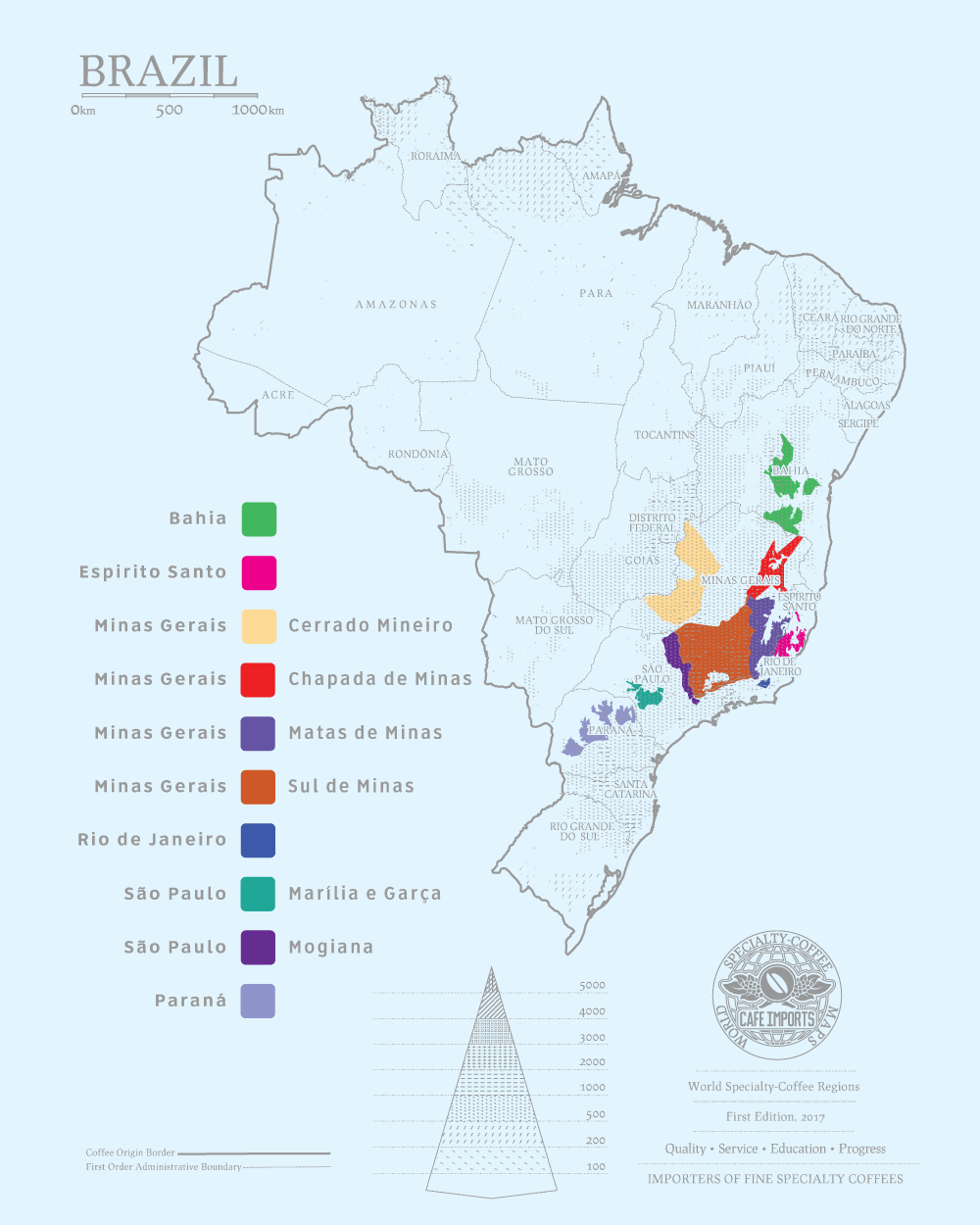
Brazil has 26 states, 17 of which produce coffee. Seven states account for the bulk of the output, together representing 98% of the national total.
São Paulo (Mogiana, Centro-Oeste)
Paraná (Norte Pioneiro do Paraná)
Bahia (Planalto da Bahia, Cerrado da Bahia, Atlântico Baiano)
Espírito Santo (Montanhas do Espírito Santo, Conilon Capixaba)
Minas Gerais (Sul de Minas, Cerrado Mineiro, Chapada de Minas, Matas de Minas)
Rondônia (Rondônia)
Rio de Janeiro (Rio de Janeiro)
Legend Episode
The history of Brazil's coffee cultivation has a genuinely legendary quality. Three hundred years ago Brazil had no coffee trees at all, and it was an illicit romance that put the country where it is today. In 1727 the handsome army officer Francisco de Mello Palheta was sent to French Guiana to mediate a territorial dispute between France and the Netherlands. The governor's wife fell in love with Palheta and gave him a bag of Bourbon coffee seeds, though some accounts say seedlings. Back in Brazil, Palheta resigned his commission and went to the Para province near the equator in the northwest to grow coffee, and in doing so set off a coffee boom that no one had anticipated.
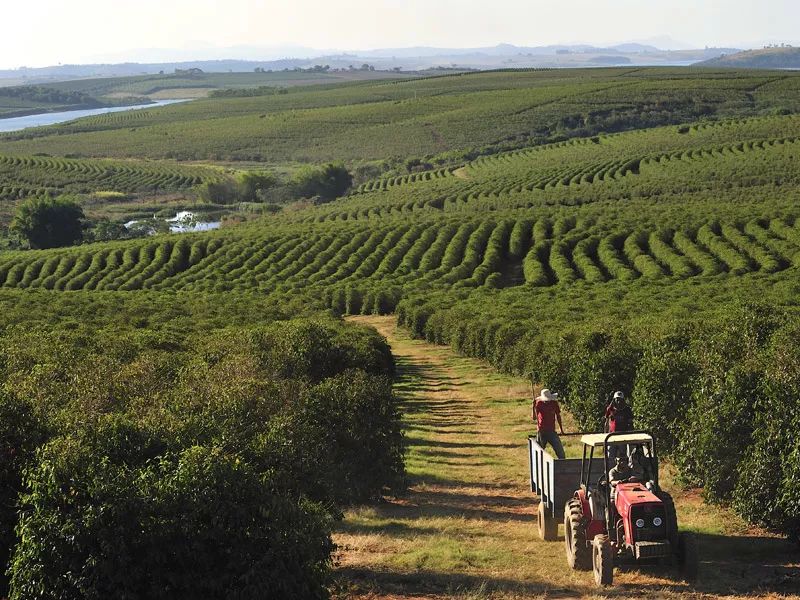
Over the following two centuries, plantations gradually moved to the more populous southeastern states of São Paulo and Espírito Santo, and to Paraná in the south. These areas sit between 20 and 30 degrees south, and in the higher latitudes winter frosts caused cold damage that farmers could not absorb. After 1970-1980, Brazilian growers began developing the warmer northern regions of Minas Gerais and Bahia, between 10 and 20 degrees south, where winters are mild and frost-free. Today Minas Gerais has become the new hope for Brazilian specialty coffee.
Cultivated Varieties
Brazil cultivates a broad range of varieties, with Red Bourbon, Yellow Bourbon, Mundo Novo, and Catuai currently the mainstays. Caturra, Acaiá, Obatã, Aramosa, and Laurina are also grown and researched. The Agronomic Institute of Campinas in São Paulo is Brazil's renowned center for coffee variety improvement, and Catimor, the most widely grown variety in the world, is the work of Portuguese and Brazilian scientists.
Mundo Novo
Mundo Novo is a hybrid of Bourbon and Typica. It first appeared in the 1940s and remains popular among Latin American producers today. Its disease resistance and yield beat Bourbon and Typica, but it pays for that with less flavor complexity.
Catuai
Brazil developed Catuai in the 1950s, a hybrid of Caturra and Mundo Novo with strong disease resistance and high yield. Like Caturra, its ripe fruit naturally divides into red and yellow types, and I personally prefer the former. Catuai is known for its rich acidity and is a common variety across most of Central America.
Caturra
In the 1930s a genetic mutation of Bourbon was discovered near the city of Caturra in Brazil, and the variety took its name from the place. Caturra is very high-yielding and its compact form makes harvesting easier, but in lower-altitude environments that same trait turns against it: the coffee becomes light, and the weight of the fruit alone can kill the plant. Planted above 1,200 meters, Caturra's quality and yield are both better protected. It is a common variety throughout the Central American coffee belt.
Bourbon
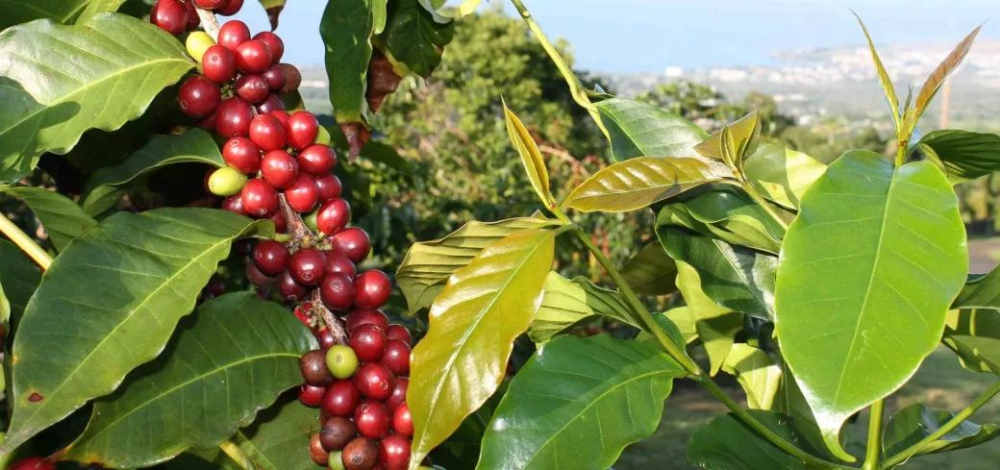
When it comes to Bourbon, most people have heard about the color distinctions: Red Bourbon, Yellow Bourbon, Pink Bourbon. Bourbon is a subspecies that mutated from Typica and, alongside Typica, belongs to the oldest coffee varieties still in existence. Its green fruit ripens to a bright red. Bourbon planted at high altitude usually has better aroma and brighter acidity. Red Bourbon is the most common type, because under normal conditions the fruit moves from green to a faint yellow to orange, shows red at the ideal picking moment, and finally turns overripe dark purple.
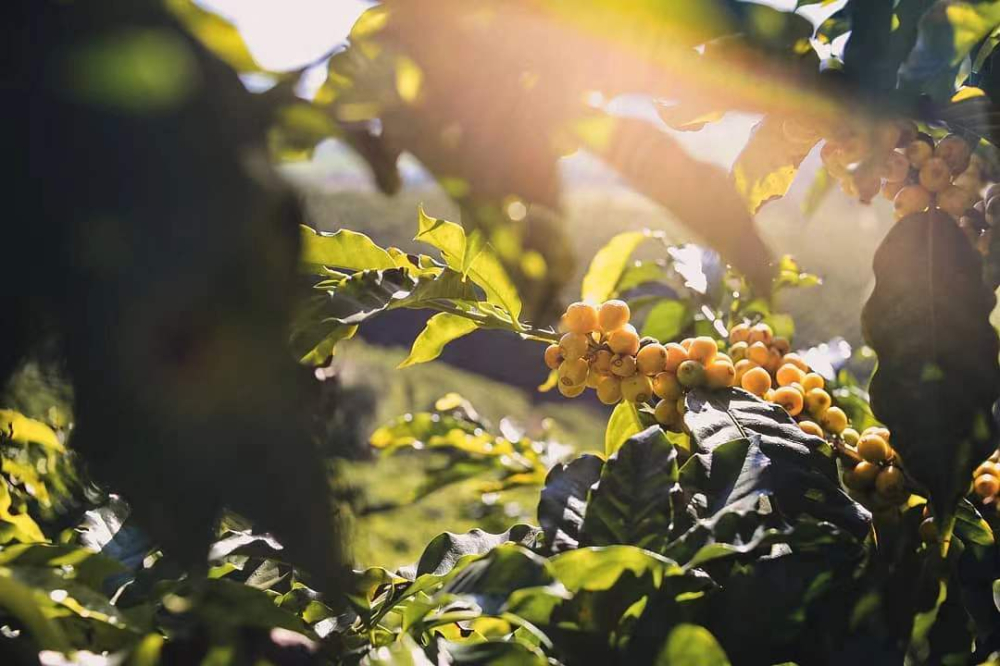
Red Bourbon takes its name from its red fruit, and the same logic applies to Yellow Bourbon and Pink Bourbon. Yellow Bourbon is generally considered a hybrid of Red Bourbon and another variety, and its fruit ripens yellow. It was first discovered in Brazil, and Brazil remains the main country growing it. Beyond the color, Yellow Bourbon yields relatively little and is not resistant to wind and rain, so it is not widely planted. Pink Bourbon is rarer still, obtained by crossing Red and Yellow Bourbon; the pink color is determined by recessive genes that are easily disrupted, which makes the appearance difficult to maintain.
Brazil's coffee areas are dominated by two types of terrain: the Brazilian plateau above 500 meters and the Brazilian plains below 200 meters. The best-known varieties grown are Bourbon, including Yellow Bourbon, Red Bourbon, and flat-bean Santos. Brazilian coffee's flavor is defined above all by low acidity, nuttiness, balance, and moderate body. In the specialty world it is not a standout, but in espresso it is frequently used as a blending component. Because it is so balanced, merchants often use it as a Blue Mountain-style flavor bean.
Coffee Bean Characteristics
Brazilian coffee beans are, broadly, every bean grown in Brazil except Santos. Most are "good value for money" coffees, usable in mass-produced blends and usually roasted dark. FrontStreet Coffee's two blends also draw on Brazilian coffee: the Basic Blend and the Specialty Blend. Brazilian beans are likewise the main raw material for instant coffee.
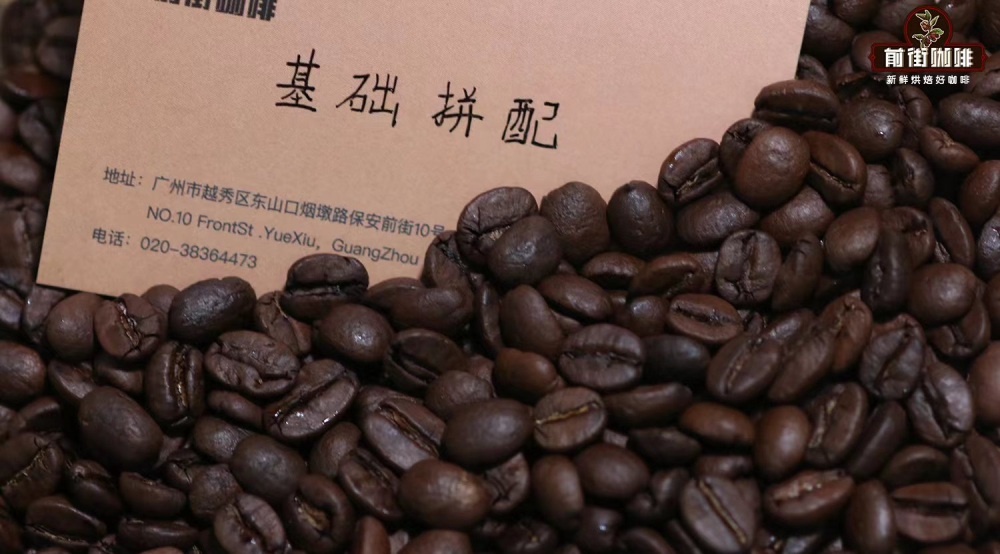
Brazilian beans are large and aromatic, with moderate bitterness and high-quality acidity. The overall impression is soft and low in acidity, and careful tasting reveals a long, persistent finish. The profile combines lower acidity with coffee's sweet and bitter notes, making it extremely smooth to drink, with a faint grassy aroma behind it. It is fragrant with a slight bitterness, sweet and smooth, and the aftertaste is refreshing. Without good Brazilian coffee, in other words, there is no good espresso.

FrontStreet Coffee's Brazilian Pour-Over Coffee
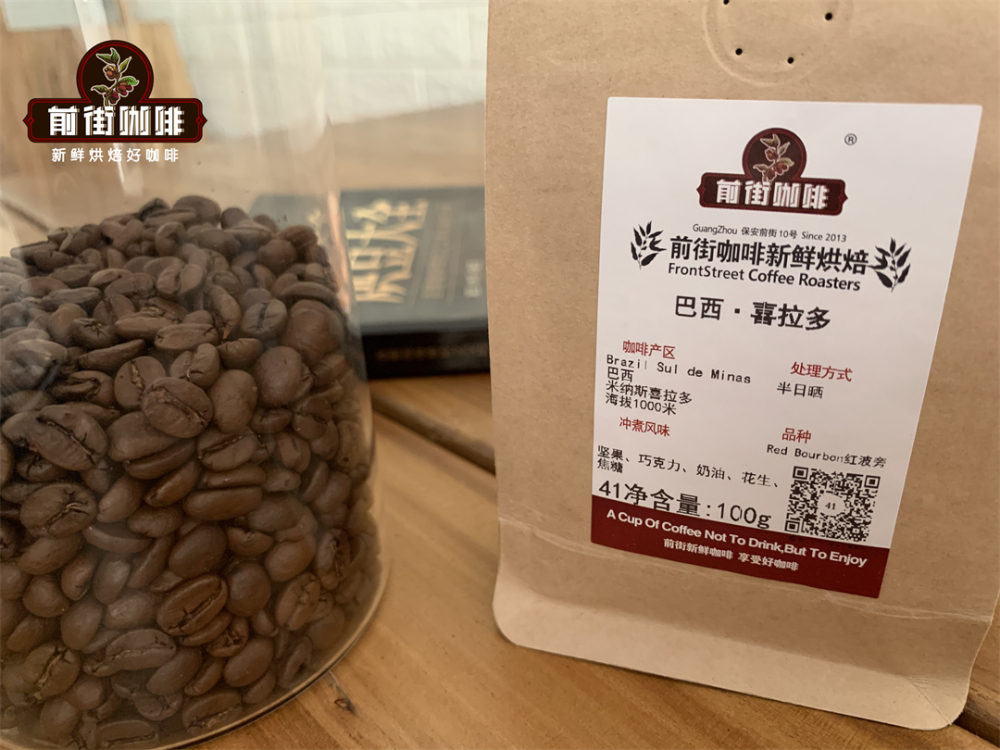
FrontStreet Coffee's bean list includes two Brazilian coffees: Red Bourbon from Cerrado and Yellow Bourbon from Queen's Farm. Let's brew the Cerrado beans and walk through the Brazilian method. Cerrado lies in Minas Gerais and is a high-quality producing region, the heart of the Cerrado savanna, with high altitude and fertile soil that make it possible to grow specialty beans with a sweet, clean flavor, high body, and high cleanliness. FrontStreet Coffee has tasted coffees from every major Brazilian region, and Cerrado, as a large producing area, delivers the most stable and characteristic flavor. We use this bean in espresso blends and as an everyday single origin representing the Brazilian profile.
Brewing Parameters: Using a Kono Filter
Water Temperature: 88°C
Dose: 15 grams
Coffee-to-Water Ratio: 1:15
Grind Size: medium-fine (Chinese standard No. 20 sieve, 70-75% pass rate)
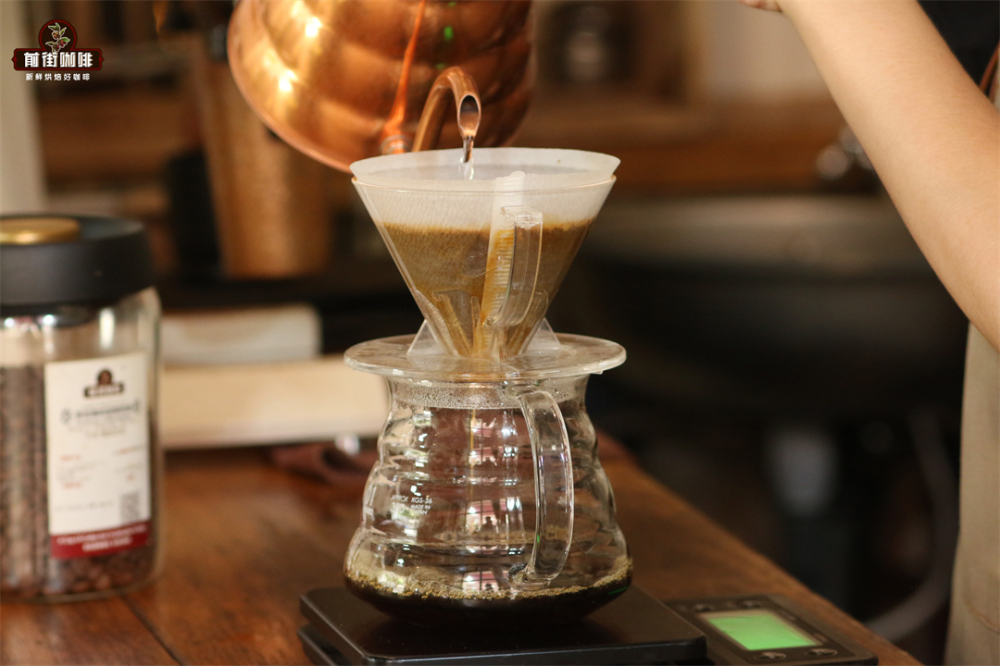
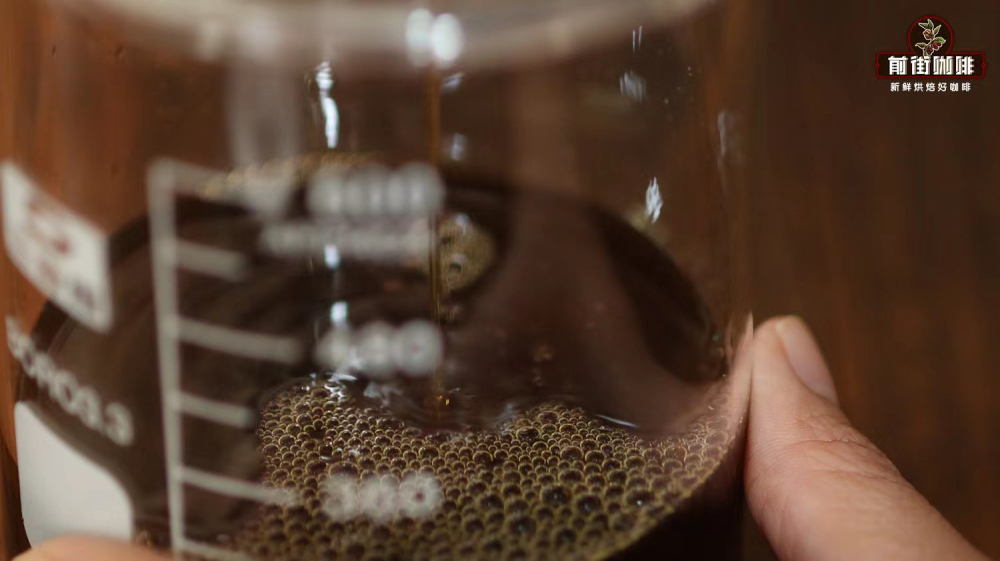
FrontStreet Coffee uses a segmented pour, also called three-stage brewing: bloom with 30g of water for 30 seconds, then pour in a circular motion at a low flow to 125g for the second stage. When the water level drops and the bed is about to be exposed, continue pouring to 225g and stop. When it drops again and the bed is about to be exposed, remove the dripper. Timing starts at the beginning of the bloom, and the extraction runs 2:05 to 2:15.
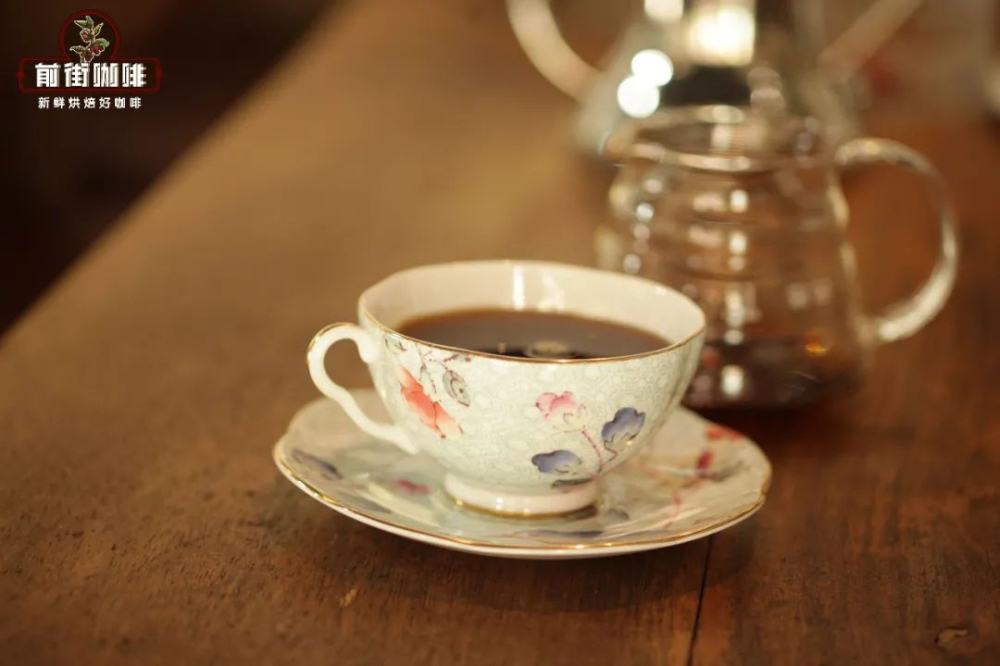
Brazilian Red Bourbon Brewing Flavor
An obvious sweetness appears right at the start, accompanied by a faint caramel aroma and rich nutty flavors, with a distinct dark chocolate note in the later stages and a rounded overall impression.
FrontStreet Coffee Recommendation
FrontStreet Coffee's Cerrado Red Bourbon is the classic Brazilian single origin and the easiest way into the profile. Cerrado is one of Brazil's best-known growing regions, prized for high-quality beans, and this lot is the common South American Red Bourbon variety. Roasted medium, it shows rich cream and peanut, toasted bread, caramel, and hazelnut aromas, with a round, smooth body, no real acidity, and a mild bittersweet edge. It handles pour-over as easily as the moka pot, espresso SOE, siphon, or French press.
For a less common variety, FrontStreet Coffee's Queen's Farm comes from Mogiana, close to southern Minas, where fertile red volcanic soil feeds the fruit and builds a fuller aroma. The region mixes traditional farm management with newer, standardized practice, and the quality has improved markedly as a result. The variety is the rare Yellow Bourbon, a mutation of Red Bourbon with a cleaner fruit character, and it delivers a sugarcane sweetness found nowhere else, alongside fruit and chocolate notes. Pour-over, moka pot, or home espresso machine all suit it.
Brazil's low acidity, balance, and accessible price also make it the first choice in many espresso recipes. FrontStreet Coffee's Classic Blend with its generous crema, the nutty Specialty Blend, the balanced Black Cocoa Blend recommended by many baristas, and FrontStreet Coffee's Commercial Blend designed for cafes all contain Brazilian coffee. Beyond contributing chocolate and cream aromas, Brazilian beans add a soft sweet-sour-bitter balance that helps keep extraction stable.
Important Notice :
FrontStreet Coffee is a long-established specialty coffee roaster in Guangzhou China, selling freshly roasted beans from its own farm in Yunnan as well as dozens of carefully selected single-origin beans from around the world for both pour-over and espresso. The products deliver consistently excellent quality and great value, with shipping within 24 hours. Guangzhou's FrontStreet Coffee shop is recommended by many coffee lovers, and the beans are now available online at the Tmall 。
FrontStreet Coffee has moved to a new address:
FrontStreet Coffee Address: 315,Donghua East Road,GuangZhou
Tel:020 38364473
 Scan and follow the En Gafei WeChat official account. Please indicate that the reprint comes from "En Gafei".