How is the Goddess Geisha Coffee? Flavor Characteristics of Colombian Geisha Coffee Bean Varieties

How Is Geisha Coffee, the "Goddess" of Coffee?
Geisha seedlings were first found growing wild in the forests of southwestern Ethiopia, where collectors were searching for new disease-resistant varieties. The plants took their name from the nearby Geisha Mountain. In 1954 they were carried to Costa Rica and catalogued as T2722. Through the 1950s and 1960s they were trial-planted on farms across Central and South America, but low yields and fragile, delicate plants kept them from being widely cultivated. Only in 2003 did the Peterson family of Hacienda La Esmeralda take an interest, and after the variety won the Best of Panama competition in 2004, the era of Panamanian Geisha began.

Geisha is extremely demanding about where it grows. It needs high altitude, fertile soil, and cloud cover or shade trees, and it cannot tolerate direct, harsh sunlight. The owner of Hacienda La Esmeralda has noted that the estate relies on numerous shade trees to shield the delicate Geisha from direct sun, and that traditional pruning methods must be used during the first years of planting, or the trees are prone to dying. Geisha planted at higher elevations ripens more slowly, which lets it develop a more complex and distinctive flavor profile.
Unlike other coffee varieties, Geisha trees have very thin foliage, so their photosynthetic efficiency is low. Their root systems are also fragile, absorbing water and nutrients slowly, which translates into very low yields. Combined with the high-altitude sites they favor, the cherries ripen late as well. A single Geisha tree produces only about half the fruit of a Caturra tree, and that scarcity is one of the reasons Geisha is so prized.

Flavor Characteristics of Geisha Coffee
In 1931 Geisha made an unremarkable journey from Geisha Mountain in southwestern Ethiopia (whose name happens to sound like the Japanese word for geisha) to Kenya, drifting onward through Tanzania and Costa Rica, and in the 1960s it was transplanted to Panama. After nearly half a century in obscurity it rose suddenly to fame, beating out long-standing champions such as Bourbon, Caturra, Catuai, and Typica and sweeping first place at the Panama Cup of Excellence in 2005, 2006, and 2007.
Geisha beans are celebrated worldwide for their intense floral aroma, citrus and berry notes, juicy texture, acidity that grows finer as the cup cools, and richly layered flavor. Panamanian coffee cultivation centers on the volcanic Chiriqui region, and Geisha is exacting about its environment: it needs higher altitudes, cloud cover or extensive shade, and fertile soil to deliver those captivating florals, refined fruit acidity, and layered flavors.

When people talk about Geisha, those from Hacienda La Esmeralda in Panama are regarded as the finest, largely because Panama's microclimate shapes the signature flavor of Panamanian Geisha. Once Geisha became famous, estates around the world began planting it. FrontStreet Coffee has sourced Geisha not only from Panama but also from Colombia, Guatemala, and Costa Rica. Panamanian Geisha may be exceptional, but Geisha from other origins offers excellent flavor profiles as well.
Colombia's Coffee Growing Environment
Colombia is the world's third-largest coffee exporter, producing almost entirely Arabica, and it is the largest exporter of Arabica beans. The country is rich in natural resources, with coffee, flowers, gold, and emeralds celebrated as its "four treasures." Sitting in the northwest of South America, Colombia shares a border with Panama in Central America. Seen from the air, its western side looks as if it were scratched by a cat, leaving three vertical claw marks running north to south. Colombia's famous growing regions are scattered across these Andes Mountains, whose soils are fertile and volcanic.

Colombia's Huila province lies where the central and eastern ranges of the Andes meet, in the south of the country. Its coffee zone centers on Pitalito, with cultivation at 1,750-1,950 meters, mostly on smallholder farms. Over the past decade these small farmers have worked collaboratively, hand-picking and carefully processing their cherries into specialty beans that express the distinctive flavors of Huila. FrontStreet Coffee has cupped many coffees from the region, all showing nutty, caramel aromas and soft berry-like acidity.

Huila Province, Colombia
In 2007 the Herrera family of Colombia's La Esperanza farm brought Geisha over from Panama's Hacienda La Esmeralda. Despite early failures, years of experimental cultivation paid off, and in April 2011 they took first place at the "Coffees of the Year" competition held by the Specialty Coffee Association of America in Houston.

Colombia's Huila province lies where the central and eastern ranges of the Andes meet, in the south of the country. Its coffee zone centers on Pitalito, with cultivation at 1,750-1,950 meters, mostly on smallholder farms. Over the past decade these small farmers have worked collaboratively, hand-picking and carefully processing their cherries into specialty beans that express the distinctive flavors of Huila.
Finca Montblanco
Finca Montblanco sits along the winding mountain roads of Vereda La Tocora near Pitalito, run by estate owner Rodrigo Sanchez Valencia, whose family's coffee growing traces back to his grandfather. The estate occupies a hilltop with roughly 18 hectares of land, abundant water, and well-equipped washing and drying facilities, so most of its coffee is washed, including several special preparations that build on the washed process.

Hanami Geisha Coffee
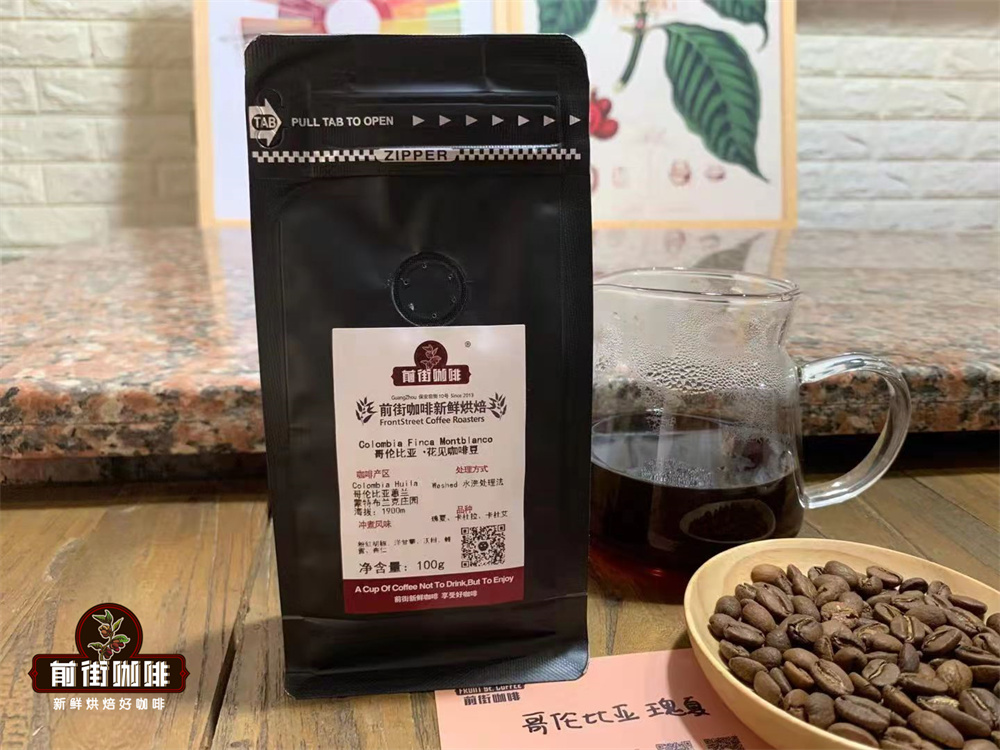
Hanami Geisha comes from Colombia's most famous region, Huila. Colombian coffee needs little introduction, and Colombia holds a high reputation in the specialty world. Huila represents Colombia's classic profile: nutty and caramel notes with berry-like acidity. Hanami is a blend of Geisha, Caturra, and Catuai processed by the classic traditional washed method. While hot it leads with chamomile and pink pepper; at medium temperature the Geisha character stands out with citrus and honey; as it cools, a touch of bitterness appears alongside almond.

Coffee Varieties
The Geisha blend that FrontStreet Coffee carries is composed of Geisha, Caturra, and Catuai. The estate originally planted Caturra and Catuai; in 2016 the owner and his team brought in Geisha varieties from Panama, harvested their first crop in 2020, and reached commercial production by 2021. This makes these beans Montblanco Estate's first Geisha coffee to reach the market.
At this point some may wonder whether a blend of varieties can still count as single-origin. Single-origin simply means the coffee was grown in one single region or estate, not that it comes from a single variety. By that definition, this Geisha blend qualifies as single-origin coffee.
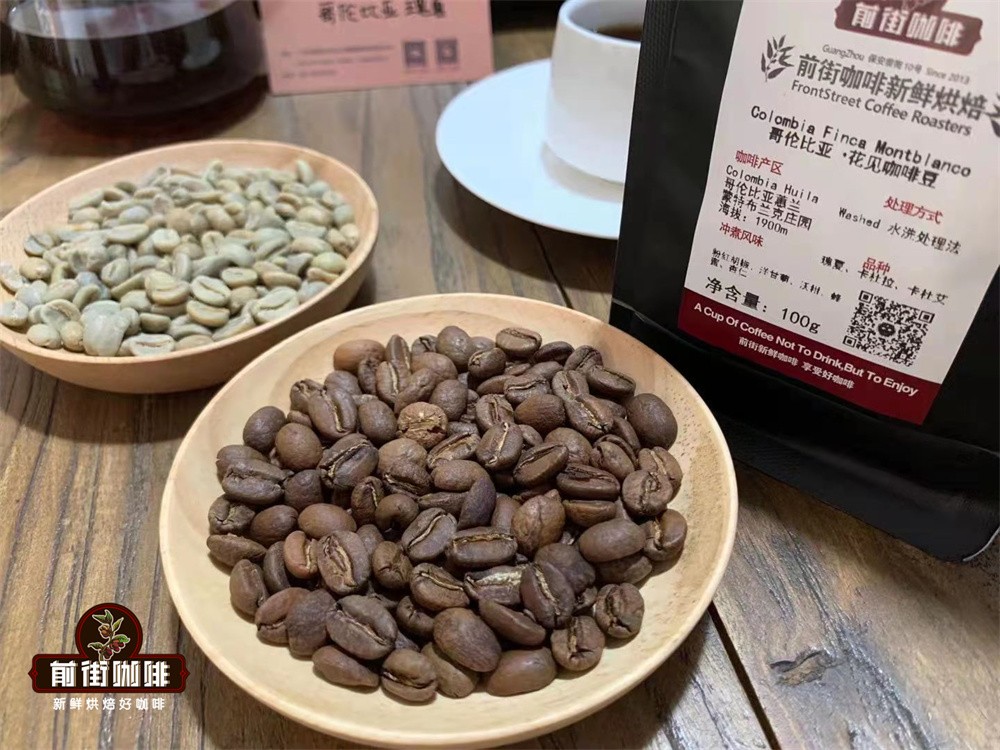
Geisha has beautiful, narrow leaves, and its cherries and green beans are slightly elongated compared with other Arabica varieties. It is sensitive to growing conditions, delivers excellent flavor at high altitude, and produces low yields.
Caturra: a natural mutation of Bourbon, discovered in Brazil in 1937. Its plant is shorter and more compact than Bourbon. It carries Bourbon's lineage, with lower disease resistance but higher yields. Although it was found in Brazil, Caturra is not well suited to growing there and was never widely cultivated in the country; instead it became popular across Central and South America, with extensive plantings in Colombia, Costa Rica, and Nicaragua. FrontStreet Coffee's Colombian "Flower Moon Night" and "Rose Valley," for example, are both Caturra varieties.

Catuai: a variety created by artificially crossing Caturra and Mundo Novo. Catuai inherited Caturra's compact structure, needing no shade, which makes it easy to grow and convenient to harvest. It also resists natural disasters better than Mundo Novo and has good acidity in the cup. Catuai typically produces both red and yellow cherry types.
Washed Processing Method
Colombia is a major producer of washed coffee and the largest country producing washed Arabica, so most of its beans are washed. The estate first float-selects the harvested cherries, skimming off fruit that is insufficiently dense or rotten, along with branches and stones. Machines then remove the skin and pulp, and the depulped cherries go into fermentation tanks for 18-36 hours, where acids produced during fermentation break down the mucilage layer. After fermentation the cherries are rinsed thoroughly and finally sun-dried until the beans' moisture content falls to around 11%. The dried beans are stored in parchment until just before export, when the parchment is removed.

FrontStreet Coffee Roasting Recommendations
Because new-crop green beans hold a high moisture content, FrontStreet Coffee's roasters extend the dehydration phase so the bean surface and core heat evenly. To bring out this coffee's sweetness, acidity, and rich aromatics, a medium-light roast level is used.
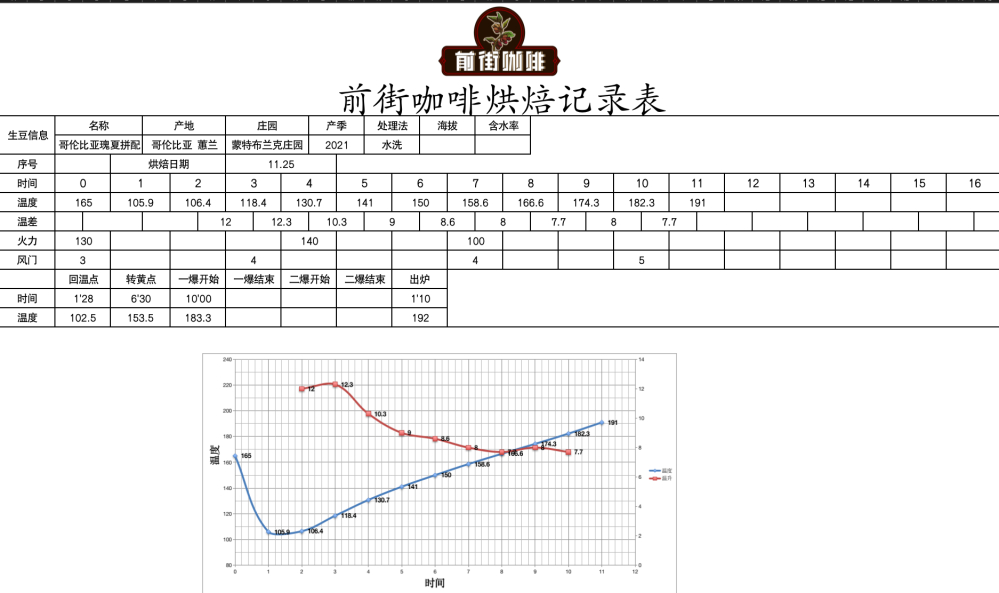
FrontStreet Coffee's Colombian Geisha Brewing Parameters
FrontStreet Coffee uses a medium-fine grind, about the texture of granulated sugar (80% pass-through rate on a China-standard #20 sieve). Use 15 g of coffee with a V60 dripper, 91°C water, a 1:15 coffee-to-water ratio, and a three-pour technique.
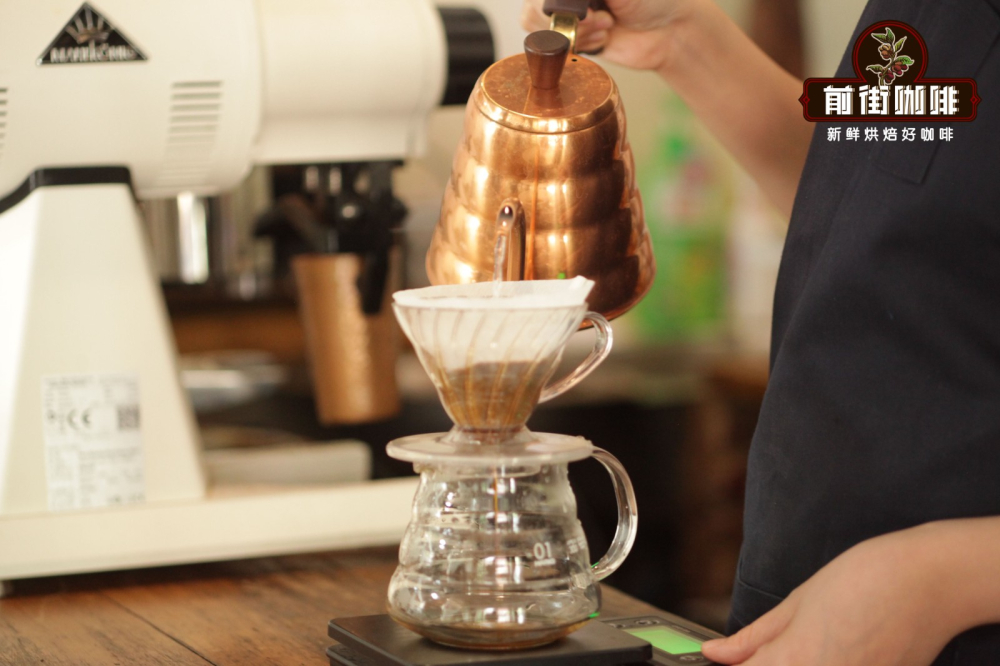
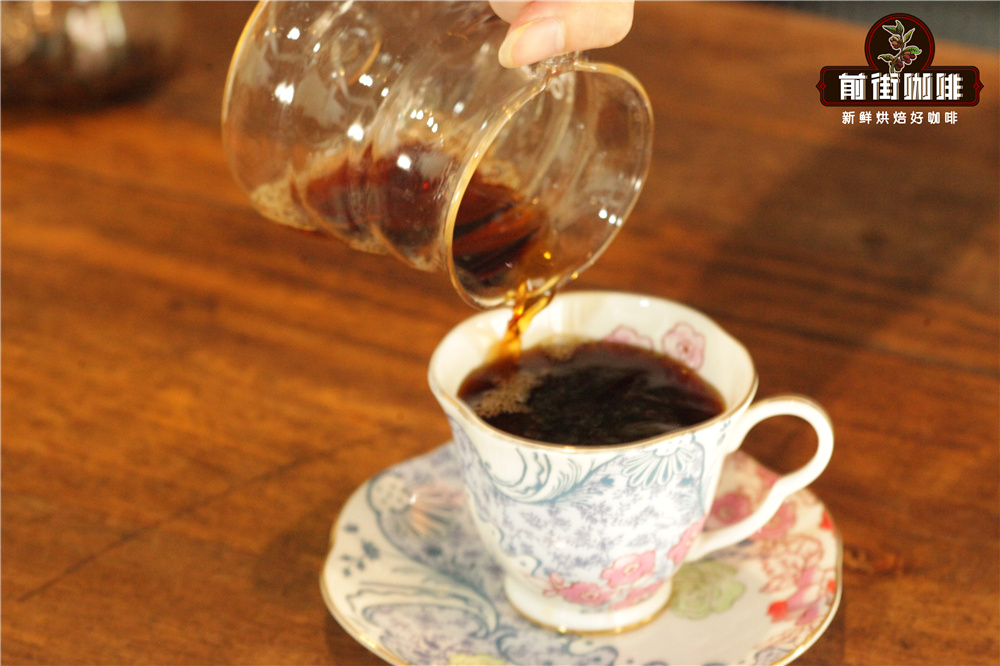
For the three-stage extraction, begin with a bloom using twice the weight of the grounds in water, that is 30 g of water for a 30-second bloom. The bloom lets the grounds release trapped carbon dioxide, which keeps extraction stable in the stages that follow. With a small stream, pour in a circular motion to 125 g, then continue to 225 g and stop. Remove the dripper once the water has finished draining through. Timing starts at the first pour, and extraction takes 2'00". Finally, take the whole carafe and swirl it gently so the coffee is evenly mixed before pouring into cups for tasting.
FrontStreet Coffee's Colombian Hanami Geisha flavor profile: bright, lively, and varied acidity; intense floral and fruity aromas; medium body; a balanced, smooth mouthfeel; and a long, sweet aftertaste.
FrontStreet Coffee's Brewing Recommendations
When it comes to brewing, FrontStreet Coffee has always held that the freshness of the beans has a huge influence on flavor. FrontStreet Coffee therefore ships beans roasted within 5 days. Its roasting philosophy is "Freshly Roasted Quality Coffee," so that every customer who places an order receives the freshest coffee possible. The resting period is roughly 4-7 days, which means the coffee arrives at its peak when it reaches you.
For those who need ground coffee, a gentle reminder from FrontStreet Coffee: once beans are pre-ground there is no need for a resting period, and the pressure from carbon dioxide building up in the bag during shipping also helps round out the flavors. You can brew a cup the moment the ground coffee arrives. That said, ground coffee should be brewed promptly, since it oxidizes fairly quickly once exposed to air and its flavors fade faster, lowering the overall quality. FrontStreet Coffee therefore recommends buying whole beans and grinding fresh before brewing to get the most from the cup.
As specialty coffee has advanced, Colombia has also moved beyond the traditional washed process to introduce anaerobic methods, such as the Colombian "Flower Moon Night" and "Rose Valley," which carry extra floral, berry, and fermented notes compared with washed coffees. Washed coffees are cleaner, with nutty and dark chocolate notes and soft fruit acidity. FrontStreet Coffee believes the washed process best expresses a place's flavors, but special processing methods offer very interesting profiles of their own.
FrontStreet Coffee Recommendation
If this Colombian Geisha has you curious about the variety's benchmark, FrontStreet Coffee's two Panama Esmeralda lots are the place to start. The Esmeralda Green Label (Private Collection) is blended from several plots to showcase the estate's signature high-altitude Geisha character, and its more accessible price makes it the best-value introduction to the Esmeralda style. The Esmeralda Red Label (Esmeralda Special) is grown at 1,600-1,800 m, cups above 90 points, and comes from a single plot with its own lot number, the most direct way to taste the estate's finest work.
For a gentler first step into Geisha, FrontStreet Coffee's Panama Boquete Geisha is an entry-level lot that delivers the classic Panama profile at a friendly price: tangerine-honey sweetness, an oolong-tea texture, and fine fruit acidity with clearly separated layers. Whichever you choose, brew it like the Hanami above: a medium-fine grind and water around 91°C bring out the floral aromatics and delicate acidity that define Geisha.
Important Notice :
FrontStreet Coffee is a long-established specialty coffee roaster in Guangzhou China, selling freshly roasted beans from its own farm in Yunnan as well as dozens of carefully selected single-origin beans from around the world for both pour-over and espresso. The products deliver consistently excellent quality and great value, with shipping within 24 hours. Guangzhou's FrontStreet Coffee shop is recommended by many coffee lovers, and the beans are now available online at the Tmall 。
FrontStreet Coffee has moved to a new address:
FrontStreet Coffee Address: 315,Donghua East Road,GuangZhou
Tel:020 38364473
 Scan and follow the En Gafei WeChat official account. Please indicate that the reprint comes from "En Gafei".