What Variety Does Geisha Coffee Belong To? Differences Between Ethiopian Native Geisha Variety from Coffee Gene Bank and Panamanian Geisha Flavor Profile

Geisha coffee belongs to the Arabica family, Ethiopian lineage, and originates from the African region of Ethiopia.
Although the Geisha variety originates from Ethiopia, it gained fame in Panama. When coffee enthusiasts worldwide were praising Geisha to the skies, a group of passionate coffee dreamers returned to its origin, seeking the roots and attempting to cultivate Geisha coffee beans of the same quality there.

Although both are called Geisha, Geisha coffee grown in Panama and Central and South America is in fact a different variety from Geisha coffee grown in Ethiopia.
According to FrontStreet Coffee's comparison, whether from Panama or other Central and South American regions, this variety's flavor characteristics include delicate fruit acidity, floral notes, caramel sweetness and tea-like qualities, whereas Ethiopian Geisha coffee has flavors of citrus, almond and tea-like notes.
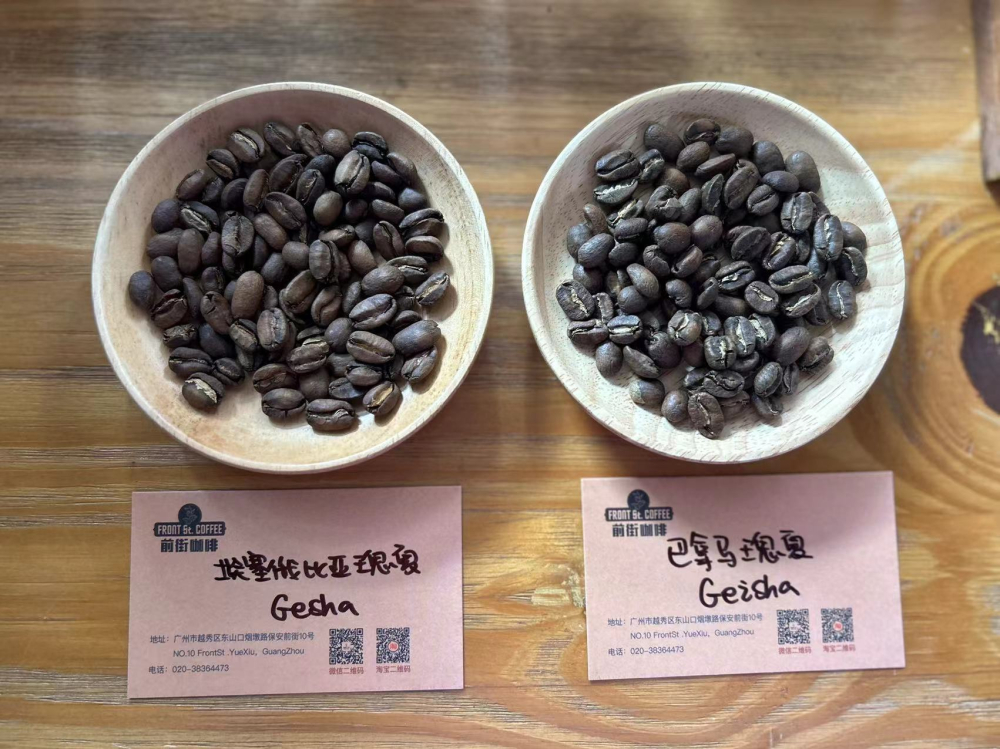
Overall, Ethiopian Geisha coffee varieties do not exhibit the same refined and rich flavors as Panamanian and Central and South American Geisha coffees, lacking slightly in complexity. To understand the reasons behind this comparison, FrontStreet Coffee consulted numerous coffee books.
Who Discovered the Geisha Variety?
In the 1930s, after World War I ended, East African countries had been divided into colonial territories by European powers seeking economic benefit for their home countries. Ethiopia was one of only two countries that were not colonized, but its surrounding areas were all under British influence, so military forces were always stationed at its borders. To find coffee varieties suitable for large-scale commercial cultivation, the British Agricultural Director in Kenya ordered a survey of wild Arabica coffee varieties in Ethiopia, instructing border-stationed Colonel Richard Whalle to lead troops deep into the Kaffa Forest in southwestern Ethiopia to collect coffee tree specimens for research.

Because a wild forest near the Kaffa Forest called Gesha was widely known for producing particularly delicious coffee, the European colonial powers also took an interest in this homeland of Arabica coffee. The colonel collected various coffee seeds and handed them to the British consul stationed in the Maji region, who then shipped them back to coffee research institutes in Kenya and Tanzania for classification and cultivation.
A letter mentioned that they collected approximately 10 pounds of coffee seeds from a place called Geisha. The letter noted that the original forest at Geisha was a rainforest area where coffee trees grew under dense, tall tree shade, belonging to a shaded growing environment similar to the coffee environment in the Sudan region. Since the report misspelled the collection location "Gesha" as "Geisha", Geisha has been known by this "incorrect name" for a century.

According to report documents from that time, such collection work was conducted three times in total: once in 1931 and twice in 1936. The first coffee was sent to Kitale, Kenya, for trial planting, while the second selection identified seedlings numbered Geisha 1, 9, 11, 123 and so on, which were sent to the Lyamungu Coffee Research Station in Tanzania for trial planting. The Lyamungu Coffee Research Station then stabilised these Geisha varieties through artificial selection, choosing a group of seedlings numbered from VC496 to VC500.
By 1953, the Tropical Agricultural Research and Higher Education Center (CATIE) in Costa Rica had obtained this batch of Geisha coffee seedlings from Tanzania's Lyamungu Coffee Research Station. Then, not until the 1960s, CATIE sent this batch of Geisha coffee, including the variety numbered T2722 from La Esmeralda, to Boquete, Panama, where it was given to local farmers to plant in order to fight leaf rust. Another 40 years passed before it was discovered by the Peterson family, and at the BOP it dominated the competition.
The Relationship Between Ethiopian Geisha and Panamanian Geisha
It turns out that Geisha from Panama and Central and South America and Ethiopian Geisha do not have much of a relationship, meaning they are two completely different varieties. In many official documents, you can notice that Geisha from Central and South America is spelled "Geisha", while Geisha from Ethiopia is spelled "Gesha". This one-letter difference is not an accidental error but a deliberate distinction made by people.
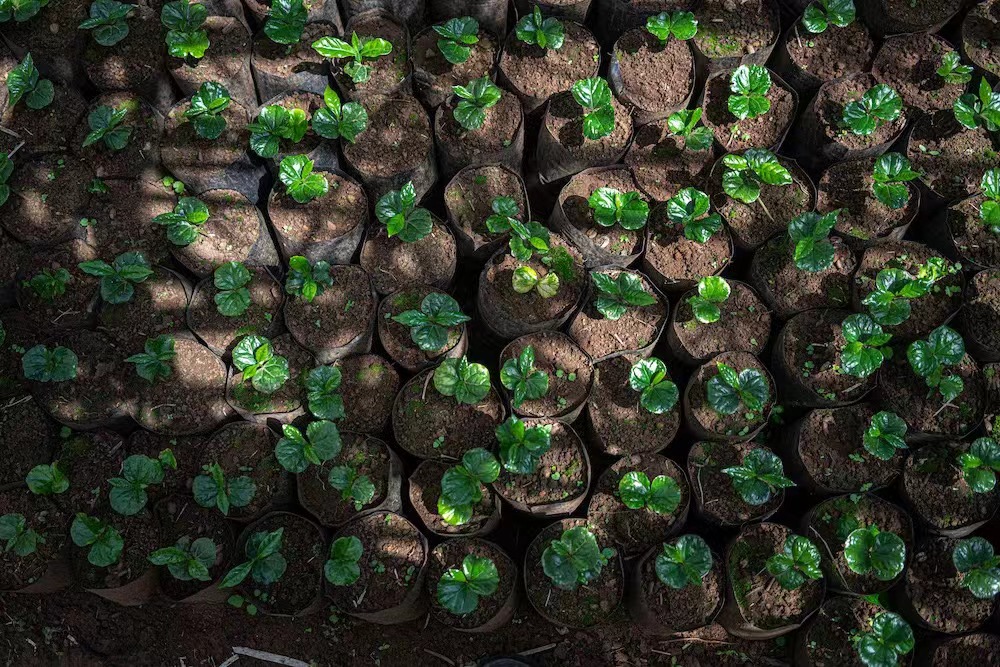
According to documented records, the source of the Geisha that gained fame in Panama was a variety marked as "Gesha" that a British colonel purchased in 1931 from an area called Gesha in Ethiopia and from nearby markets, then mixed together and sent to British plantations in Kenya.
At that time, people used this batch of mixed coffee plants as research varieties and continuously cultivated many Geisha plant lines mixed with different genes. The one that gained fame in Panama was the Geisha variety numbered T2722. After years of artificial cultivation and the plants' own natural evolution to adapt to the regional terroir environment, these refined coffee flavors emerged "by accident".
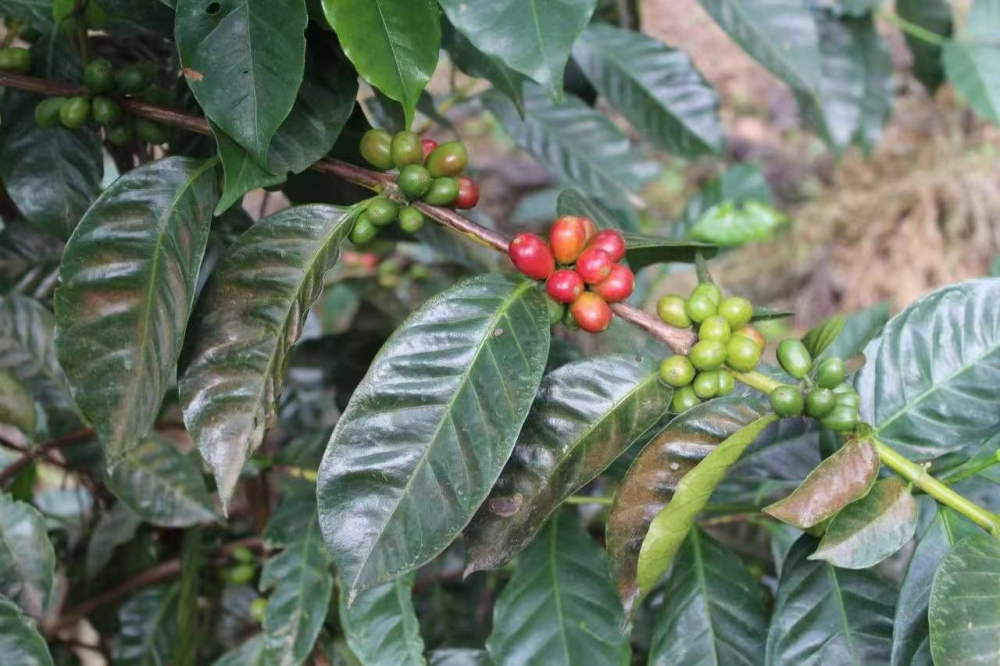
Meanwhile, Geisha in Ethiopia was discovered when people returned to the Gesha area about a decade ago to find wild varieties with the same origins as Panamanian Geisha, hoping to cultivate alternatives. To draw more attention to these later-discovered varieties, they named these wild varieties "Gesha" after the region.
Because they have only been discovered and research-cultivated in recent years, Ethiopian Geisha flavors have not yet been "tamed" by humans or by different regional terroirs, so the flavors stay closer to those of native Ethiopian varieties. The overall layered flavors are completely different from the Panamanian Geisha that everyone knows.
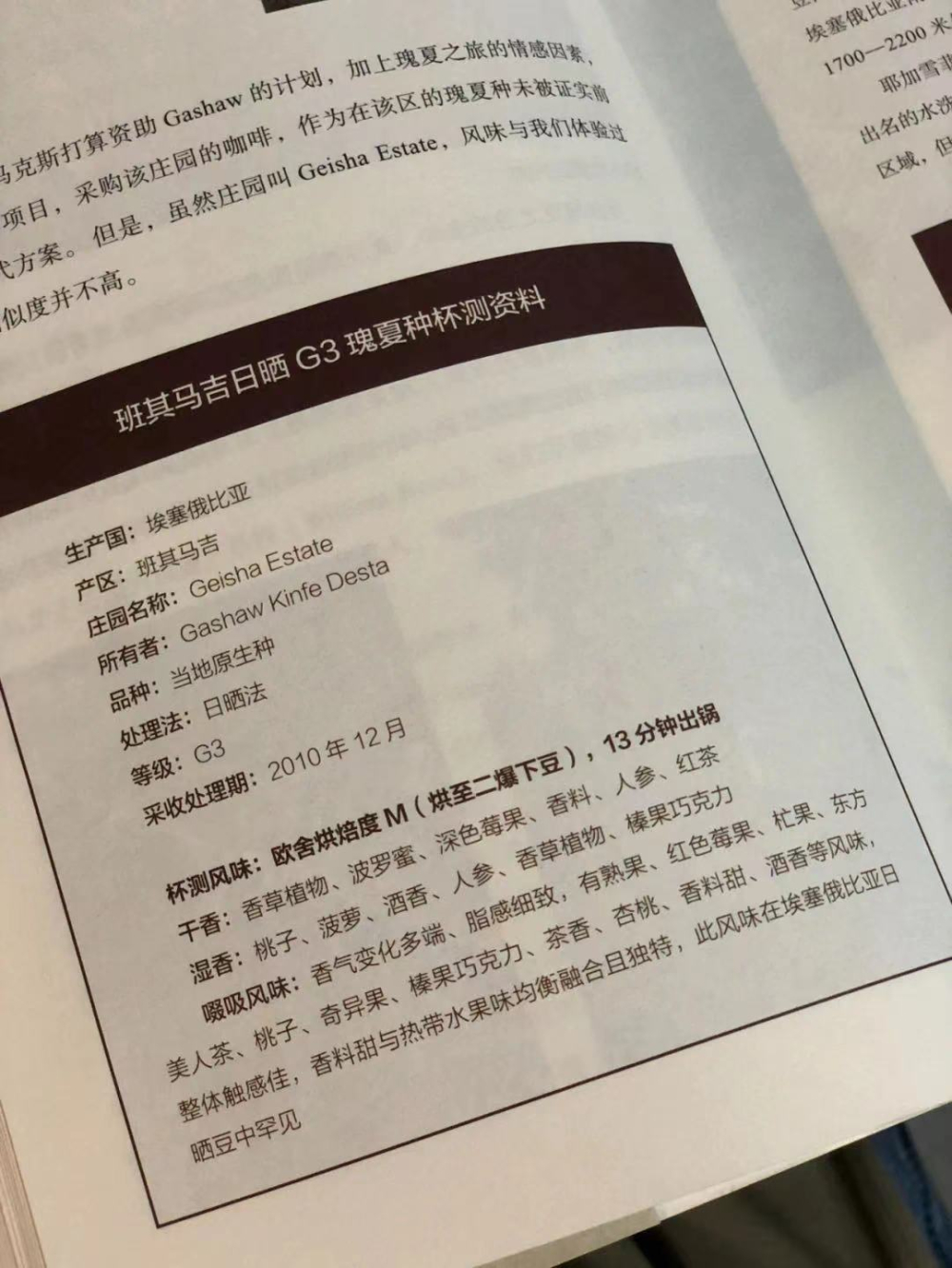
Going back to 2004, the Geisha that won the championship at the BOP competition and amazed everyone was found, through sample comparison, to be the "geisha T2722" variety collected from the Gesha area near the Kaffa Forest in southwestern Ethiopia in the 1930s, later cataloged by CATIE in Costa Rica as a fungus-resistant variety.
The variety name of the Gold Label from Geisha Village in Ethiopia, however, carries an additional year: "Gesha 1931". The selection work at Geisha Village was led by Willem Boot. Because genetic comparison technology was lacking at the time, farm owner Adam screened the vast Gesha area by referencing the plant morphology and flavor performance of Panamanian Geisha, and found two Geisha varieties. One of them had flavors remarkably similar to La Esmeralda's Geisha, so it was named "Gesha 1931" in memory of the year Geisha was discovered.

From this we can confirm that the Panamanian Geisha, La Esmeralda included, that is highly sought after today comes from the coffee variety recorded as "T2722" in a small notebook back then, while Geisha Village's "Gesha 1931" was found in the vast Kaffa Forest using Panamanian Geisha as a reference template, so it cannot be proven to be of the same origin as Panamanian Geisha.
Currently, FrontStreet Coffee sells Geisha coffee beans from the original Geisha Village in the Bonga Maji region of Ethiopia, including Geisha Village's Gold Label, Red Label and Chaka varieties.
FrontStreet Coffee's Geisha Village Gold Label uses the Gesha 1931 variety from the Oma region, with flavors of berries, chamomile, melon and tea-like qualities. Geisha Village Red Label uses the Geri gesha variety, with flavors of citrus, plum, cream, tropical fruits and fermented notes. Geisha Village Chaka uses Gesha 1931, Geri gesha and IIIubabor varieties, with notes of lemon, berries, honey, cream and oolong tea.

From Panama, there are Geisha varieties including La Esmeralda's Natural Red Label, its Washed Green Label, and Geisha coffee beans from the Boquete region.
FrontStreet Coffee's La Esmeralda Natural Red Label Geisha coffee beans come from the Mario lot, with flavors of rich berry acidity and sweetness, rose aromas, tropical fruit fermentation notes and a black tea-like aftertaste. La Esmeralda Washed Green Label Geisha coffee beans exhibit white floral notes like jasmine and ginger flower, citrus-like bright acidity, a Tieguanyin-like aftertaste and a honey-like finish. Washed Boquete Geisha coffee beans show citrus-like acidity, a roasted sweet potato-like sweetness, white floral notes and a green tea-like aftertaste.

FrontStreet Coffee Recommendation
Because Ethiopian and Panamanian Geisha are two different varieties, FrontStreet carries both so drinkers can taste the difference directly. On the Ethiopian side, FrontStreet Geisha Village Gold Label makes up 10% of the village's total production and is, outside the auction lots, the finest coffee it produces, often chosen by competitors on the international stage. It is the Gesha 1931 variety, given a refined natural process, and it cups with a complexity that lingers from the dry aroma through the sip to the finish. The FrontStreet Geisha Village Red Label is the Geri gesha variety and accounts for 15% of production; it is the estate's single-terroir series, scoring 88 or above on the SCA 100-point scale, and every lot number carries full traceability, including farm block name, variety and processing date.
Panama's answer sits at the other end of the family. FrontStreet Esmeralda Red Label Geisha, the estate's Esmeralda Special, grows at 1600-1800 meters and must cup above 90 points per batch; each lot is numbered and drawn from a single plot, giving the precise orange-blossom honey character, fragrant florals, juicy fruit acidity and tea-like finish that made the variety famous. The FrontStreet Esmeralda Green Label Geisha, known as Private Collection, blends several plots rather than isolating one, which gives it the estate's signature high-altitude Geisha style at a more affordable price and excellent value.
Important Notice :
FrontStreet Coffee is a long-established specialty coffee roaster in Guangzhou China, selling freshly roasted beans from its own farm in Yunnan as well as dozens of carefully selected single-origin beans from around the world for both pour-over and espresso. The products deliver consistently excellent quality and great value, with shipping within 24 hours. Guangzhou's FrontStreet Coffee shop is recommended by many coffee lovers, and the beans are now available online at the Tmall 。
FrontStreet Coffee has moved to a new address:
FrontStreet Coffee Address: 315,Donghua East Road,GuangZhou
Tel:020 38364473
 Scan and follow the En Gafei WeChat official account. Please indicate that the reprint comes from "En Gafei".