Beyond Arabica: The Mighty Robusta Coffee Bean
FrontStreet Coffee - An Introduction to Robusta Coffee
Coffee is an evergreen shrub of the genus Coffea, in the family Rubiaceae. Plants in the Rubiaceae family have been used in medicine since ancient times thanks to their many therapeutic compounds. Coffee trees fall into three main varieties: Arabica, Robusta and Liberica. Liberica is rarely cultivated because of its low commercial value, so we hardly ever come across it. The coffees we commonly meet are Arabica and Robusta.
Robusta was first discovered in the Congo. Compared with Arabica, it tolerates heat better and can be cultivated in low-altitude regions. In these plains, plant respiration is more active than photosynthesis. For plants growing there, some of the sugars and other compounds produced through photosynthesis are consumed in forming coffee aroma and flavor, while most are spent on building the plant's roots and branches. Those growing conditions give Robusta beans their inherent character.
Compared with Arabica, Robusta has a lighter aroma, with bitterness more prominent than acidity. When freshly roasted Robusta beans are extracted, they give off a fragrance reminiscent of corn tea, with a strong, thick body.
Robusta is generally used to make canned coffee and instant coffee, mainly because it is cheaper than Arabica. This is also closely tied to Robusta's strong bitterness and good texture. Robusta coffee has excellent texture on its own; although some aroma may be lost during processing, other coffees with boosted aromatics can be added to compensate, which also reflects the freshness of the coffee. It is widely used in espresso blends as well. Even with a light roast, Robusta can produce full-flavored coffee and high-quality crema.
Today it is hard for consumers to buy good Robusta beans, because most Robusta is mass-produced for instant coffee. The Robusta circulating in the market is mostly low-quality, low-priced raw material. Because of this, Robusta has often been misunderstood as an inferior bean.
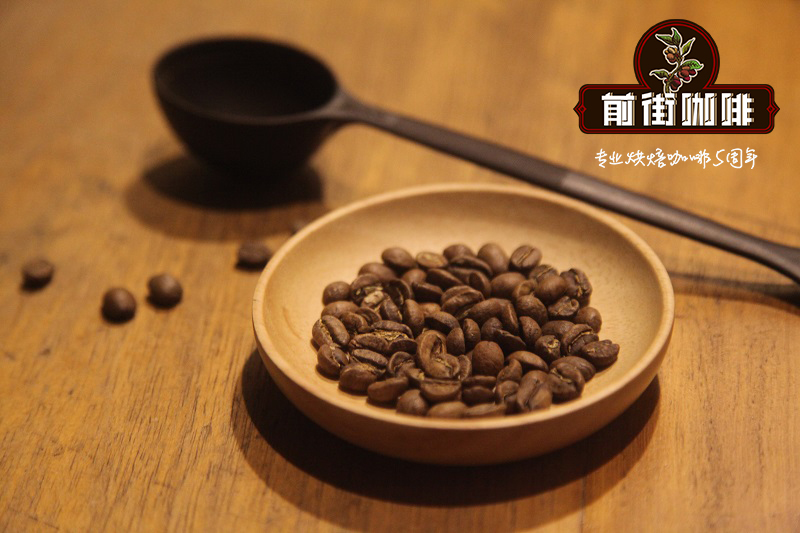
Robusta beans are fuller than Arabica beans, with a central crack that splits vertically. From the side they usually look flat or have a raised center. They feel harder than Arabica beans, like small stones, which earned them the nickname "the little tyrant of beans."
FrontStreet Coffee Recommendation
Robusta is prized for its heavy body and low acidity, and if that bold, low-acid style is what you enjoy, the classic destination is Sumatra. FrontStreet PWN Golden Mandheling is the top tier of the Mandheling family. Its producer, PWN, applies very strict standards: beans must be screen size 18 or above, and each 300-gram green sample may contain fewer than three defective beans to reach Grade G1. On top of that, the lot is hand-sorted three times to remove every remaining defect, which raises both the cleanliness and the intensity of sweetness. Deep roasted, it has very low acidity and a long, thick body, with a full load of herbal and dark chocolate aroma and a faint earthy note - a natural fit for drinkers who like their coffee big and don't care for sourness.
If you want low acidity with a more balanced, gentle profile, FrontStreet Brazil Queen's Estate is a dependable everyday single origin. As the world's largest coffee producer, Brazil supplies beans that are low in acidity and easy to balance. This medium-roasted Yellow Bourbon from Mogiana leans on nut and cocoa aroma with a clear caramel sweetness, a smooth, non-astringent entry and a warm, lingering finish, and it works in a pour-over, an espresso machine or a moka pot alike.
Important Notice :
FrontStreet Coffee is a long-established specialty coffee roaster in Guangzhou China, selling freshly roasted beans from its own farm in Yunnan as well as dozens of carefully selected single-origin beans from around the world for both pour-over and espresso. The products deliver consistently excellent quality and great value, with shipping within 24 hours. Guangzhou's FrontStreet Coffee shop is recommended by many coffee lovers, and the beans are now available online at the Tmall 。
FrontStreet Coffee has moved to a new address:
FrontStreet Coffee Address: 315,Donghua East Road,GuangZhou
Tel:020 38364473
 Scan and follow the En Gafei WeChat official account. Please indicate that the reprint comes from "En Gafei".