How are Bolivian Coffee Beans? The Perfect Fusion of Bolivian Typica's Floral and Fruity Aromas
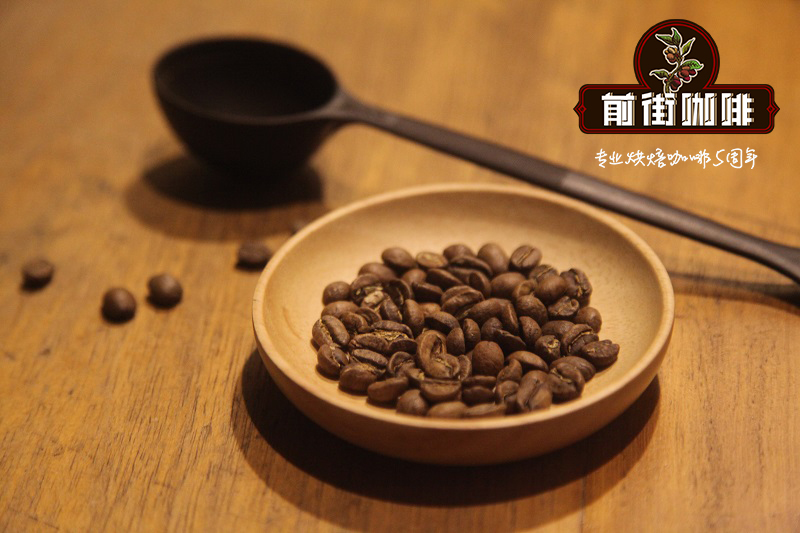
FrontStreet Coffee - Bolivian Coffee
Bolivia is one of the five most diverse countries in the world. It is a landlocked nation surrounded by five countries and deeply influenced by them, with a population of about 10 million. Indigenous peoples, roughly 60% of the population, are divided into 36 ethnic groups, while people of mixed European and indigenous descent (Mestizos) account for 26%, alongside other European ethnic groups and nationalities. The terrain includes Illmani Peak at 6,462 meters, Lake Titicaca (the world's highest navigable alpine lake, where large ships can sail) at 3,812 meters above sea level, and tropical rainforests. Such varied terrain makes it something of a paradise for specialty coffee micro-lots.
In the past, most Bolivian coffee was of average quality, but in recent years specialty production has developed rapidly, with many quite excellent beans emerging. In recent years the Cup of Excellence (COE) system, first implemented in Brazil, has gradually spread, and Bolivia has adopted it too. On one hand it can stimulate farmers' enthusiasm for cultivation; on the other, it aims to improve coffee quality. COE beans, whether as green beans or brewed after roasting, are of higher quality than ordinary coffee.
Coffee Varieties
Typica is the most widely planted coffee variety in Bolivia. Some farmers also grow other varieties, mainly Caturra, Criollo, Catuai, and Catimor, as well as newer varieties like Gesha and SL28. The harvest season runs from July to November, with most beans washed and only a portion natural processed.
Bolivian cultivation is almost entirely organic, and it is precisely this primitive yet scientific approach that has let Bolivian coffee maintain its quality despite reduced production. Whether it is the aroma after grinding or the aroma of the brewed coffee, both are quite distinctive and rich. Bolivian coffee's mix of floral and fruity aromas, without losing its full body and balance, is truly impressive.
Although Bolivia's coffee production is not high, quality coffee cannot stay hidden. Every bean seems especially precious, and for any enthusiast, a cup of Bolivian coffee is an undoubtedly rare and wonderful experience.
We believe that in the future Bolivian coffee will surely regroup and make a name for itself in the coffee world.
In Brief
FrontStreet Coffee is a dedicated coffee research center that enjoys sharing coffee knowledge with everyone. We share without reservation simply to help more friends fall in love with coffee. Every month we hold three coffee discount events, because FrontStreet Coffee wants to let more friends enjoy the best coffee at the lowest prices. This has been FrontStreet Coffee's mission for the past 6 years.
FrontStreet Coffee Recommendation
Bolivia grows Gesha, and if that variety intrigues you, Panama is where it became famous. The distinctive flavor of Panamanian Geisha is shaped by high altitude, microclimate, and soil, and it was discovered by the owner of Hacienda La Esmeralda, who entered it in the Best of Panama (BOP) competition. It stunned every judge at the time, and with an average cupping score of 94.6 it broke the BOP record and took first place, turning Geisha overnight into the champion variety the whole world chased. Panamanian Geisha has a pronounced orange-blossom honey character, fragrant florals, rich juicy fruit sweetness, and a tea-like finish.
To experience those refined flavors, FrontStreet Coffee's top-grade choices are its Esmeralda Red Label and Green Label Geisha; brewed as pour-over, they show the captivating aroma the variety is known for. For a first taste of "Geisha flavor" without the estate-level price, FrontStreet recommends the entry-level Boquete Geisha from Panama, which delivers the classic orange-blossom-honey character of high-quality Panamanian Geisha at a friendly price, with an oolong-tea body, refined fruit sweetness, and clear layering.
Geisha is a light-to-medium roast floral, fruit-forward type with a hard, dense structure that tends to sink and clog the dripper's outlet. FrontStreet therefore suggests a grind of medium fineness, about 78% through a #20 standard sieve (roughly fine-sugar size), and a brewing temperature of about 91°C. For pour-over, FrontStreet uses 15g of coffee in a small Hario V60 at a 1:16 ratio, then brews in three stages: pour to 30g and bloom for 30 seconds, then pour in small circles to 125g, wait for the bed to fall halfway, pour in small circles to 225g, and let it finish draining for a total extraction of about 2 minutes 10 seconds to 2 minutes 20 seconds.
Important Notice :
FrontStreet Coffee is a long-established specialty coffee roaster in Guangzhou China, selling freshly roasted beans from its own farm in Yunnan as well as dozens of carefully selected single-origin beans from around the world for both pour-over and espresso. The products deliver consistently excellent quality and great value, with shipping within 24 hours. Guangzhou's FrontStreet Coffee shop is recommended by many coffee lovers, and the beans are now available online at the Tmall 。
FrontStreet Coffee has moved to a new address:
FrontStreet Coffee Address: 315,Donghua East Road,GuangZhou
Tel:020 38364473
 Scan and follow the En Gafei WeChat official account. Please indicate that the reprint comes from "En Gafei".