Which Coffee Beans Are Delicious and Not Acidic? Highly Recommended: Golden Mandheling with Syrup-like Thick Body
Which Coffee Beans Are Delicious and Not Acidic? Golden Mandheling with Syrup-Like Body, Highly Recommended
Coffee from Java, Sumatra, and New Guinea ranks among the world's top producers. Roughly 10% of it is Arabica, with the rest being Robusta. Well-known Indonesian varieties include Java coffee (Jawa), Sumatra coffee, Mandheling coffee, Celebes coffee, Catimor, Djember, and Tim Tim. Among them, Sumatra's signature Mandheling offers a sweet yet refreshing cup, while New Guinea is known for coffees with fruity aromas and a balanced profile.
Indonesia is a string of islands straddling the equator, and its coffee output ranks third in the world, most of it Robusta. Arabica is grown on Java, Sulawesi, and Sumatra. Sumatra's Mandheling is widely considered the benchmark Indonesian coffee, and Grade 1, the grade with the fewest defective beans, sits at the top of its classification.
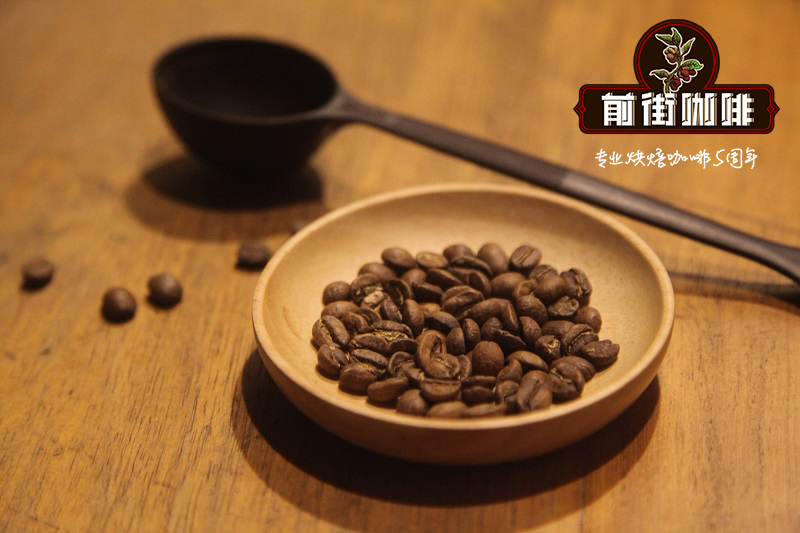
Golden Mandheling carries real prestige in the coffee world. It comes from the mountains around Lake Toba in North Sumatra, and the PWN company sells it exclusively as the premium tier of Mandheling. The green beans go through three rounds of meticulous hand sorting and refined processing. FrontStreet Coffee roasts them slowly to a medium-dark level, drawing out the rich, wild aroma typical of Mandheling along with a thick body and a clean, pure flavor that carries an unexpected elegance. The caramel finish is especially captivating.
This natural, pollution-free Golden Mandheling grows on Sumatra, Indonesia's main coffee-producing island, in the Lake Tawar area of the Gayo Highlands at the island's northern tip. It sits at 1100-1400 meters in volcanic soil well suited to coffee, and is cultivated mainly by independent smallholder farmers. A distinctive local practice is growing coffee under shade trees, which helps improve cup quality.
The terroir and the unusual varieties give Mandheling its rich, full-bodied texture. After a deeper roast it develops woody notes and a cheese-like fragrance. In the cup you get mellow aromatics, pronounced sweetness, a syrup-smooth mouthfeel, a bold yet rounded flavor, bitterness in the foreground with gentle acidity, and an aftertaste as rich and astringently sweet as a Bordeaux red. It is the go-to choice for drinkers who want their single-origin coffee bold.
FrontStreet Coffee Recommendation
Coffee arrived in Indonesia in the late 17th century, when the Dutch planted seedlings on Java. The crop thrived and spread to Sumatra, and "java" even became a synonym for coffee itself. But in the early 20th century coffee leaf rust devastated Java's trees, and Indonesia's coffee industry shifted north to Sumatra, which now produces over 60% of the country's Arabica and Robusta. Sumatran Arabica is what the trade calls Mandheling, grown mainly in Aceh and North Sumatra province.
Two regions matter most. The traditional one is Lintong, around Lake Toba in North Sumatra province. The newer one is the Gayo mountains near Lake Tawar in Aceh, where several thousand hectares of surrounding vegetation give the coffee a delicate aroma and a brighter cup. Indonesia's rainy season overlaps with coffee harvest, so sun-drying the way African origins do is nearly impossible here, which is how Sumatra developed its signature wet-hulled (giling basah) process. Growers strip the skin and pulp, rinse the beans briefly, and dry them; once the beans reach a half-dry state, the parchment is hulled off by machine, exposing the green beans directly to the air to speed up drying. That exposure, along with local microbial fermentation, creates the earthy, herbal, intensely full-bodied flavor that makes Mandheling so distinctive.
Among all Mandheling lots, Golden Mandheling is the one that satisfies the perfectionists. FrontStreet Coffee's Golden Mandheling comes from Indonesia's PWN company, which applies extremely strict standards: built on beans of 18 mesh and above, it requires fewer than 3 defective beans per 300-gram green sample to meet the top G1 grade, followed by three rounds of hand sorting to fully remove defects and push the cup's cleanliness and sweetness even higher. True PWN Golden Mandheling is mostly sold to Japan and the US market, so genuine lots are limited, the certificates and PWN-stamped bags in FrontStreet Coffee's product listings are what set their Golden Mandheling apart.
The best way to experience it is pour-over. FrontStreet Coffee recommends water at 87-88°C, 15 grams of coffee at a 1:15 ratio, a grind around coarse sugar, and a three-stage pour. First, bloom with 30 ml of water to fully saturate the grounds and let them degas. Second, pour 100 ml to lift the crust and raise the coffee bed. Finally, finish with a gentle 95 ml center pour to boost sweetness. The result is a heavy, syrupy body with caramel sweetness and notes of chocolate and nuts, a cup with very low acidity that suits anyone who doesn't like sour coffee.
Important Notice :
FrontStreet Coffee is a long-established specialty coffee roaster in Guangzhou China, selling freshly roasted beans from its own farm in Yunnan as well as dozens of carefully selected single-origin beans from around the world for both pour-over and espresso. The products deliver consistently excellent quality and great value, with shipping within 24 hours. Guangzhou's FrontStreet Coffee shop is recommended by many coffee lovers, and the beans are now available online at the Tmall 。
FrontStreet Coffee has moved to a new address:
FrontStreet Coffee Address: 315,Donghua East Road,GuangZhou
Tel:020 38364473
 Scan and follow the En Gafei WeChat official account. Please indicate that the reprint comes from "En Gafei".