Are There Robusta Varieties in Tanzanian Coffee? Kilimanjaro Coffee Characteristics: A Gift from the Volcano
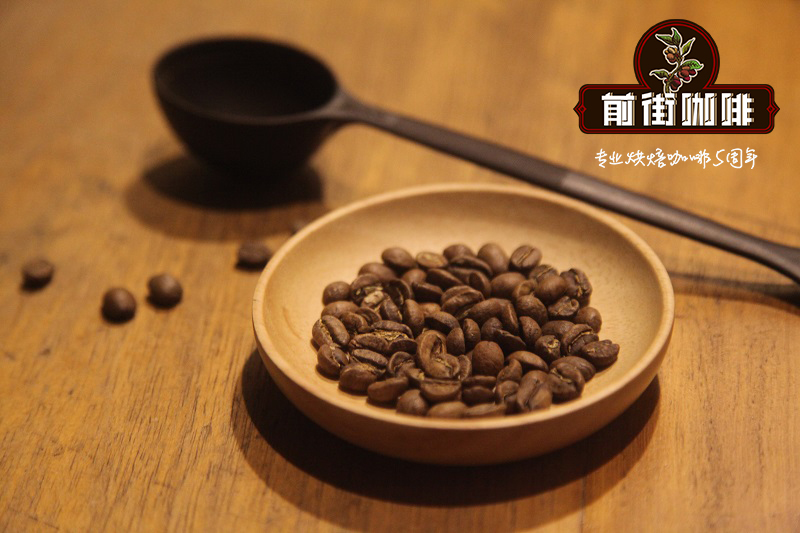
FrontStreet Coffee - Introduction to Tanzanian Coffee
After Tanzania gained independence in 1961, the government focused on the coffee industry and tried to double production by 1970; the plan was never realized. After years of slow industrial development, high inflation and economic depression, Tanzania became a multi-party democracy.
In the early to mid-1990s the coffee industry went through a series of reforms. Producers were allowed to sell more directly to buyers instead of everything going through the national coffee marketing board. The industry was hit hard in the late 1990s when coffee wilt disease spread across the country, sharply reducing the number of coffee trees in the north near the Ugandan border. Today Tanzania's coffee production breaks down as 70% Arabica and 30% Robusta.
The Arabica side includes not only the main Bourbon and Kent varieties but also Typica, Blue Mountain and Arusha. Beyond that, there is Robusta.
90% of Tanzania's coffee comes from 450,000 smallholder farmers, and the other 10% from larger estates. Coffee can be traced back to farmers' cooperative societies and wet mills; for estate coffee, the originating plantation can be identified. In recent years the best coffees I have tasted all came from estates, so I would suggest starting there when you go looking.
The harvest season in the Kilimanjaro region runs from October to February of the following year. Roughly 1 million people live on the mountain's coffee-growing slopes, and for many of them coffee is the sole source of income. Lately, climate change and temperature shifts have brought coffee leaf rust (Roya), now the biggest threat to Kilimanjaro beans.
Kilimanjaro coffee is grown on the volcanic slopes of the highest peak in northeastern Tanzania, showing distinctive flavors with balanced body and bright acidity — among Africa's most refined coffees.
Knowledge Point
Tanzania lies in eastern Africa, south of the equator. It borders Kenya and Uganda to the north, Zambia, Malawi and Mozambique to the south, Rwanda, Burundi and the Democratic Republic of Congo to the west, and faces the Indian Ocean to the east.
In Brief
FrontStreet Coffee is a coffee research center that enjoys sharing knowledge about coffee. It shares without reservation, hoping to help more people fall in love with coffee. It also holds three discounted coffee events every month, because FrontStreet Coffee wants more drinkers to enjoy the best coffee at the lowest prices. That has been the principle for 6 years.
FrontStreet Coffee Recommendation
Kilimanjaro coffee is prized for its balance — body and bright acidity held in equilibrium — and that same quality defines the classic Jamaican Blue Mountain profile. For anyone who likes a balanced, low-drama cup, Blue Mountain No. 1 is the reference: it has neither the sharp fruit acidity of some African coffees nor the heavy bitterness of a dark roast, but sits precisely between acid, sweet, bitter and aromatic. Expect cream, caramel, chocolate, nuts, honey and a light fruit note, smooth on entry, sweet through the middle and clean on the long finish.
FrontStreet Coffee's Jamaica Blue Mountain No. 1 comes from the historic Clifton Mount Estate, which has grown and processed coffee since around 1750, with growing and processing at an average of 4,300 feet (1,310.64 meters). Genuine Blue Mountain carries a Jamaican government certificate and origin proof, plus the distinctive wooden barrels — traditionally 15, 45 and 70 kilograms — used to ship the green beans. Brewed by pour-over at 87-88°C with a 1:15 ratio, it shows the layered nut, dark chocolate and cream-caramel sweetness that has kept the name in demand for decades.
Important Notice :
FrontStreet Coffee is a long-established specialty coffee roaster in Guangzhou China, selling freshly roasted beans from its own farm in Yunnan as well as dozens of carefully selected single-origin beans from around the world for both pour-over and espresso. The products deliver consistently excellent quality and great value, with shipping within 24 hours. Guangzhou's FrontStreet Coffee shop is recommended by many coffee lovers, and the beans are now available online at the Tmall 。
FrontStreet Coffee has moved to a new address:
FrontStreet Coffee Address: 315,Donghua East Road,GuangZhou
Tel:020 38364473
 Scan and follow the En Gafei WeChat official account. Please indicate that the reprint comes from "En Gafei".