What Types of Yunnan Coffee Exist and What Are Their Characteristics? Are Yunnan Coffee Varieties Really Underperforming?
When it comes to coffee, more and more people are noticing that Chinese beans have found their way onto cafe menus, and Yunnan coffee in particular. At FrontStreet Coffee, friends often ask us what Yunnan coffee tastes like. These days Yunnan Xiaoli is one of the most popular beans on FrontStreet Coffee's daily lineup, and it has become the face of Yunnan coffee.
In the past, most attention went to imported coffee. But with the rise of homegrown trends, more coffee lovers have discovered just how rich Yunnan coffee can be, and that China also produces excellent coffee. Today, the great majority of coffee sold in the Chinese market comes from Yunnan, which accounts for 98% of the country's total output and essentially represents China's entire coffee-growing industry.
Yunnan: A Golden Zone for Coffee Cultivation
Why is Yunnan considered the most suitable golden zone for coffee cultivation?
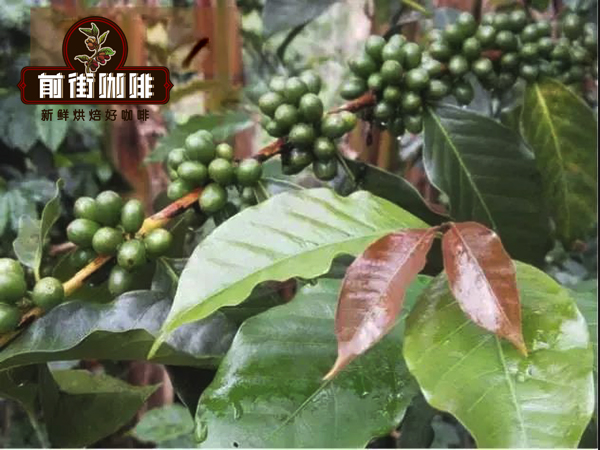
As FrontStreet Coffee has pointed out, coffee is an agricultural product, and its quality is naturally tied to climate and environment. Yunnan sits in southwest China, with the Tropic of Cancer crossing its southern region. The western and southern parts of the province lie between 15 degrees north latitude and the Tropic of Cancer. Most areas sit at elevations of 1,000 to 2,000 meters, and the mountainous, sloped terrain varies greatly. The region has fertile soil, abundant sunshine, plentiful rainfall, and a wide temperature swing between day and night. This mountainous plateau terrain, where mid-altitude land between 1,000 and 3,500 meters accounts for nearly 90% of the province's total area, enjoys a subtropical plateau monsoon climate that is exceptionally well suited to coffee. As FrontStreet Coffee has said before, coffee needs high altitudes with the right temperature and rainfall to produce a high-quality cup.
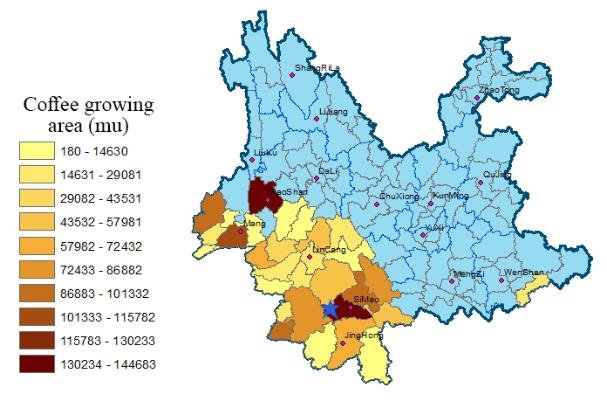
Yunnan's southern and western regions - Pu'er, Xishuangbanna, Wenshan, Baoshan, Dehong, and Lincang - are all home to Xiaoli coffee cultivation.
Dehong: The "Hometown of Chinese Coffee"
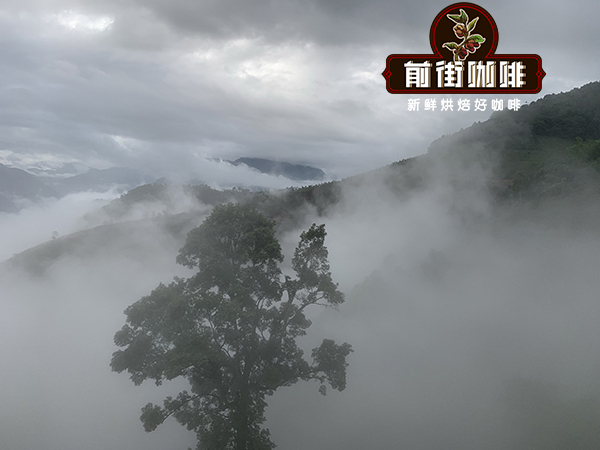
Every coffee-growing area in Dehong Prefecture sits above 1,000 meters, and 30,000 mu are planted on mountainous terrain above 1,600 meters. Dehong also relies mainly on organic fertilizers and organic pesticides, which yields higher-quality coffee and makes it one of the world's rare high-quality coffee-producing regions.
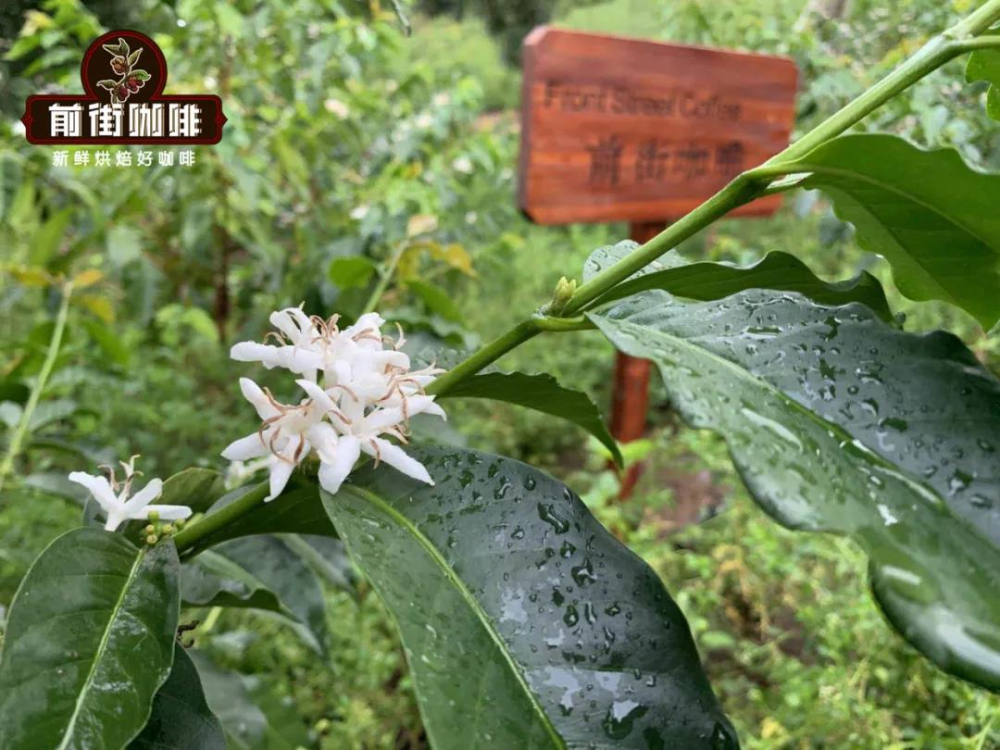
Baoshan: A Historic Coffee Region
Baoshan began growing coffee in the mid-1950s, when the late patriotic overseas Chinese Mr. Liang Jinshan brought the first coffee seedling over from Southeast Asia. In recent years, as international trade expanded, Lujiangba's Xiaoli coffee earned a strong reputation. European, American, and Arab countries - especially merchants from Britain, the United States, Egypt, Hong Kong, and Macau - regard it as premium coffee, and demand outstrips supply. In December 2010, after review by China's General Administration of Quality Supervision, Inspection and Quarantine, national geographical indication product protection was granted to "Baoshan Xiaoli Coffee."
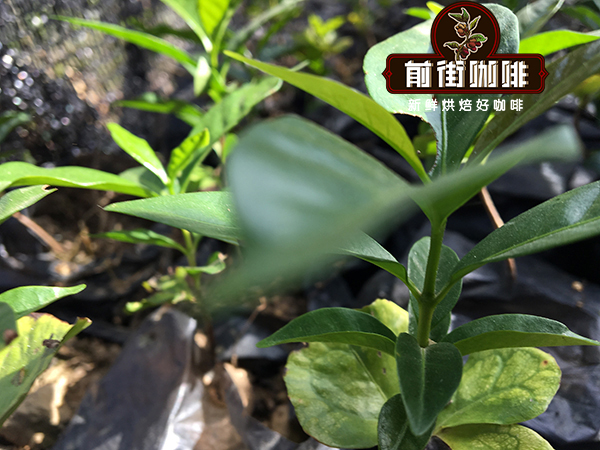
Lincang: A Focus for Coffee Enterprises
Lincang's distinctive geography and climate have made it a magnet for coffee companies. They have set up 200-mu and 100-mu high-quality coffee seedling bases in Mengding Town of Gengma Autonomous County and at Lincang Xingfu Farm respectively, and have carried out coffee cultivation in Gengma, Zhenkang, Yunxian, Cangyuan, and Yongde. FrontStreet Coffee's estate is located in Lincang.
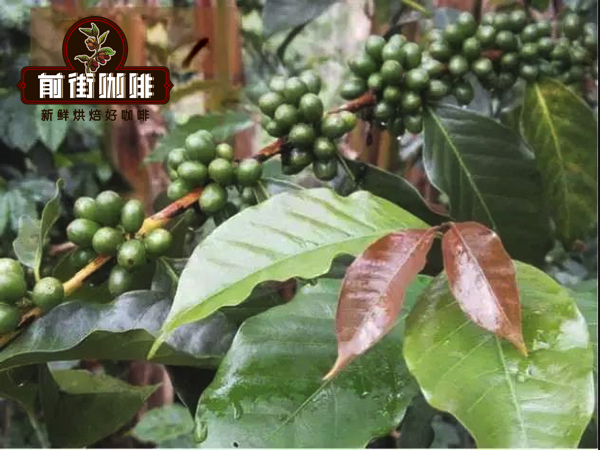
Pu'er: 150 Years of Coffee History
Pu'er, known as the land of tea, has a 150-year history of coffee cultivation. In the early 1990s, Pu'er City began developing coffee as a key industry for restructuring the local economy and raising farmers' incomes.
Yunnan Coffee Varieties
Of course, flavor is inseparable from variety. Different varieties naturally produce different cups. So which varieties grow in Yunnan?
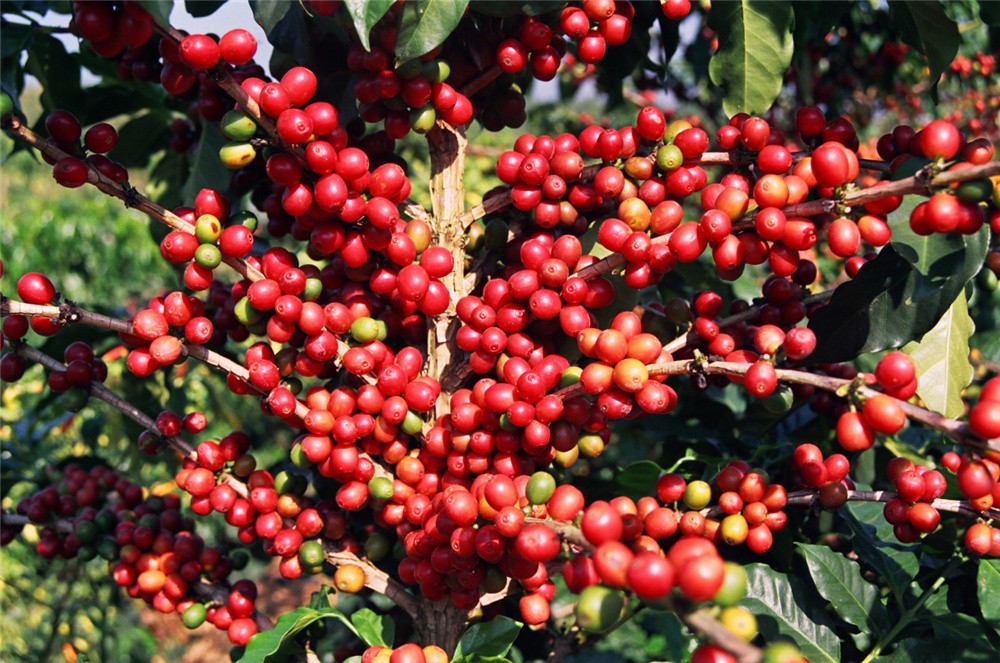
FrontStreet Coffee carries two Yunnan varieties: Catimor, as in Yunnan Xiaoli coffee, and Typica, as in FrontStreet Coffee's 2013 Natural Process Typica. The name "Xiaoli," meaning small grain, actually comes from Typica, because Typica beans are small. As FrontStreet Coffee has explained, Catimor's high yield and strong disease resistance led many growers to reluctantly cut down their Typica trees and switch to Catimor. Today Catimor still covers a large share of Yunnan's planted area, and Yunnan Xiaoli coffee is of the Catimor type.
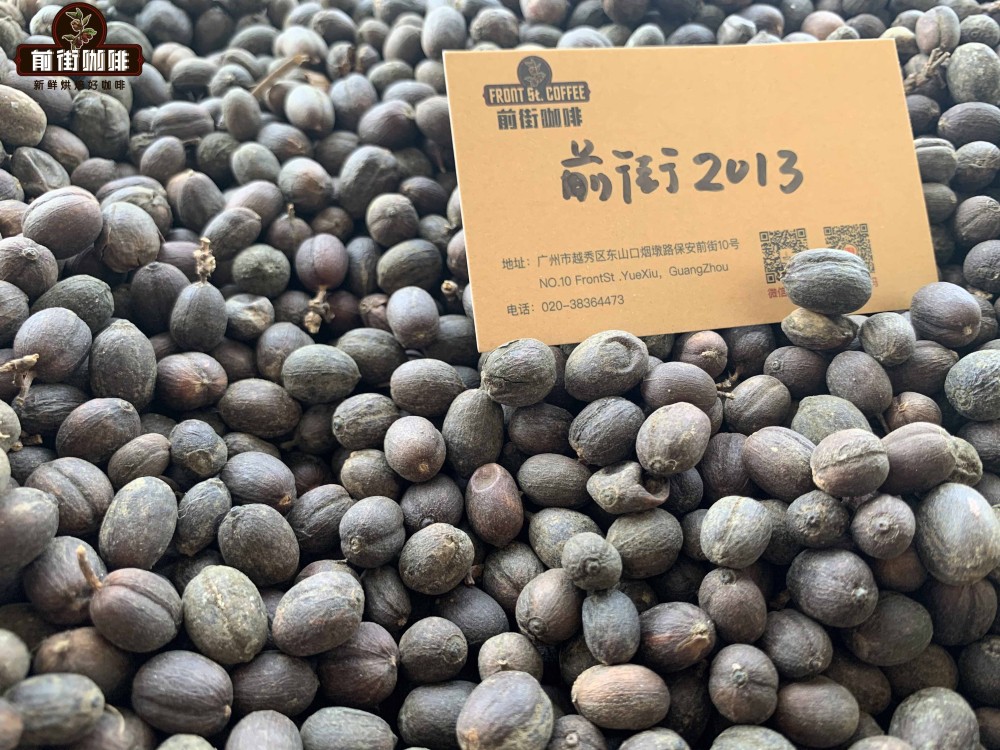
Catimor is by far the most widely planted coffee in Yunnan today, though small amounts of Typica and Bourbon are also grown around Baoshan. Although all of these belong broadly to the Arabica species, the varieties still differ in important ways.
Typica Coffee Beans
The most classic high-quality Arabica variety, and the ancestor of many commercial improved varieties. Typica is prized for its excellent flavor expression and is recognized as a specialty coffee variety, but its yields are extremely low and it is prone to leaf rust, so it demands more hands-on management. Typica originates from Ethiopia and southeastern Sudan and is the most widely cultivated coffee variety in the Western Hemisphere. The plants are fairly robust but cannot tolerate strong light, and they yield better in Hawaii. Typica's top leaves are bronze-colored, which earned it the name "red-top coffee."
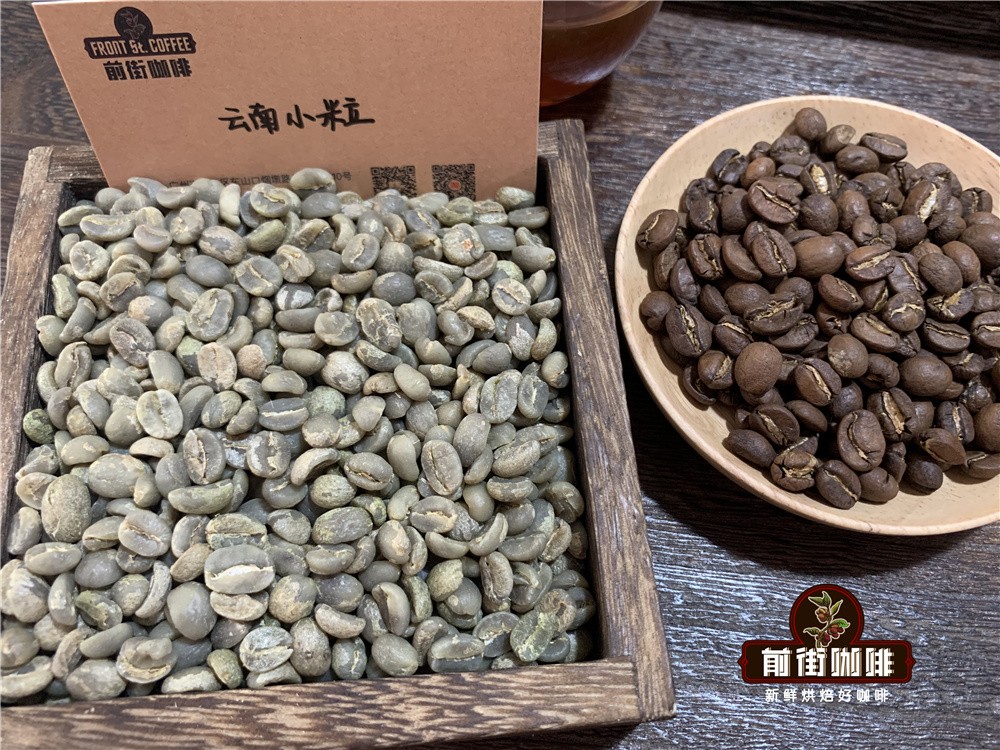
Catimor Coffee Beans
Catimor is not purely Arabica: it is a hybrid of Timor (a Robusta) and Caturra (a Bourbon variant), which gives it 25% Robusta lineage. That Robusta blood determines its flavor flaws - insufficient aroma, an overall bitter taste, and a tendency toward astringency and harsh, musty notes.
Since 2013, FrontStreet Coffee has focused on growing Typica and a small amount of Bourbon in Yunnan's Lincang region. Typica was chosen for two reasons. First, as one of the oldest coffee varieties, it carries pure Arabica genes and is recognized as a specialty variety for its elegant, clean flavor. Second, the very first coffee trees planted in Yunnan were also Typica, introduced by French missionaries.
Yunnan Coffee Bean Processing Methods
Processing methods shape flavor just as much as variety. Naturally processed beans tend to carry the sweet-and-sour taste of tropical fruit, preserving the bean's natural richness with layered flavor and sometimes a hint of wine. Washed beans, because fermentation is more tightly controlled, avoid the off-flavors of natural processing and offer better acidic aroma and brightness. That is why the seven beans on FrontStreet Coffee's daily lineup are mainly washed, since washing better expresses a region's original character.
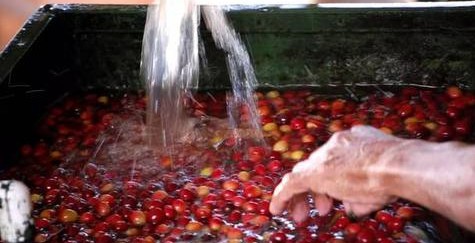
Yunnan beans are processed by both natural and washed methods, and more methods will certainly follow - all of them extensions built on those two foundations.
The Typica from FrontStreet Coffee's estate is natural processed. Ripe cherries are spread evenly on raised beds to sun-dry, and turned regularly to prevent uneven drying that would create unpleasant fermented flavors. Keeping the whole fruit also lets more of the cherry's sugars seep into the green beans, making FrontStreet Coffee's beans more aromatic and sweeter.
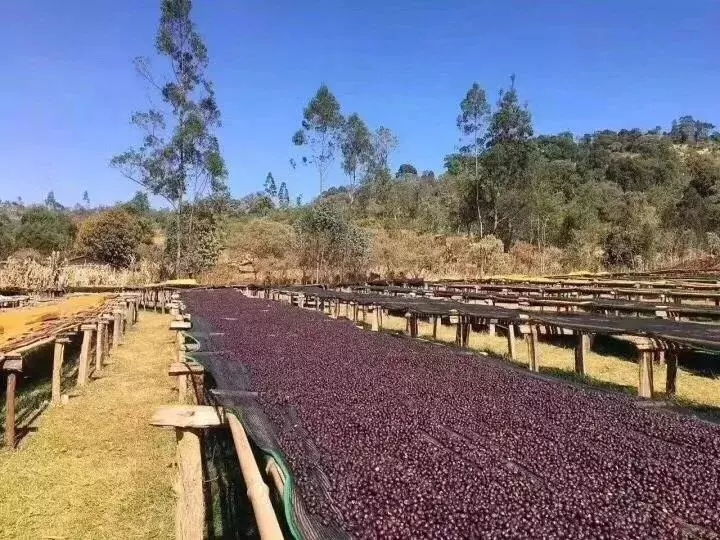
When FrontStreet Coffee's roaster received these natural processed Typica green beans, the goal was to highlight their aroma and sweetness while emphasizing the mouthfeel of Yunnan Xiaoli, so a medium roast level was chosen.
FrontStreet Coffee Brewing Recommendations
For brewing, FrontStreet Coffee recommends freshly roasted beans to fully appreciate coffee's rich flavors. Every bag FrontStreet Coffee ships is roasted within 5 days, because FrontStreet Coffee understands how much freshness matters to flavor. FrontStreet Coffee's roasting philosophy is "freshly roasted good coffee," so that every customer who orders receives the freshest coffee on arrival. The resting period is about 4-7 days, which means the coffee is at its peak by the time it reaches you.

Some customers ask FrontStreet Coffee to grind the beans for them, and that's fine too - but a word of caution: once beans are ground in advance, they no longer need a resting period, because the pressure of carbon dioxide inside the packaging helps mellow the flavor during transit, so you can brew a cup as soon as it arrives. Ground coffee should be brewed promptly, though, because it oxidizes quickly in air and its flavor fades relatively fast, leaving a flatter cup. FrontStreet Coffee therefore recommends buying whole beans and grinding fresh to taste the coffee at its best.
FrontStreet Coffee Yunnan Brewing Parameters:
Filter cup: Hario V60. Water temperature: 90 degrees C. Coffee dose: 15g. Coffee-to-water ratio: 1:15. Grind size: medium-fine (70% pass-through rate on a Chinese standard #20 sieve).
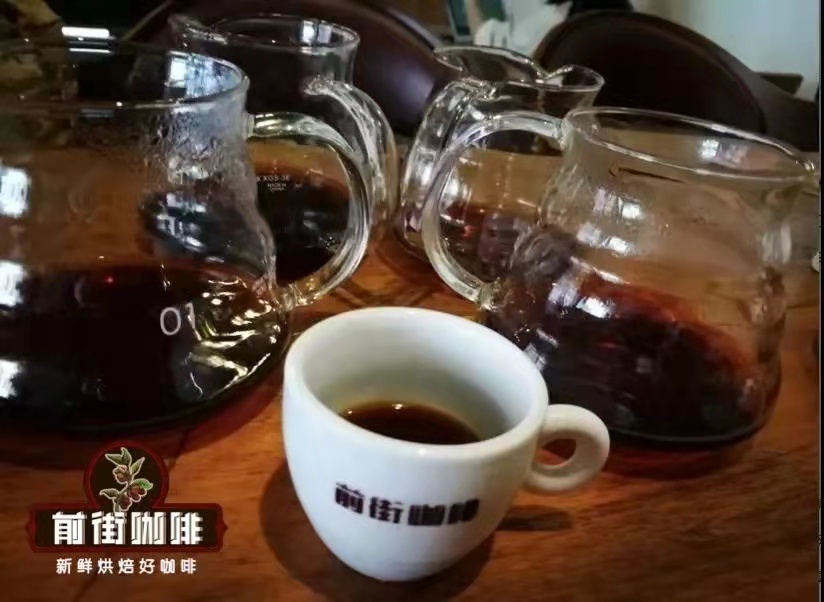
FrontStreet Coffee 2013 Natural Process Typica Flavor Profile:
Rich mouthfeel, prominent sweet-and-sour notes, with citrus and berry tones, a hint of fermented wine aroma, caramel sweetness, a creamy aftertaste, and a black-tea sensation.
Washed Yunnan Xiaoli Coffee Flavor Profile:
Herbal and nutty aroma, chocolate, caramel.
FrontStreet Coffee Recommendation
If you want an easy introduction to Chinese Arabica, start with FrontStreet Coffee's Yunnan Xiaoli. Grown in the Baoshan region, it is washed and medium roasted, emphasizing a caramel-like sweetness while keeping some acidity, so it clearly expresses the terroir of Yunnan. Because the washed process removes the mucilage by fermentation and rinsing before drying, the cup shows the region's signature profile: soft nutty and chocolate sweetness with a light plum acidity, all at a friendly price.
For a clearer, more expressive Yunnan cup, try FrontStreet Coffee's 2013 Yunnan Natural Typica. Coming from FrontStreet Coffee's own estate, it is processed with the oldest and most traditional method - natural sun-drying - which gives it a heavier body and more pronounced sweet-and-sour character. It carries citrus and berry tones, a hint of fermented wine, caramel sweetness, and a creamy finish.
To taste Yunnan in an espresso, look to FrontStreet Coffee's Black Cocoa Blend, a combination of Yunnan Xiaoli and Brazil Cerrado that many baristas recommend. The Brazilian beans supply mixed-nut aroma and balance, while the Yunnan Xiaoli brings chocolate and citrus. The Americano it makes is balanced between sweet, sour, and bitter with nutty and brown-sugar sweetness, and as a latte it is smooth with almond and cream - especially beginner-friendly.
Important Notice :
FrontStreet Coffee is a long-established specialty coffee roaster in Guangzhou China, selling freshly roasted beans from its own farm in Yunnan as well as dozens of carefully selected single-origin beans from around the world for both pour-over and espresso. The products deliver consistently excellent quality and great value, with shipping within 24 hours. Guangzhou's FrontStreet Coffee shop is recommended by many coffee lovers, and the beans are now available online at the Tmall 。
FrontStreet Coffee has moved to a new address:
FrontStreet Coffee Address: 315,Donghua East Road,GuangZhou
Tel:020 38364473
 Scan and follow the En Gafei WeChat official account. Please indicate that the reprint comes from "En Gafei".