Yunnan Coffee Beans: Differences Between Typica and Catimor, and Why Catimor's Flavor is Criticized
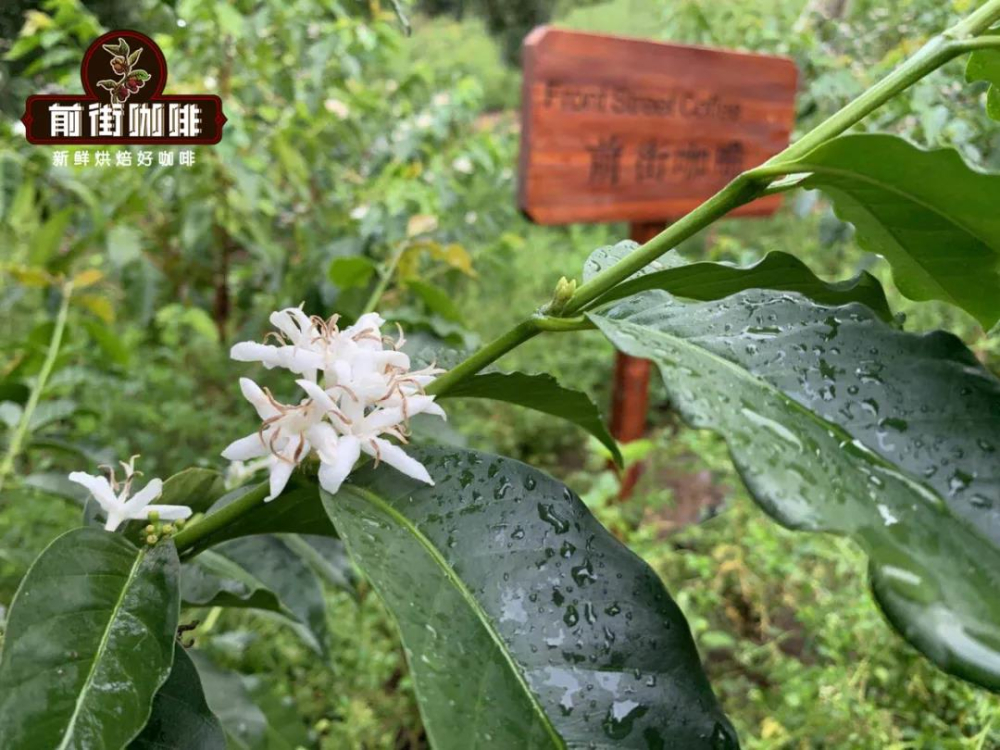
FrontStreet Coffee runs its own coffee plantation in Lincang, Yunnan, where the trees are Typica. Why Typica rather than Catimor? Because FrontStreet Coffee wants everyone to experience the charm of Yunnan coffee, and Typica is one of the oldest varieties derived from Arabica, naturally offering the most primitive and best flavor profile, which is why it was chosen.
Yunnan coffee actually began with Typica as well. Yunnan small-grain coffee refers to Arabica beans. At the time, the French missionary Tian Deneng brought coffee seeds (Typica) from Vietnam to Yunnan and planted them successfully in Zhugula Village, Binchuan County, Yunnan Province, telling people this was small-grain coffee, since Arabica beans are a small-fruit coffee while Robusta is a medium-fruit one. Naturally, the Yunnan region came to call Arabica beans Yunnan small-grain.

In the late 19th century, however, leaf rust swept through most of the world's Typica. In 1959, Catimor, a hybrid cross between Timor and Caturra developed by Portugal's Coffee Leaf Rust Research Center CIFC, was widely promoted for its strong disease resistance and high productivity. The Yunnan growing region had initially cultivated the elegant yet fragile Typica, but as international brands such as Nestlé and Starbucks entered the Chinese coffee market in search of raw material, farmers cut down the fine Typica and replaced it with high-yield, disease-resistant Catimor, chasing better economic returns and responding to the promotion of Catimor by those brands.
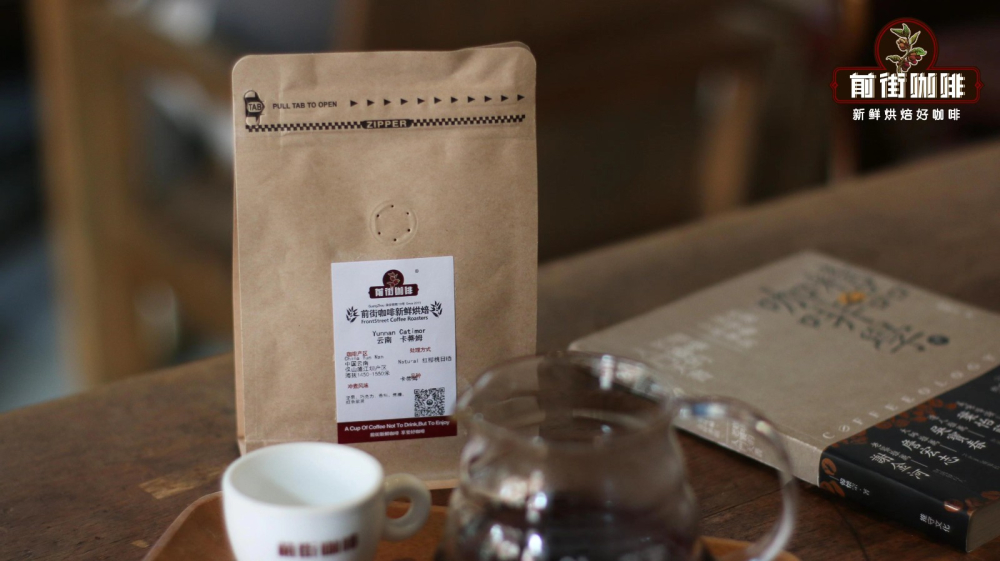
That is how Catimor came to be. It was developed in 1959 by Portugal's Coffee Leaf Rust Research Center CIFC, whose work focused on disease resistance and high yield. Wanting to keep good flavor as well, they crossed the Timor variety, derived from Robusta, with the Caturra variety, derived from Arabica, to create the new variety named Catimor. Catimor did not disappoint: it inherited Timor's Robusta genes, making it more resistant to coffee berry disease and coffee leaf rust and stronger against pests. That same inheritance, though, is why its cup performance is so often criticized.

Catimor fruit matures quickly and yields heavily, and it needs ample fertilizer and shade. Its high yield also means a relatively short commercial life, on average only ten years. Through FrontStreet Coffee's own cupping tests, low-altitude Catimor shows neither a clear advantage nor a clear disadvantage in the cup compared with other commercial varieties.
Typica Coffee Characteristics
As one of the ancient coffee varieties, Typica has a delicate, clean flavor profile with balanced character and high cup cleanliness, something special processing cannot manufacture. Yunnan farmers are reluctant to grow Typica because it yields little and is prone to pests, making the effort disproportionate to the harvest; on the other hand, farmers have not yet developed specialty-coffee awareness, so they keep their distance from the variety.

Typica is also known as the old-variety small-grain coffee. Its production is low and cultivation is difficult, so its price runs well above ordinary small-grain coffee. Typica originated in southeastern Ethiopia and Sudan and is the most widely cultivated coffee variety in the Western Hemisphere. The plant is fairly robust but does not tolerate strong sunlight, and it yields better in Hawaii. The top leaves are reddish-bronze, which earned it the name red-topped coffee. It belongs to the elegant-flavored ancient coffees, but it has a weak constitution, poor disease resistance, susceptibility to leaf rust, and low fruit yield, which makes it economically difficult.
Because the Catimor variety carries Robusta genes, it inherited Robusta's strong disease resistance along with the criticized flavor profile. Han Huaizong once described Catimor as having a "devilish aftertaste." As cultivation techniques and variety improvement have advanced, Catimor's flavor has gradually become more elegant.

Main Yunnan Coffee Growing Regions
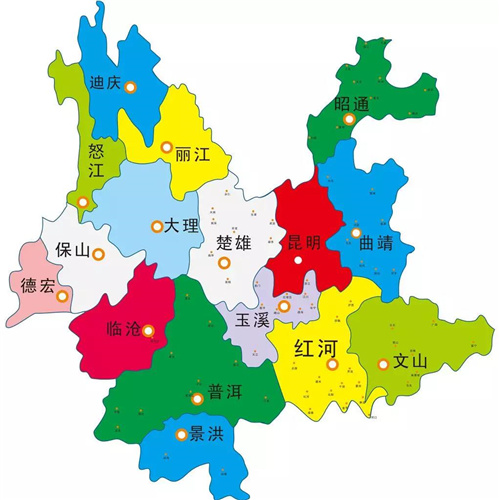
Yunnan's coffee areas are mainly distributed across Lincang, Baoshan, Simao, Xishuangbanna, Dehong, and other regions.
Lincang Region
Lincang City sits in the southwestern part of Yunnan Province, with the Tropic of Cancer crossing its southern edge. It borders Pu'er to the east, Dali to the north, Baoshan to the west, and Myanmar to the southwest, which is why it is also called Lancang Jiang, a brilliant pearl on China's southwestern border. The average annual temperature in Lincang City ranges between 16.8°C and 17.2°C. The dry and wet seasons are distinct, with abundant sunshine.

Thanks to its distinctive location and climate, Lincang has become a focus for many coffee companies. High-quality seedling bases of 200 mu and 100 mu were established in Mengding Town of Gengma Dai and Yi Autonomous County and at Lincang Huanle Farm respectively. In Gengma, Zhenkang, Yun County, and Cangyuan, Yunnan coffee, also known as Yunnan small-grain, has uniformly sized, full beans with a mellow, moderate taste.
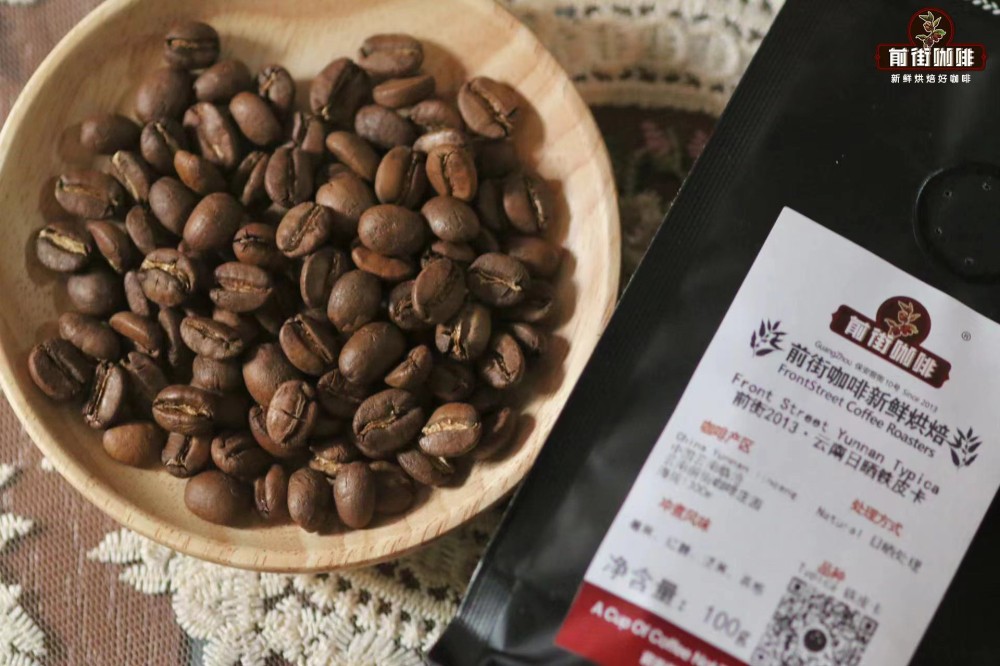
For this reason, and to let more friends experience the charm of Yunnan coffee, FrontStreet Coffee established its own plantation in Lincang, mainly growing Typica. Because Typica is one of the oldest varieties derived from Arabica, its flavor expression is naturally the most primitive and best, which is why it was chosen. The coffee from that plantation was released as FrontStreet Coffee's 2013 Natural Typica. The path to growing it was far from easy.
Baoshan
Baoshan has a long history of coffee cultivation and is recognized as the best small-grain coffee producing area, making it one of the better-quality regions both nationally and globally.

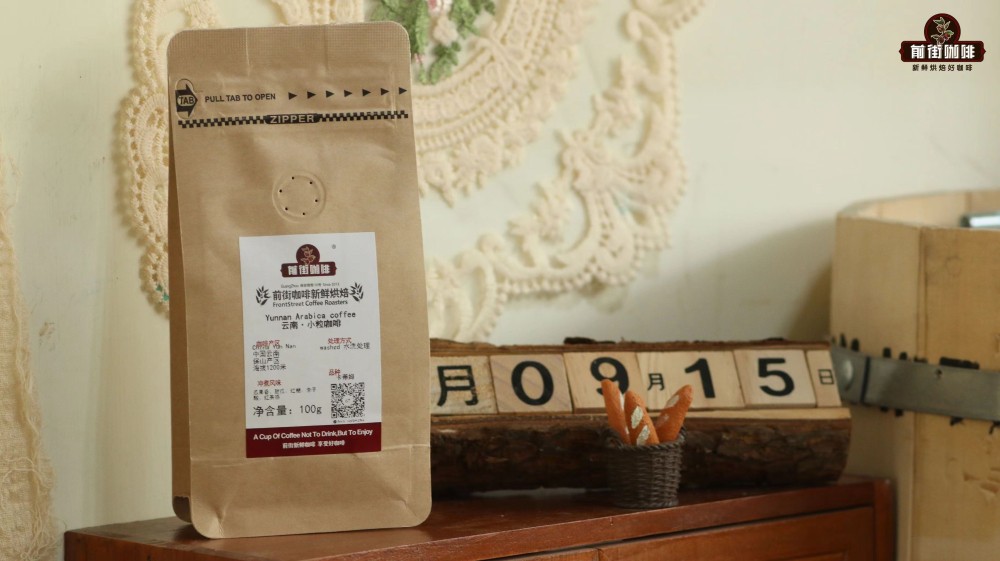
The average temperature in Baoshan is 21.5°C, reaching up to 40.4°C, with essentially no frost all year, which is why it is recognized as the best small-grain coffee producing area. The small-grain coffee grown there is famous at home and abroad for being rich but not bitter, fragrant but not strong, with small, uniform beans, a mellow, full flavor, and fruity notes. Tasting experts from the International Coffee Organization rated Yunnan coffee in the same category as Colombian wet-processed small-grain coffee, among the highest-quality coffee in the world. FrontStreet Coffee's Yunnan small-grain coffee comes from the Baoshan region.
Yunnan Coffee Bean Processing Methods
Yunnan's weather is rainy and foggy, so washed processing has become the most common method for Yunnan coffee. There are natural processed lots as well, such as FrontStreet Coffee's Natural Catimor and FrontStreet Coffee's 2013 Natural Typica.

Washed Processing: Harvested berries are separated from most of the pulp in a depulper, then the parchment beans are guided into a clean water tank and soaked to ferment off the remaining mucilage. Through washing, unripe and defective beans are floated out and removed, and fermentation is easier to control, so the flavor avoids the miscellaneous notes of natural processing and instead shows clear fruit acidity, slightly more complexity, and a cleaner cup.
Natural Processing: Whole, fully ripe red cherries are spread evenly on drying beds in the sun. Because the complete skin and pulp layer are retained, drying is more complex and takes longer. To avoid over-fermentation, workers must turn each cherry frequently and at regular intervals.

FrontStreet Coffee's Natural Typica, processed naturally, has a very full aroma and outstanding sweetness, with preserved-fruit sweetness, a soft plum acidity, rich nutty notes, and a finish of brown sugar sweetness and a tea-like sensation. Many customers who buy this bean ask FrontStreet Coffee's baristas how to brew it to best bring out the flavor. FrontStreet Coffee's Natural Typica is fragrant but not strong, rich but not bitter, carrying the traditional taste of Yunnan small-grain coffee.
FrontStreet Coffee's Brewing Parameters for Natural Typica
To preserve the sweet-sour sensation and tea-like character of Yunnan coffee, FrontStreet Coffee uses a medium roast. For brewing, use a V60 dripper with a 1:15 coffee-to-water ratio, a medium grind (roughly coarse-sugar size, about 80% pass-through on a China No. 20 standard sieve), and 91°C water.

Use segmented extraction. Bloom with twice the weight of the grounds in water, that is, 30g of water for 30 seconds. Blooming lets the grounds release internal carbon dioxide, which makes the rest of the extraction more stable. Pour in a small circular motion to 125g, then continue to 225g and stop. Remove the dripper once the water has finished dripping through. Start timing from the first pour, for an extraction time of 2'00". Finally, pick up the whole cup, swirl it evenly, and pour into cups for tasting.
[FrontStreet Coffee 2013 Natural Typica Flavor] Heavy body, prominent sweet-sour sensation, citrus and berry notes, a hint of fermented wine aroma, caramel-like sweetness, a creamy finish, and a black-tea sensation.
FrontStreet Coffee's Brewing Advice

On brewing, FrontStreet Coffee has always held that the freshness of the beans strongly shapes the flavor, so we ship beans roasted within 5 days. Our roasting philosophy is "Freshly roasted good coffee," which ensures that every customer receives the freshest coffee on arrival. The degassing period is about 4-7 days, so when the coffee arrives it is at its peak.
For those who prefer ground coffee, a gentle reminder: pre-ground coffee needs no degassing, because the pressure of carbon dioxide in the packaging helps mellow the flavor in transit, so you can brew immediately on receiving it. Ground coffee should be used promptly, though, because it oxidizes quickly in air and the flavor fades faster, and the cup suffers. FrontStreet Coffee therefore suggests buying whole beans and grinding fresh for each brew to better enjoy the flavor.
FrontStreet Coffee Recommendation
For an easy introduction to Chinese Arabica, FrontStreet Coffee's Yunnan Small-Grain is the first choice. It comes from the Baoshan region and uses washed processing with a medium roast, which brings out some caramel character while keeping part of the acidity, so the cup reflects the terroir of Yunnan clearly. Washed processing removes the mucilage through fermentation and rinsing before drying, which lets the bean show the flavor profile distinctive to the region: soft nut and chocolate sweetness with a light plum acidity, at a price that makes it many people's first taste of Yunnan coffee.
If you want a sharper, more defined Yunnan cup, choose FrontStreet Coffee's 2013 Yunnan Natural Typica. The Typica from our own plantation uses the most original, traditional post-harvest method, natural drying. Typica is one of the oldest and purest Arabica varieties, and after natural processing FrontStreet Coffee's Typica has a heavier body and more prominent sweet-sour balance, with citrus and berry notes, a touch of fermented wine aroma, caramel sweetness, and a creamy finish.
To taste Yunnan in an espresso, try FrontStreet Coffee's Black Cocoa Blend, a combination of Yunnan small-grain and Brazil Cerrado recommended by many baristas. The Brazilian coffee supplies the aroma of mixed nuts and a balanced body, while the Yunnan small-grain plays the role of chocolate and citrus. The Americano made from it balances sweet, sour, and bitter with a nut and brown-sugar sweetness, and a latte made from it has the smooth texture of almond and cream, which makes it very beginner-friendly.
Important Notice :
FrontStreet Coffee is a long-established specialty coffee roaster in Guangzhou China, selling freshly roasted beans from its own farm in Yunnan as well as dozens of carefully selected single-origin beans from around the world for both pour-over and espresso. The products deliver consistently excellent quality and great value, with shipping within 24 hours. Guangzhou's FrontStreet Coffee shop is recommended by many coffee lovers, and the beans are now available online at the Tmall 。
FrontStreet Coffee has moved to a new address:
FrontStreet Coffee Address: 315,Donghua East Road,GuangZhou
Tel:020 38364473
 Scan and follow the En Gafei WeChat official account. Please indicate that the reprint comes from "En Gafei".