Understanding Pour-Over Coffee and the Role of Pre-infusion for Better Flavor
FrontStreet Coffee - Introduction to Coffee Pre-infusion
Pour-over coffee equipment is simple, but operations that look easy and nearly identical actually hold endless flavor possibilities. Even the same person brewing the same coffee several times will not produce exactly the same taste each time.
Pour-over coffee, with no external pressure involved, extracts through filter paper, which better presents the flavors the coffee develops on its own. The cup tastes smoother, with more layered complexity.
A truly perfect pour-over demands not only solid technique but also delicate control of many variables: coffee variety, dose, grind size, water temperature, water quality, flow rate, extraction time, pouring technique and timing, and even the drinker's own preferences. All of them have to be tuned to keep sweetness, acidity, bitterness, body, and aroma in perfect balance.
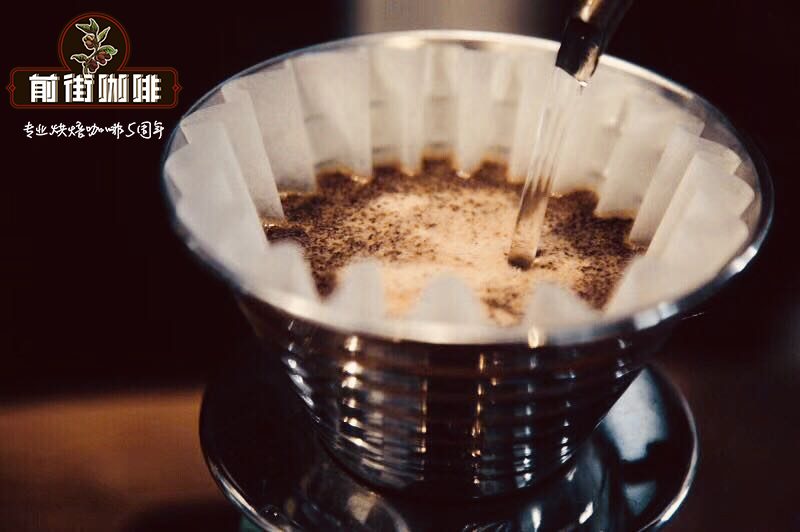
Blooming brings several benefits: it helps reduce extraction channeling, improve extraction efficiency, and enhance extraction uniformity. In espresso extraction, blooming, or pre-infusion, can also reduce the migration of coffee particles, making the extraction more effective with less effort.
Blooming and Channeling
If a barista skips the bloom and simply pours water onto the grounds in a V60 dripper, the result is uneven extraction, with some grounds left dry. Once certain areas stay dry, water preferentially flows through the areas already wetted, while the dry regions resist penetration. Eventually all the grounds do get wet, but this passive wetting produces uneven extraction and hurts the flavor.
Pre-infusion and Extraction Uniformity
From one point of view there are two kinds of coffee particles: fine particles that no longer have an intact cell structure, and particles that still retain one or more complete cells. When water extracts particles without intact cells, the process is easy and effective. Particles that still hold one or more complete cells require water to enter through the cell pores before the soluble material can dissolve out, and that diffusion is quite passive, which makes high-quality extraction hard to achieve.
During blooming, some grounds are brewed with high TDS (Total Dissolved Solids) while others stay low, which is less uniform than pouring straight away. Bloomed coffee can therefore taste unpleasant at first sip because of this uneven extraction.
Knowledge point: In the 1860s and 1870s, coffee leaf rust devastated Indonesia's coffee market and led the Dutch to abandon many plantations. With the plantations collapsing, workers took over small plots of land and eventually replanted coffee with Robusta varieties and a range of disease-resistant Arabica hybrids.
In Brief
FrontStreet Coffee is a specialty coffee research center dedicated to sharing coffee knowledge with everyone. We share without reservation to help more people fall in love with coffee. We also hold three coffee promotion events with deep discounts each month, because FrontStreet Coffee wants more people to enjoy the best coffee at the lowest possible price. This has been FrontStreet Coffee's mission for the past six years.
FrontStreet Coffee Recommendation
If you are new to pour-over, a V60 is almost certainly the dripper you will be pointed toward: practical, easy to learn, and handsome. Hario, the company that designed it, was founded in Tokyo in 1921 and is a well-known Japanese glassmaker that began by designing and producing heat-resistant glass instruments for research institutions; its heat-resistant glass server, often paired with pour-over setups, is a popular product. In 2004 Hario redesigned the V60 prototype into something much closer to the shape we know today, naming it for its distinctive 60-degree cone and V shape, and launched it a year later. Compared with other drippers, the cone and 60-degree angle force the water toward the center before it drips into the server, lengthening contact between water and grounds so aroma and flavor can extract fully. The V60 also has its signature single large hole, which lets water flow without obstruction, so the flow rate depends heavily on the brewer's control and shows up directly in the cup.
Before the millennium, the coffee market favored medium-dark roasts, and brewing chased body, high sweetness, a long sweet finish, and the caramelized flavors that dark roasting brings, such as chocolate, maple syrup, nuts, and vanilla. Siphon brewers and cloth filters rendered those qualities beautifully, and coffees like FrontStreet Blue Mountain No.1 and FrontStreet PWN Golden Mandheling were the most popular specialty beans of that era. With the arrival of the third wave, drinkers began chasing a sense of place, such as the white florals of Ethiopia or the berry acidity of Kenya, and roasting shifted from dark toward light, with tasting moving from heavy and sweet to refined and aromatic. The V60's fast extraction is exactly what produces a more three-dimensional aroma and lively acidity, bringing out florals, fruit acidity, clean sweetness, and tea-like notes. That is why fruit-and-floral coffees such as FrontStreet's classic Yirgacheffe-style Gutiti, the tropical FrontStreet Ethiopia Huakui, the Geisha-style FrontStreet Strawberry Candy, and the raisin-toned FrontStreet Mozart all brew beautifully in a V60.
V60 drippers now come in many materials, including the resin version FrontStreet favors, along with ceramic, glass, copper, and stainless steel. Each material affects the look, weight, and heat transfer, which causes subtle differences in extraction, though the structural design stays the same. FrontStreet's fondness for the resin Hario V60 comes down to two things: resin effectively blocks heat loss, and in standard industrial mass production it is the easiest material to shape with the smallest tolerances. For a lighter-roasted starting point, FrontStreet's Ethiopia Yirgacheffe Gutiti has long been a first stop into specialty coffee, with vivid citrus, berry, and floral notes and a green-tea-like sweetness; its acidity is soft and bright, more like the natural sweet-tartness of fruit than a sharp bite, making it very approachable. FrontStreet's Ethiopia Huakui is one of the most successful stars of the specialty market in recent years, defined by intense tropical fruit aroma of strawberry, passion fruit, jackfruit, and even lychee, with strong sweetness and almost no bitterness. For a deeper, less acidic cup, FrontStreet's PWN Indonesia Golden Mandheling is dark-roasted with very low acidity, a full, lingering body, and plenty of herbal and dark chocolate aroma with a faint earthy note, while FrontStreet's Brazil Queen Estate is low in acidity and very balanced, rich in nut and cocoa aroma with clear caramel sweetness and a smooth, gentle finish that works in pour-over, espresso, and moka pot alike.
Important Notice :
FrontStreet Coffee is a long-established specialty coffee roaster in Guangzhou China, selling freshly roasted beans from its own farm in Yunnan as well as dozens of carefully selected single-origin beans from around the world for both pour-over and espresso. The products deliver consistently excellent quality and great value, with shipping within 24 hours. Guangzhou's FrontStreet Coffee shop is recommended by many coffee lovers, and the beans are now available online at the Tmall 。
FrontStreet Coffee has moved to a new address:
FrontStreet Coffee Address: 315,Donghua East Road,GuangZhou
Tel:020 38364473
 Scan and follow the En Gafei WeChat official account. Please indicate that the reprint comes from "En Gafei".