Is Yunnan Small Bean Coffee an Arabica? Yunnan Coffee Varieties, Growing Regions, and Flavor Characteristics
Introduction to Yunnan Coffee
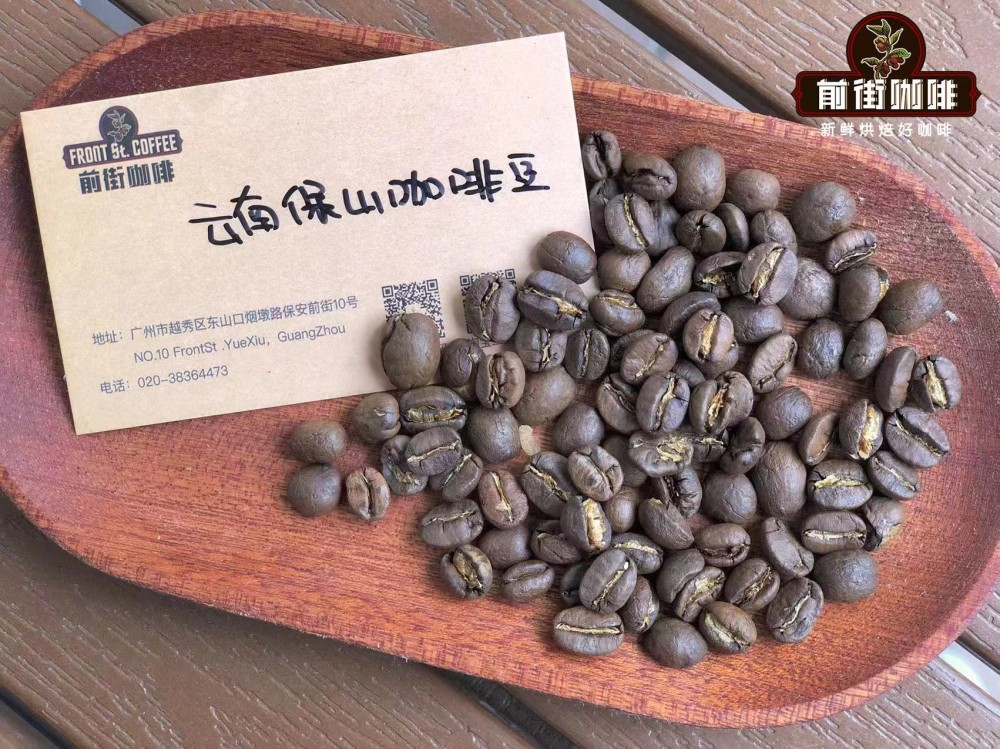
Yunnan coffee, also known as Yunnan small-grain coffee, refers to Arabica varieties. In the early days, Yunnan mainly grew pure Arabica—Typica. But because of leaf rust damage, weak disease resistance, and low yields, Nestlé introduced Catimor to Yunnan in 1992. Thanks to its strong disease resistance and high yield, Catimor quickly replaced the traditional varieties and became the mainstream of Yunnan's coffee industry. As a result, what locals call Yunnan small-grain coffee has shifted from Typica to the now widely planted Catimor.
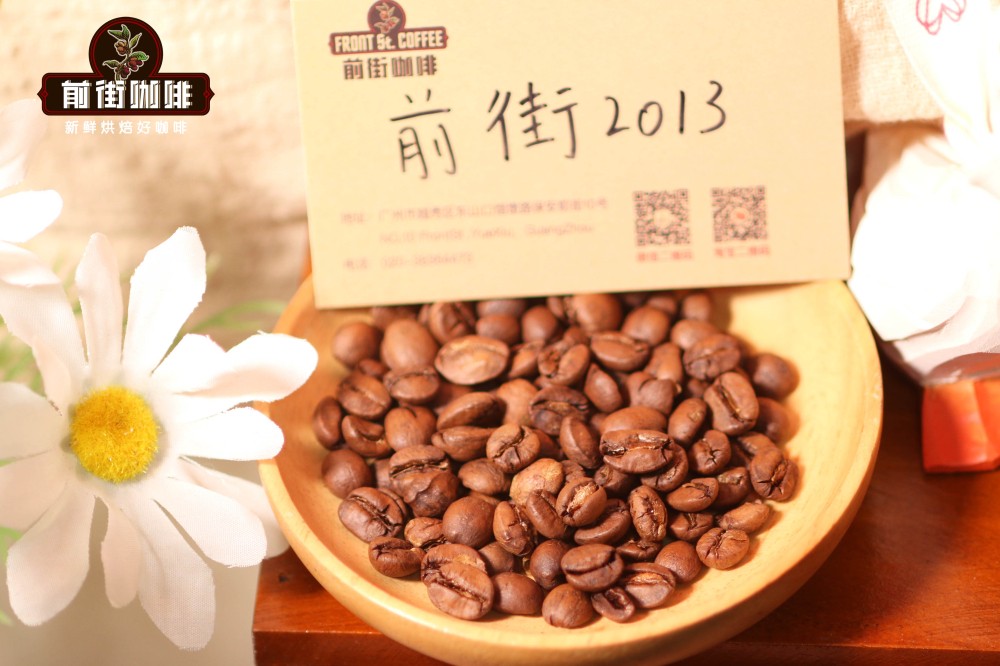
Yunnan also has high-quality varieties such as Geisha, Typica, and Bourbon, which make up a relatively small share of its production. FrontStreet Coffee, for example, began experimental planting in Lincang in 2013, sowing the first batch of Typica seeds. It wasn't until the 2020-21 season that a reasonably good harvest came in, yielding only just over 200 kilograms. In terms of flavor, it no longer has the "devil's aftertaste" of Catimor that Mr. Han described, but instead presents nuts, brown sugar, and a subtle fruit acidity.

Over 90% of the beans produced in Yunnan are Catimor. As a hybrid of Arabica and Robusta, Catimor inherits Robusta's strong disease resistance and high yield. But precisely because of that Robusta lineage, Catimor's flavor profile has always drawn criticism.
Catimor Variety
Catimor is a hybrid of Timor and Caturra. Its story begins with leaf rust, a fatal coffee disease with no cure. Leaf rust first appeared in 1861 in the Lake Victoria coffee region of East Africa, then spread quickly through much of Southeast Asia, and eventually reached the entire southern, central, and western African coffee regions. To save the industry, in 1959 Portugal's Coffee Leaf Rust Research Center (CIFC) developed Catimor with disease resistance, high yield, and decent flavor as its goals.
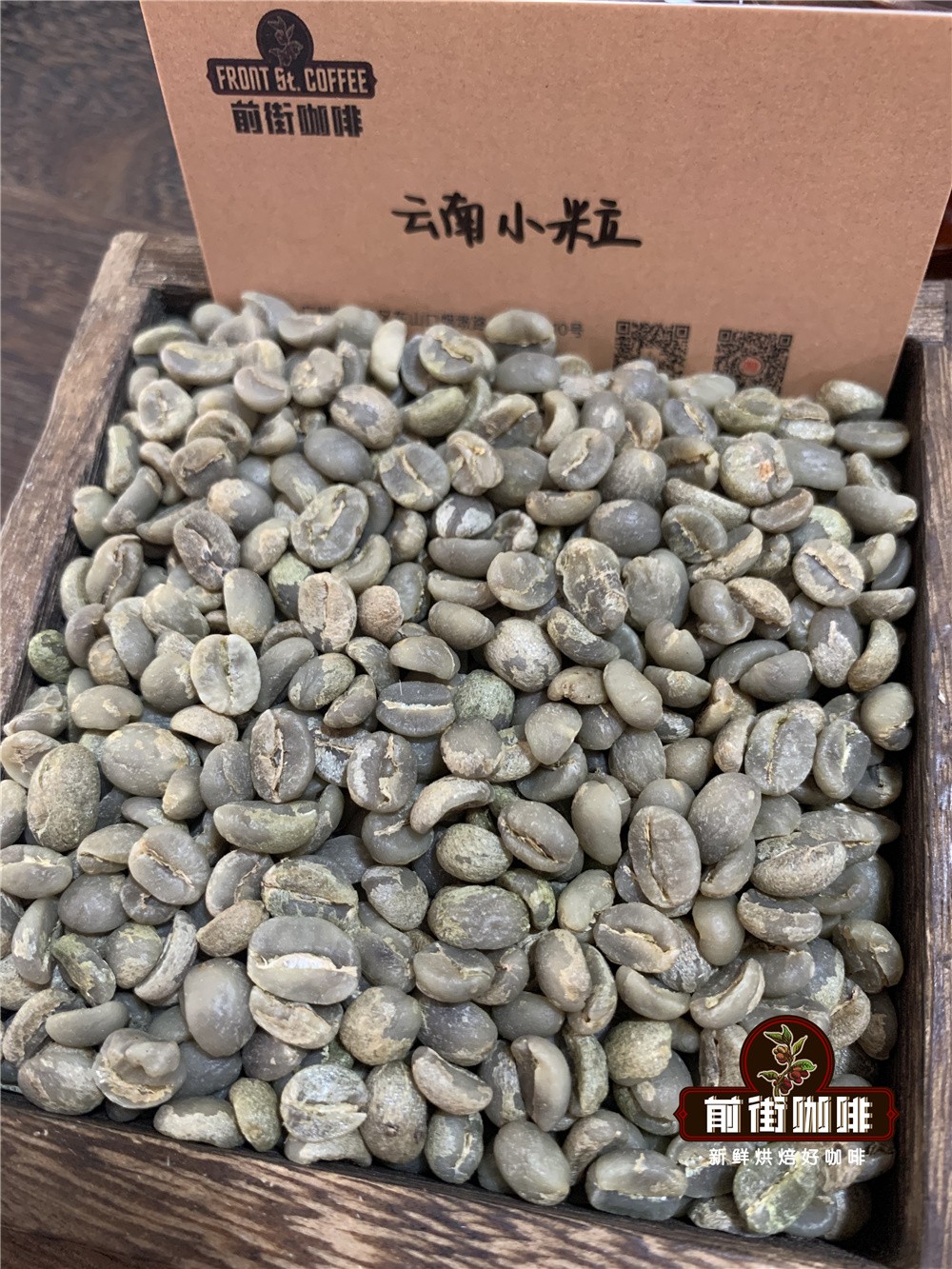
Catimor inherited the Robusta genes from Timor, giving it better resistance to coffee berry disease and leaf rust, plus stronger pest resistance and faster fruit maturation with high yields. This also leads to incomplete flavor development in the bean, and improper processing can easily produce negative tastes such as strong bitterness and grassy flavors.
Catimor is now an important commercial variety. East Timor was colonized by Portugal for four hundred years, and the Portuguese had long been familiar with its coffee trees. In 1959, the Portuguese moved Brazil's Bourbon mutant Caturra to East Timor and crossed it with Timor, which carries Robusta lineage, successfully creating Catimor with extremely strong disease resistance and productivity. Between 1970 and 1990, leaf rust plagued coffee-producing countries worldwide. With help from international organizations, producing countries vigorously promoted Catimor to resist leaf rust and raise output. Yet while Catimor inherited Robusta's disease resistance, it also inherited poor flavor genes. What's more, early Catimor, although productive, needed shade trees or it would easily wither—strong on the outside, weak within.
Typica Variety
Typica is the most classic high-quality Arabica variety, and many commercial improved varieties descend from it. It shows excellent flavor and is recognized as a specialty coffee variety, but it yields extremely little and is susceptible to rust, needing more hands-on management. Typica originates from southeastern Ethiopia and Sudan and is the most widely grown coffee variety in the Western Hemisphere. The plants are relatively robust but intolerant of strong light, with higher yields in Hawaii. Typica's top leaves are copper-colored, earning it the name red-topped coffee.
For decades, many botanists have worked on improving Catimor and have bred dozens of new varieties. Colombia, as the largest harvesting country, cultivated sun-grown Catimor in 1982 and named it after the country, "Colombia." Colombia claims that through multiple generations of crossbreeding it differs from general Catimor, and today, along with Caturra, it has become one of the country's two main varieties, long replacing the weak, disease-prone, low-yield Typica. Even so, most COE competition winners are Caturra, with few Robusta-blooded varieties taking awards. Colombia's large exports of commercial beans are likely lower-altitude or Caturra rather than traditional Typica, which is the main reason for the increasingly poor flavor. Colombia, however, cannot go back to cultivating low-yield Typica.
Yunnan Coffee Growing Regions
The western and southern parts of Yunnan Province lie between 15° north latitude and the Tropic of Cancer, precisely within the coffee belt's growing range. At the same time, most areas have the high altitude coffee needs, with terrain dominated by mountains and slopes, large undulations, fertile soil, plenty of sunlight, abundant rainfall, and large day-night temperature differences. Yunnan coffee is mainly grown in Lincang, Pu'er, Baoshan, Xishuangbanna, Wenshan, and Dehong.
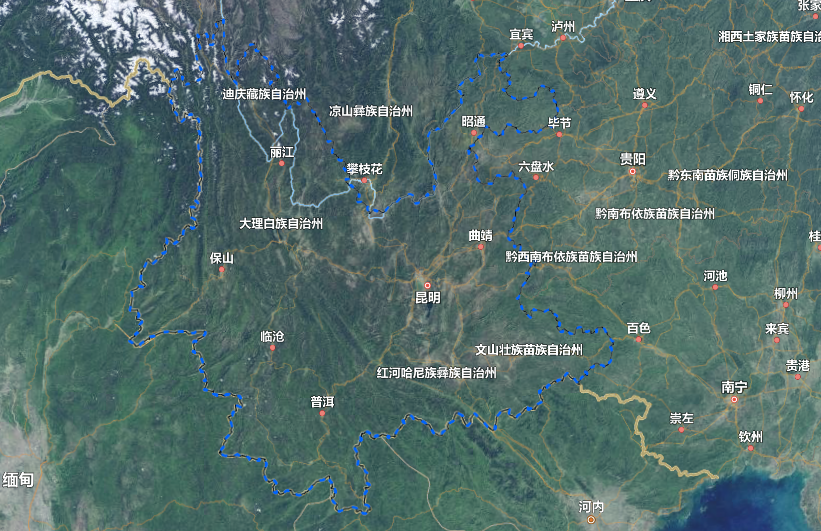
Lincang
Lincang has a subtropical low-latitude plateau mountain monsoon climate with complex terrain, making it a region of multiple climate types. Mainly influenced by the Indian Ocean's warm, humid air and the southwest monsoon, it has no obvious four seasons but distinct dry and rainy seasons, with abundant rainfall and long sunshine hours. Average annual sunshine exceeds 2000 hours, the frost period is short, and some areas are frost-free year-round. The three-dimensional climate is pronounced, with mountain areas averaging 13-15°C annually.
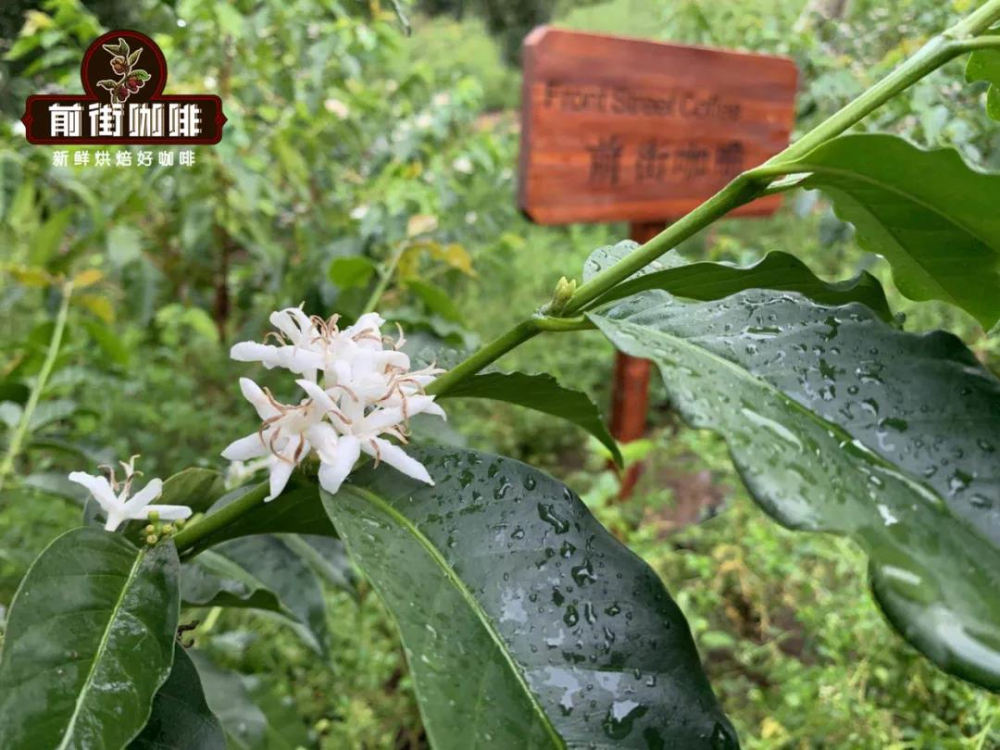
Because Typica yields so little, farmers growing Catimor are unwilling to replant Typica without income, and planting takes a lot of time and energy. FrontStreet Coffee believes this is also the main reason Yunnan beans still cannot command high prices despite having special processing methods. Since few people are willing to take it on, FrontStreet Coffee seized the opportunity in recent years and led by example, establishing FrontStreet Coffee's estate in Lincang to plant Typica. Thus FrontStreet Coffee's 2013 natural-processed Typica was born and became a coffee loved by many.
Pu'er
Pu'er, known as the tea town, has a 150-year history of coffee cultivation. In the early 1990s, Pu'er City began developing coffee as an advantageous backbone industry to adjust its industrial structure and raise farmers' incomes. Influenced by the subtropical monsoon climate, most areas here are frost-free year-round, with no severe cold in winter and no extreme heat in summer. Pu'er averages 15-20.3°C annually, with an annual frost-free period of over 315 days and annual rainfall of 1100-2780 millimeters.

Baoshan
Coffee cultivation in Baoshan began in the mid-1950s, with the first seedling introduced from Southeast Asia by the late patriotic overseas Chinese Mr. Liang Jinshan. In recent years, with the expansion of international trade, the small-grain coffee from Lujiangba has become renowned. Baoshan has a low-latitude mountain subtropical monsoon climate. Because it sits on a low-latitude plateau with complex terrain, it forms a three-dimensional climate of "four seasons in one mountain, different weather within ten li."

Dehong
Dehong has no severe cold in winter and no extreme heat in summer, with abundant rainfall, rain and heat arriving together, distinct dry and cold seasons, small annual temperature differences, large daily temperature differences, a short frost period, and few frosty days, giving coffee trees good conditions for growth and overwintering. The entire prefecture sits close to the Tropic of Cancer at low latitude, influenced by the Indian Ocean southwest monsoon, belonging to the south subtropical monsoon climate.
Yunnan Coffee Bean Processing Methods
Yunnan has no four seasons, only dry and rainy seasons, and most coffee-growing regions have similar conditions—which is the fundamental reason some regions use natural processing. June marks the start of the rainy season in the producing areas, and the next three to four months are rainy, which is the most favorable period for coffee cultivation. Only by planting seedlings at this time, with several months of moisture from rain, can they develop root systems deep enough to survive the first six-month dry season.

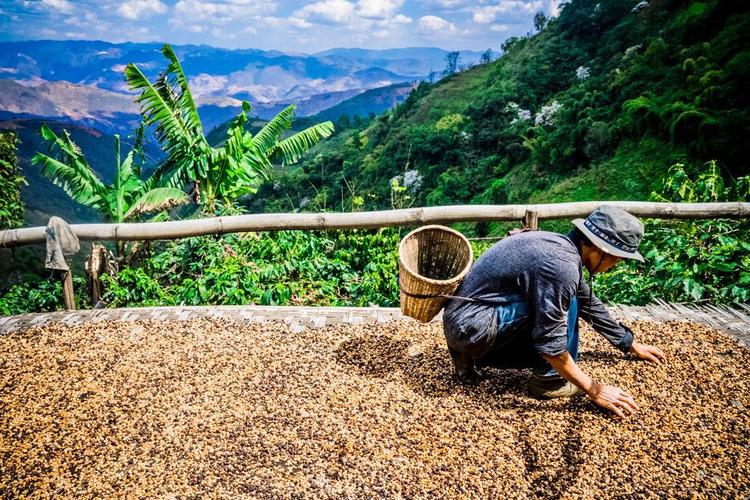
Since Yunnan's coffee harvest usually falls during the rainy season, making it impossible to widely adopt natural drying that takes three to four weeks, Yunnan farmers adapt to local conditions. Based on the hot, rainy climate, most use washed processing for their green coffee.
Washed Processing Method: A machine removes the skin and pulp from the harvested cherries. The skinned beans are placed in fermentation tanks, where fermentation breaks down the mucilage layer. The fermented beans are then washed repeatedly with clean water to remove the decomposed mucilage. Finally, the beans are sun-dried for 1-2 weeks, after which they can be stored and transported.
Washed coffee is clean and stable with a low defect rate and higher acidity, and it presents the coffee's inherent flavors better. That is why FrontStreet Coffee's Yunnan daily-drinker beans are washed-processed Baoshan small-grain coffee. FrontStreet Coffee's original intent in launching daily beans was to help everyone understand major producing regions by tasting their basic flavors. FrontStreet Coffee has selected several classic regions—Yirgacheffe from Africa, Brazil and Colombia from the Americas, and Sumatra from Asia—mostly using washed processing to present each region's unique character.
FrontStreet Coffee's Brewing Parameters for Yunnan Catimor
FrontStreet Coffee believes Yunnan coffee should have both a rich coffee aroma and some acidity, so FrontStreet Coffee uses a medium roast. Considering that Yunnan small-grain coffee tends toward a balanced taste—not too high in acidity, not too heavy in bitterness—FrontStreet Coffee uses a V60 dripper with a medium-fine grind and a medium water temperature for extraction.
FrontStreet Coffee uses a Kono dripper — Water temperature: 88°C — Coffee amount: 15g — Water-to-coffee ratio: 1:15 — Grind size: Medium-fine (75% pass-through rate with China standard #20 sieve)

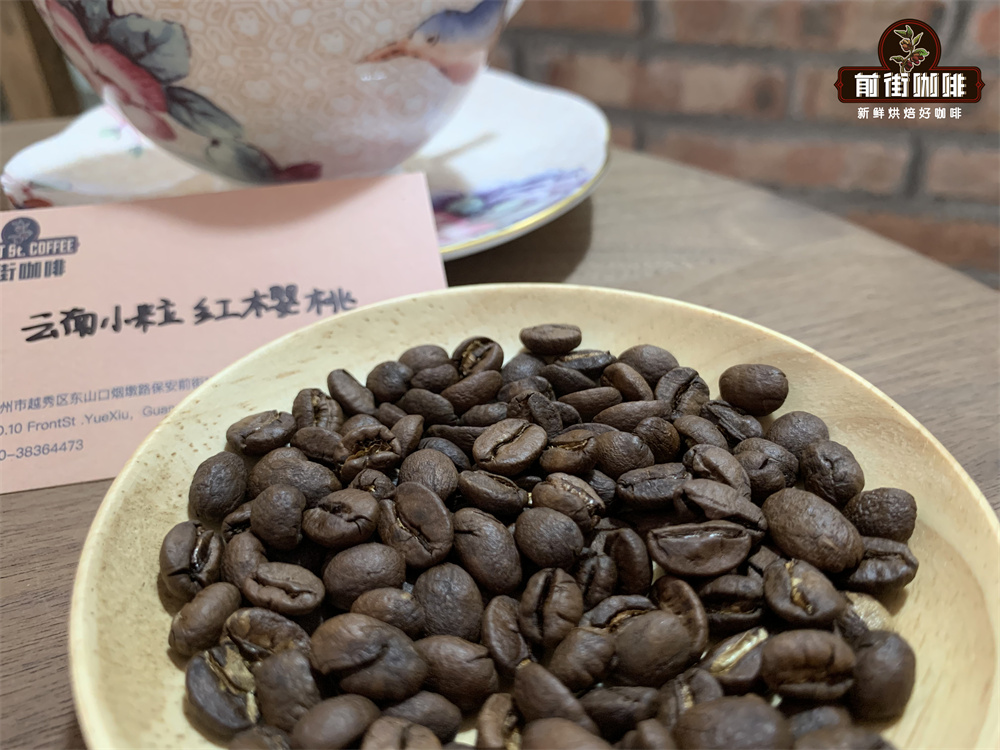
FrontStreet Coffee's Washed Yunnan Small-Grain Coffee Flavor: Herbal, nutty aroma, chocolate, caramel, black tea sensation.
FrontStreet Coffee's Natural Yunnan Catimor Coffee Flavor: Nuts, chocolate, spices, caramel, plum.
FrontStreet Coffee's 2013 Natural Typica Coffee Flavor: Heavy mouthfeel, prominent sweet and sour notes, with citrus and berry tones, a hint of fermented wine aroma, caramel-like sweetness, a creamy aftertaste, and a black tea sensation.

FrontStreet Coffee's Brewing Recommendations
Whatever coffee you're brewing, a delicious cup still depends on the freshness of the beans. FrontStreet Coffee has always believed that bean freshness is closely tied to flavor, so all beans shipped by FrontStreet Coffee are within 5 days of roasting. FrontStreet Coffee's roasting philosophy is "freshly roasted good coffee," ensuring every customer receives the freshest coffee on arrival. The resting period is about 4-7 days, so when customers receive it, it is precisely at its best.
For friends who need ground coffee, FrontStreet Coffee kindly reminds you: if the beans are ground in advance, there is no need to rest them further, because during transport the pressure from carbon dioxide inside the package also rounds out the flavor, so you can brew a cup as soon as it arrives. Ground coffee, however, must be brewed promptly, because once it contacts air it oxidizes relatively quickly, meaning the flavor fades faster and the cup won't be as good. FrontStreet Coffee therefore recommends buying whole beans and grinding fresh before brewing to taste the coffee at its best.
FrontStreet Coffee Recommendation
Since Yunnan is quietly home to varieties such as Geisha, it is worth tasting what Geisha can be in the regions where it became famous. The FrontStreet Panama Emerald Estate Red Label Gesha is the classic: grown at 1,600-1,800 meters, cupped at 90 points or higher, with elegant jasmine florals, citrus and bergamot, and a fine black-tea-like finish.
For an easier entry into Geisha, the FrontStreet Boquete Gesha from Panama's Boquete area brings the classic orange-blossom honey character: white coffee-flower aroma, then citrus, melon, and honey with a caramel note. It suits pour-over, drip bags, cold brew, the Clever Dripper, and French press.
And for anyone who wants Geisha's floral-fruit character in an espresso blend, the FrontStreet Strawberry Candy pairs a Costa Rican honey process with a Panamanian Gesha—rose florals plus grape, dried blueberry, sweet orange, and fruit candy—so you get a distinctive cup whether you brew pour-over, cold brew, or espresso.
Important Notice :
FrontStreet Coffee is a long-established specialty coffee roaster in Guangzhou China, selling freshly roasted beans from its own farm in Yunnan as well as dozens of carefully selected single-origin beans from around the world for both pour-over and espresso. The products deliver consistently excellent quality and great value, with shipping within 24 hours. Guangzhou's FrontStreet Coffee shop is recommended by many coffee lovers, and the beans are now available online at the Tmall 。
FrontStreet Coffee has moved to a new address:
FrontStreet Coffee Address: 315,Donghua East Road,GuangZhou
Tel:020 38364473
 Scan and follow the En Gafei WeChat official account. Please indicate that the reprint comes from "En Gafei".