5 Levels of Coffee Bean Grind: What Grind Size for Pour-Over, Cold Brew, and Espresso?

Whatever brewing method you use, coffee beans have to be ground. The purpose is to let the flavor compounds in coffee dissolve more quickly. Of course, not every soluble substance in coffee is delicious. So to extract the flavors you want while avoiding the ones you don't, choosing the right particle size becomes extremely important.

Different Coffee Brewing Methods Require Different Grind Sizes
Different brewing methods need different grind sizes because their extraction methods differ. Take the methods we meet most often day to day: pour-over, French press, espresso machine, and cold brew/drip coffee. Ranked from coarsest to finest, their grind sizes run: [French press > pour-over > cold brew/drip > espresso machine].
Even knowing which methods want coarser grinds and which want finer ones, we still can't pin down exact values. How coarse is "coarser," how fine is "finer," and what is that "relative comparison" based on?
Reliable Reference Standards
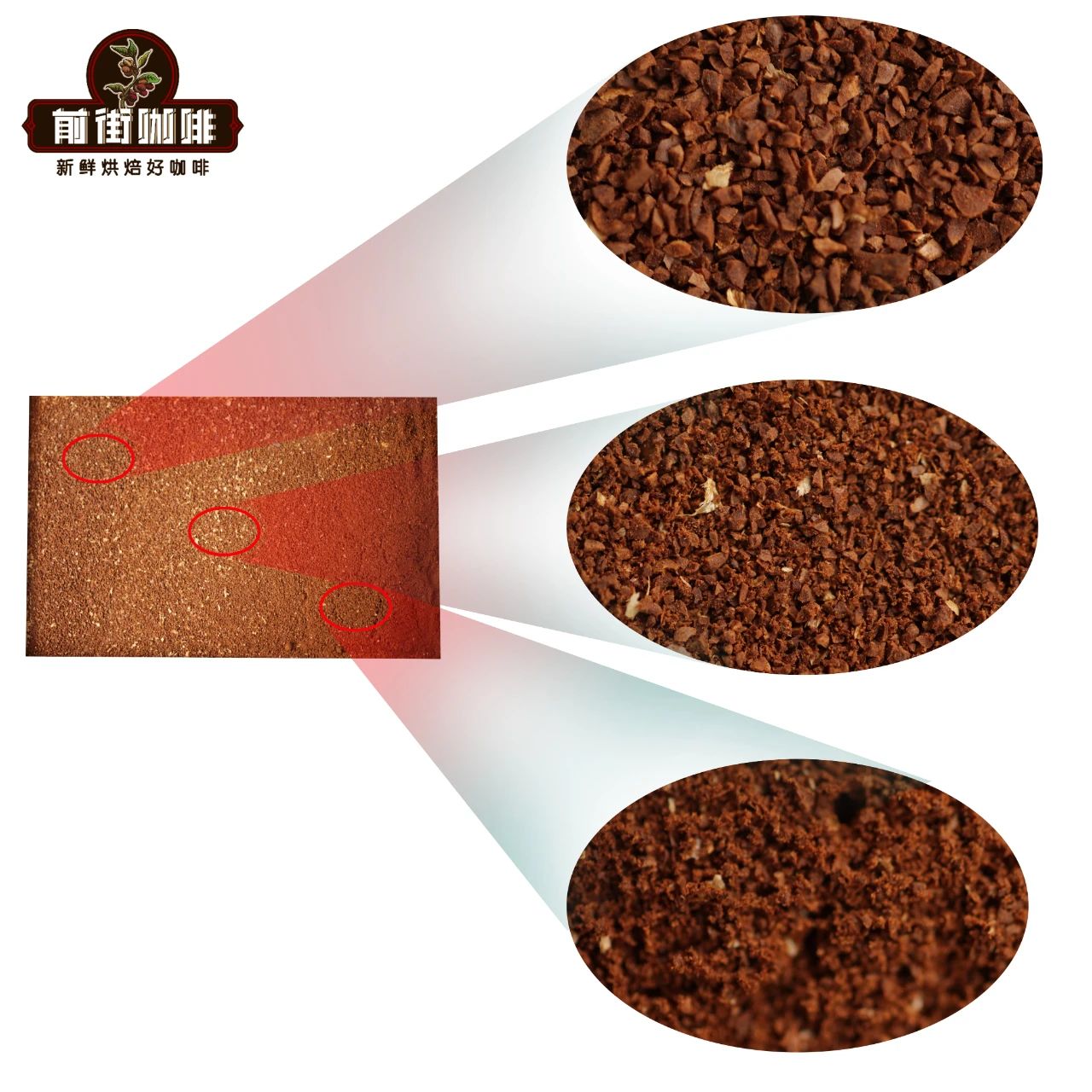
Although different coffee establishments have their own brewing standards, there is one standard recognized throughout the industry: cupping. Cupping's original purpose was to inspect the quality of green coffee, so it certainly contains valuable extraction principles. The grind size for cupping is a 70-75% pass-through rate through a #20 sieve.
Knowledge Note: A #20 China standard sieve has an aperture of 0.85mm and is used as a tool for particle-size classification and testing. Any standard sieve that meets factory specs is accurate. Calibrating your grind is simple too: pour the ground coffee into the sieve, cover it, shake it horizontally until no more particles fall through, then weigh the particles that passed. That tells you the grind size. For example, if you grind 20g of coffee and 15.2g passes through, that grind has a 76% pass-through rate through the #20 sieve. The higher the pass-through rate, the finer the grind.
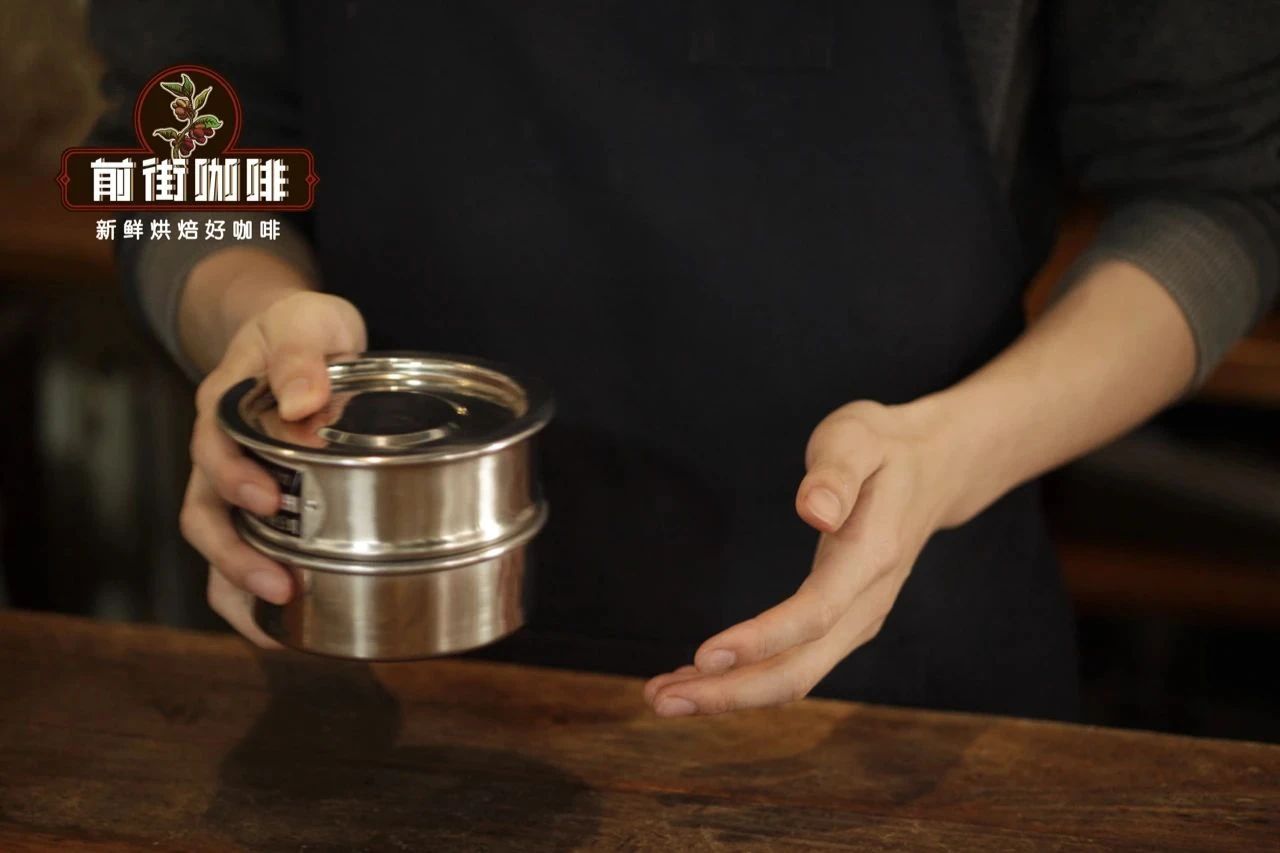
Since cupping can be calibrated with a standard sieve to determine grind size, the grind sizes for the brewing methods we commonly use can also be listed clearly with data.
French Press (68-75% pass-through rate through #20 sieve)
French press extraction is very similar to cupping, since both are primarily immersion. So the grind size chosen largely overlaps with cupping. There is another reason to choose coarser particles: French press filtration uses a metal filter with gaps visible to the naked eye, so a coarser grind also filters better. Different roast levels also call for different grinds. Light to medium roast beans can use a slightly finer grind (72-75% pass-through rate), while medium to dark roast beans can be ground coarser (68-71% pass-through rate).

Pour-Over Coffee (70-80% pass-through rate through #20 sieve)
Pour-over is primarily drip filtration. Unlike immersion methods, which have longer extraction times and can easily pull out undesirable flavors, pour-over has a shorter brew time—roughly 1 minute 30 seconds to 2 minutes 30 seconds. So a finer grind than cupping is needed to fully express the coffee's flavors. Again, different roast levels need different grinds: light to medium roast coffee should be ground finer (75-80% pass-through rate), while medium to dark roast beans can be ground coarser (70-75% pass-through rate).

Cold Brew/Drip Coffee (80-85% pass-through rate through #20 sieve)
Cold brew and drip coffee both use cold water, which penetrates poorly and extracts very inefficiently. So the coffee needs to be ground finer. Remember, though, that finer isn't always better. Too fine a grind can make cold brew cloudy and harder to filter; for drip coffee, it can cause water to pool in the bed and stall the flow. A grind with an 80-85% pass-through rate through the #20 sieve is more appropriate. If you want a richer flavor, choose 85%; if you prefer a cleaner taste, choose 80%.

Note: Because of differences in bean density and roast level, even if you grind two beans with very different densities at the same setting on the same grinder, the resulting particle sizes may differ. For example, grinding FrontStreet Coffee's Yirgacheffe beans on an EK-43s at setting 10 gives an 80% sieve pass-through rate, while grinding Colombian Rose Valley at the same setting 10 gives 75%. So when a grind feels off, it is best to confirm it using the same type of beans.

Espresso Machine
The grind size for espresso is very fine, and screen testing isn't practical. The main way to set an espresso grind is through extraction testing. Coffee shops calibrate their espresso before daily service, and a big part of that is adjusting the grind. Because espresso machines are so sensitive to grind size, even a difference of 0.1 on the grind setting can noticeably change extraction time and flavor.

So setting the espresso grind requires a stable extraction recipe. Take FrontStreet Coffee's recipe as an example: 20g of coffee grounds to extract 40g of coffee liquid in 28 seconds (with a margin of error of ±1). First the recipe is fixed, then the grind is adjusted to hit it. Afterward, taste testing decides whether any parameter needs fine-tuning.
FrontStreet Coffee Recommendation
Because grind size matters so much, matching your beans to your brewer helps a lot. For moka pots, FrontStreet Coffee recommends blends that are built for pressure extraction. The FrontStreet Classic Blend is made specifically for espresso and moka pot, with outstanding crema and a traditional mamba recipe—full-bodied and mellow, easy for beginners and experienced brewers alike to enjoy.
If you want to control cost without giving up body, the FrontStreet Dark Cocoa Blend uses 100% Arabica with plenty of crema, a rich mouthfeel, and a friendly price, and the FrontStreet Autumn Chestnut Blend combines Honduran Caturra and Papua New Guinea Typica for a warm, nutty, chestnut-and-caramel sweetness with a smooth, rounded finish.
For a single-origin option with a moka pot, the FrontStreet Brazil Queen Estate brings low acidity and balanced nut-and-cocoa sweetness with a clear caramel note, while the FrontStreet PWN Golden Mandheling goes deep and full-bodied with herbs, dark chocolate, and a long, sweet finish—both handle a slightly finer moka grind beautifully.
Important Notice :
FrontStreet Coffee is a long-established specialty coffee roaster in Guangzhou China, selling freshly roasted beans from its own farm in Yunnan as well as dozens of carefully selected single-origin beans from around the world for both pour-over and espresso. The products deliver consistently excellent quality and great value, with shipping within 24 hours. Guangzhou's FrontStreet Coffee shop is recommended by many coffee lovers, and the beans are now available online at the Tmall 。
FrontStreet Coffee has moved to a new address:
FrontStreet Coffee Address: 315,Donghua East Road,GuangZhou
Tel:020 38364473
 Scan and follow the En Gafei WeChat official account. Please indicate that the reprint comes from "En Gafei".