How to Choose the Grind Size for Pour-over Coffee and the Perfect Water-to-Coffee Ratio for the Best Flavor
FrontStreet Coffee - Introduction to Pour-Over Coffee Grind Size and Coffee-to-Water Ratio
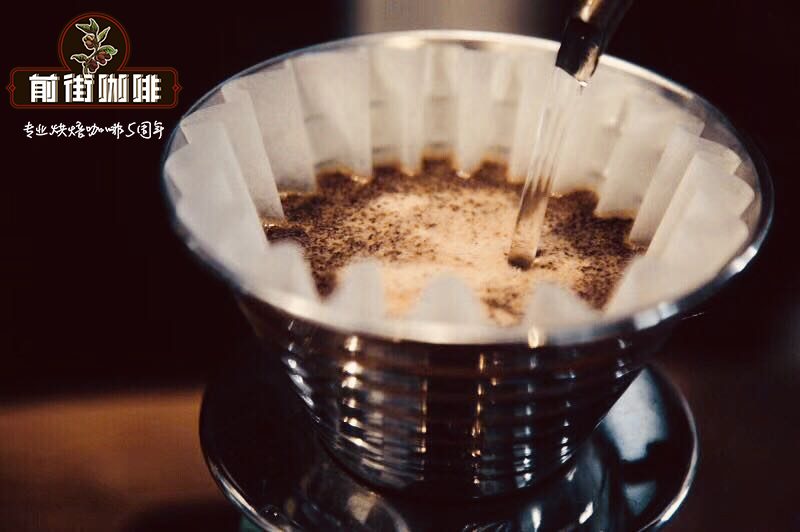
Pour-over coffee is a simple thing to make. Follow a 1:15 coffee-to-water ratio, keep the water at roughly 90-93°C, rinse the filter paper first, level the grounds, then brew, let it drip through and serve. Try to keep the whole process inside 2.5 minutes. Grind setting is deliberately left out here, because grinders from different brands do not share the same scale, so no single number would mean the same thing on two machines.
With that in mind, it is worth looking at how each variable changes the flavor in the cup.
As the grounds get finer, bitterness, body and astringency all climb, while acidity drops. A higher water temperature lifts acidity, bitterness, body and astringency at the same time. Brewing time has little effect on acidity, bitterness or body, but astringency grows the longer the water stays in contact with the coffee.
Working with the same beans, a good grinder is the single biggest factor in flavor, and the right grind setting is the most important lever for expressing it. To reach the profile you want, you have to use the grind that matches it. Pour-over drip generally calls for a medium-coarse particle, something like gravel or coarser. Many beginners fall into the trap of thinking coffee should be ground as fine as possible, and the result is the opposite of what they hoped for. Controlling coarseness is what lets a coffee taste the way it should.
Of course, before you start adjusting the grind you need to know your beans. If you are working with a medium-dark roast such as Mandheling, going finer can bring a more intense aroma and body, but it also brings bitterness and astringency. Going coarser may add a grassy note, but a Mandheling that has lost most of its body is simply incomplete. You have to test and adjust until the cup suits your own taste.
If instead you are using a medium-light roast such as Yirgacheffe, too fine a grind can produce sharp acidity and severe astringency and tips easily into over-extraction, especially if you stretch the brew time. Too coarse a grind may give you bright acidity, but Yirgacheffe's aroma and sweetness turn noticeably duller.
So an appropriate grind setting matters a great deal for any bean. Every coffee needs its own setting to taste its best, and because grinders vary so much, even two units of the same model can differ, the setting has to be dialed in with your own palate. After all, whether something tastes good is deeply subjective.
Knowledge Point:
How coarse the grounds are affects how much coffee material is released and how quickly during brewing. Broadly speaking, grind size falls into five levels: extremely fine, fine, medium-fine, medium and coarse.
In short, FrontStreet Coffee is a coffee research center that is happy to share coffee knowledge with everyone. Our unrestrained sharing is simply to help more friends fall in love with coffee. Every month we hold three heavily discounted coffee events, because FrontStreet Coffee wants more people to enjoy the best coffee at the lowest price. That has been our mission for the past 6 years.
FrontStreet Coffee Recommendation
Matching the bean to the brew is half the battle, and the Hario V60 is a good reference point: Hario began in Tokyo in 1921 as a maker of heat-resistant glassware, redesigned the V60 into its modern form in 2004 and launched it a year later. Its 60-degree cone forces water to the center before it drips through, which extends contact between water and coffee and gets more aroma out of the grounds, while the single large hole lets the brewer's pouring control the flow directly. That speed is exactly why V60 suits floral and fruit-forward coffees, and two FrontStreet beans fit it especially well.
The FrontStreet Yirgacheffe Gotiti Cooperative is the first stop for many drinkers new to specialty coffee. This washed G1 Ethiopian lot brings vivid citrus, berry and floral notes with a green-tea finish, and its acidity is soft and bright rather than sharp, much closer to the natural sweet-sour of fruit. The FrontStreet Huakui is the natural-process counterpart: an Ethiopian heirloom whose tropical-fruit aromatics stand out, with strawberry, passion fruit, jackfruit and even lychee, clear sweetness, very little bitterness and a juicy, smooth body that some describe as the least coffee-like coffee there is.
If your taste runs to the medium-dark side instead, the FrontStreet PWN Golden Mandheling and the FrontStreet Jamaica Blue Mountain No. 1 belong on the shelf. Both reward a finer grind with more aroma and body, and both will punish you with bitterness if you push too far, which makes them ideal beans for practicing exactly the grind adjustments described above.
Important Notice :
FrontStreet Coffee is a long-established specialty coffee roaster in Guangzhou China, selling freshly roasted beans from its own farm in Yunnan as well as dozens of carefully selected single-origin beans from around the world for both pour-over and espresso. The products deliver consistently excellent quality and great value, with shipping within 24 hours. Guangzhou's FrontStreet Coffee shop is recommended by many coffee lovers, and the beans are now available online at the Tmall 。
FrontStreet Coffee has moved to a new address:
FrontStreet Coffee Address: 315,Donghua East Road,GuangZhou
Tel:020 38364473
 Scan and follow the En Gafei WeChat official account. Please indicate that the reprint comes from "En Gafei".